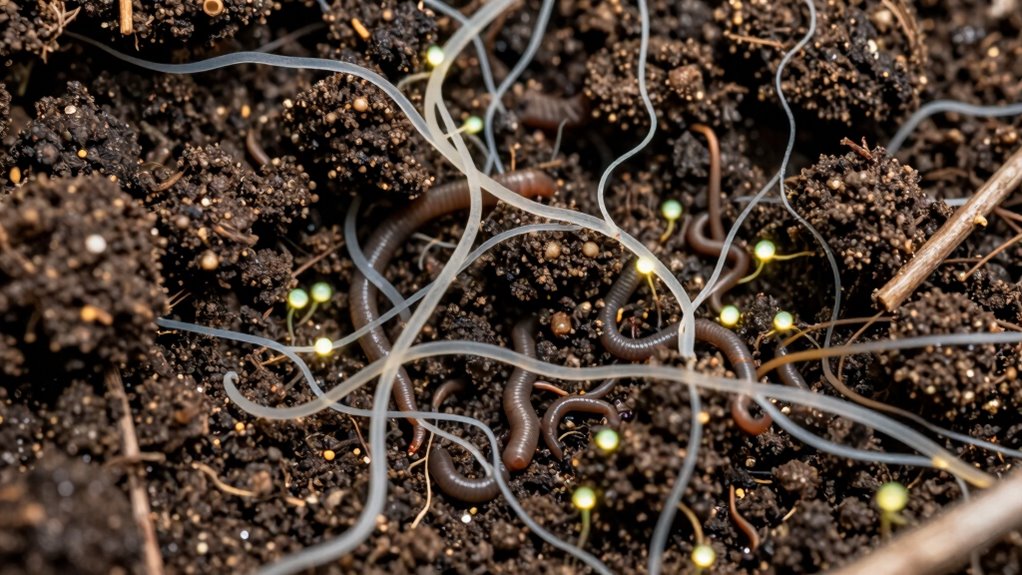

Beneath your feet, soil hosts a hidden world full of microorganisms like bacteria, fungi, and protozoa that work constantly to keep it alive and healthy. These tiny organisms break down organic matter, recycle nutrients, and help plants grow stronger roots. They also improve soil structure and water retention, making it more resilient. If you want to discover just how vibrant and essential this underground ecosystem truly is, there’s much more to uncover.

Prime made for students and young adults
- Fast, free delivery for dorm and study essentials
- Prime Video and Amazon Music included
- Member-only deals
Key Takeaways
- Soil harbors diverse, invisible microorganisms that actively decompose organic matter and support plant growth.
- Microbial activities improve soil structure, water retention, and nutrient cycling, making soil a living ecosystem.
- Symbiotic fungi and bacteria form networks that extend roots and enhance nutrient absorption.
- Soil’s organic matter is constantly broken down and recycled by microbes, sustaining its fertility.
- Healthy soil requires care and minimal chemical disruption to preserve its vibrant, living microbial community.
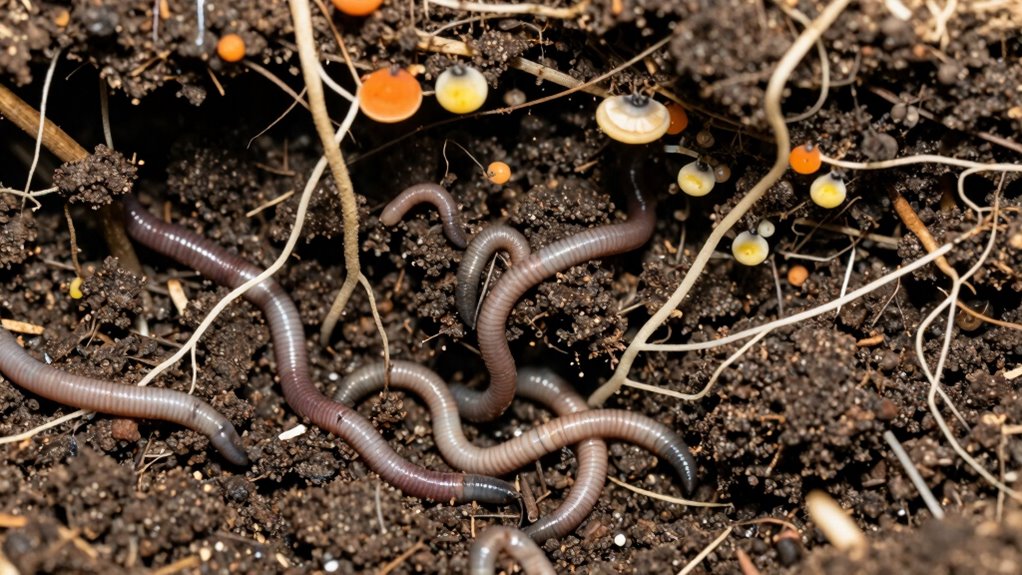
Have you ever wondered what lies beneath the surface of the soil we walk on? Beneath your feet is a bustling world teeming with life, often invisible to the naked eye. This hidden universe is filled with microbial diversity—an incredible variety of bacteria, fungi, protozoa, and other microorganisms—all playing vital roles in maintaining soil health. These tiny organisms might be small, but their collective efforts influence everything from plant growth to climate regulation.
Beneath our feet lies a vibrant, invisible world of microbes vital to soil health and Earth’s balance.
As you dig into the soil, you might notice its rich, dark color. That’s a sign of organic matter, which forms the foundation for this lively ecosystem. Organic matter consists of decomposed plant and animal material, acting as a food source for countless microbes. These microorganisms break down complex organic compounds, releasing nutrients like nitrogen, phosphorus, and potassium that plants need to thrive. Without this continuous process, the nutrients would remain locked away, making the soil barren and unproductive.
The microbial diversity in healthy soil is astonishing. Each microorganism has a specific role—some fix atmospheric nitrogen into forms plants can absorb, while others decompose organic material, recycling nutrients back into the soil. Fungi create networks that extend far beyond the plant roots, helping plants absorb water and nutrients more efficiently. Protozoa and bacteria work together, controlling microbial populations and preventing harmful pathogens from taking hold. This intricate web of interactions keeps the soil balanced and resilient.
What’s remarkable is how this microbial activity directly impacts plant health. When you plant a seed, you’re tapping into a community that’s already working tirelessly beneath the surface. The organic matter and diverse microbes create a living soil environment that promotes healthy root development, improves soil structure, and enhances water retention. In turn, healthy plants produce more organic matter, fueling the cycle of life beneath your feet.
Understanding that soil is more alive than it appears emphasizes the importance of caring for it properly. Avoiding over-tilling, minimizing chemical use, and adding organic matter can support this vibrant ecosystem. When you appreciate the complex interactions happening underground, you realize that soil isn’t just dirt—it’s a dynamic, living system essential for life on Earth. By nurturing this unseen world, you help sustain the garden, the farm, and ultimately, the planet itself.
As an affiliate, we earn on qualifying purchases.
Frequently Asked Questions
How Do Farmers Promote Healthy Soil Ecosystems?
You promote healthy soil ecosystems by enriching soil organic matter through composting techniques, which introduce essential nutrients and beneficial microbes. Practice crop rotation to prevent nutrient depletion and reduce pests. Avoid chemical overuse, and instead, use organic fertilizers. Minimize tillage to protect soil structure. These actions foster diverse microbial life, improve soil health, and support sustainable farming, ensuring your soil remains vibrant and alive for future crops.
What Are the Signs of Soil Degradation?
Like a fading masterpiece, soil degradation shows through signs like soil erosion, where topsoil washes away, and declining organic matter, leaving the land less fertile. You might notice poor plant growth, compacted soil, or increased runoff after rain. These signs indicate the soil’s health is deteriorating, reducing its ability to support life. Recognizing these clues helps you take steps to restore and protect your soil’s importance before it’s too late.
Can Soil Health Be Restored After Contamination?
Yes, soil health can be restored after contamination. You should start with contamination remediation to remove pollutants and prevent further damage. Soil detoxification methods, like adding organic matter or bioremediation, help break down contaminants and revitalize the soil. By actively applying these techniques, you can improve soil structure, nutrient content, and microbial activity, gradually restoring its health and making it productive again for plants and ecosystems.
How Does Soil Biodiversity Affect Plant Growth?
You might think soil biodiversity doesn’t matter, but it’s essential for healthy plant growth. Soil microbial diversity accelerates organic matter decomposition, releasing nutrients your plants need. These microorganisms improve soil structure, enhance water retention, and suppress pests. Without a rich ecosystem of microbes, plants struggle to access critical nutrients, leading to poor growth. So, nurturing soil biodiversity directly boosts plant health and productivity, making your garden more vibrant and resilient.
What Role Do Microorganisms Play in Nutrient Cycling?
Microorganisms play a vital role in nutrient cycling through microbial symbiosis, where they form partnerships with plants and other soil organisms. They facilitate nutrient transformation, breaking down organic matter into forms plants can absorb, like nitrogen and phosphorus. This process guarantees essential nutrients are available for plant growth, maintaining soil health and fertility. Without these microorganisms, nutrient cycling would slow down, harming plant development and overall soil ecosystem balance.
As an affiliate, we earn on qualifying purchases.
Conclusion
Soil is more alive than it looks—teeming with tiny creatures, bursting with nutrients, and supporting every plant you see. It breathes with activity, works tirelessly beneath your feet, and sustains life in countless unseen ways. Recognize its importance, respect its complexity, and nurture its health. Because when you understand soil’s lively nature, you see the foundation of life itself—vibrant, resilient, and endlessly essential beneath the surface.
As an affiliate, we earn on qualifying purchases.
As an affiliate, we earn on qualifying purchases.
Fall Picks
fall essentials
As an affiliate, we earn on qualifying purchases.