

Your brain often tricks you into perceiving situations more negatively than they truly are, fueling daily stress and anxiety. Cognitive distortions like emotional reasoning or catastrophizing distort your thoughts, making problems seem worse or more overwhelming. By recognizing these mental patterns and challenging them, you can reduce their hold on your mood. If you want to find out how to spot and reframe these distortions, you’ll discover helpful strategies that can improve your emotional well-being.
Key Takeaways
- Cognitive distortions like emotional reasoning and catastrophizing subtly deceive your mind, increasing daily stress and anxiety.
- Recognizing these distortions through mindfulness and journaling helps prevent negative thoughts from spiraling.
- Challenging automatic negative beliefs with evidence and alternative perspectives rewires your brain toward positive thinking.
- Mindfulness reduces the influence of distortions, fostering emotional resilience and healthier responses to stress.
- Awareness of mental biases empowers you to control reactions and cultivate mental clarity amidst daily challenges.
What Are Cognitive Distortions and How Do They Affect Daily Stress?

Cognitive distortions are biased ways of thinking that distort reality and reinforce negative thought patterns. When you’re aware of these distortions, you develop better self-awareness, which helps you recognize unhealthy mental habits. These distortions cause you to interpret situations more negatively than they truly are, fueling daily stress. For example, you might catastrophize or see problems as unmanageable, even when they aren’t. Over time, these mental habits become automatic, shaping how you respond to everyday challenges. Recognizing these mental habits can empower you to make positive changes in your thought patterns and improve overall well-being. Developing an understanding of cognitive biases can help you identify when your thinking is skewed, allowing for more balanced perspectives. Being aware of how automatic thoughts influence your emotional responses is crucial for managing stress effectively. Learning to identify and challenge these distorted perceptions can lead to healthier responses and better emotional resilience. Recognizing the automatic nature of these distortions is essential for breaking the cycle of negative thinking and fostering mental flexibility. Developing this awareness is key to replacing distorted thinking with more balanced perspectives, ultimately helping you manage daily stress more effectively.
Common Cognitive Distortions That Lead to Anxiety

Many thinking patterns can fuel anxiety by skewing how you interpret events. Emotional reasoning is a common distortion where you believe your feelings reflect reality—if you feel anxious, you assume something bad will happen. This intensifies your worries, making threats seem more imminent than they are. Catastrophizing takes this further, as you automatically imagine the worst-case scenario, heightening your stress and fear. You might think, “If I make a mistake, everything will fall apart,” even when evidence suggests otherwise. These distortions create a cycle where your emotions distort your perception, causing anxiety to spiral. Recognizing emotional reasoning and catastrophizing helps you understand why your mind amplifies threats, making it easier to challenge these patterns and regain a balanced perspective. Developing cognitive awareness can help you identify when these distortions occur and prevent them from taking hold. Cultivating mental flexibility allows you to adapt your thinking and reduce the impact of these distortions on your emotional state. Applying thought awareness techniques can further enhance your ability to spot and correct unhelpful thought patterns. Understanding cognitive distortions can empower you to break free from automatic negative thinking and foster healthier mental habits. Using tools to detect passive voice can also help you identify and revise unintentional language that weakens your writing and clarity.
How to Spot Cognitive Distortions as They Happen

Recognizing distortions as they occur requires you to pay close attention to your thoughts in real time. Mindfulness exercises help you stay present, making it easier to notice when your mind jumps to negative patterns. As you observe your thoughts, try journaling techniques to capture fleeting distortions before they spiral. Write down what you’re thinking and identify any language that exaggerates, overgeneralizes, or black-and-white thinking. Developing an awareness of cognitive distortions early can prevent them from influencing your mood or decisions. Regular practice with mindfulness and journaling sharpens your ability to recognize these mental traps as they happen, empowering you to respond more consciously and reduce daily stress caused by distorted thinking. Incorporating mental habits like attentive observation can further strengthen your capacity to detect these distortions in real time. Engaging in self-awareness exercises can help you better identify when your thoughts are veering into negative patterns. Developing an understanding of essential oils for mental clarity can also support your focus and emotional resilience during this process. Additionally, cultivating vetted techniques related to wave and wind can enhance your overall mental clarity and stress management.
Practical Strategies to Challenge and Reframe Negative Thoughts
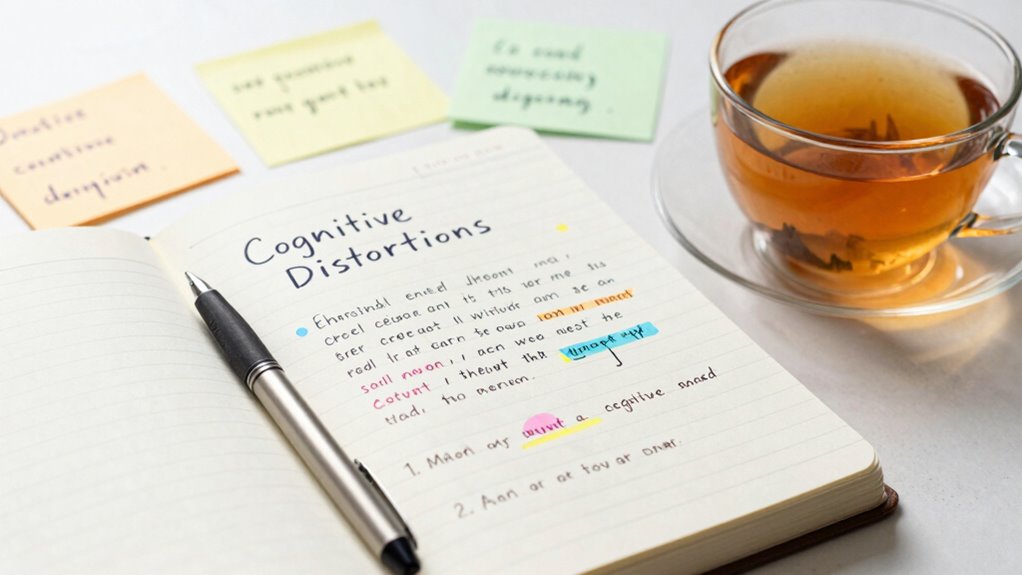
Once you’ve identified negative thoughts as they happen, the next step is actively challenging and reworking them. Practice thought reframing by questioning the validity of your automatic negative beliefs. Ask yourself if there’s evidence supporting or contradicting these thoughts and consider alternative, more balanced perspectives. This process helps shift your mindset, reducing stress and promoting healthier responses. Incorporate simple stress management techniques, like deep breathing or mindfulness, to stay grounded during this process. Remember, the goal isn’t to ignore problems but to view them more objectively. Developing a Free Floating awareness of your thoughts can make it easier to catch and address distorted thinking patterns early. Consistently practicing thought reframing builds resilience, making it easier to manage daily stress and prevent negative thoughts from spiraling out of control. Over time, this approach rewires your brain for more positive thinking patterns.
How Recognizing Cognitive Biases Can Help Reduce Anxiety

Understanding cognitive biases can considerably reduce anxiety by helping you see situations more clearly. When you recognize patterns like catastrophizing or overgeneralization, you gain better control over your reactions. Techniques such as mindfulness meditation can help you stay present and observe your thoughts without judgment, reducing automatic bias effects. Thought journaling allows you to identify and challenge distorted thinking patterns, making biases more conscious. Developing awareness of cognitive distortions can lead to healthier thought patterns and improved emotional resilience. Recognizing and addressing these biases is essential for cultivating mental clarity and emotional stability. Here’s a quick overview:
| Bias Type | How It Affects You | How to Counteract It |
|---|---|---|
| Catastrophizing | Exaggerates problems as worst-case scenarios | Write down evidence against fears |
| Overgeneralization | Views one event as never-ending pattern | Practice mindfulness meditation to stay grounded |
| All-or-Nothing Thinking | Sees things as black or white | Use thought journaling to explore shades of gray |
Frequently Asked Questions
How Can I Differentiate Between Realistic Worries and Cognitive Distortions?
To differentiate between realistic worries and cognitive distortions, practice rational evaluation and evidence-based thinking. Ask yourself if there’s solid evidence supporting your concern, or if you’re catastrophizing or jumping to conclusions. Consider alternative explanations and the likelihood of your fear coming true. By objectively analyzing your thoughts, you can identify distorted patterns and focus on realistic worries that merit your attention, reducing unnecessary stress.
Are There Specific Mental Health Conditions Linked to Distorted Thinking?
Yes, certain mental health conditions are linked to distorted thinking. For instance, depression often involves negative cognitive patterns like black-and-white thinking, while anxiety can trigger catastrophizing. You might notice these distortions influencing your perceptions of reality, affecting your mood and behavior. Recognizing these patterns helps you understand how your mental health impacts your thinking, allowing you to seek appropriate support or strategies to challenge and change these cognitive distortions.
Can Cognitive Distortions Develop From Childhood Experiences?
Childhood trauma and early memories can shape your thinking patterns, making cognitive distortions more likely to develop. When your mind records negative experiences early on, it may reinforce distorted beliefs, like overgeneralizing or catastrophizing. These mental habits can persist into adulthood, influencing how you interpret daily stress. Recognizing this connection helps you understand that some distortions stem from past experiences, giving you a chance to challenge and reframe them.
What Role Does Mindfulness Play in Recognizing Cognitive Biases?
Mindfulness training helps you recognize cognitive biases by encouraging present-moment awareness and non-judgmental observation. When you practice mindfulness, you become more aware of automatic thoughts and distortions, making it easier to identify biases like catastrophizing or all-or-nothing thinking. This heightened awareness allows you to challenge these distortions, ultimately reducing stress and improving your emotional resilience through ongoing bias recognition.
How Long Does It Typically Take to Change Habitual Thinking Patterns?
Changing habitual thinking patterns usually takes about 21 to 66 days, but it varies based on your commitment. You can accelerate this process with habit reversal techniques and thought restructuring exercises. Consistently practicing these strategies helps rewire your brain, making new thought patterns more automatic. Stay patient and persistent — over time, you’ll notice your old cognitive distortions fading as healthier habits take their place.
Conclusion
Understanding cognitive distortions can considerably reduce your daily stress. Did you know that nearly 80% of people experience negative thoughts that aren’t entirely accurate? By recognizing and challenging these mental biases, you take control of your mindset and lessen anxiety. Remember, your brain might be lying to you politely, but you don’t have to believe everything it tells you. Take charge of your thoughts today, and start feeling calmer and more in control.