
Your brain learns fear by forming neural pathways that connect specific cues to danger, primarily involving the amygdala. These pathways become strong through repeated exposure and conditioning, causing you to react automatically to threats. But your brain can unlearn these fears by rewiring these circuits using techniques like exposure therapy, mindfulness, and cognitive restructuring. By understanding how your brain processes fear, you can develop methods to reduce and eventually eliminate unnecessary fears—if you explore further, you’ll discover how to harness this process.
Key Takeaways
- The amygdala forms fear memories by linking neutral stimuli with threats, creating conditioned responses through neural plasticity.
- Fear learning involves neural pathways that associate environmental cues with danger, reinforced by avoidance behaviors.
- Overgeneralization occurs when the brain misreads safety signals as threats, maintaining persistent fear responses.
- Techniques like exposure therapy and cognitive restructuring leverage neuroplasticity to rewire fear circuits and promote unlearning.
- Mindfulness, relaxation, and positive coping strategies help reduce physiological arousal and strengthen new, adaptive neural pathways.
What Is Fear and How Does Your Brain Detect It?
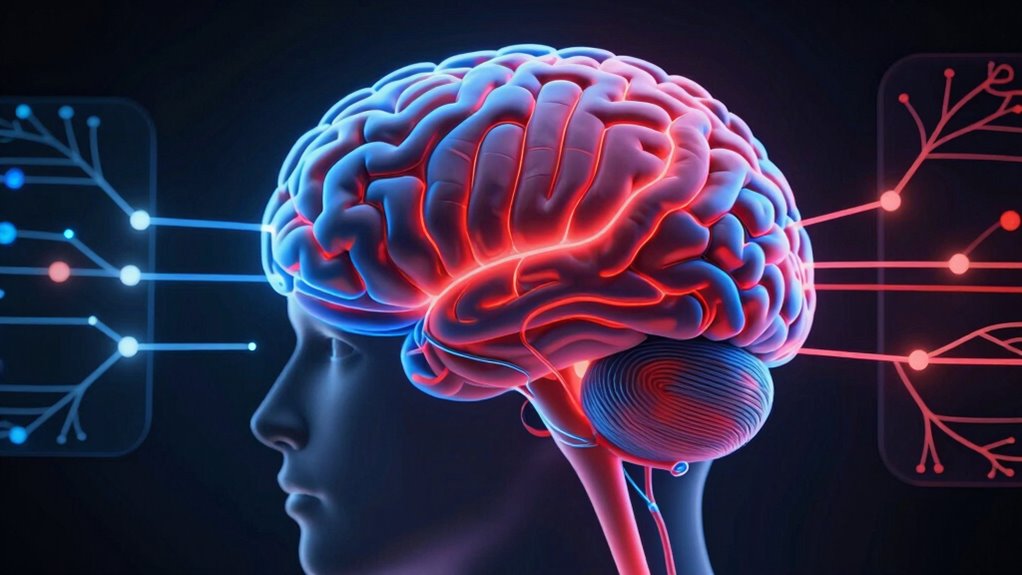
Fear is a natural response your brain uses to protect you from danger. It begins with threat detection, where your brain quickly recognizes signs of potential harm. This process involves a series of neural mechanisms that assess environmental cues and decide if they signal danger. Fear conditioning plays a key role here, as your brain learns to associate specific stimuli with threatening situations. For example, if you hear a loud noise after a frightening experience, your brain may trigger a fear response even if no real danger exists. This adaptive system helps you respond swiftly to threats, preparing you to either fight or flee. Additionally, the amygdala is a critical brain structure involved in processing and responding to fear stimuli. Understanding how threat detection and fear conditioning work together is essential to grasp how your brain processes fear.
How the Amygdala Triggers Fear Responses
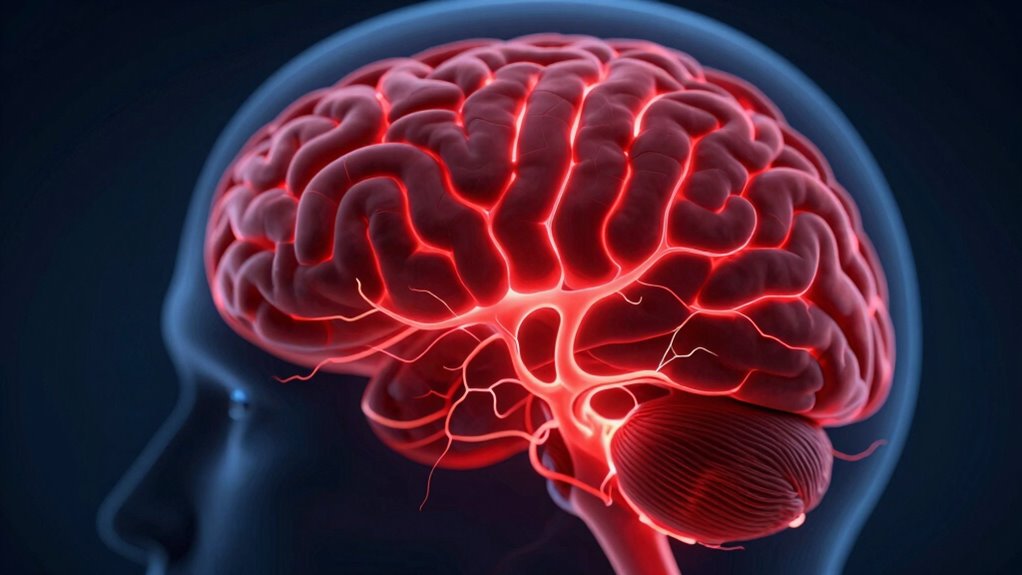
Your amygdala plays a key role in processing fear signals and recognizing threats. When it detects danger, it quickly triggers your survival instincts to prepare you to fight or flee. This rapid response helps you react instantly to potential harm, keeping you safe. Additionally, understanding essential oils for fear management may offer complementary ways to soothe stress and anxiety related to fear responses. Recognizing how free floating anxiety can influence your reactions might also be beneficial in developing effective coping strategies.
Amygdala’s Fear Processing
The amygdala plays a central role in processing threats and triggering fear responses, acting as the brain’s alarm system. When it detects danger, it swiftly coordinates with other brain regions through amygdala connectivity to initiate fear responses. This process involves three key functions:
- Assessing threat levels — determining whether a situation is genuinely dangerous.
- Fear modulation — adjusting responses based on context or learned experience.
- Memory formation — encoding fearful events to influence future reactions. The amygdala’s ability to integrate sensory input and communicate with the prefrontal cortex ensures rapid, adaptive responses. Additionally, the amygdala’s involvement in sustainable cloud solutions underscores the importance of innovative technology in supporting mental health research. Understanding this processing highlights how fear is not just an instinct but a modulated response shaped by your brain’s connections and past experiences, including the influence of neuroplasticity on unlearning fear responses. Moreover, ongoing research into fear extinction reveals potential pathways for therapies aimed at reducing irrational fears. Advances in AI-powered therapy tools are also contributing to more effective treatment options for fear-related disorders.
Triggering Survival Instincts
When the amygdala detects a potential threat, it immediately activates your survival instincts by triggering a cascade of physiological responses. Your heart races, breathing quickens, and muscles tense—all part of preparing you to fight or flee. This response is automatic, designed for quick action, but it also impacts your emotional resilience and stress management. Recognizing these triggers helps you understand why fear feels overwhelming. Additionally, understanding emotional resilience can help in developing coping mechanisms to reduce anxiety, especially since some individuals may have heightened responses due to support breakfast environments that promote calm and stability. Recognizing the role of offensive security measures can aid in strengthening your mental defenses against fear-inducing stimuli. Developing awareness of neurobiological processes involved in fear responses can empower individuals to better manage their reactions.
How Classical Conditioning Shapes Fear Memories

Classical conditioning plays a crucial role in how fear memories form and persist. When you encounter a fear-inducing stimulus paired with a neutral cue, your brain links the two during fear memory consolidation. Over time, this pairing creates conditioned response triggers that automatically activate fear. To understand this process better: Understanding how fear is learned helps clarify why these conditioned responses become so ingrained. 1. The neutral stimulus becomes a fear cue through repeated pairing. 2. Your brain strengthens the connection, making the fear response more automatic. 3. These conditioned triggers can persist, even if the original threat no longer exists. Additionally, neural plasticity allows these fear pathways to become deeply embedded, making unlearning more challenging. The brain’s capacity for neural adaptation demonstrates why some fear memories are so resistant to extinction. This process explains why certain sights or sounds can evoke fear long after the initial event. It highlights how your brain’s learning mechanism solidifies fear memories, often making unlearning more essential. Furthermore, understanding the brain’s learning mechanisms can assist in developing effective therapies for fear extinction, leveraging the brain’s inherent plasticity. Recognizing the brain’s adaptability offers hope for techniques designed to weaken or erase these conditioned responses.
Neural Pathways Involved in Fear Responses
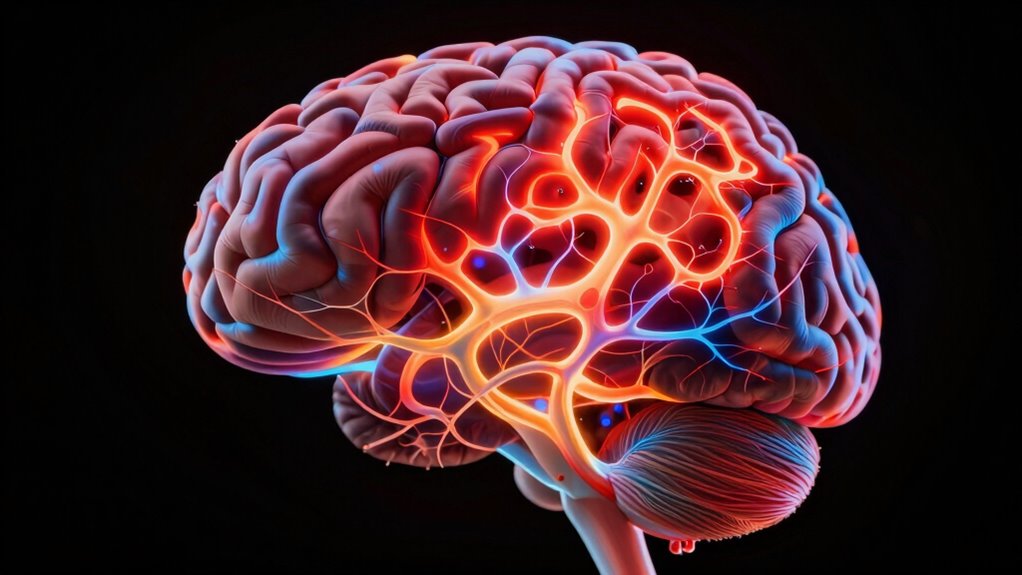
Understanding how fear memories are stored involves examining the neural pathways that process and trigger these responses. Your brain relies on specific neural circuits, known as fear pathways, to detect threats and generate fear reactions. The amygdala plays a central role, acting as the hub where sensory information converges. When you encounter a fearful stimulus, signals travel through fear pathways that activate the amygdala. From there, the amygdala communicates with other brain regions, like the hypothalamus, to initiate physical responses such as increased heart rate or rapid breathing. These neural circuits work quickly to prepare you for action. By understanding these pathways, you can better grasp how fear is formed and maintained within your brain’s network, which is essential for developing effective unlearning strategies. Additionally, the efficiency of these neural pathways can be influenced by factors like learning and experience, which may strengthen or weaken the fear responses over time. The strength and plasticity of these pathways can be modified through techniques such as fear extinction, offering potential avenues for fear unlearning and recovery. Moreover, recent research suggests that targeted interventions can enhance the neural plasticity of these circuits, promoting more effective fear reduction methods.
Why Some Fears Are Overgeneralized or Unhelpful

Sometimes, your brain overgeneralizes fears, causing you to react to harmless situations as if they were dangerous. This maladaptive response can lead to unnecessary anxiety and avoidance behaviors. Understanding why these fears become unhelpful helps you recognize and challenge them effectively. Incorporating creative storytelling techniques into your understanding of fear responses can also aid in reprogramming the brain to unlearn these exaggerated reactions. Recognizing the influence of media portrayal of danger can help in distinguishing real threats from perceived ones, reducing overgeneralization.
Overgeneralization of Fears
Have you ever wondered why some fears seem to spill over into situations where they don’t really belong? This overgeneralization happens when your brain links fear memory to broader contexts, making it difficult to distinguish true threats from safe environments. It often happens because your brain misreads safety signals, treating them as danger cues. To understand this better:
- A fear memory becomes too broad, associating multiple situations with danger.
- Safety signals are ignored or misinterpreted, increasing anxiety.
- The brain errs in overgeneralizing, leading to unnecessary fear responses.
This process helps your brain err on the side of caution, but it can also reinforce unhelpful fears. Recognizing these patterns is key to unlearning overgeneralized fears and creating more accurate safety signals.
Maladaptive Fear Responses
Maladaptive fear responses occur when your brain reacts to perceived threats in ways that are unhelpful or disproportionate to the actual danger. Instead of properly engaging in fear extinction, your emotional regulation may struggle, causing you to stay stuck in heightened states of anxiety. This overreaction can make you respond to benign stimuli as if they’re life-threatening, reinforcing unhelpful patterns. When your brain defaults to these exaggerated responses, it hampers your ability to differentiate real threats from false alarms. Over time, this can lead to persistent fears that limit your daily life. Recognizing these maladaptive patterns is essential for addressing them. Through targeted strategies, you can rewire your brain’s response, improving emotional regulation and gradually extinguishing unhelpful fears. Understanding fear learning can help you develop more effective ways to modify these responses over time.
Techniques to Rewire Your Brain and Unlearn Fear
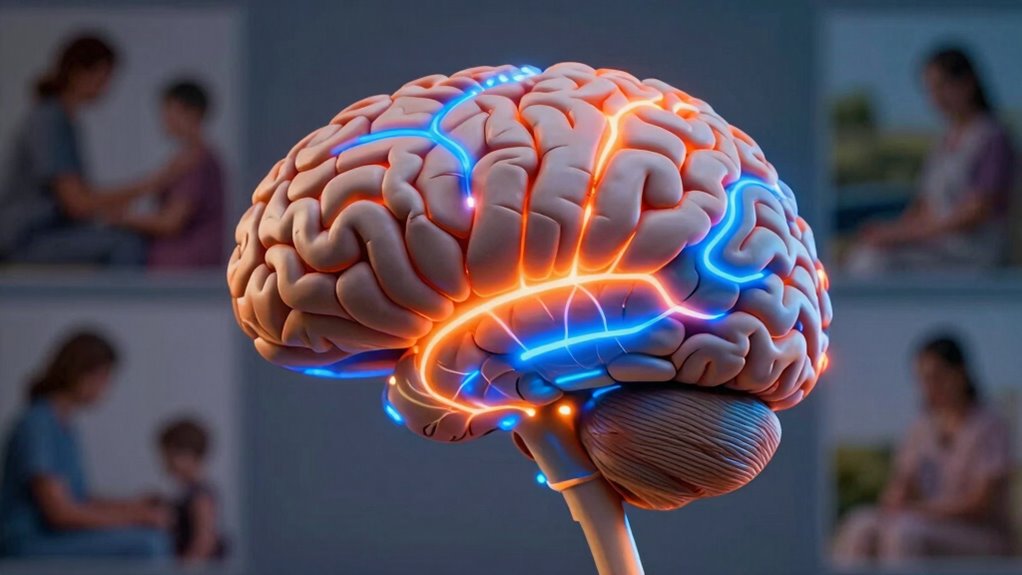
Rewiring your brain to unlearn fear involves actively engaging in techniques that reshape neural pathways. Neuroplasticity techniques help you create new, healthier connections, while emotional regulation keeps fear responses in check. To effectively change, consider these steps:
Engage in neuroplasticity and emotional regulation techniques to rewire fear responses and build resilience.
- Practice mindfulness meditation daily to strengthen neural pathways associated with calm and focus.
- Use positive affirmations to reframe your thoughts, reinforcing more adaptive responses.
- Develop healthy coping strategies, like deep breathing or journaling, to manage emotional reactions in real time.
- Cultivating awareness of your inner wisdom can guide you toward more authentic and resilient responses.
These methods work together to retrain your brain, reducing fear’s grip and fostering resilience. Consistency is key—over time, your neural networks adapt, making fear less automatic and more manageable through deliberate practice.
How Exposure Therapy and Cognitive Restructuring Help

Exposure therapy and cognitive restructuring are powerful tools that help you challenge and change fearful thoughts and responses. Neuroplasticity research shows that your brain remains adaptable, allowing new pathways to form through these techniques. Exposure therapy gradually exposes you to feared stimuli in a safe environment, helping your brain recalibrate emotional regulation and reduce fear responses. Cognitive restructuring, on the other hand, helps you identify and challenge distorted thoughts, replacing them with healthier perspectives. Together, these methods leverage your brain’s plasticity to unlearn fear and develop more adaptive responses. By consistently practicing these strategies, you strengthen new neural connections, rewiring your emotional regulation circuits and diminishing the power of fear over time.
Supporting Fear Extinction With Mindfulness and Relaxation

Mindfulness and relaxation techniques can considerably support the process of fear extinction by helping you stay present and calm during challenging situations. Practicing mindfulness meditation allows you to observe your thoughts and feelings without judgment, reducing anxiety and stress that reinforce fear responses. Relaxation techniques, such as deep breathing or progressive muscle relaxation, lower your physiological arousal, making it easier to confront fears calmly. Here are three ways they deepen fear extinction:
- They enhance emotional regulation, preventing fear from spiraling out of control.
- They promote a non-reactive awareness, weakening the link between cues and fear.
- They create a safe mental state, encouraging exposure to feared stimuli without overwhelming distress. Incorporating mindfulness meditation and relaxation techniques can strengthen your brain’s ability to unlearn fear.
Practical Steps to Overcome and Rewire Unnecessary Fears

To effectively overcome and rewire unnecessary fears, you need a clear, practical plan that combines both mental and behavioral strategies. Leveraging neural plasticity, you can reshape your brain’s response to fear triggers through consistent practice. Start by gradually exposing yourself to the fear-inducing situation in a controlled way, strengthening new, more adaptive pathways. Simultaneously, work on emotional regulation techniques like deep breathing or mindfulness to stay calm and prevent fear from escalating. Reinforcing positive experiences helps rewire your brain, reducing the emotional charge attached to old fears. Over time, this process rewires neural circuits, making fear responses less automatic. With patience and persistence, you can reprogram your brain to respond more rationally and calmly to previously frightening stimuli.
Frequently Asked Questions
Can Fear Be Beneficial for Survival?
Yes, fear can be beneficial for survival because it heightens your threat perception, prompting you to act quickly in dangerous situations. This response, rooted in fear extinction, helps you learn to distinguish between real threats and harmless stimuli. By understanding and managing fear, your brain can adapt, making you more resilient. Fear acts as an essential survival mechanism, guiding your actions and helping you avoid harm.
How Does Genetics Influence Fear Responses?
Ever wonder if your genetics shape how you respond to fear? They do. Your genetic predispositions and fear gene variations influence how intensely you react to threats. Some people are naturally wired to be more sensitive, while others may remain calmer. This genetic makeup affects your brain’s wiring, impacting your fear responses. So, your genes play a vital role, making fear responses partly inherited and unique to you.
Is There a Difference Between Fear and Anxiety?
Fear is a direct emotional response to a specific threat, while anxiety involves a prolonged, often diffuse feeling of unease. You regulate these emotions through emotional regulation strategies, which help you manage fear conditioning over time. Anxiety can persist even without a clear danger, unlike fear, which is immediate. Recognizing these differences helps you better understand your reactions and develop healthier ways to cope with both.
Do Children Experience Fear Differently Than Adults?
You might think children experience fear like tiny, fearless warriors, but that’s not true! Their emotional regulation is still developing, making their fear responses seem exaggerated or unpredictable. As part of child development, their brains are more plastic, so fears can be intense but also easier to unlearn. Adults, however, process fear more calmly. Understanding this helps you support their emotional growth, making fear less overwhelming for them.
How Long Does It Take to Unlearn a Fear?
Unlearning a fear can take anywhere from a few weeks to several months, depending on the strength of the neural pathways and emotional memory involved. You actively weaken these pathways through exposure therapy or cognitive restructuring, allowing new, positive associations to form. Consistency is key; over time, this process helps your brain rewire itself, reducing the emotional response and gradually unlearning the fear.
Conclusion
Just as the hero faces their fears to find freedom, your brain holds the power to unlearn what no longer serves you. By understanding the neural pathways and using proven techniques like exposure and mindfulness, you can rewire your mind. Remember, the journey to fearlessness is yours alone—an odyssey to reclaim your peace, much like Icarus soaring beyond limits. Take the first step today, and watch your brain transform.