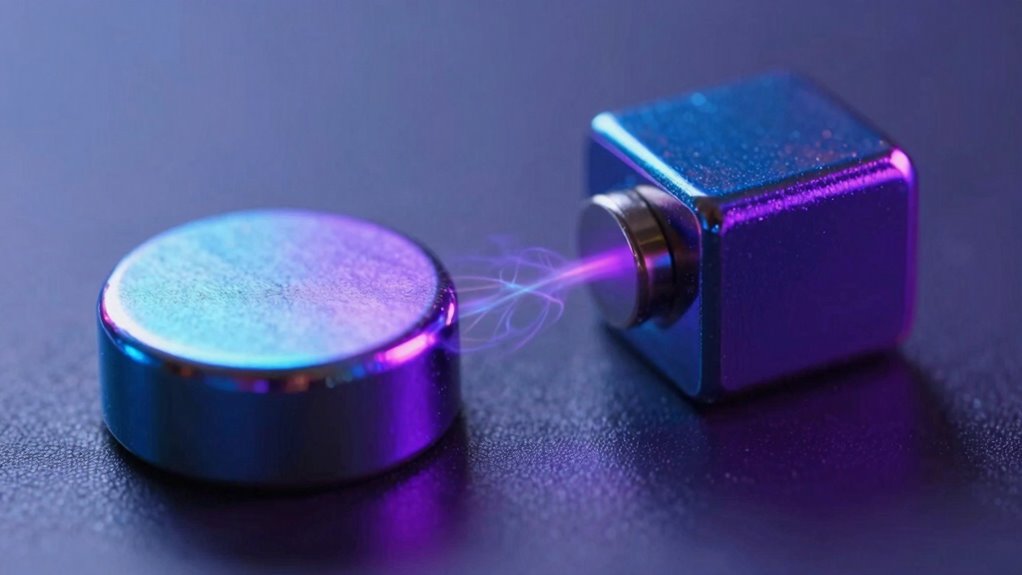

Magnets still feel like magic because their invisible magnetic fields create quick, powerful pulls that seem to happen instantaneously, almost like a mysterious force at work. You can’t see these fields, yet you can feel the attraction or repulsion as soon as two magnets come close. Their simplicity and immediacy evoke wonder, making it feel like a magic trick. If you stay curious, you’ll discover how the natural laws behind magnetism keep fascinating us every day.

Prime made for students and young adults
- Fast, free delivery for dorm and study essentials
- Prime Video and Amazon Music included
- Member-only deals
Key Takeaways
- Magnetic forces are invisible, creating a mysterious sense of attraction without visible clues.
- The immediate, silent reaction of magnets evokes feelings of magic and wonder.
- Magnetic fields operate naturally and effortlessly, reinforcing their enchanting quality.
- Their fundamental, unchanging principles make magnetic attraction feel timeless and mystical.
- Modern technologies utilizing magnetism highlight its continuous, magical influence in daily life.

Magnets have a way of capturing your attention, making everyday objects seem almost magical. You’ve likely experienced that sudden pull when you hold a fridge magnet or felt the invisible force as two magnets snap together. This enchanting sensation stems from magnetic fields and attraction forces working behind the scenes. These invisible forces create a sense of wonder because they’re not visible to the naked eye, yet their effects are undeniable. When you see a magnet cling to a metal surface or attract other objects, it feels like a simple magic trick, but really, it’s the result of natural physical laws.
Magnets seem magical as they pull objects together through invisible, natural forces we can’t see but can feel.
The magnetic fields generated by magnets extend outward in all directions, creating a force field that influences nearby objects. These fields are invisible, but they’re constantly present, shaping how magnets interact with their surroundings. When you bring two magnets close, their attraction forces come into play. Depending on how you align their poles, they either snap together or push apart. This direct, almost instantaneous reaction is what fuels that sense of magic. You don’t need to understand the complex physics behind it to be enthralled—you just feel the pull, almost as if the magnet has a life of its own.
What makes this feeling even more intriguing is how natural it seems. The attraction forces between magnets are fundamental interactions in nature, yet they feel so extraordinary because of their simplicity and immediacy. You don’t need batteries or power—just the magnetic properties of the materials involved. That pure, effortless attraction creates a sense of wonder, making it seem like the magnet has a secret power. It’s a reminder that natural forces often work quietly and invisibly but can produce dramatic, tangible effects that capture your imagination. Interestingly, this fundamental physical law operates consistently across various scales, from tiny electronic components to large industrial applications. The fact that such simple interactions can have such profound effects across different domains adds to the magnetism’s almost magical appeal.
Even as technology advances, the basic principles of magnetic fields and attraction forces remain the same, preserving that mesmerizing quality. Magnetic phenomena are everywhere—from the tiny electronics inside your phone to the giant MRI machines used in hospitals. These applications rely on the fundamental properties of magnetism to function effectively, highlighting how this natural force continues to influence our modern world. The invisible nature of magnetic fields contributes to the sense of mystery and magic that surrounds magnets, as their influence cannot be directly seen but is unmistakably felt. Yet, the core experience of feeling a magnet’s pull hasn’t changed. It still surprises you, still feels like a little bit of magic in your everyday life. That’s because, at its core, magnetism is a fundamental force that combines simplicity with mystery, making it endlessly fascinating and almost magical to witness.
As an affiliate, we earn on qualifying purchases.
Frequently Asked Questions
How Do Magnets Generate Magnetic Fields Without Visible Energy?
Magnets generate magnetic fields through the alignment of magnetic domains within their material. When these domains, tiny regions with aligned magnetic moments, line up, they produce magnetic induction, creating a magnetic field. This field isn’t visible energy but results from the collective behavior of electrons’ spins and movements. Your eyes can’t see this process, but the magnetic field exerts forces, making magnets feel like magic without any visible energy.
Can Magnets Attract or Repel Through Different Materials?
Magnets can attract or repel through certain materials, depending on their magnetic properties. Magnetic materials like iron, cobalt, and nickel easily respond to magnetic fields, making them useful in magnetic applications such as motors and sensors. Non-magnetic materials, like plastic or wood, don’t interact with magnetic fields. So, whether a magnet attracts or repels depends on the material’s magnetic properties, influencing how you can use magnets in various applications.
Why Do Some Magnets Lose Their Magnetism Over Time?
Some magnets lose their magnetism over time due to magnet degradation caused by factors like heat, physical shocks, or corrosion. Magnetic insulation, which prevents magnetic domains from aligning properly, can weaken the magnet’s strength. As these domains become disorganized, the magnet’s ability to attract or repel diminishes. Proper storage and handling help prevent magnet degradation, maintaining your magnet’s magnetic power longer.
Are There Natural Magnets Found in the Environment?
You’ve heard the saying, “Where there’s smoke, there’s fire,” but in nature, where there’s magnetism, there’s often more. Natural magnets, like magnetic minerals and lodestones, are found in the environment. These natural lodestones contain magnetic minerals that can attract iron and other magnetic materials. You can find them embedded in rocks or soil, proving that nature’s own magnets do exist, almost like a quiet magic hidden beneath our feet.
How Do Magnetic Forces Compare to Other Fundamental Forces?
Magnetic forces are weaker than fundamental forces like gravity, but they’re still powerful in specific applications. Magnetic resonance uses these forces to produce detailed images of your body, while magnetic levitation relies on magnetic fields to lift objects without contact. You might not notice magnetic forces daily, but they’re essential in technology like MRI machines and maglev trains, showcasing their unique strength compared to other fundamental forces.
As an affiliate, we earn on qualifying purchases.
Conclusion
Magnets still feel like magic because they effortlessly pull or push without any visible effort, sparking curiosity and wonder. Did you know that Earth itself acts as a giant magnet, with a magnetic field extending thousands of miles into space? This incredible force shapes everything from compass navigation to animal migration. So next time you see a magnet, remember it’s not just a simple object—it’s a powerful force that connects us to the universe in ways we’re still discovering.
As an affiliate, we earn on qualifying purchases.
Halloween Picks
halloween
As an affiliate, we earn on qualifying purchases.