

Scientists trace Earth’s climate history by analyzing tiny gas bubbles trapped in ice layers formed over thousands of years. During ice formation, air from the atmosphere gets sealed within ice crystals and preserved in bubbles. Using specialized drilling and analysis techniques, scientists extract and measure gases like carbon dioxide and methane, which reveal past greenhouse levels. This work uncovers how climate has changed and what might happen next—if you keep exploring, you’ll learn even more about this fascinating process.
Key Takeaways
- Scientists extract ice core samples with tiny air bubbles that contain ancient atmospheric gases.
- They carefully warm and analyze the bubbles using techniques like mass spectrometry to identify gas composition.
- Gas concentrations reveal past levels of greenhouse gases like CO₂ and methane, indicating historical climate conditions.
- Comparing gas data with other ice core proxies helps reconstruct past temperature, precipitation, and climate shifts.
- This information informs understanding of Earth’s climate history and predicts future climate trends.
How Do Tiny Bubbles in Ice Reveal Earth’s Past Atmospheres?

Tiny bubbles trapped in ice serve as natural time capsules that reveal Earth’s past atmospheres. When ice forms, it begins with ice bubble formation, where small pockets of ancient air get enclosed within the ice crystals. These bubbles preserve ancient air, capturing the composition of the atmosphere thousands of years ago. As snow accumulates and compresses into ice, air pockets become sealed off, creating tiny containers of ancient air. Scientists can then extract these bubbles to analyze the gases inside, such as carbon dioxide and methane, which reflect past climate conditions. The process of ice bubble formation is vital because it guarantees that each bubble contains a snapshot of the atmosphere at a specific moment in history, allowing us to study changes in Earth’s climate over millennia. Additionally, understanding the contrast ratio in ice core analysis helps scientists distinguish subtle differences in gas concentrations, providing more precise climate reconstructions. Advanced sampling techniques enable researchers to recover these tiny air pockets with minimal contamination, ensuring the accuracy of their climate reconstructions. Moreover, improvements in analytical methods have increased the sensitivity and reliability of measurements, leading to more detailed climate models.
The Science of How Air Gets Trapped in Ice Sheets
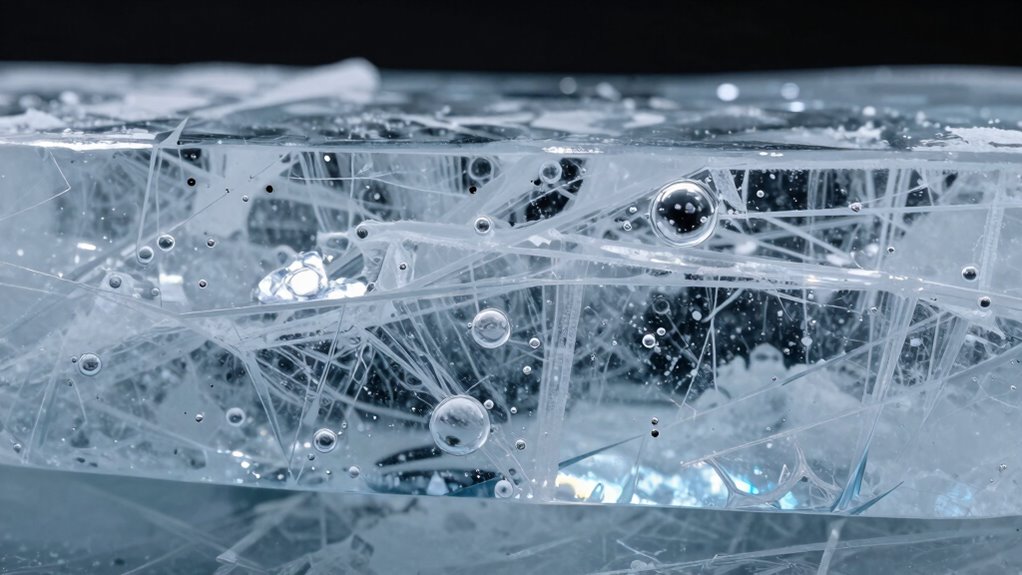
When snow falls and accumulates on ice sheets, it doesn’t just add layers; it creates a delicate environment where air can become trapped. During ice sheet formation, snow compresses over time, transforming into firn and eventually solid ice. As this process occurs, tiny air bubbles become sealed within the growing ice. These bubbles effectively trap the ancient atmosphere, preserving its composition from thousands of years ago. The pressure from accumulating snow forces air into small pockets, preventing it from escaping. Over time, the weight causes compaction and densification, locking in the air. This natural process ensures that each ice layer contains a snapshot of the past atmosphere, allowing scientists to analyze the trapped air and understand historical climate conditions. This process is crucial for climate research because it provides direct evidence of atmospheric composition over millennia, aided by advanced analytical techniques that can extract and study these tiny air samples. Additionally, modern sampling methods have improved the precision with which these ancient gases are recovered, enhancing our understanding of climate change over time.
Techniques Scientists Use to Extract and Analyze Ice Bubbles

Scientists use specialized ice core drilling methods to reach deep layers of ice containing ancient air bubbles. Once extracted, they apply precise bubble extraction techniques to isolate the gases for analysis. Advanced gas analysis technologies then identify and measure the composition of these tiny air samples, revealing past climates. Understanding the cultural significance of these ancient gases helps scientists interpret environmental changes through history. Additionally, ongoing research into ice preservation techniques ensures the integrity of samples during extraction and analysis. Developing improved sample handling methods is crucial for maintaining sample quality and obtaining accurate climate data. Moreover, integrating auditory processing strategies can enhance the training of technicians working with delicate samples, ensuring consistent quality.
Ice Core Drilling Methods
To extract and analyze the ancient air trapped within ice, researchers employ specialized drilling methods that carefully retrieve intact ice cores. This process begins with ice core sampling, where scientists use advanced drilling equipment designed to minimize disturbances. The equipment includes sturdy drills mounted on rigs that can reach deep into ice sheets, sometimes thousands of meters below the surface. Precision is vital to avoid fracturing the ice or contaminating the samples. Once the core is extracted, it’s carefully stored and transported for analysis. These drilling methods ensure the ice remains as close to its natural state as possible, preserving the tiny bubbles that contain ancient atmospheres. This meticulous approach allows scientists to study climate history with high accuracy.
Bubble Extraction Techniques
After successfully retrieving the ice cores, researchers focus on extracting the tiny air bubbles trapped within. To do this, they use specialized bubble extraction techniques that preserve the integrity of the ice bubble formation. First, the ice is carefully cut into sections under controlled conditions to prevent melting or sublimation. Then, scientists employ bubble preservation techniques such as slow warming and vacuum extraction to release the trapped air without damaging the bubbles. These methods ensure the tiny bubbles remain intact, allowing accurate analysis later. Precise temperature control and gentle handling are essential to avoid bubble rupture or contamination. Additionally, understanding the impact of wave and wind on ice movement helps scientists interpret the data more accurately. By maintaining the integrity of the bubbles, scientists can confidently study the ancient atmospheres locked inside, revealing climate information from thousands of years ago.
Gas Analysis Technologies
Advancements in gas analysis technologies enable researchers to precisely examine the air trapped within ice bubbles. Techniques like mass spectrometry and laser spectroscopy allow scientists to identify and quantify greenhouse gases and other atmospheric components from tiny ice samples. These methods are essential for reconstructing past climates and understanding how natural processes, like ocean currents, influence greenhouse gas exchange. This data informs models predicting future climate trends, including the potential impact of renewable energy adoption. Precise gas analysis also helps determine how ancient atmospheric compositions compare to today’s, revealing shifts driven by natural and human factors. As technology improves, you’ll find faster, more accurate analyses that deepen our understanding of Earth’s climate history and guide sustainable energy solutions.
What Gases Are Preserved in Ice Bubbles and Why They Matter

You can find various gases trapped in ice bubbles, like carbon dioxide and methane, which reveal Earth’s past atmosphere. These gases act as clues to understanding historical climate conditions. By studying them, you gain insights into how our climate has changed over time. Study techniques and exam preparation can also help scientists interpret these complex data sets more effectively. Additionally, advances in ice core analysis enable more precise reconstructions of ancient climates, deepening our understanding of environmental shifts. Recognizing the importance of gas composition within ice bubbles further enhances the accuracy of climate models and predictions. Understanding gas stability over millennia is essential for reliable climate reconstructions and future predictions.
Types of Preserved Gases
Ice bubbles trap a variety of gases that reveal Earth’s past climate conditions. These gases include major components like nitrogen and oxygen, along with trace gases that provide climate clues. The gas composition within bubbles results from bubble formation processes, capturing atmospheric conditions at specific times. Understanding the types of preserved gases helps scientists interpret ancient climates.
| Gas Type | Role in Climate Study | Abundance in Bubbles |
|---|---|---|
| Nitrogen (N₂) | Makes up most of the atmosphere | Very high |
| Carbon Dioxide (CO₂) | Indicates greenhouse effect | Trace but significant |
| Methane (CH₄) | Sign of past biological activity | Trace |
| Argon (Ar) | Used for dating ice layers | Moderate |
Climate Indicators in Bubbles
Gases trapped in ice bubbles serve as essential climate indicators because they preserve snapshots of Earth’s atmospheric composition at specific times. During ice crystal formation, air gets trapped in tiny bubbles, effectively capturing a sample of the atmosphere from that period. This atmospheric sampling allows scientists to analyze key gases like carbon dioxide, methane, and oxygen, which reveal insights into past climate conditions. By studying these gases, you can understand how greenhouse gases have fluctuated over thousands of years and how those changes relate to climate shifts. These tiny bubbles provide a direct, reliable record of Earth’s atmospheric history, making them invaluable tools for understanding long-term climate trends and the natural variability of our planet’s climate system. Additionally, gas analysis plays a crucial role in reconstructing detailed climate scenarios, as it enables researchers to track greenhouse gas fluctuations over time. Furthermore, advances in ice core dating techniques help precisely determine the ages of these bubbles, enhancing the accuracy of climate reconstructions.
Using Ice Cores to Reconstruct Climate History

Scientists analyze ice cores to open Earth’s past climate conditions, since these frozen archives preserve a detailed record of atmospheric changes over thousands of years. By drilling deep into ice sheets, you access layers that contain trapped air, dust, and isotopes, revealing clues about ancient climate. This ice preservation allows you to reconstruct temperature fluctuations, greenhouse gas concentrations, and precipitation patterns over millennia. To interpret this data, scientists study the layering and chemical composition of ice, connecting it to global climate events. The table below highlights key components of ice core analysis:
| Component | Significance |
|---|---|
| Isotopic data | Temperature variations |
| Gas concentrations | Greenhouse gas levels |
| Dust particles | Aridity and wind patterns |
| Layering | Chronology and age estimation |
| Organic material | Vegetation and atmospheric changes |
Understanding these components enables scientists to reconstruct past climates, providing valuable insights into Earth’s climate history. Additionally, advancements in analytical techniques help improve the accuracy of climate reconstructions from ice core data.
How Gas Data From Ice Cores Helps Predict Future Climate Trends

By examining the gas concentrations trapped in ice cores, researchers gain valuable insights into how past atmospheric conditions influenced climate change. Ice core modeling uses these gas data to reconstruct historical greenhouse gas levels, helping scientists understand climate variability. Gas diffusion within the ice affects how accurately these measurements reflect ancient atmospheres, so understanding this process is key. By analyzing how gases moved through the ice over time, scientists can calibrate models to predict future climate trends more reliably. This approach allows you to see patterns in greenhouse gases like CO₂ and methane, directly linking past fluctuations to current climate change. Ultimately, gas data from ice cores guide projections of future climate shifts, informing policies and mitigation strategies.
Challenges in Reading and Interpreting Ancient Air in Ice

Reading ancient air in ice is complicated by contamination risks that can alter gas measurements. Gas diffusion over time can blur the original signals, making it hard to pinpoint exact dates. Additionally, accurately dating and layering ice cores presents persistent challenges that impact data interpretation.
Ice Core Contamination Risks
Contamination poses a significant challenge when analyzing ancient air trapped in ice cores, as even tiny amounts of modern pollutants can distort the original atmospheric signals. Ice core contamination can occur during drilling, handling, or storage, introducing foreign substances that skew data. These contaminants can affect measurements of gases and chemical markers, making it harder to accurately interpret past climates. Additionally, bubble preservation challenges arise because over time, gases may diffuse or escape, complicating efforts to identify pristine samples. Ensuring the integrity of ice cores requires meticulous protocols and contamination prevention measures. Without strict controls, the risk remains that modern pollutants could be mistaken for ancient atmospheric components, leading to inaccurate climate reconstructions. Overcoming these contamination risks is vital for reliable insights into Earth’s ancient climate history.
Gas Diffusion Over Time
As gases become trapped in ice, they are not permanently fixed in place; instead, they can slowly migrate through the ice layers over time. This gas diffusion complicates climate reconstructions because gases may move from bubble to surrounding ice, distorting original atmospheric signals. During bubble formation, gases are initially sealed, but over time, diffusion can cause mixing, leading to potential inaccuracies. Factors like temperature fluctuations and pressure changes accelerate this process. To understand these effects, consider the table below:
| Factor | Impact |
|---|---|
| Temperature | Increases gas diffusion rate |
| Ice crystal structure | Affects bubble stability |
| Pressure variations | Alters bubble formation |
| Time | Enhances diffusion effects |
Recognizing how gas diffusion over time influences ancient air data is vital for accurate climate interpretation.
Dating and Layering Challenges
Accurately dating ice layers is essential for reconstructing past climates, yet it presents significant challenges due to the complex layering processes involved. Layering complexities arise from accumulation rates, melting, and deformation, which can distort the chronological order of layers. These factors sometimes cause dating discrepancies, making it difficult to assign precise ages to specific ice sections. Additionally, impurities and isotopic variations can complicate interpretations, leading to uncertainties in timeline reconstructions. Scientists must carefully analyze the physical and chemical properties of ice layers to mitigate these issues. Despite advancements, the inherent layering complexities mean that precise dating remains a challenge. Overcoming these obstacles is vital for understanding the accuracy of climate records embedded within ancient ice.
Major Climate Discoveries Unlocked Through Ice Core Research

Ice core research has revolutionized our understanding of Earth’s past climate by revealing detailed records of atmospheric conditions over hundreds of thousands of years. These cores hold ancient secrets, preserved in layers of ice that trap gases, dust, and even microorganisms. Thanks to exceptional ice preservation, scientists can analyze these layers to uncover critical climate shifts, such as ice ages and warming periods. Discoveries include fluctuations in greenhouse gases like CO₂ and methane, which correlate with natural climate cycles and human impact. These insights help us grasp how Earth’s climate has changed over time and inform predictions for the future. The preservation quality of ice cores is crucial for obtaining accurate climate data over such extensive timescales. Advances in ice core analysis techniques have enabled scientists to extract more precise information from these ancient samples. Additionally, improvements in sample extraction methods have increased the reliability of data obtained from these precious ice archives. By uncovering these major climate discoveries, ice core research provides a clearer picture of our planet’s dynamic history and the delicate balance of its atmosphere.
Comparing Ice Core Data With Other Climate Records
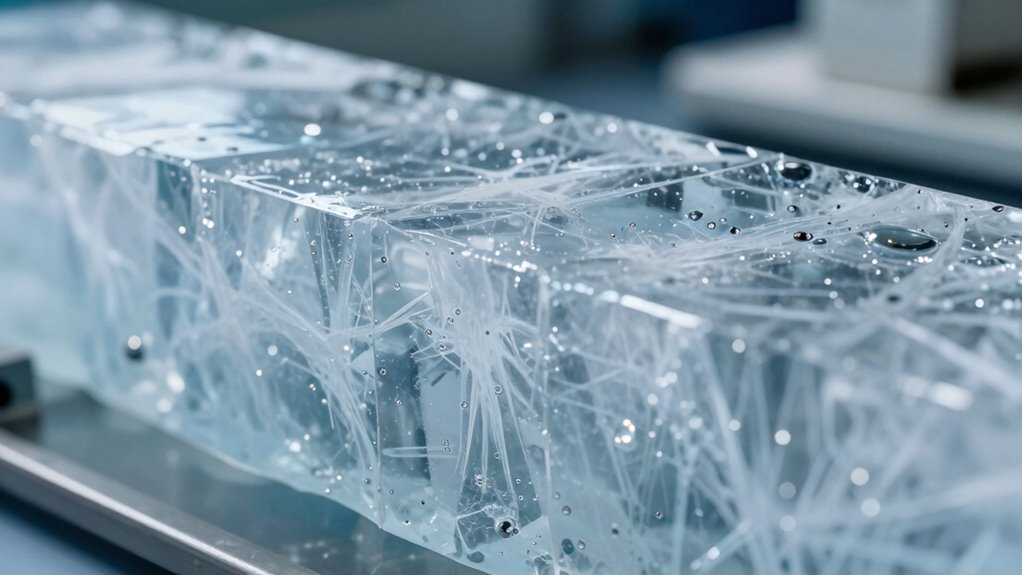
Comparing ice core data with other climate records allows scientists to validate and expand their understanding of Earth’s climate history. By cross-referencing data from ice formation layers, tree rings, and sediment records, you can identify consistent patterns and anomalies. Ice cores capture ancient air through bubble expansion during ice formation, offering direct greenhouse gas measurements. When these measurements align with other climate proxies, confidence in the findings increases. Discrepancies prompt further investigation into factors like local environmental changes or dating inaccuracies. Understanding how ice core data correlates with other records helps reconstruct thorough climate timelines. This multi-source approach ensures a more accurate picture of past climate variability, informing models and predictions for future climate change.
How Studying Past Climate Changes Guides Our Climate Future

Studying past climate changes provides essential insights that help shape our strategies for addressing future climate challenges. Marine sediments reveal long-term climate patterns by preserving layers of organic material and minerals, offering a deep history of Earth’s variability. Tree rings serve as annual records, showing how temperature and rainfall fluctuate over centuries. By analyzing these natural archives, scientists identify how climate responded to past events, such as volcanic eruptions or shifts in greenhouse gases. This knowledge guides us in predicting future trends and developing adaptive policies. Understanding how climate has changed naturally helps us distinguish human influences from natural variability. Ultimately, studying past climate changes empowers us to make informed decisions, mitigate risks, and build resilience against ongoing and future climate shifts.
Frequently Asked Questions
How Accurate Are Ice Core Climate Reconstructions Compared to Other Methods?
Ice core climate reconstructions are highly accurate, especially when you consider factors like ice core calibration and sampling resolution. These methods allow you to precisely interpret past climate data by linking gas bubbles to specific periods. While other techniques, like tree rings or sediment analysis, provide valuable insights, ice cores offer a detailed, direct record of atmospheric conditions over hundreds of thousands of years, making them a reliable tool for climate history.
Can Ice Core Data Predict Specific Future Climate Events?
You can’t rely solely on ice core data to predict specific future climate events. While paleoclimate modeling helps interpret past climate patterns, it provides general trends rather than precise predictions. Think of ice cores as a weather forecast’s hint—valuable for understanding overall climate shifts, but not detailed enough to forecast exact events like storms or heatwaves. They’re an essential piece, but not the whole puzzle for future climate prediction.
How Do Scientists Date Ice Layers Precisely?
You can date ice layers precisely by using layer counting and radiometric dating. Layer counting involves examining annual bands in the ice, much like tree rings, to identify yearly layers. Radiometric dating measures the decay of radioactive isotopes within the ice or embedded particles, providing an absolute age. Combining these methods allows scientists to determine the age of ice layers accurately, helping reconstruct past climate conditions with high precision.
Are There Limitations to the Types of Gases Preserved in Ice?
Think of ice as a delicate vault, safeguarding gases like a treasure chest. Gas preservation can be limited because some gases escape or degrade over time, especially if the ice gets contaminated or warms up. Certain gases may not survive long or could be altered, making it tricky to measure ancient atmospheres accurately. So, ice contamination and the nature of gas preservation pose real challenges for scientists seeking pristine climate records.
What Advancements Are Enhancing Ice Core Analysis Techniques?
You can now benefit from advanced imaging and isotope analysis techniques that greatly improve ice core analysis. These innovations allow you to examine ice layers in higher detail, revealing precise gas compositions and isotopic signatures. As a result, you gain better insights into past climates, climate variability, and atmospheric changes. These advancements make it easier for you to interpret ancient air samples, enhancing our understanding of Earth’s climate history.
Conclusion
By examining tiny bubbles in ice, you decipher the secrets of Earth’s past, understand the shifts in climate, and grasp the impact of gases on our environment. You see the story frozen in time, hear the whispers of ancient atmospheres, and learn how past changes shape your future. With each ice core, you gain insight, with every discovery, you deepen your understanding, and with each step, you become more prepared to face the climate challenges ahead.