
TL;DR
Researchers from more than 50 institutions have published a multi-species atlas cataloguing basal ganglia cell types in humans, macaques, marmosets and mice. The 28-paper package includes findings linking particular cell types to autism, schizophrenia and bipolar disorder, but those findings do not establish causes or treatments.
Researchers from more than 50 institutions have published a 28-paper research package presenting what the reports describe as the first comprehensive, multi-species atlas of basal ganglia cell types, covering humans, macaques, marmosets and mice. Published in Cell and other Cell Press journals with support from the National Institutes of Health’s BRAIN Initiative Cell Atlas Network, the work offers a shared resource for studying how different brain cells may relate to disorders including Parkinson’s disease, schizophrenia and addiction.

Prime made for students and young adults
- Fast, free delivery for dorm and study essentials
- Prime Video and Amazon Music included
- Member-only deals
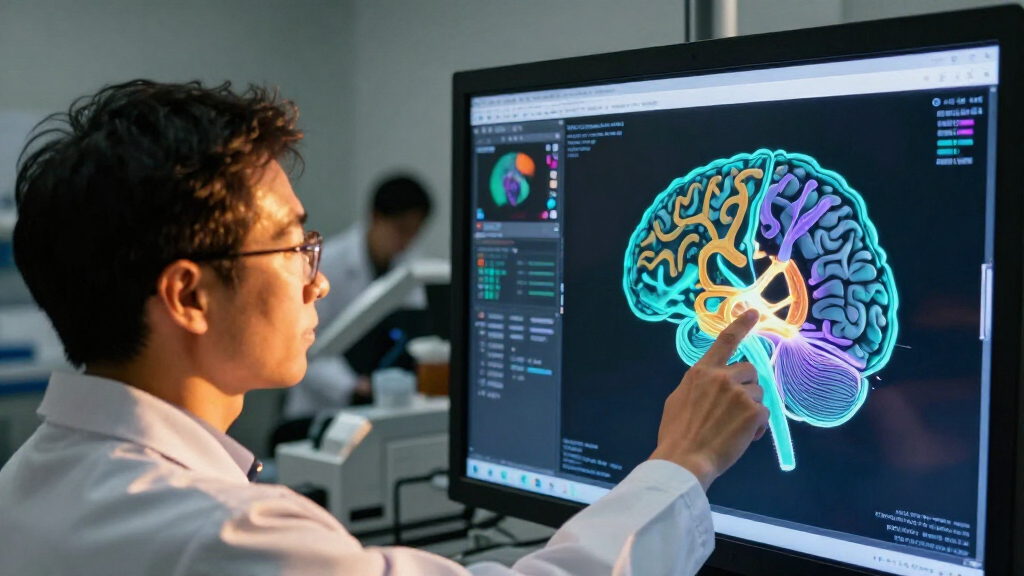
The studies use single-cell molecular analyses to characterize cells in the basal ganglia, a group of structures near the center of the brain involved in movement, decision-making and habit formation. The research package aims to organize findings across species and studies, providing researchers with a more integrated view of the cells and molecular features in this brain region.
Among reported findings, researchers at the University of California, San Francisco identified genetic changes in particular basal ganglia cell types that they said might play a role in autism. The wording is preliminary: the findings point to possible links and do not show that the changes cause autism or that they can already be used to develop a treatment. Separately, Allen Institute researchers reported a previously unrecognized brain-cell type linked to schizophrenia and bipolar disorder. The supplied information does not detail the evidence behind these associations or establish a causal mechanism.
The research package is connected to the NeMO Archive (Neuroscience Multi-Omic Archive), a resource for finding, analyzing and combining data from different studies and technologies. Owen White, a contributing principal investigator and associate director of research collaboration and development at IGS, said the archive holds genomic, transcriptomic, epigenomic and spatial transcriptomic data from more than 50 million brain cells. He said its purpose is to let researchers build on and compare data across projects and institutions.
A shared map of basal ganglia cells
A 28-paper research package maps cell types across four species, giving researchers a shared resource to study brain biology and disease links.
One atlas, four species
Researchers can compare basal ganglia cell types across species without assuming they are identical.
Why the cell map matters
The basal ganglia are involved in movement, decision-making and habit formation.
A shared reference
Cell-level detail can help teams ask more precise questions about this brain region.
Cross-study comparisons
The NeMO Archive helps researchers find and combine data across studies and technologies.
Disease links are early findings
The reports point to possible associations that need further study.
- Cell-type genetic changes that might play a role in autism
- A previously unrecognized cell type linked to schizophrenia and bipolar disorder
- Whether these findings establish causes
- Whether they can lead to clinical tools or treatments
The atlas gives researchers a common reference for investigating how specific cell populations in the basal ganglia differ across species and how their molecular characteristics may relate to disease. That matters because the same brain region participates in several functions, and disorders including movement conditions and psychiatric illnesses may involve different cell types or pathways. A cell-level resource can help researchers frame more precise questions than studies treating the region as a single unit.
Its value also depends on access to the underlying evidence. By bringing together data from multiple studies and technologies through NeMO, the project may make it easier for teams to compare results and test whether patterns seen in one dataset appear elsewhere. White described open access as a way for scientists beyond the original research teams to build on large-scale projects. The atlas is a research tool, however, not a diagnostic test or a treatment, and the reported disease links require further study.
Popular right now

Vitamix VX1 Professional-Grade Blender, 64 oz, Black

De'Longhi Classic Signature Espresso Machine with Adjustable Milk Frother

Sony BRAVIA 6 65-Inch OLED 4K HDR Smart Google TV with Gemini (K-65A60)
As an affiliate, we earn on qualifying purchases.
The basal ganglia are a set of interconnected structures involved in controlling movement as well as aspects of decision-making and learned habits. The supplied research summary says growing evidence has connected this region with a range of brain disorders, including Parkinson’s disease, schizophrenia and addiction. Those broad connections do not mean every disorder has the same cause or that the atlas identifies a single disease pathway.
The new work is part of the NIH-funded BRAIN Initiative Cell Atlas Network, which supports efforts to chart brain cell types. The publication package includes 28 papers in Cell and other Cell Press journals. Its multi-species scope brings human data together with data from macaques, marmosets and mice, allowing researchers to examine similarities and differences across the species without assuming that results in one species directly apply to another.
The cited overview paper is Garcia and colleagues’ “Toward an integrated framework for a human and mammalian brain cell atlas,” published in Cell in 2026. The NeMO Archive predates this release as a platform for neuroscience data; the announcement says the new research adds to its collection. The supplied information does not specify how many of the archive’s more than 50 million cells come from this project.
“The real value of these large research efforts comes when scientists everywhere can build upon them.”
— Owen White, contributing principal investigator and associate director of research collaboration and development at IGS
Disease Links Need Further Testing
The announcement describes possible genetic involvement in autism and a cell type linked to schizophrenia and bipolar disorder, but it does not provide enough detail to assess the strength, size or limits of those findings. A reported association does not establish that a cell type or genetic change causes a condition. The supplied information also does not say whether the findings have been independently replicated or how they vary among individuals.
It remains unclear how the atlas’s cell classifications will translate into explanations of disease, clinical tools or treatments, and when any such applications might be possible. The announcement does not give a detailed account of the methods used in each paper, the number of subjects or samples, or the extent to which the datasets cover different ages and populations. It also does not explain how closely the cell types identified in nonhuman species correspond to those in people.
Researchers Put the Atlas to Use
The immediate next step is for researchers to explore the published studies and associated datasets, compare findings across methods and species, and test the reported disease-related signals in further work. The NeMO Archive is intended to support that kind of cross-study analysis. The supplied announcement does not name a specific follow-up study, clinical trial or release date for an expanded atlas.
For now, the key development is the availability of a shared research resource, alongside early findings that point to questions for further investigation. Whether those findings lead to more detailed explanations of disease biology or, eventually, clinical applications will depend on evidence from future studies.
Source: rss
Key Questions
What does the atlas cover?
It catalogs basal ganglia cell types across humans, macaques, marmosets and mice, drawing on research published in a 28-paper package.
Who supported the research package?
The work was funded by the National Institutes of Health’s BRAIN Initiative Cell Atlas Network.
Does the atlas show what causes autism or other disorders?
No. The reported findings describe possible genetic changes and disease links, but they do not establish that those features cause autism, schizophrenia or bipolar disorder.
What is the NeMO Archive?
It is a neuroscience data resource for discovering and combining research datasets. The announcement says it contains genomic, transcriptomic, epigenomic and spatial transcriptomic data from more than 50 million brain cells.
Source: news-medical.net