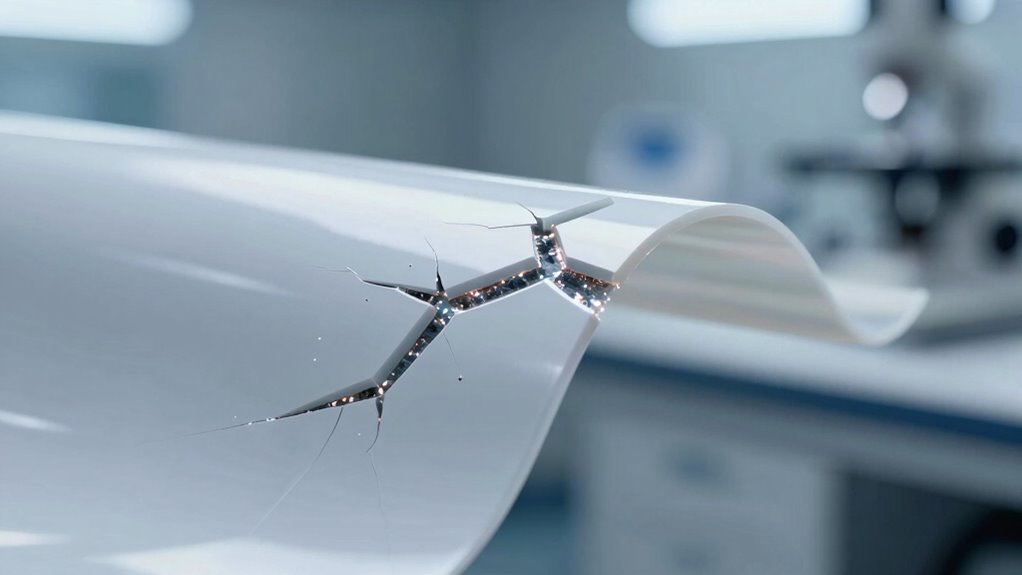

Self-healing materials might sound like sci-fi, but they’re very real. They repair cracks through mechanisms like microcapsules releasing healing agents or nanostructures with reversible bonds that mend damage inside the material. These systems activate automatically when damage occurs, sealing cracks and restoring strength. Today, they’re used in aerospace, automotive, and biomedical devices to improve durability and safety. If you explore further, you’ll discover how these innovative materials are transforming industries and pushing the boundaries of science.
Key Takeaways
- Self-healing materials repair cracks through embedded nanostructures that release healing agents or form reversible bonds upon damage.
- Microcapsules or vascular networks store healing agents that flow into cracks when they rupture, sealing the damage.
- Advanced nanotechnology enables internal repair mechanisms that mimic biological healing processes at the molecular level.
- These materials are designed to withstand environmental conditions, ensuring effective healing in real-world applications like aerospace and automotive industries.
- While they sound futuristic, self-healing repairs are based on proven scientific principles using chemistry, nanotech, and material science.
What Are Self-Healing Materials? An Overview
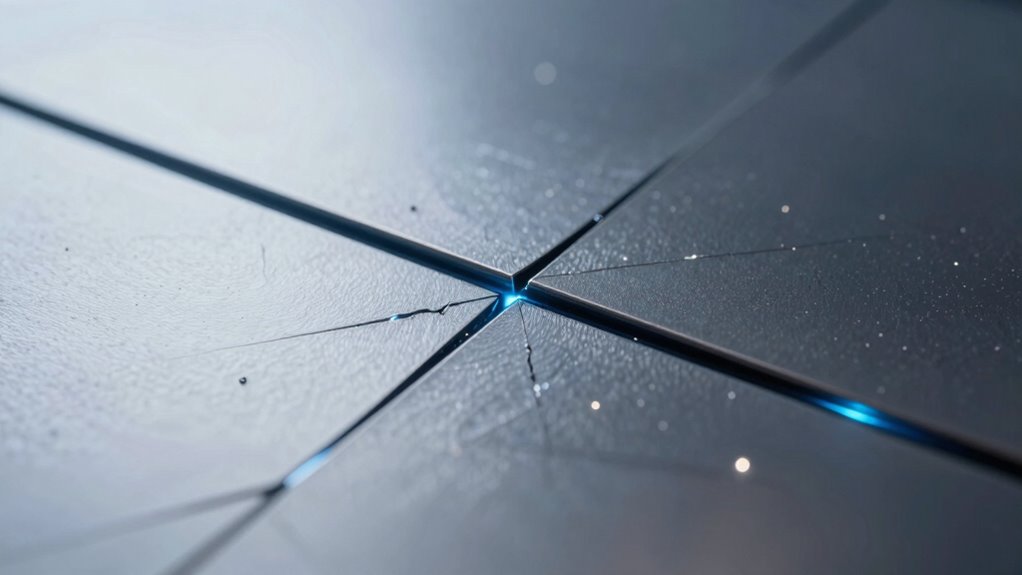
Have you ever wondered how materials can repair themselves after damage? Self-healing materials are engineered innovations that automatically restore their structure, extending their lifespan. Their historical development dates back several decades, initially inspired by biological healing processes. Researchers have since created polymers, composites, and coatings capable of repairing cracks or damages without human intervention. Ethical considerations also come into play, especially regarding environmental impact and safety. Questions arise about the sustainability of these materials and their long-term effects. As technology advances, self-healing materials are becoming more practical and widespread. Understanding their origins and ethical implications helps you appreciate their potential to revolutionize industries like construction, aerospace, and medicine—paving the way for smarter, more durable solutions. Additionally, the integration of energy-efficient processes in manufacturing enhances their sustainability and aligns with the goals of sustainable development. Moreover, ongoing research into self-healing mechanisms aims to improve the efficiency and reliability of these materials across various applications.
How Do Self-Healing Materials Repair Cracks? The Science Explained
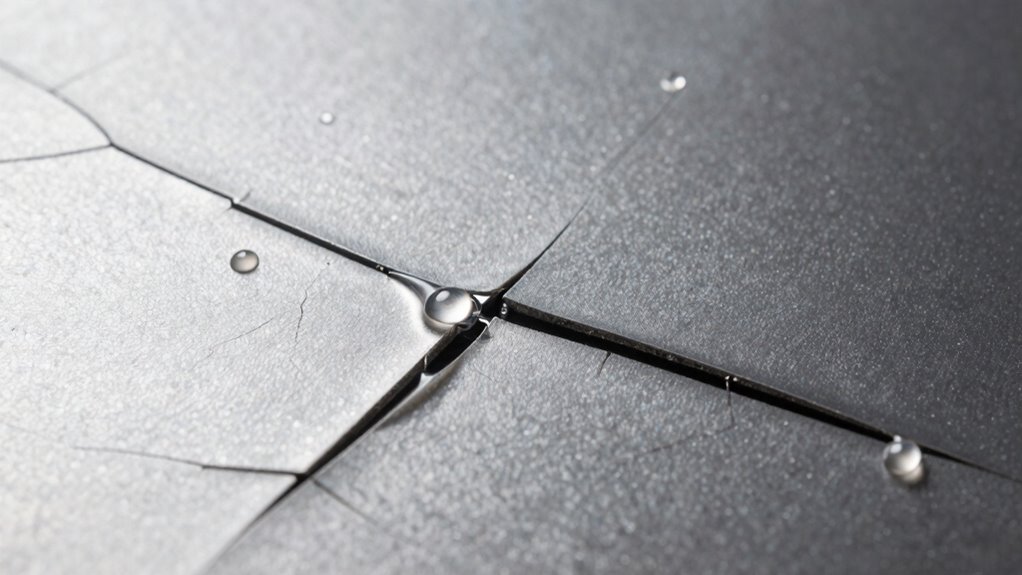
Ever wondered how self-healing materials detect and repair cracks on their own? They do this through advanced mechanisms like nanotechnology integration, which allows tiny particles or capsules embedded in the material to respond quickly when damage occurs. When a crack forms, these nanostructures activate, releasing healing agents that flow into the damaged area. This process effectively seals the crack, restoring the material’s integrity. Additionally, self-healing materials are designed for environmental durability, meaning they can withstand exposure to moisture, temperature fluctuations, and other harsh conditions while still repairing themselves. The inclusion of material systems helps clarify how these innovations are integrated into everyday products for long-term performance. Moreover, ongoing research into self-healing mechanisms continues to expand the potential uses of these materials across various industries. These advancements are critical for creating more sustainable and resilient technological solutions, and recent developments in smart materials further enhance their responsiveness and effectiveness.
Types of Self-Healing Materials and How They Work

What are the main types of self-healing materials, and how do they differ in their repair mechanisms? You’ll find two primary categories: intrinsic and extrinsic. Intrinsic materials use nanostructure design to enable self-healing through reversible chemical bonds or physical interactions, allowing cracks to repair themselves internally. Extrinsic materials rely on external agents, such as microcapsules or vascular networks, that release healing agents upon damage. To understand these better:
- Nanostructure design enhances intrinsic healing by embedding reversible bonds at the molecular level, inspired by bio approaches.
- Microcapsule-based systems release healing agents when cracks rupture capsules, providing a quick repair.
- Vascular systems mimic biological blood vessels, delivering healing agents continuously or on demand.
These approaches show how bio inspired techniques and nanostructure design shape the future of self-healing materials.
Where Are Self-Healing Materials Used Today? Industry Applications

Today, self-healing materials find their way into industries like aerospace, automotive, and healthcare. You’ll see them enhancing aircraft structures, preventing car damage, and improving medical devices. These applications demonstrate how self-healing tech is revolutionizing safety and durability across various fields. Additionally, ongoing research into auditory processing techniques highlights the importance of tailored interventions in communication disorders, further emphasizing the significance of innovative materials and therapies in enhancing quality of life. The development of self-healing polymers continues to expand the potential uses of these materials, promising even more advanced applications in the future. Moreover, understanding the plant properties of herbs can inspire biomimetic approaches in developing more efficient self-healing systems. For instance, some plants naturally repair their tissues, offering insights into biological repair mechanisms that can be mimicked in synthetic materials. Exploring electric dirt bike technology can also lead to smarter, more sustainable repair methods for infrastructure and devices.
Aerospace Structural Components
Self-healing materials are increasingly making their way into aerospace structural components, where they help improve safety and reduce maintenance costs. You benefit from advanced nanotechnology integration that enables these materials to detect and repair microcracks proactively. Their environmental durability ensures they withstand harsh conditions like temperature fluctuations and moisture exposure, vital for aerospace applications. Specifically, you’ll find self-healing composites used in aircraft fuselages and wing structures, providing ongoing protection against fatigue. The three key advantages are:
- Enhanced safety through early crack detection and repair
- Reduced downtime and maintenance expenses
- Increased lifespan of critical components
Self-floating is one of the innovative techniques supporting these durable materials, allowing for better integration with existing structures and environmental conditions.
Automotive Damage Prevention
Have you ever wondered how modern vehicles prevent minor damages from becoming major issues? Self-healing materials play a key role in automotive damage prevention. For example, they enhance tire durability by automatically sealing small punctures, reducing the risk of flats and extending tire life. In addition, self-healing paint helps preserve the vehicle’s appearance by repairing minor scratches and chips, preventing corrosion and maintaining resale value. These advanced materials respond to damage instantly, minimizing the need for repairs and downtime. By incorporating self-healing technology, automakers are making vehicles safer, more resilient, and easier to maintain. As a result, your car can better withstand everyday wear and tear, saving you both time and money while keeping it looking new longer.
Biomedical Device Enhancements
Advances in self-healing materials are making a significant impact in the field of biomedical devices. They enable devices to recover from damage, improving longevity and safety. With nanotechnology integration, these materials can be tailored for specific biomedical applications. For example:
- They repair microcracks in implantable sensors, maintaining accuracy.
- They enhance the durability of flexible catheters, reducing replacement frequency.
- They improve the resilience of wearable health monitors, ensuring continuous operation.
- Incorporating Ceiling Fan Energy Savings principles into device design can further optimize energy efficiency and performance. Additionally, understanding media literacy helps users better interpret device data and avoid misinformation.
What Challenges Do Self-Healing Materials Face? Limitations and Obstacles
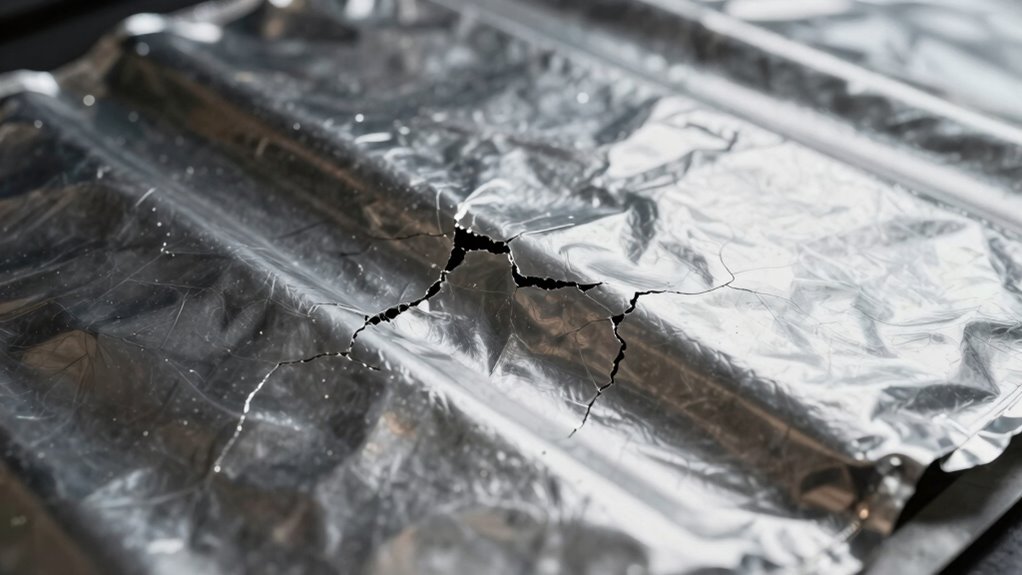
Despite their promise, self-healing materials face significant challenges that limit their widespread adoption. Scalability issues make it difficult to produce these materials cost-effectively on a large scale, hindering commercial use. You might find that laboratory success doesn’t always translate to real-world applications, especially when manufacturing processes aren’t optimized. Environmental durability also poses a major obstacle. These materials may perform well in controlled conditions but can degrade quickly when exposed to moisture, temperature fluctuations, or UV radiation. This limits their reliability over time. Additionally, balancing self-healing capabilities with other material properties—like strength and flexibility—remains complex. Overcoming these obstacles requires continued research to improve durability and develop scalable manufacturing methods.
The Future of Self-Healing Materials: Innovations and Breakthroughs

The future of self-healing materials looks promising as researchers develop innovative solutions to overcome current limitations. Advances in nanotechnology integration are paving the way for smarter, more responsive materials that can detect and repair damage at a microscopic level. You can expect these innovations to enhance durability and efficiency considerably. Additionally, ecological sustainability is becoming a priority, with new materials designed to be environmentally friendly and recyclable. Here are some exciting breakthroughs to watch for:
Self-healing materials will become smarter, more durable, and environmentally sustainable through nanotech innovations.
- Development of nanostructured coatings that enable rapid, autonomous repairs.
- Use of biodegradable self-healing polymers that reduce environmental impact.
- Integration of nanotechnology to improve healing precision and longevity.
- Smart material design that incorporates sensors to monitor structural health in real-time, leveraging advances in material science to create more effective self-healing systems.
Frequently Asked Questions
Are Self-Healing Materials Environmentally Friendly?
Self-healing materials can be environmentally friendly, but it depends on their biodegradability concerns and overall environmental impact. If they use eco-friendly, biodegradable components, they reduce waste and pollution. However, some formulations may contain chemicals that pose environmental risks. You should consider the full lifecycle of these materials, including production and disposal, to determine if they truly benefit the environment. Overall, advancing biodegradable options makes self-healing materials more sustainable.
How Cost-Effective Are Self-Healing Materials Compared to Traditional Ones?
Self-healing materials can be cost-effective over time because they reduce maintenance and replacement costs. When you compare the cost comparison to traditional materials, manufacturing costs may be higher initially due to advanced technology. However, their ability to repair cracks automatically means you save money on repairs and extend the lifespan of products. Overall, investing in self-healing materials can save you money in the long run despite higher upfront manufacturing costs.
Can Self-Healing Materials Repair All Types of Damage?
Sure, self-healing materials can fix many damages, but don’t get carried away—there are damage limitations. Heavy impacts or complex cracks might leave these materials scratching their heads, unable to activate their repair mechanisms. Think of them as the overenthusiastic handyman who’s great for small repairs but gets overwhelmed by major damage. So, while impressive, they’re not miracle workers for every type of crack or break out there.
What Are the Long-Term Durability Prospects of These Materials?
You’ll find that the long-term durability of self-healing materials looks promising, thanks to their enhanced long-term stability and degradation resistance. These materials are designed to maintain their healing abilities over extended periods, resisting environmental factors like moisture and temperature changes. As research advances, expect these materials to become more reliable, ensuring they can withstand the test of time while repeatedly repairing cracks, making them suitable for long-lasting applications.
Are There Any Safety Concerns With Self-Healing Materials?
You might worry about safety with self-healing materials, but generally, they’re safer than you think. Toxicity concerns are minimal because most use non-toxic healing agents, and accidental activation is rare with proper design. Still, it’s essential to thoroughly test these materials for any unforeseen reactions. While not entirely risk-free, the potential benefits outweigh the dangers, making them a promising, safe innovation if properly regulated.
Conclusion
Self-healing materials are revolutionizing the way you think about durability and maintenance. They’re not just science fiction anymore—they’re transforming industries and saving you from endless repairs. As researchers uncover new possibilities, these materials are becoming more reliable and versatile than ever. Imagine a world where cracks mend themselves faster than you can blink—your everyday life could soon be filled with such miraculous resilience. The future of self-healing materials is truly a game-changer.