TL;DR

Prime made for students and young adults
- Fast, free delivery for dorm and study essentials
- Prime Video and Amazon Music included
- Member-only deals
Researchers tested semi-transparent colored cadmium telluride solar panels above broccoli in an agrivoltaic experiment in Sweden. The broccoli produced roughly the same yield as unshaded plants but took 25 additional days to reach harvest; the researchers say larger, multi-season trials are needed.
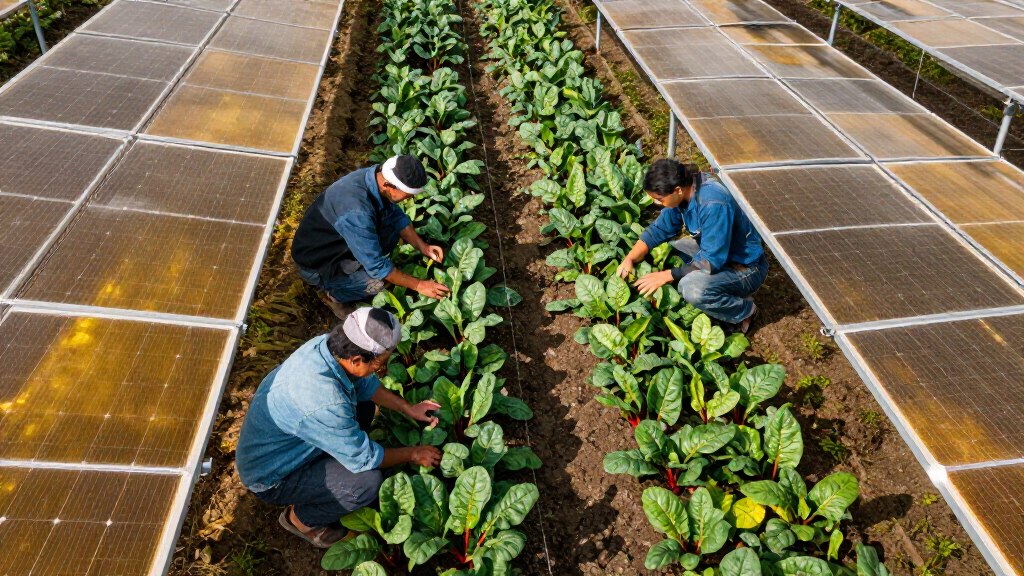
Researchers in Sweden found that broccoli grown beneath semi-transparent, colored cadmium telluride (CdTe) solar panels produced roughly the same yield as unshaded broccoli, although it took 25 additional days to reach harvest. The preliminary agrivoltaics experiment, reported in Cell Reports Physical Science, tested panels that generate electricity while allowing some red and blue light to pass through to crops.
The panels filtered incoming sunlight, converting some wavelengths into electricity while transmitting most red light and some blue light. The light reaching the plants had a magenta appearance. The approach aims to share sunlight between energy production and crop growth on the same land, rather than relying on fully opaque panels that can block light from crops.
In the trial, broccoli under the panels grew more slowly, but researchers reported roughly similar harvest yields to those of unshaded plants. The shaded growing conditions also reduced vapor pressure deficit, a measure related to the atmospheric demand for water from plants. The report says plant biomass per sunlight was 2.8 to 4.5 times higher in the shaded treatment than in the unshaded comparison; that result is a measure of biomass efficiency, not a reported increase in harvested broccoli yield.
Nutrient results were mixed. The study reported that levels of macronutrients including calcium, magnesium and phosphorus were similar to or higher than in unshaded broccoli, while some micronutrients, including iron, copper and zinc, were slightly lower. The experiment does not establish how the panels would affect commercial production, farm income or electricity output across larger areas.
Agrivoltaics places solar generation and crop production on the same land, potentially easing competition between food production and energy development. The broccoli result suggests that, under the tested conditions, a colored semi-transparent panel can generate electricity without reducing the crop’s final yield, though it lengthened the time to harvest. That trade-off matters to growers: a similar yield is not necessarily equivalent to the same production schedule, labor needs or number of growing cycles.
The study also examines a design choice that may affect how crops respond to panels: which parts of the light spectrum are transmitted. Rather than treating shade as a simple reduction in sunlight, these panels filter light and alter the crop’s growing environment. Whether that combination benefits farms will depend on crop type, local climate, installation costs, electricity revenue and the practical effects of a slower-growing crop. The experiment offers an early result, not evidence that the technology is ready for widespread farm use.
Popular right now

Roborock RockMow X130H Wire-Free 4WD Robot Lawn Mower

LG 77-Inch OLED evo C6 4K Smart TV

De'Longhi Magnifica Start Fully Automatic Espresso Machine with Milk Frother, Silver
As an affiliate, we earn on qualifying purchases.
Earlier Trials and the Light Trade-Off
Conventional solar panels are opaque, so placing them over crops can reduce the light available to plants. Semi-transparent photovoltaic designs seek to divide incoming sunlight between electricity generation and photosynthesis. The Swedish trial used colored CdTe thin-film panels that transmitted most red wavelengths and some blue wavelengths, while converting much of the remaining light into electricity.
The report describes a 2020 study of a different spectral-filtering design. Those panels let red light through while harvesting green and blue wavelengths. Basil yields were similar under the panels, while spinach yields fell; researchers estimated that combining crop and electricity sales could increase income for spinach growers by 35 percent on the same land. That estimate came from the earlier study and should not be treated as a finding about the newer broccoli experiment.
The article also cites climate research suggesting agrivoltaics could be relevant across a broad, sunny band of the United States, from Texas to Nebraska and west to California. It says using one percent of U.S. farmland for agrivoltaics could cover up to 20 percent of national electricity needs. Those figures describe potential at a national scale, not outcomes measured in the Swedish broccoli trial.
Questions Beyond One Broccoli Trial
The research is described as preliminary. The available report does not provide enough detail to establish how the results would change across larger plots, multiple seasons or different climates. It is also unclear whether other crops would respond similarly, or whether the extra 25 days to harvest would affect planting schedules and total annual output under commercial conditions.
The reported findings do not settle the economics. The source material gives no measured electricity production, installation or maintenance costs, or farm revenue from the trial. It also does not establish why the nutrient differences occurred or whether they would be consistent across seasons. The biomass-efficiency comparison should not be read as proof of higher crop yield: the reported broccoli harvest was roughly similar to the unshaded comparison.
Larger and Longer Field Tests
The study authors call for testing on larger plots, over multiple growing seasons and in locations with different climates and sunlight conditions. Such work could show whether the yield pattern holds beyond this experiment, how dependable the longer time to harvest is, and whether the filtered-light design works for crops beyond broccoli.
Further trials would also need to report crop performance alongside electricity generation and farm economics to assess how the system performs as a combined food-and-energy project. Until those results are available, the study supports continued testing of colored, semi-transparent CdTe panels in agrivoltaics, but does not establish their commercial viability.
Key Questions
What did the broccoli experiment find?
Broccoli beneath the semi-transparent colored panels produced roughly the same yield as unshaded plants, according to the report, but needed 25 more days to reach harvest.
What makes the panels semi-transparent?
The panels convert some wavelengths of sunlight into electricity while transmitting most red light and some blue light to the crops. The filtered light gives the plants a magenta cast.
Did the panels increase broccoli yield?
The report says final broccoli yield was roughly similar under the panels and in the unshaded comparison. It separately reports greater biomass produced per unit of sunlight under shade; that is not the same as a higher harvested yield.
Are these panels ready for commercial farms?
The study is preliminary and does not establish commercial readiness. Larger plots, multi-season trials, different locations and data on electricity output and costs are still needed.
Source: anthropocenemagazine.org