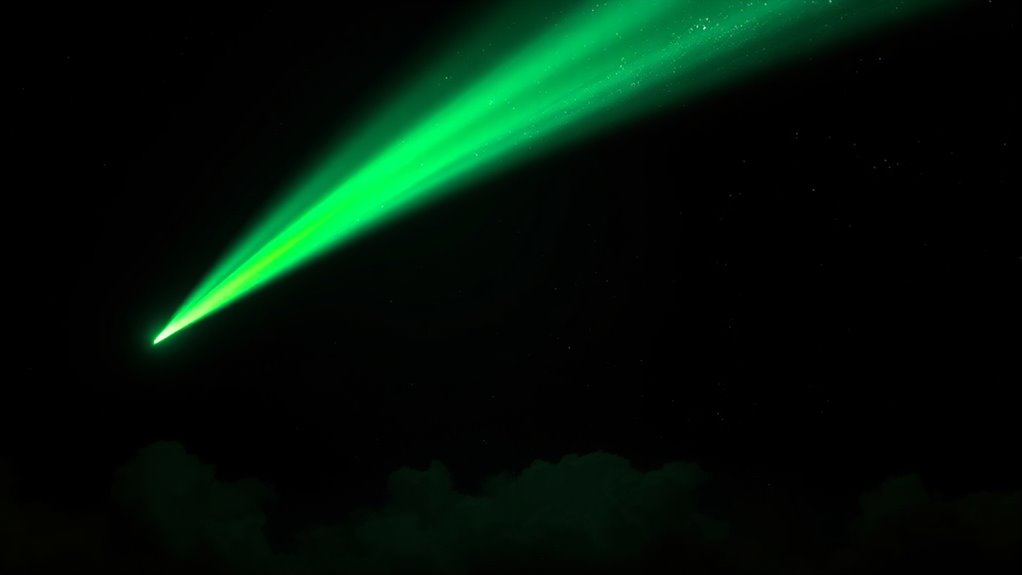

A rare green comet is approaching Earth, flashing brightly in the night sky for the first time in about 50,000 years. Its vibrant hue is caused by diatomic carbon gas glowing near the Sun, making for a stunning sight. To see it, find a dark, clear spot away from city lights and use binoculars or a telescope. Stay patient and attentive—there’s more about this historic event that you’ll want to explore.

Get school and study supplies delivered free — and shop member deals
- Fast, free delivery on millions of items
- Access to Prime Big Deal Days deals on October 6–7
- Prime Video, Amazon Music and more included
Key Takeaways
- A rare green comet is currently visible from Earth, offering a unique celestial display.
- It has traveled through the solar system for tens of thousands of years before approaching Earth.
- The comet’s green color results from diatomic carbon gas glowing near the Sun.
- This event is the first such comet to light up the skies in approximately 50,000 years.
- Observing the comet requires dark skies, clear weather, and possibly binoculars or a telescope for best view.

A rare green comet is currently making its way toward Earth, offering skywatchers a once-in-a-lifetime opportunity to witness a celestial spectacle. This extraordinary visitor, believed to have traveled through the solar system for tens of thousands of years, is set to light up the night sky with its vibrant hue and glowing tail. As you prepare to observe this cosmic wonder, understanding its composition and knowing the best viewing guidelines will enhance your experience. The comet’s appearance can be further appreciated by considering how its composition influences its brightness and color. Comet composition plays a significant role in its striking appearance. The green color you’ll see is primarily caused by diatomic carbon (C₂) gas, which glows when sunlight excites it as the comet approaches the Sun. This gas, along with other volatile ices like cyanogen, sublimates from the comet’s nucleus, creating the luminous coma and tail. The nucleus itself is composed of a mixture of dust, rock, and frozen gases—essentially a dirty snowball. When sunlight hits these materials, they vaporize and emit light, giving the comet its distinctive glow. The green hue is a visual indicator of the presence of diatomic carbon, which is a short-lived molecule that only exists when the comet is near the Sun. The more volatile material the comet contains, the brighter and more colorful it appears in the sky. To catch this celestial display, you’ll want to follow some viewing guidelines. First, find a dark location away from the bright lights of city streets. Light pollution can obscure the comet’s vivid colors and delicate tail. Check the comet’s predicted position in the night sky, which varies depending on your location, and plan to observe it during clear, moonless nights for maximum visibility. Use binoculars or a telescope if possible; while the comet may be visible to the naked eye, optical aid will reveal more detail, especially its tail and surrounding coma. Be sure to arrive early, as the comet’s brightness will change as it moves closer or farther from Earth, and atmospheric conditions like clouds or haze can affect your view. Patience is key—wait for the sky to fully darken, and give your eyes time to adapt to the darkness for the best viewing experience.
Frequently Asked Questions
How Often Do Green Comets Appear in Our Solar System?
You might wonder about comet frequency and celestial sightings, especially green comets. These rare visitors appear roughly once every 5,000 years, making them extraordinary events in our solar system. Most comets are more common, but green comets like this one are exceptional due to their unique color and brightness. So, when you see a green comet, know you’re witnessing a rare celestial sight that only happens once in a very long while.
Can Viewing the Comet Be Harmful to Human Health?
You might wonder if viewing the green comet can harm your health. Generally, it’s safe to look at it with your naked eye, but avoid staring directly for long periods to protect your eyes. Don’t forget eye safety — use proper viewing methods if needed. Also, there’s little pollution risk from just observing the comet, but avoid lingering near bright lights or pollution sources that could affect your health.
What Causes the Comet’s Green Coloration?
You might wonder what causes the comet’s green color. Spectroscopic analysis shows that this vivid hue results from the chemical composition of the comet’s nucleus, primarily due to the presence of diatomic carbon (C2) gas. When sunlight hits the comet, it excites these molecules, causing them to emit a green light. This fascinating process reveals the unique makeup of the comet and helps scientists understand its origins.
Will the Comet Be Visible With Regular Binoculars or Only Telescopes?
Imagine gazing up at the night sky like a detective searching for clues. You’ll likely see the comet with binoculars, as it offers good binoculars visibility, making it perfect for casual stargazing. However, for detailed viewing and to truly appreciate its green glow, a telescope is recommended. So, while binoculars can reveal it, a telescope provides a clearer, more stunning view of this rare celestial visitor.
How Can I Best Prepare to Observe This Rare Event?
To best prepare for observing this rare event, start by researching celestial navigation tips so you can find the comet easily. Check the weather forecast to guarantee clear skies and avoid light pollution for better visibility. Remember sky safety: don’t look directly at the sun, and use proper viewing equipment like binoculars or telescopes. Bring a flashlight with a red filter, dress warmly, and enjoy this extraordinary cosmic spectacle responsibly.
Conclusion
As the green comet draws closer, you can’t help but wonder what secrets it’s hiding and what it’ll reveal when it finally lights up our skies. Will it dazzle you with its emerald glow or disappear just as mysteriously as it appeared? With history in the making and so little time left before it’s gone, you’ll want to stay alert. This rare visitor promises an unforgettable moment — don’t miss the chance to witness something truly extraordinary.
Fall Picks
fall essentials
As an affiliate, we earn on qualifying purchases.