
TL;DR

Prime made for students and young adults
- Fast, free delivery for dorm and study essentials
- Prime Video and Amazon Music included
- Member-only deals
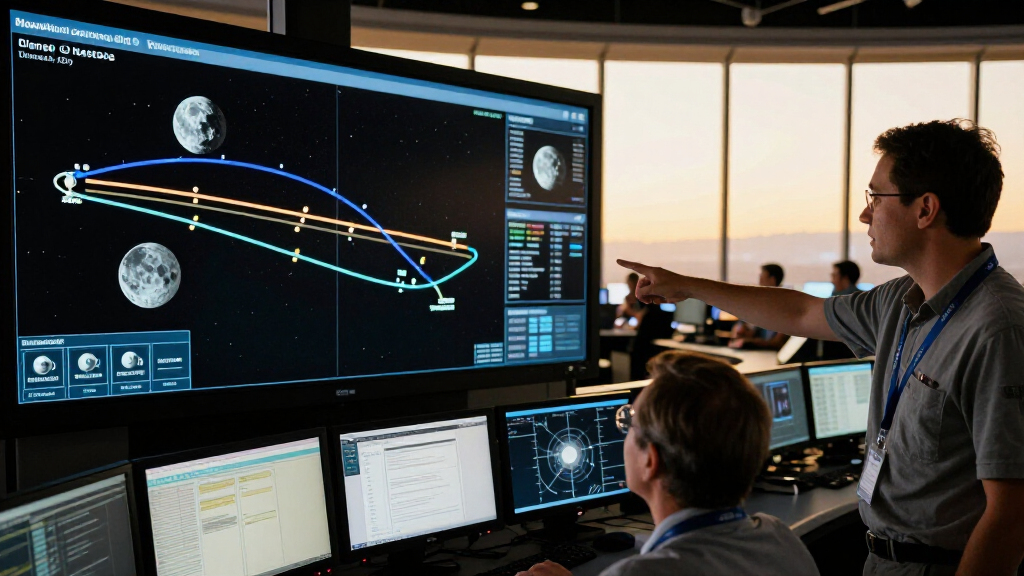
NASA Langley engineer Richard Spolzino helps identify and document information NASA still needs for future Moon and Mars missions. His team says its published data gaps have grown from about 25 last year to a projected 60 by the end of this year, and the list is being used to assess proposed instruments and prioritize data return.
NASA engineer Richard Spolzino is helping the agency identify information it still needs about the Moon and Mars, with documented data gaps now used to guide instrument proposals and decisions about which lunar data to send back first. In a NASA profile, Spolzino said his team at Langley Research Center had started with roughly 25 published gaps last year and was on track to publish 60 by year-end.
A data gap records a question NASA cannot yet answer well enough for mission planning. Spolzino described the process as documenting what is unknown, why the information matters, what existing evidence falls short, and a measurable target that industry and international partners can work toward. The effort sits within Moon Base’s mission architecture and systems interoperability work at Langley, in Hampton, Virginia.
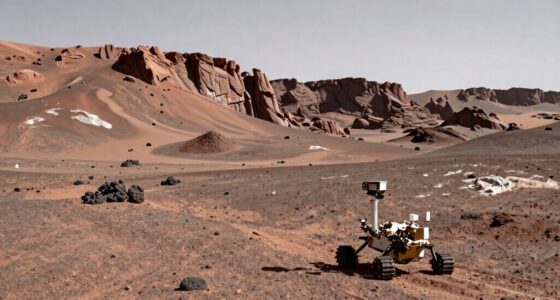
One example is the geotechnical behavior of lunar regolith, the loose material covering the Moon’s surface. Knowing how much load it can support and how it shears can affect rover routes and whether a habitat foundation is viable. Those are connected system questions: a resource plant, the vehicles that supply it, and the people or equipment using its output all depend on compatible assumptions.
Spolzino said the gap list has informed work related to the Griffin-1 lunar mission being prepared by Voyager, formerly Astrobotic. His team did not select the mission’s instruments, which were already set, but helped prioritize which data should be transmitted first over a limited communications link. Separately, he has compared proposed instruments—including spectrometers, sample collection tools and technology demonstrations—with the published gaps, providing leadership with information to assess whether a proposal addresses a documented need.
How Data Gaps Shape Mission Choices
NASA’s return to the Moon requires hardware and teams to work as a connected system. A rover’s safe operating limits, a lander’s communications capacity and the scientific value of an instrument can depend on information that is incomplete before a mission flies. Spolzino’s account describes a process for making those unknowns visible and measurable while there is still time to use them in planning.
The approach also gives potential partners a clearer way to identify where their work could help. If a proposal can be tied to a defined gap, decision-makers can compare its expected contribution with other candidate instruments. That does not establish that a proposal will be selected or that a gap will be resolved; it provides a common reference point for review.
For readers following lunar exploration, the profile offers a view of work that receives less attention than launch dates and spacecraft hardware. Mission readiness also depends on decisions about missing information: what must be learned, what can be measured on the surface, and what data can be brought home through constrained communications.
Popular right now

Vitamix 5200 Professional-Grade Blender, 64 oz. Container, Black

Shark Navigator Robot Vacuum with Self-Empty Base, Dark Grey (RV2120AE)

Vitamix Propel Series 750 Professional-Grade Blender, 4 Programs, Black
As an affiliate, we earn on qualifying purchases.
From Physics to Systems Architecture
Spolzino’s route to NASA was indirect. He began college studying history, switched to physics at Santa Clara University and worked on interstellar dust polarization at Lick Observatory. After deciding that observational research’s overnight schedule did not suit him, he pursued Navy Officer Candidate School with hopes of flying jets. That plan did not work out, and he later entered a University of Houston graduate program combining aerospace engineering and space architecture.
In this setting, space architecture means systems-level planning rather than designing a building. Spolzino said he was drawn to how components fit together, such as the relationship between a lunar oxygen plant, the rovers supplying it, processing equipment and users of the resource. A University of Houston program connected with Johnson Space Center introduced him to NASA alongside industry and government options. He said the scope of the problems and the chance to contribute to decisions about lunar exploration attracted him to the agency.
NASA’s profile says his team’s published gap count has risen from roughly 25 last year, with 60 expected by the end of this year. The figures describe the team’s documented gaps over that period; the profile does not provide a comparison with all NASA knowledge needs or specify how many gaps have been closed.
What the Gap Count Leaves Open
The NASA profile does not provide the full data-gap list, explain how gaps are ranked, or report how many have been resolved. It also does not give the detailed criteria leadership uses to decide whether an instrument proposal advances, or say which proposals were ultimately selected. Spolzino’s account describes the use of the list in evaluation, but does not quantify its effect on mission outcomes.
The profile refers to Griffin-1 as an upcoming mission in the account of the work, but supplies no launch date or detailed schedule. It also does not specify the communications capacity at issue, how priorities are set across different kinds of data, or which findings the mission is expected to return. The projected total of 60 gaps is a team target reported by Spolzino, not a measure of all remaining uncertainty about the Moon or Mars.
More Gaps and Proposal Reviews
Spolzino said the team was on track to reach 60 published data gaps by year-end. The profile does not state a later publication date or identify a release schedule for the list. As more gaps are documented, NASA leadership can use them to compare proposed instruments against stated information needs, while partners can use the targets to identify possible contributions.
For the Griffin-1 work described in the report, the next relevant milestone is the mission’s eventual data return, which would show what information can be transmitted through the available link. The profile gives no date for that milestone. It also leaves open whether future instrument proposals will lead to new selections or how the gap process will affect specific mission plans.
Key Questions
What does NASA mean by a data gap?
It is a documented knowledge need: what NASA does not yet know, why the information matters, what current evidence lacks, and a measurable target for further work.
How many gaps has Spolzino’s team identified?
Spolzino said the team began with roughly 25 published gaps last year and was on track to reach 60 by the end of this year. The profile does not say how many have since been closed.
How has the gap list been used for lunar missions?
For work related to Voyager’s Griffin-1 mission, the team helped prioritize which data to transmit first through a limited communications pipeline. Spolzino also said he compared proposed instruments with the documented gaps to inform leadership’s review.
Did NASA select instruments based on the gap list?
The profile says the list is used to assess proposals and help filter candidates. It does not name selected instruments or establish that the gap list alone determined any selection.
Source: primary