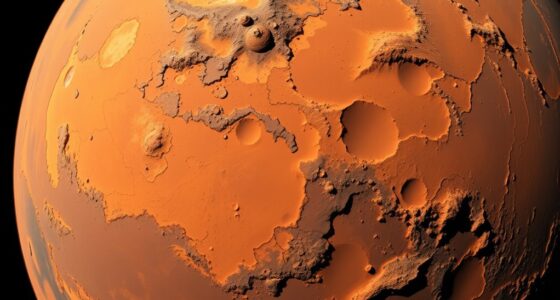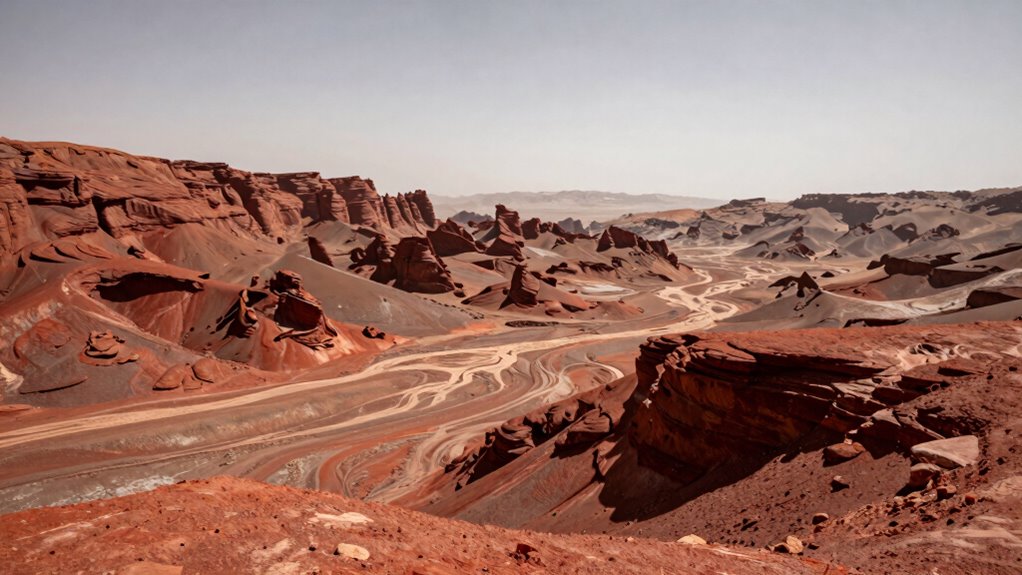

Mars looks red because its surface contains iron-rich minerals that oxidize in the thin atmosphere, creating a layer of rust called iron oxide. This oxidation gives the planet its distinctive hue, a sign of a history involving volcanic activity and interactions with water. Past climates shaped its surface, revealing how water once flowed there. To discover more about what the red color reveals about Mars’s history, keep exploring; there’s much more to uncover.
Key Takeaways
- Mars’s surface is covered with iron-rich minerals that oxidize, creating a reddish hue known as iron oxide or rust.
- The red color indicates a history of volcanic activity and water interactions that led to mineral deposits and surface oxidation.
- Evidence of past water shaping Mars’s landscape suggests liquid water once existed, contributing to mineral formation and oxidation.
- The widespread oxidation of minerals reflects environmental changes from wetter, habitable conditions to arid, oxidizing environments.
- Future missions aim to analyze surface minerals further, revealing insights into Mars’s climatic history and past habitability.

United Scientific Mineral ID Kit – 7 Pieces – Includes Streak Plates, Glass Plate, Dropper Bottle, Magnet, Nail, & Hand Lens – Great for Geology Classrooms & Basic Field Testing
A fun way to explore the variety of techniques that geologists use to identify rocks and minerals
As an affiliate, we earn on qualifying purchases.
As an affiliate, we earn on qualifying purchases.
Why Does Mars Look Red? The Surface Chemistry Explained
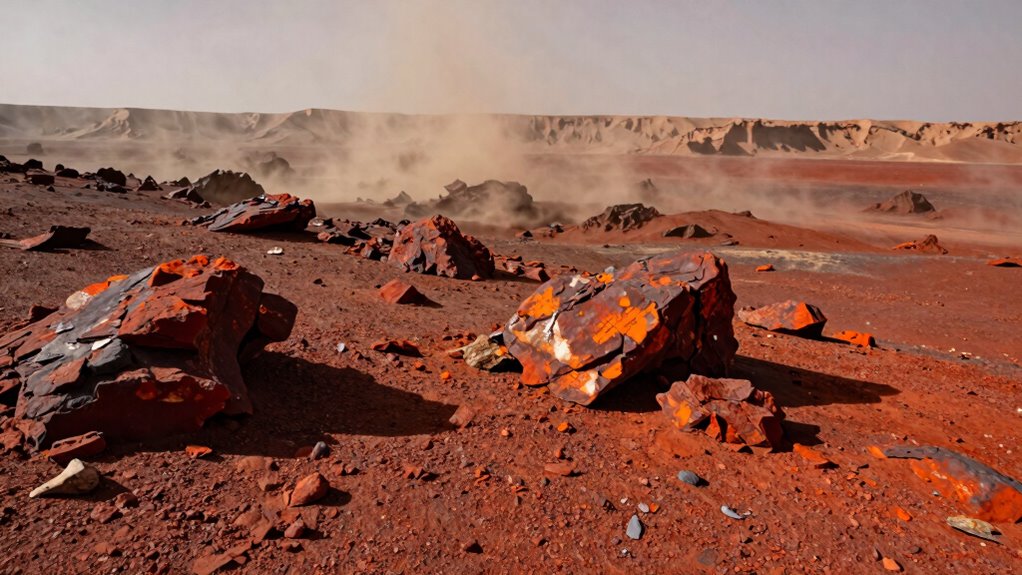
Mars appears red because its surface is covered with iron-rich minerals that oxidize when exposed to the planet’s thin atmosphere. This process, known as surface oxidation, transforms the minerals into rusty, reddish compounds that give Mars its striking hue. The planet’s geology reveals a history of volcanic activity and mineral deposits rich in iron, which readily reacts with oxygen. As these minerals oxidize over time, they form a layer of iron oxide, or rust, on the surface. This oxidation process is a key reason why Mars looks so distinct from Earth’s lush, green landscape. The surface chemistry, driven by iron mineralogy and oxidation, creates the iconic red appearance that captures everyone’s imagination and hints at the planet’s dynamic geological past. Additionally, the presence of highly reactive minerals influences the rate at which oxidation occurs, contributing to the vivid coloration. Some studies suggest that surface erosion also plays a role in exposing fresh mineral surfaces, sustaining the planet’s characteristic hue. Moreover, ongoing planetary weathering processes continue to shape and refresh the surface, maintaining Mars’s distinctive red appearance. These processes are driven by solar radiation, which accelerates chemical reactions on the surface and influences the planet’s overall appearance. This continual surface transformation provides clues about the planet’s geological history and past environmental conditions.

Learning Resources Cross-Section Earth Model – World Globe for Classroom, Elementary Geography for Students, Geology, Educational STEM, Teaching Science, Gifts for Teachers ages 5+
HANDS-ON EARTH EXPLORATION – Interactive 2-piece foam globe splits in half to reveal Earth's layers, perfect for visual…
As an affiliate, we earn on qualifying purchases.
As an affiliate, we earn on qualifying purchases.
How Water and Climate Shaped Mars’s Surface Over Time
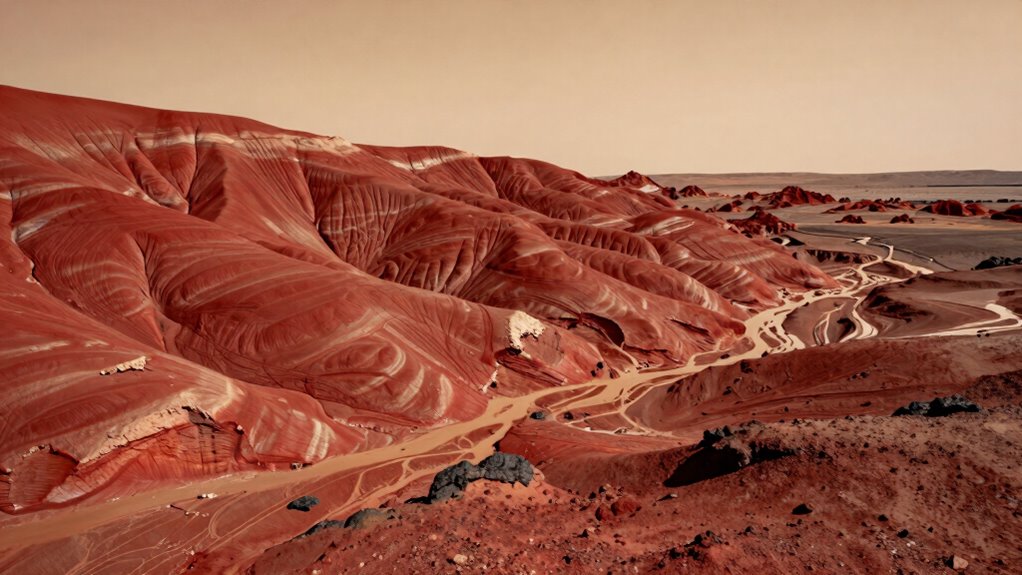
Although the planet’s surface appears arid and barren today, evidence shows that water once played a crucial role in shaping it. Climate change over billions of years caused periods of warmth and wetness, carving valleys and forming riverbeds. These changes influenced mineral distribution, creating clay minerals and sulfates that you can detect today. As Mars’s climate shifted to colder, drier conditions, much of its water evaporated or froze, leaving behind sediment layers and dried lakebeds. These climate fluctuations left distinct surface features that reveal how water once flowed across Mars. By studying mineral deposits and landforms, you can trace the planet’s climatic history, understanding how water shaped its surface and contributed to the red planet’s complex geological story. Understanding mineral deposits also helps scientists interpret Mars’s past climate variations, providing insights into its climatic evolution. Additionally, the presence of certain mineral deposits indicates the historical existence of standing bodies of water, further supporting the idea of a wetter past. Recognizing these surface features allows researchers to reconstruct the planet’s shifting environmental conditions over time. Moreover, analyzing the mineral composition can reveal the duration and extent of ancient water activity, shedding light on Mars’s climatic history.

Mars 12758
New Compact Design with 0.250" x 0.031" Quick Connect Terminals
As an affiliate, we earn on qualifying purchases.
As an affiliate, we earn on qualifying purchases.
Where Do the Iron-Rich Minerals on Mars Come From?
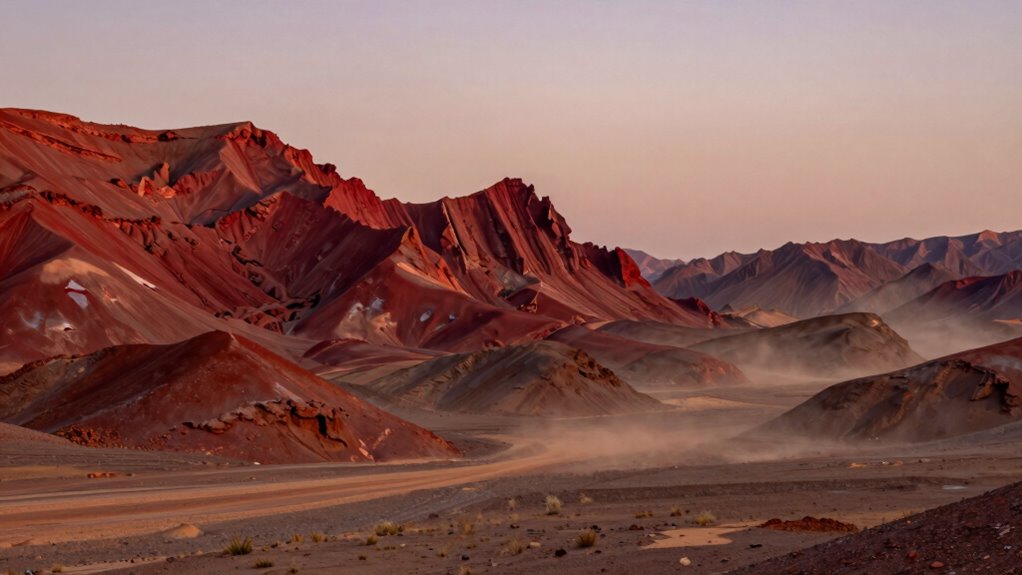
The iron-rich minerals on Mars primarily originate from the planet’s volcanic activity and its surface interactions with water. When volcanic eruptions occur, they release lava containing iron compounds. Over time, oxidation processes transform these iron minerals into rust-like deposits, giving Mars its signature red hue. Water also plays a key role by reacting with iron-rich rocks, creating mineral deposits that are rich in iron oxides. These processes create layered mineral deposits, which scientists can analyze to understand Mars’s history. Here’s a quick look at how these processes work:
| Source | Process | Result |
|---|---|---|
| Volcanic eruptions | Iron in lava oxidizes over time | Iron-rich mineral deposits |
| Water interaction | Reacts with iron minerals | Rust-colored surface |
| Surface interaction | Oxidation accelerates deposits | Distinct mineral layers |

1000X Handheld Microscope for Kids : 4K 2.0" Screen Rechargeable Telescope and Camera Combo with 6 Slides, Perfect for Indoor Outdoor Exploration, Portable Edu for Age 3-12 Children
Curiosity Begins Here: Designed for kids aged 3+ who love exploring the world around them, this handheld microscope…
As an affiliate, we earn on qualifying purchases.
As an affiliate, we earn on qualifying purchases.
What Does Mars’s Red Color Tell Us About Its Past Environment?
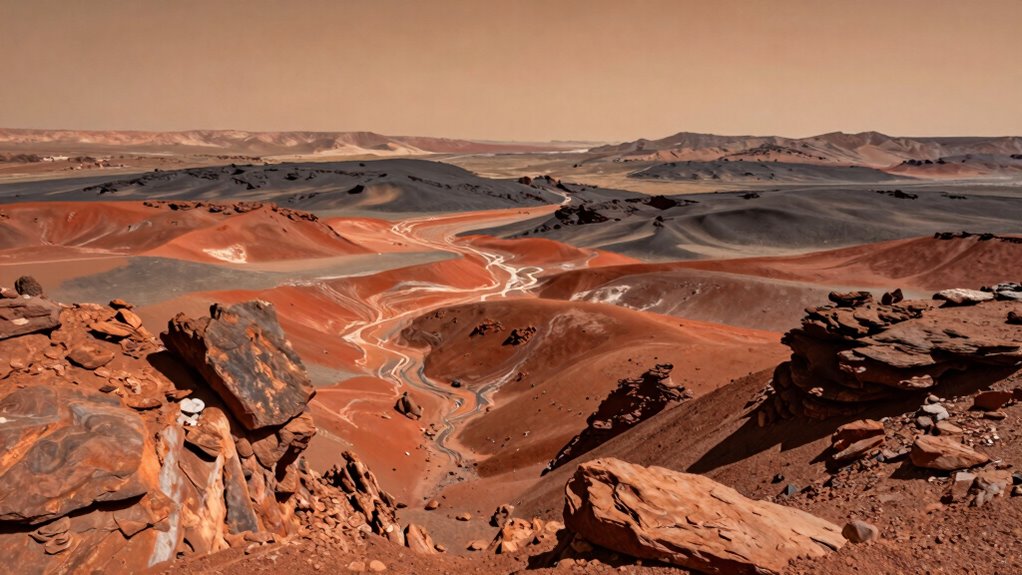
The planet’s pervasive red hue reveals a history shaped by both water and volcanic activity. Oxidation processes played a key role in transforming minerals on Mars’s surface, giving them their distinctive color. When iron-rich minerals interact with water and oxygen, they undergo oxidation, forming iron oxides that stain the terrain red. The mineral composition, including hematite and other iron oxides, indicates that liquid water once existed on Mars, possibly in lakes or streams. This suggests a wetter past environment capable of supporting water-related processes. The widespread presence of oxidized minerals points to a planet that experienced significant environmental changes, evolving from a potentially habitable world to its current arid, oxidized state. These clues help us understand Mars’s dynamic geological and environmental history. Additionally, studying the mineral evidence can provide insights into the planet’s past climate conditions. Exploring these mineral signatures enables scientists to reconstruct Mars’s ancient water history and better understand how its environment has transformed over time. Recognizing the Oxidation processes that occurred on Mars offers valuable clues about its climatic evolution and habitability potential.
What Future Missions Will Reveal About Mars’s Red Surface and Past
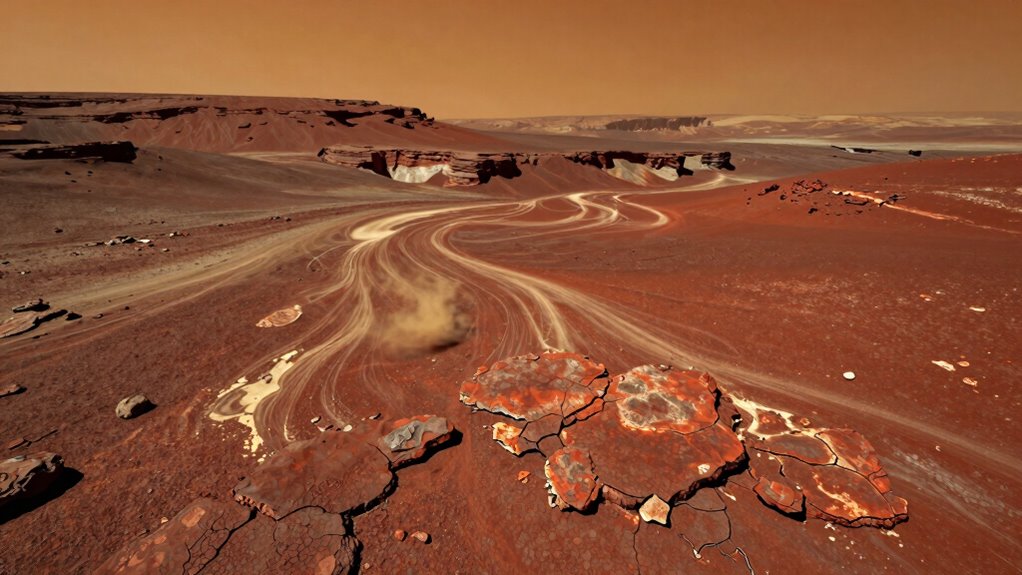
Future missions to Mars are poised to deepen our understanding of its red surface and the planet’s ancient environment. By analyzing planetary geology directly, scientists will uncover how Mars’s surface features formed and changed over time. Upcoming exploration tools, such as advanced rovers and orbiters, will study mineral compositions, detect signs of past water activity, and reveal the planet’s geological history. These missions aim to identify ancient habitable zones and clarify how the red surface developed its distinctive hue. You’ll gain insights into Mars’s climate evolution and the processes that shaped its landscape. Ultimately, future exploration will help us piece together Mars’s past, revealing whether it once supported life and how its iconic red surface came to be. Field‑of‑view and imaging‑scale examples will assist scientists in interpreting the planet’s surface features from orbit. Additionally, geological analysis techniques will enable researchers to better understand the mineral transformations that contributed to the planet’s characteristic coloration. Moreover, advancements in remote sensing technology will enhance our ability to analyze surface mineralogy in greater detail. Furthermore, planetary surface processes will be better understood through in-situ measurements and remote observations, shedding light on the factors that caused the surface to turn red. The study of surface mineralogy will provide critical clues about the planet’s past climate conditions.
Frequently Asked Questions
Could Mars’s Red Color Affect Future Colonization Efforts?
Mars’s red color won’t substantially hinder future colonization efforts. However, it does pose terraforming challenges, like managing dust and soil composition. The vivid hue can affect habitat visibility, making it easier to spot structures from afar, aiding navigation and safety. Overall, while the red surface presents some obstacles, it’s unlikely to prevent colonization; instead, it offers opportunities to adapt and develop innovative solutions.
How Does Mars’s Atmosphere Influence Its Surface Coloration?
Your curiosity about Mars’s surface coloration is spot-on. Its atmosphere, rich in carbon dioxide but lacking in oxygen, promotes surface oxidation—think rust on a giant scale. This atmospheric composition causes iron-rich minerals to react with oxygen, turning the landscape a fiery red. So, the thin, CO2-dominated atmosphere directly influences the surface’s oxidized, reddish appearance, making Mars look like a rusted relic from a cosmic scrapyard.
Are There Any Other Planets With Similar Red Hues?
Yes, other planets like Mercury and some moons such as Io display similar red hues. These colors result from planetary mineralogy and surface oxidation, which produce iron-rich compounds. You can see this in Mercury’s oxidized surface and Io’s sulfurous deposits. These processes mirror Mars’s surface oxidation, giving them their distinctive red or reddish-brown appearance, highlighting how planetary mineralogy shapes surface coloration across our solar system.
What Role Did Volcanic Activity Play in Mars’s Red Appearance?
Did you know that volcanic activity shaped 90% of Mars’s surface? Volcanic mineralogy and magma composition played vital roles in its red appearance. When volcanoes erupted, they released iron-rich minerals, which oxidized upon exposure to Mars’s thin atmosphere, turning the surface a rusty red. This extensive volcanic activity created vast lava plains, giving Mars its iconic hue and revealing a planet once marked by fiery eruptions.
Can the Red Surface Hide Underground Water Reservoirs?
Yes, the red surface can hide underground water reservoirs. You might find subsurface ice and mineral deposits beneath the rust-colored soil, especially near the poles or in certain craters. These hidden reservoirs hold clues about Mars’s past climate and potential habitability. Exploration missions use radar and other techniques to detect these underground features, revealing water that’s trapped beneath the surface, despite the planet’s dry, red appearance.
Conclusion
Think of Mars as a cosmic painting, its red hue a story etched in every brushstroke. The iron-rich minerals and ancient water tell a tale of a once-thriving world, now waiting to be uncovered. Future missions are like explorers peeling back layers of this vibrant canvas, revealing secrets of its past. By understanding Mars’s redness, you’re opening a window into a planet’s history, reminding us that even in the silence of space, stories are waiting to be told.