TL;DR

Prime made for students and young adults
- Fast, free delivery for dorm and study essentials
- Prime Video and Amazon Music included
- Member-only deals
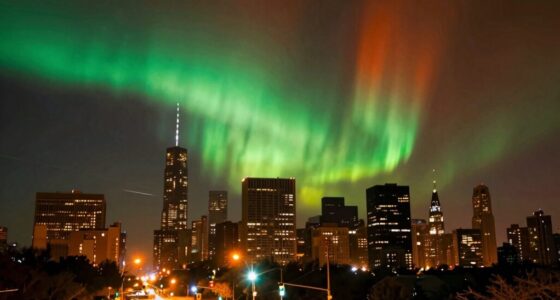
A solar storm has caused a significant increase in aurora borealis activity across northern Europe. The event is confirmed by multiple observatories and weather agencies, attracting many viewers. The development highlights the ongoing impact of solar activity on Earth’s atmosphere.
Scientists have confirmed that a recent solar storm has caused a widespread display of aurora borealis across northern Europe, including parts of Scandinavia and the UK. The event is linked to increased solar activity and is considered one of the most intense displays in recent years, drawing large crowds and attracting scientific attention.
The aurora borealis, also known as the northern lights, was visibly active from late March 2024, with reports from observatories in Norway, Sweden, Finland, and the UK confirming heightened geomagnetic activity. The solar storm, classified as a G4 (severe) level by NOAA’s Space Weather Prediction Center, was triggered by a coronal mass ejection (CME) from the sun, which struck Earth’s magnetic field earlier this week.
According to the European Space Agency (ESA), the geomagnetic storm caused the auroras to extend farther south than usual, with some sightings reported as far south as central England. Local weather conditions, including clear skies, have contributed to optimal viewing conditions, leading to widespread public interest and media coverage.
Why This Aurora Event Matters for Earth and Space Weather
This event underscores the ongoing influence of solar activity on Earth’s magnetic environment. Severe geomagnetic storms can disrupt satellite communications, GPS signals, and power grids. The confirmed intensity of this storm also highlights the importance of monitoring space weather to mitigate potential technological impacts.
Furthermore, the widespread visibility of the aurora borealis offers valuable opportunities for scientific research and public engagement with space weather phenomena, emphasizing the need for continued observation and preparedness.
aurora borealis viewing binoculars
As an affiliate, we earn on qualifying purchases.
As an affiliate, we earn on qualifying purchases.
Previous Solar Storms and Aurora Activity in Recent Years
Solar activity, including coronal mass ejections and solar flares, fluctuates on an approximately 11-year cycle. The last major geomagnetic storm occurred in 2021, which caused minor disruptions but was less intense than the current event. Historically, significant aurora displays have been linked to high solar activity periods, with notable events recorded in 1989 and 2003.
This recent storm is part of a predicted increase in solar activity, as solar cycle 25 continues to evolve. Experts had warned of heightened geomagnetic disturbances during this period, making the current display consistent with forecasts.
“The intensity of this solar storm is notable, and the auroras we’ve observed are among the most vivid in recent years. It highlights the importance of monitoring space weather for both scientific and practical reasons.”
— Dr. Maria Jensen, ESA Space Weather Specialist
portable thermal binoculars for northern lights
As an affiliate, we earn on qualifying purchases.
As an affiliate, we earn on qualifying purchases.
Unconfirmed Aspects of the Solar Storm’s Impact
While the geomagnetic storm’s intensity is confirmed, the full extent of potential disruptions to satellite systems, power grids, and communications remains unclear. Experts warn that further geomagnetic activity could follow as the solar storm propagates, but specific impacts are still being assessed.
Additionally, the duration of the aurora display and its visibility in more southern regions are still uncertain, depending on geomagnetic conditions and local weather.
night vision telescope for aurora viewing
As an affiliate, we earn on qualifying purchases.
As an affiliate, we earn on qualifying purchases.
Monitoring and Preparing for Potential Continued Space Weather Effects
Scientists and space weather agencies will continue to monitor solar activity and geomagnetic conditions closely over the coming days. Authorities in affected regions are advised to prepare for possible disruptions to technological systems, although no major outages have been confirmed yet.
Public interest in auroras is expected to remain high, with forecasts indicating that aurora activity could persist or intensify if additional solar eruptions occur.
warm insulated outdoor jacket for northern lights
As an affiliate, we earn on qualifying purchases.
As an affiliate, we earn on qualifying purchases.
Key Questions
What causes the aurora borealis?
The aurora borealis is caused by charged particles from the sun colliding with Earth’s magnetic field and atmosphere, producing colorful light displays at high latitudes.
How often do such solar storms occur?
Solar storms happen irregularly, often in cycles related to the solar activity cycle, which lasts about 11 years. Major storms are less frequent but can have significant effects.
Can the aurora be seen in other parts of the world?
Yes, auroras can sometimes be visible in lower latitudes during intense geomagnetic storms, but they are most common and vivid in northern regions like Scandinavia, Canada, and Alaska.
Are there risks to technology from this storm?
Severe geomagnetic storms can disrupt satellite operations, GPS signals, and power grids. Authorities are monitoring the situation, but no major disruptions have been confirmed yet.
Source: google-trends
Halloween Picks
halloween
As an affiliate, we earn on qualifying purchases.