

A solar superstorm would severely disrupt your life by damaging power grids, causing blackouts that last days, and knocking out communication systems, including satellites and internet. It can affect GPS signals, stop transportation, and compromise emergency services. Infrastructure vulnerabilities mean long recovery times if unprotected. To stay safe, communities need to improve resilience, prepare for outages, and upgrade systems. If you want to understand how this could impact you and what can be done, keep exploring.
Key Takeaways
- A solar superstorm can cause widespread power outages by damaging transformers and overload electrical grids.
- Satellite systems, GPS, and communication networks could be severely disrupted or destroyed.
- Critical infrastructure like hospitals and emergency services may face prolonged failures, impacting public safety.
- Economic activities relying on electronics and data timing could suffer significant disruptions and losses.
- Communities would need enhanced resilience measures and preparedness strategies to recover quickly from such events.
What Is a Solar Superstorm, and How Does It Occur?
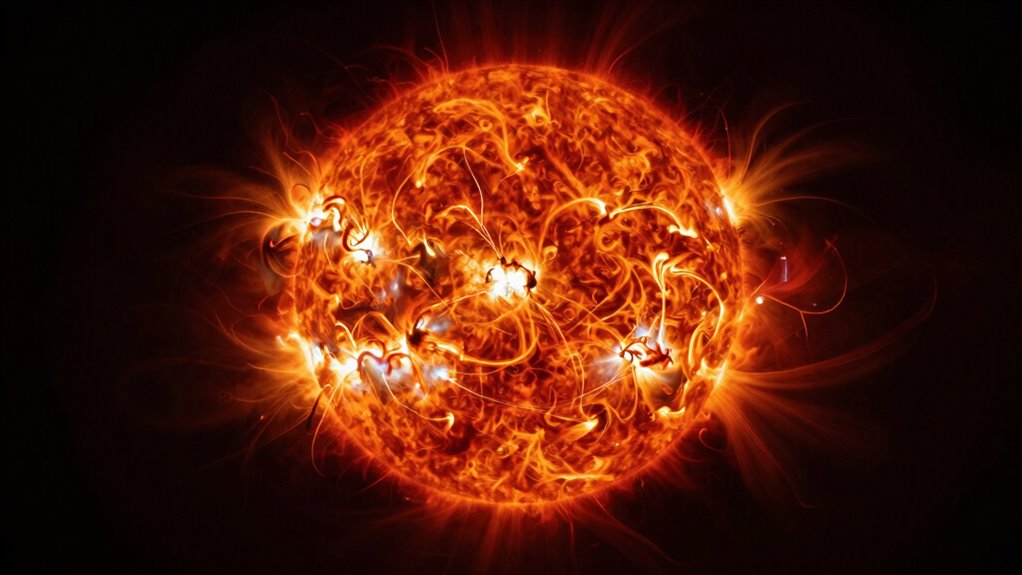
A solar superstorm is an intense burst of solar activity that releases massive amounts of energy and charged particles into space. These events are also called solar storms and are driven by powerful magnetic disturbances on the Sun’s surface. When the Sun’s magnetic fields become twisted or unstable, they suddenly realign, releasing energy in a process called magnetic reconnection. This releases a solar storm, propelling energetic particles toward Earth at high speeds. As these particles reach Earth, they interact with our planet’s magnetic field, causing a magnetic disturbance. This disturbance can disrupt satellites, power grids, and radio communications. Solar superstorms are rare but incredibly powerful, resulting from extreme magnetic activity that unleashes vast amounts of solar energy into space. European cloud infrastructure can play a vital role in monitoring and mitigating the impacts of such space weather events.
How Does a Solar Superstorm Disrupt Power and Communication?

When a solar superstorm hits, your power grid can experience widespread failures, causing blackouts that last for hours or even days. Communication systems, including satellites and internet infrastructure, can become disrupted or completely knocked out. These effects can cripple daily life and critical services, making it essential to understand how they happen. Additionally, the storm can induce geomagnetic disturbances that threaten trusted resources and essential infrastructure. Such disturbances can also interfere with air and heat systems, impacting home comfort and safety. The potential for widespread damage underscores the importance of understanding geomagnetic disturbances and how they affect our modern electrical and communication networks. Recognizing the vulnerabilities in power grids can help in developing strategies to mitigate these disruptions and protect vital systems during a solar superstorm. Moreover, ongoing research into space weather prediction aims to improve early warning systems, allowing for better preparedness and response.
Power Grid Failures
Solar superstorms can cause widespread disruptions to power grids by inducing intense geomagnetic currents that overload and damage transformers and other critical infrastructure. These surges can lead to widespread blackouts, affecting homes, hospitals, and essential services. Modern power grids, especially those integrating renewable energy sources, are vulnerable to such geomagnetic disturbances because they rely on sensitive equipment and interconnected systems. Urban planning that doesn’t account for geomagnetic risks exacerbates the problem, leaving cities more exposed to prolonged outages. Restoring power can take weeks or even months, depending on the damage. To mitigate these failures, utilities need to implement safeguards like protective devices and better planning that considers space weather impacts, ensuring resilience against future solar superstorms. Additionally, understanding the impact of geomagnetic storms on infrastructure can help prioritize protective measures and improve response strategies. Implementing space weather forecasting can provide early warnings, giving utilities time to prepare and protect critical systems before a storm hits.
Communication System Disruptions
Power grid failures during solar superstorms often grab headlines, but communication systems face equally serious threats. When a powerful solar flare strikes, it releases intense radiation and charged particles that can trigger a magnetic storm. These storms distort Earth’s magnetic field, inducing electric currents that can damage satellites, radio signals,, and undersea cables. As a result, satellite communications may become unreliable or completely cut off, disrupting GPS, internet,, and phone services. Radio waves, especially high-frequency signals used in aviation and emergency communications, can be absorbed or scattered, making communication difficult or impossible. This disruption can last hours or days, hampering coordination and response efforts. In fundamental terms, a solar superstorm has the potential to cripple our modern communication infrastructure, leaving us disconnected when we need it most. Filtration systems are also vulnerable during such events, which can further impact indoor communication and safety systems.
Effects on Satellites, GPS, and Modern Tech
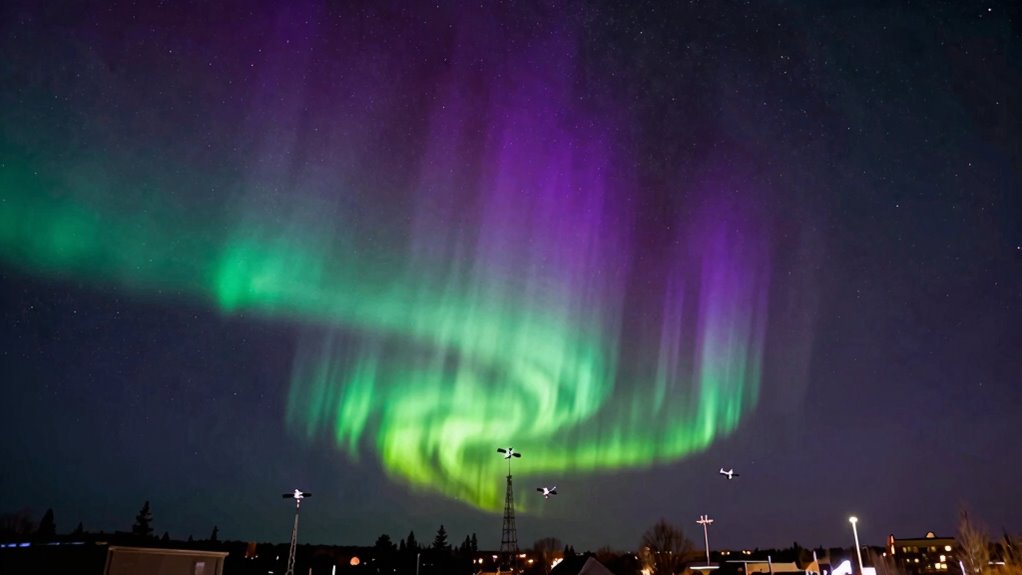
During a solar superstorm, satellites can experience disruptions or even failures that impact your daily services. GPS signals might become inaccurate or lost, affecting navigation and timing systems you rely on. These effects highlight how modern technology is vulnerable to solar activity, potentially causing widespread inconvenience. Additionally, the impact on energy distribution systems could lead to widespread power outages, further complicating recovery efforts. Such disturbances underscore the importance of space weather monitoring to mitigate risks and protect critical infrastructure. Recognizing vulnerable systems is essential for developing effective strategies to minimize the impact of future solar storms. Moreover, understanding solar wind behavior can help predict and prepare for such events more effectively. Being aware of system resilience can also guide investments in infrastructure hardening and emergency planning.
Satellite Disruptions and Failures
Have you ever wondered how a massive solar superstorm can instantly disrupt the satellites we rely on daily? During intense space weather events, high-energy particles and electromagnetic radiation can overload satellite systems, causing failures or even complete shutdowns. Many satellites lack sufficient resilience against such solar activity, making them vulnerable to damage or malfunctions. This can lead to interruptions in communication, broadcasting, and weather monitoring. Power surges may disable onboard electronics, and radiation can degrade satellite components over time. If a superstorm strikes, satellite operators might struggle to control or repair affected units promptly. As a result, our modern tech infrastructure, dependent on satellite signals, could face widespread disruptions, highlighting the importance of designing more resilient satellites to withstand the impacts of space weather.
GPS Signal Interference
Ever wondered how a solar superstorm can interfere with GPS signals and disrupt your daily life? When a superstorm strikes, intense solar radiation can cause GPS signal interference by disrupting the satellites that relay your location data. This interference can lead to navigation system failures, making it difficult to rely on GPS for directions, transportation, and timing services. Critical infrastructure, such as aviation, shipping, and emergency response, depends heavily on accurate GPS signals. As a result, a solar superstorm could cause widespread confusion and delays, forcing many to revert to traditional navigation methods. Your smartphone, vehicle, and even financial systems could experience interruptions, highlighting just how vulnerable modern technology is to solar-induced disruptions. Additionally, smart home technology that relies on precise timing and location data could be affected, impacting routines and security systems. The reliance on electric power makes modern systems even more susceptible to widespread outages during such events. Moreover, the disruption of satellite communications could hinder weather forecasting and disaster response efforts, which are crucial during emergencies. A disruption to communication networks could also isolate communities and delay emergency responses, increasing the disaster’s overall impact. Increasing reliance on digital infrastructure amplifies these vulnerabilities, putting communities at greater risk during solar storms.
What Infrastructure Risks Come With a Solar Superstorm?
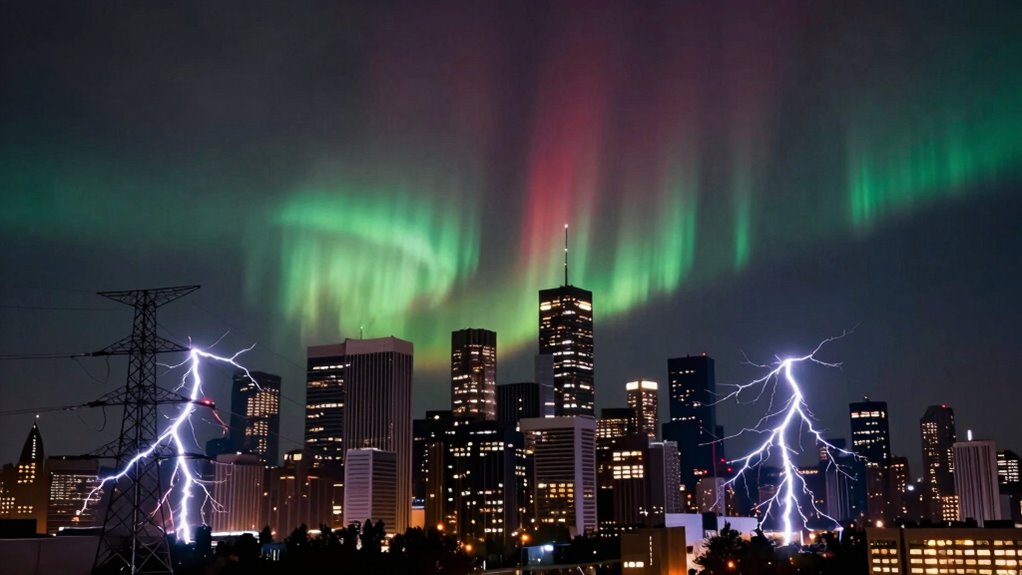
A solar superstorm can severely disrupt critical infrastructure by inducing powerful geomagnetic currents that overload and damage electrical systems. These currents exploit grid vulnerabilities, risking widespread blackouts and equipment failures. Transformers and other essential components may overheat or sustain permanent damage, leading to prolonged outages. Power grids with limited infrastructure resilience are especially at risk, as they lack the capacity to withstand such intense geomagnetic activity. This vulnerability highlights the importance of infrastructure resilience in safeguarding communities against space weather events. Implementing geomagnetic storm safeguards is crucial for minimizing potential long-term damage and ensuring rapid recovery. Additionally, the economic impact of widespread infrastructure failure underscores the need for comprehensive risk assessment and contingency planning to mitigate potential damages. Developing early warning systems can provide critical lead time to prepare and protect vulnerable assets before the storm hits.
How Can We Prepare and Build Resilience?

To effectively prepare for a solar superstorm, you need to focus on strengthening infrastructure and developing all-encompassing response plans. Building community resilience and enhancing emergency preparedness are key. You can achieve this by:
Strengthen infrastructure, build resilience, and develop comprehensive plans to prepare for a solar superstorm effectively.
- Upgrading power grids with protective measures
- Stockpiling essential supplies and backup power sources
- Conducting regular emergency drills with your community
- Educating residents about solar storm risks and safety protocols
- Establishing communication networks that survive geomagnetic disturbances
- Ensuring your home EV charging setup is resilient, including safe installation practices, to maintain mobility and power during disruptions.
These steps help ensure your community can withstand disruptions and recover faster. Strengthening infrastructure reduces vulnerability, while fostering community resilience creates a unified, prepared response. By planning ahead, you can minimize chaos and protect lives, property, and critical services during a solar superstorm.
Long-Term Impacts of a Solar Superstorm on Society

Preparing your community to withstand the immediate effects of a solar superstorm sets the stage for understanding its prolonged societal impacts. Long-term, society will face challenges in economic recovery and societal adaptation. Power grid failures could persist, causing disruptions in daily life and commerce. Over time, communities might develop new infrastructure and backup systems, fostering resilience. Societal shifts may include changes in communication, transportation, and energy consumption. To visualize these impacts:
| Impact Area | Long-Term Effect |
|---|---|
| Economic Recovery | Slow, requiring new industries |
| Societal Adaptation | Increased reliance on local resources |
| Infrastructure Resilience | Upgrades and redundancies |
| Social Cohesion | Greater community cooperation |
Understanding these effects helps you prepare for a more resilient future.
Frequently Asked Questions
Could a Solar Superstorm Cause Widespread Power Outages Globally?
Yes, a solar superstorm could cause widespread power outages globally. You’d experience electromagnetic interference that disrupts power grids and damages transformers, leading to blackouts. Satellite damage is also likely, affecting communication and navigation systems. The storm’s intense energy can overload electrical systems, making recovery difficult. Preparing for such events involves strengthening infrastructure and safeguarding satellites to reduce the risk of prolonged outages worldwide.
How Often Do Solar Superstorms Occur Historically?
Imagine lightning strikes on a predictable schedule, but instead of clouds, it’s the solar cycle. Historically, solar superstorms occur roughly once every 11 years, aligning with solar maximums shown in historical records. These cosmic fireworks are rare but impactful, making you feel like you’re caught in a celestial game of chance. While not frequent, their potential to disrupt daily life keeps scientists watching the sun’s fiery mood swings closely.
Are Current Satellites and Tech Systems Prepared for a Superstorm?
Your current satellites and tech systems are somewhat prepared for a superstorm thanks to satellite shielding and improved resilience measures. However, technological vulnerabilities still exist, especially for older or less protected infrastructure. While agencies are working to upgrade systems and improve defenses, a powerful solar superstorm could still cause significant disruptions, affecting communication, navigation, and power grids. Staying aware of these vulnerabilities helps you understand the importance of ongoing improvements.
What Immediate Safety Measures Should Individuals Take During a Superstorm?
Think of yourself as a sailor steering stormy seas—you need to stay safe. During a superstorm, you should immediately seek shelter away from windows and electrical devices. Grab your personal emergency kit, including water, snacks, and a flashlight. Use your communication plan to stay in touch with loved ones, ensuring everyone knows where to meet if needed. Stay calm, stay informed, and avoid unnecessary risks until the storm passes.
Is There Ongoing Research to Predict or Prevent Solar Superstorms?
Scientists are actively working on solar storm forecasting to better predict superstorms and develop superstorm mitigation strategies. You should stay informed about space weather alerts from agencies like NOAA, as they use advanced satellite data and models to track solar activity. These efforts aim to give you early warnings, helping you prepare and protect your electronics, communication systems, and power sources from potential damage caused by solar superstorms.
Conclusion
A solar superstorm would challenge your power, disrupt your communication, and threaten your technology. It would force you to face outages, delays, and vulnerabilities you never imagined. It would demand resilience, preparedness, and adaptation from you. It would remind you that your reliance on technology is also your vulnerability. And so, you must stay vigilant, stay ready, and stay resilient—because in facing the storm, your strength lies in your preparedness, your awareness, and your determination.