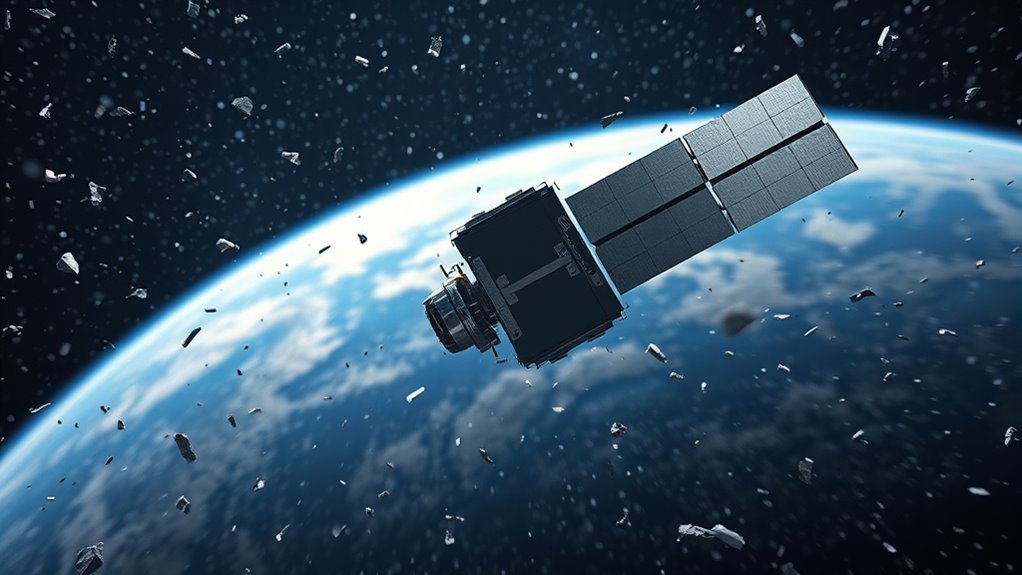

Satellite operators are constantly maneuvering to dodge the growing threat of space debris flying at over 17,500 mph. This debris, from tiny paint flecks to defunct satellites, increases collision risks and complicates satellite safety. To avoid damage, satellites perform evasive maneuvers that drain fuel and limit lifespan. With debris levels rising and tracking small fragments challenging, the space junk crisis worsens. Keep exploring to understand how this critical issue affects your space-based services and future missions.
Key Takeaways
- Satellites frequently perform collision avoidance maneuvers to evade space debris traveling at high speeds.
- Tracking systems monitor large debris, but small fragments remain a significant collision risk.
- Increased debris density raises the likelihood of chain reactions, worsening the space junk crisis.
- Active debris removal and international efforts aim to reduce collision risks and protect space assets.
- Satellite operators must act swiftly to execute evasive maneuvers, conserving fuel and extending satellite lifespan.
Space Junk Crisis
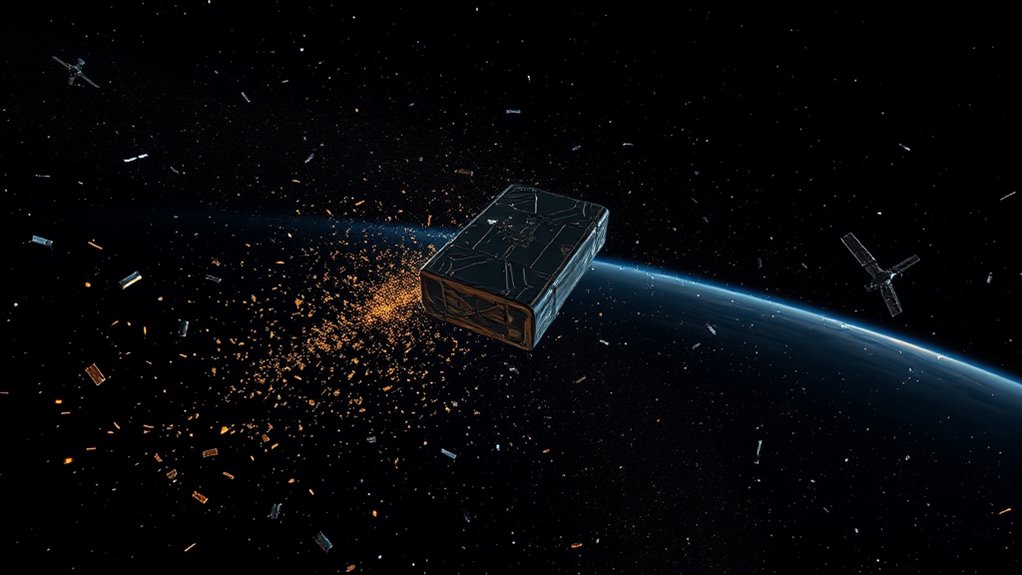
The growing problem of space junk threatens the safety and sustainability of satellite operations and future space missions. Every day, thousands of pieces of space debris orbit the Earth, ranging from tiny paint flecks to defunct satellites and spent rocket stages. These remnants travel at incredible speeds, often exceeding 17,500 miles per hour, making even the smallest fragment potentially destructive. As you rely more on satellite technology for communication, navigation, weather forecasting, and defense, the risk posed by space debris becomes increasingly urgent. Collisions with space debris can cause catastrophic damage to active satellites, disrupting services you depend on daily. It’s a critical issue that demands immediate attention to safeguard satellite safety and maintain the functionality of space-based infrastructure.
Space junk threatens satellite safety and future missions, traveling at high speeds and risking catastrophic collisions.
When satellites encounter space debris, they often have to make split-second decisions to avoid collisions. These maneuvers, called collision avoidance maneuvers, are essential to prevent costly damage or loss of assets. Satellites are equipped with sensors and tracking systems that monitor nearby debris, alerting operators to potential threats. Once a collision risk is identified, operators may command the spacecraft to change its orbit slightly, sometimes by just a few meters, to steer clear of debris. These evasive actions are complex; they consume fuel, reduce satellite lifespan, and add operational challenges. Yet, they’re essential for maintaining satellite safety, especially as the density of space debris continues to grow.
Despite advancements in tracking technology, not all debris can be monitored or predicted accurately. Smaller fragments, which make up the majority of space junk, are difficult to track because of their size and high velocities. This limited visibility increases the danger for satellites, which could suddenly encounter unseen debris during their operations. As debris accumulates, the risk of chain reactions, known as the Kessler syndrome, rises. In this scenario, collisions generate even more debris, exponentially increasing the threat to satellite safety and future missions. You can see how this escalating problem threatens not only current satellites but also the potential for new launches and exploration efforts. Additionally, efforts to develop active debris removal technologies are underway to reduce the overall amount of debris in orbit.
Efforts to address space debris include developing better tracking systems, designing satellites that can withstand impacts, and implementing active debris removal methods. However, these solutions are still in progress and require international cooperation. As a satellite user or stakeholder in space technology, understanding the importance of managing space debris is essential. Protecting satellite safety means supporting policies and innovations aimed at reducing debris, improving tracking accuracy, and designing more resilient spacecraft. Without decisive action, our reliance on satellite-based services could be compromised, and the long-term sustainability of space activities might be at risk. The space junk crisis isn’t just a technical problem; it’s a challenge that affects everyone who depends on space for communication, navigation, and scientific discovery.
satellite collision avoidance system
As an affiliate, we earn on qualifying purchases.
As an affiliate, we earn on qualifying purchases.
Frequently Asked Questions
How Do Satellites Detect Incoming Space Debris?
You rely on debris detection technologies to spot incoming space debris early. These systems use radar and optical sensors to monitor the surroundings and identify potential collision threats. When debris is detected, satellites perform collision avoidance maneuvers to prevent damage. This proactive approach guarantees your satellite stays safe, reducing the risk of collisions caused by space junk, and helps maintain reliable communication and data collection in orbit.
What Measures Are in Place to Prevent Space Debris Creation?
You should know that space agencies implement measures like spacecraft shielding to protect satellites from debris impacts. They also use debris tracking technology to monitor and predict debris paths, helping prevent new debris creation. These systems work together to minimize collision risks, ensuring satellites stay operational and reducing the chances of generating additional debris. Active debris mitigation strategies are essential for maintaining a safer, more sustainable orbital environment.
How Long Does Debris Typically Stay in Orbit?
Space debris can linger in orbit from a few years to several decades, depending on size and altitude. Smaller fragments often burn up quickly, while larger debris, like defunct satellites, may persist for decades, posing persistent peril. The orbital lifetime hinges on atmospheric drag and altitude, which can either accelerate decay or prolong the presence of space debris, demanding diligent monitoring and maintenance to minimize mishaps and mitigate the mess in space.
Can Space Debris Be Safely Removed or Deorbited?
You can safely remove or deorbit space debris using satellite servicing and debris removal techniques. These methods include robotic arms, nets, harpoons, and laser systems to capture or push debris into Earth’s atmosphere for burn-up. Active debris removal is essential to prevent collisions, protect operational satellites, and guarantee sustainable space activities. Your involvement in developing and deploying these techniques helps keep space safe for future missions and reduces the risk of space junk-related accidents.
What Are the Long-Term Implications of Increasing Space Junk?
The long-term implications of increasing space junk threaten space sustainability, making debris mitigation essential. If debris continues to pile up, you might face more frequent satellite collisions, disrupting communications and navigation systems you rely on. This accumulation could also hinder future space exploration and create a hazardous environment. To protect these critical assets, you should support efforts to reduce debris and develop sustainable practices for managing orbital debris, ensuring safer space operations for everyone.
space debris tracking device
As an affiliate, we earn on qualifying purchases.
As an affiliate, we earn on qualifying purchases.
Conclusion
As the risk of collisions grows, it’s clear that space junk isn’t just an astronaut’s problem. You might wonder if we’ll ever find a way to clean up this orbital mess. With increasing debris threatening our satellites and future missions, it’s essential we take action now. Will we wait until a catastrophic collision forces us to rethink our approach, or will we act responsibly before it’s too late? The choice is ours to make.
satellite fuel efficiency tools
As an affiliate, we earn on qualifying purchases.
As an affiliate, we earn on qualifying purchases.
space debris removal technology
As an affiliate, we earn on qualifying purchases.
As an affiliate, we earn on qualifying purchases.