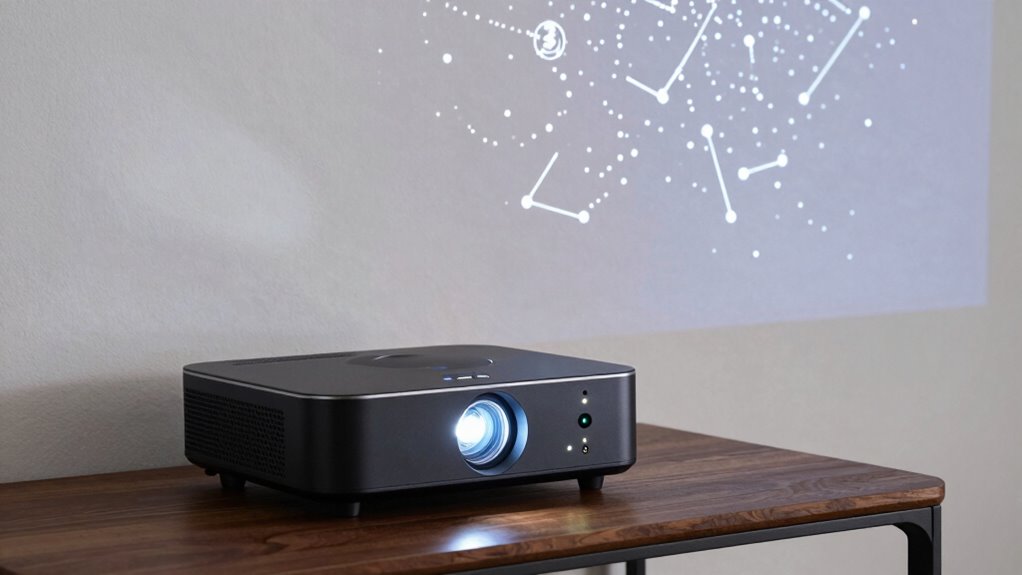
A good home planetarium projector provides sharp, high-resolution images with accurate celestial mapping, so you can enjoy detailed star fields and planetary views. It should have enough brightness to showcase stars clearly, even in well-lit rooms, and offer user-friendly features like adjustable focus and multiple display modes. Durability and ease of use also matter, ensuring smooth operation and lasting fun. Keep exploring to discover how these features can transform your stargazing nights into an immersive experience.
Key Takeaways
- Accurate celestial mapping with detailed star fields and planetary features for realism and educational value.
- High resolution and image detail to ensure clear, immersive projections of stars and celestial objects.
- Sufficient brightness and adjustable settings to perform well in various ambient lighting conditions.
- User-friendly controls and versatile projection modes for easy scene changes and customization.
- Durable build quality and reliable functionality for consistent, long-term home use.
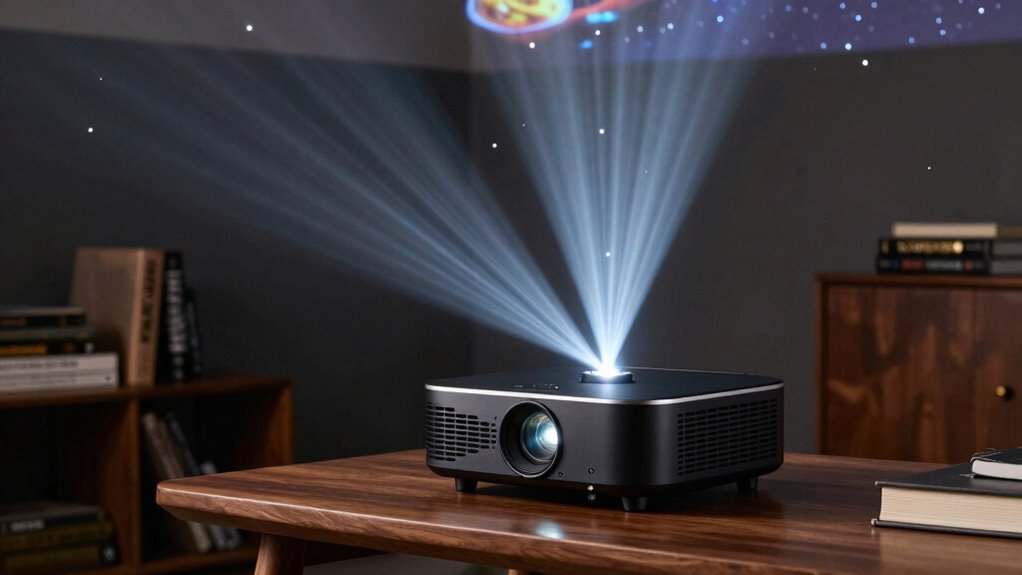
Have you ever wondered how to bring the night sky into your home? A good home planetarium projector can turn any room into a mesmerizing celestial experience, but choosing the right one requires understanding what makes it effective. At the core of a quality projector is its ability to accurately represent the stars and planets, which hinges on features like celestial mapping. Good celestial mapping ensures that the projection displays a realistic and detailed star field, capturing the constellations, nebulae, and other celestial objects with precision. The more accurate the mapping, the more immersive and educational your experience will be. When shopping for a projector, look for one that offers extensive celestial mapping, including a variety of star patterns and the ability to showcase different celestial phenomena. This way, you’ll get a true-to-life simulation that sparks curiosity and wonder. Additionally, stellar accuracy plays a crucial role in creating an authentic night sky experience, so prioritize projectors that utilize advanced celestial data. Incorporating precise star positioning can significantly enhance the realism of your projection. A projector with high resolution ensures that even the smallest details are visible, making the display more engaging and true to life. Furthermore, selecting a projector with up-to-date celestial databases can ensure that the star maps you view are current and scientifically accurate.
Furthermore, considering the technological features of the projector can help you select one that best suits your learning and entertainment needs, ensuring a more comprehensive celestial experience. Another critical aspect to consider is projection brightness. This determines how well you can see the stars and images, especially in rooms with ambient light. A projector with high projection brightness produces a clear, vibrant display, making the stars pop against the background. If your space isn’t perfectly dark, a brighter projection ensures you won’t lose details or struggle to see faint celestial objects. Conversely, a dimmer projector may work well in darker environments but can diminish the overall experience if the room isn’t adequately light-controlled. When evaluating brightness, check the lumens rating; higher lumens generally mean a brighter, more visible projection. Keep in mind that the brightness should be balanced with the image quality, as overly bright projections can sometimes wash out subtle details.
Beyond celestial mapping and projection brightness, consider other features that enhance the experience. For instance, adjustable focus and zoom allow you to customize the projection size and clarity. Some projectors also offer multiple projection modes, such as different star maps or planetary views, broadening the scope of what you can explore. Ease of setup and user-friendly controls make a significant difference, especially if you want to quickly switch between different scenes or settings. Additionally, durability and build quality matter if the projector will be used frequently or moved around. Ultimately, a good home planetarium projector combines precise celestial mapping with sufficient projection brightness and user-friendly features, creating an engaging, educational, and visually stunning experience that brings the cosmos right into your living space.
home planetarium projector high resolution
As an affiliate, we earn on qualifying purchases.
As an affiliate, we earn on qualifying purchases.
Frequently Asked Questions
How Long Do Home Planetarium Projectors Typically Last?
Home planetarium projectors typically last around 10,000 to 20,000 hours of use. You’ll notice their lifespan depends on projection brightness and image resolution—brighter projections or higher resolutions can wear out bulbs or LEDs faster. To guarantee longevity, follow manufacturer guidelines for maintenance and bulb replacement. Proper care ensures your projector continues delivering clear, vibrant images for years, making your stargazing nights even more memorable.
Are Replacement Parts Readily Available for Home Planetarium Projectors?
Replacement parts for home planetarium projectors can be tricky to find, as availability concerns vary by brand and model. Some manufacturers offer readily accessible replacement parts online or through authorized service centers, while others may have limited options. It’s smart to check with the manufacturer or retailer beforehand to confirm you can source essential replacement parts easily if needed, helping you maintain your projector’s performance over time.
Can Children Easily Operate a Home Planetarium Projector?
Did you know that over 80% of parents prioritize child safety when choosing toys? A good home planetarium projector is designed with ease of use in mind, making it accessible for children. With simple controls and child-safe materials, children can operate it independently, fostering curiosity about stars and planets. This promotes learning while ensuring their safety, giving you peace of mind during their celestial explorations.
What Is the Warranty Period for Most Home Planetarium Projectors?
Most home planetarium projectors come with a warranty period of one to two years, providing you with warranty coverage against defects. During this time, manufacturers often offer technical support to help you troubleshoot issues or answer questions. Make certain to check the specific warranty details for your projector model, as coverage duration and support services can vary. This guarantees you get reliable assistance if any problems arise.
Do Home Planetarium Projectors Require Regular Maintenance?
Yes, your home planetarium projector benefits from regular maintenance like tending a garden. Follow a simple maintenance schedule—clean the lens gently with soft cloth and check for dust buildup. Cleaning tips include avoiding harsh chemicals and keeping the device in a dust-free environment. This keeps your projector shining bright and guarantees it runs smoothly, turning your nights into a celestial voyage without interruptions.
stellar projection night sky projector
As an affiliate, we earn on qualifying purchases.
As an affiliate, we earn on qualifying purchases.
Conclusion
Choosing the right home planetarium projector is like finding a trusted guide for an adventure—you want clarity, reliability, and a touch of wonder. When I first set up mine, I was amazed how just a simple switch transformed my ceiling into a starry universe, sparking endless curiosity. Remember, a good projector isn’t just about visuals; it’s about inspiring awe and learning in your own space. Make your choice wisely, and let your celestial journey begin.
celestial mapping star projector
As an affiliate, we earn on qualifying purchases.
As an affiliate, we earn on qualifying purchases.
adjustable brightness star projector
As an affiliate, we earn on qualifying purchases.
As an affiliate, we earn on qualifying purchases.