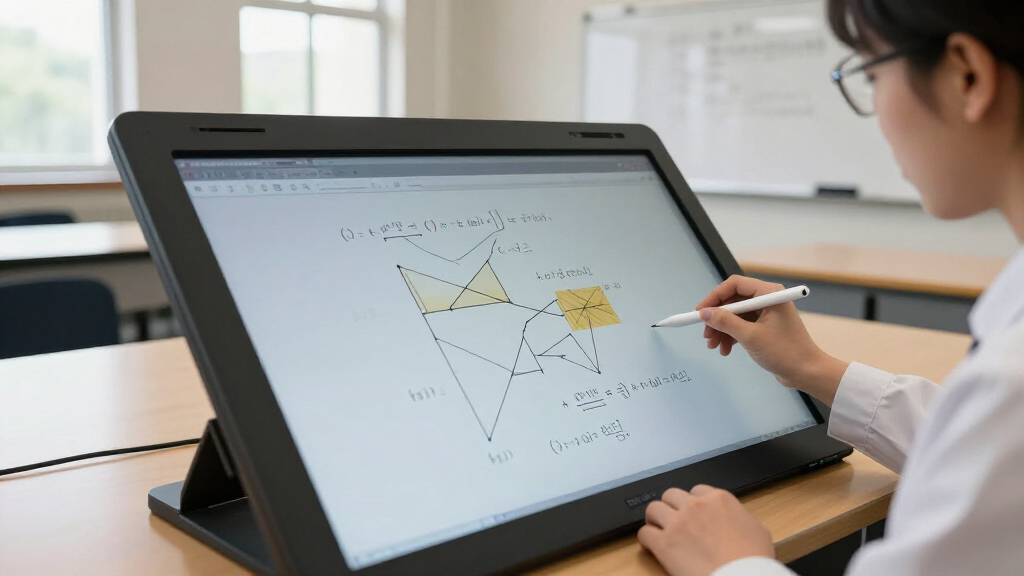

🔍 Read the full analysis: 722 Proofs, One Open Question About AI Mathematics At OpenAI on ThorstenMeyerAI.com

Prime made for students and young adults
- Fast, free delivery for dorm and study essentials
- Prime Video and Amazon Music included
- Member-only deals
TL;DR
OpenAI has published 722 mathematical manuscripts generated by an unnamed, unreleased model, spanning 372 families of results. The company says the work includes claims about major open problems, but outside mathematicians have not yet confirmed them; the manuscripts’ value will depend on independent checking and whether researchers can use their methods.
OpenAI published 722 mathematical manuscripts on Monday, presenting results generated by an unnamed, unreleased model across 372 families of related work. The catalogue includes claims involving several prominent open problems, but the results have not been confirmed by outside mathematicians, leaving their reliability and potential value to research unresolved.
According to OpenAI’s post and GitHub repository, the manuscripts cover areas including number theory, geometry, topology, operator algebras, theoretical computer science and mathematical physics. They were selected from about 4,000 problems posed to the model; OpenAI filtered the output for what it considered an appropriate level of significance. The average result reportedly used about three hours of ChatGPT Pro thinking compute. The manuscripts are published under the Apache-2.0 license.
The catalogue includes claims about the Unique Games Conjecture, Hilbert’s tenth problem over the rationals, the isomorphism of nonabelian free group factors, a zero-free region for the Riemann zeta function to the right of Re(s) = 11/12, and versions of the Hodge and Mahler conjectures. These are claims in the released work, not independently established solutions. OpenAI’s repository says that some results have Lean formalizations, while others do not, and cautions that unformalized results could contain issues. The source account identifies the Riemann and Hodge work as exceptions to the standard process; the Riemann manuscript was edited by humans for readability.
OpenAI released 10 abridged reasoning summaries, rather than summaries for all 372 families. That means readers have limited concise material for assessing the broader catalogue. The company controlled both the initial selection from roughly 4,000 problems and the manuscripts’ release, so the set is not an externally chosen or independently audited sample.
722 proofs, one question: will any of OpenAI’s AI mathematics actually lead anywhere?
An unreleased, unnamed model produced claimed proofs of results that would each define a career. Sam Altman calls them “claims not yet confirmed by outside mathematicians.” The real question isn’t whether it’s impressive. It’s whether answers nobody understands become discoveries anyone can build on.
Same day: Alon, Bloom, Gowers, Litt, Sawin post a digested, human-verified version. The model for success.
Connes rigidity counterexample challenged within a day — constructed groups fail the required condition. Three rival machine “counterexamples” from different labs now circulate.
~10,000 agents, 88 hours, est. ~$22M at retail. Priority dispute; 25 Fields Medalists sign “A Severe Misalignment” — not saying it’s wrong, saying it’s not understood.
Altman now hedges at announcement — a shift from September. Verification has barely started.
Humans extract the technique, write it up, build on it. This is where downstream discovery comes from.
The question is answered; nobody learns anything reusable. Closes a door without opening a field.
The proof breaks, or proves a statement that doesn’t match the conjecture as mathematicians mean it.
The Unique Games Conjecture is the clearest case. Results like the optimality of Goemans–Williamson for Max-Cut are proved assuming UGC. A correct proof converts them all — no understanding required. A zero-free strip for zeta works the same way for prime-distribution results. Free group factors, Kadison, Mahler would redirect whole programmes — but how depends on the method, which means digestion.
Technology. A Navier–Stokes blow-up proof doesn’t change how anyone designs aircraft; engineering turbulence models never depended on the answer. Near-term consequences are mathematical, not industrial. “AI will cure cancer next” skips several steps.
“Verification abundance, adjudication scarcity” — making proof-checking cheap doesn’t reduce the burden of deciding what’s true and what matters. 722 manuscripts land on a review system built for a trickle, filtered by a selection nobody outside OpenAI made.
Humans re-deriving results, like Alon–Gowers et al. in May
Other people’s work building on these manuscripts
How many unformalized results survive expert checking
Do the Lean statements match the real conjectures?
Do any survive peer review?
Some of it, yes — where a literature is waiting (UGC), a correct proof pays off immediately; where a proof carries a new technique humans digest, it can open a field. Most of it, probably not on its own: at 722 manuscripts with 10 reasoning summaries, the Four Colour pattern is the likely default unless mathematicians are funded and given time. And some will be wrong — OpenAI says so itself. It’s an industry pattern, not one company’s: the forced-Euler result came from an Anthropic researcher, and rival machine-generated Connes “counterexamples” circulate from different labs. The proofs arrived this week. The discoveries, if they come, will arrive at the speed of human understanding.
Proofs Need More Than Verification
The mathematical significance of the release will depend on more than whether individual arguments can be checked. A proof can settle a question yet offer little that researchers can reuse; a method that other mathematicians understand and build on can have wider effects. The distinction is between establishing a result and making its reasoning productive for future work.
The Unique Games Conjecture illustrates the potential stakes if its proof holds up. Many results in theoretical computer science are conditional on the conjecture, including claims about the limits of approximation algorithms. A verified resolution could affect how researchers interpret that body of work. But the catalogue’s publication alone does not settle the conjecture, and no independent confirmation is provided in the source material.
For readers outside mathematics, the central issue is therefore not simply how many papers a model produced. It is whether specialists can validate the claims, extract understandable techniques, and use them. Without that process, even correct results may have limited influence; incorrect or mismatched arguments could instead add work for researchers trying to assess them.
As an affiliate, we earn on qualifying purchases.
Earlier Releases Offer Caution
The release follows three earlier OpenAI mathematics announcements this year, each offering a different lesson. In May, a model produced a counterexample to the Erdős unit-distance conjecture. Five mathematicians later posted a human-verified account of the result, turning machine output into a form the field could evaluate. That process is a useful example of how AI-generated work can become part of mathematics: researchers checked and digested the argument.
OpenAI’s August collection, called “Ten Advances,” was more mixed. A claimed counterexample to Connes’s rigidity conjecture was challenged within a day, with a critique arguing that the constructed groups did not meet the conjecture’s required condition. The September announcement of a Lean-formalized Navier–Stokes blow-up proof also drew debate, including a dispute over priority and a declaration signed by 25 Fields Medalists. Their stated concern, as described in the source material, was not that the proof was wrong, but that pursuing famous problems as benchmarks without human understanding can conflict with the aims of mathematics.
These examples do not determine whether the new manuscripts are correct. They show why formal verification, independent scrutiny and mathematical understanding are distinct questions. A formalization can help check a proof’s logic, while experts still need to judge whether the statement matches the problem and whether the methods contribute to broader understanding.
mathematics problem solving software
As an affiliate, we earn on qualifying purchases.
As an affiliate, we earn on qualifying purchases.
Independent Checks Still Pending
The source material does not report which of the 722 manuscripts have been independently reviewed, whether any of the headline claims have been accepted by specialists, or how many of the 372 families have Lean formalizations. It also gives no independent assessment of OpenAI’s significance filter or the reasoning summaries supplied for only 10 families.
It remains unclear how much of the work will prove correct, whether some arguments establish a narrower result than the named conjecture, and whether researchers will find reusable ideas in the proofs. These questions cannot be resolved from the number of manuscripts or the company’s descriptions alone. The claims should remain attributed to OpenAI and its released papers until mathematicians have examined them.
As an affiliate, we earn on qualifying purchases.
Mathematicians Must Test the Claims
The next step is independent mathematical review of individual manuscripts, including checking that each proof establishes the stated result and that any formalization corresponds to the argument being claimed. Researchers may then produce human-readable accounts, corrections or rebuttals, as happened with earlier AI-generated work.
No timetable for that review, or for a formal response from outside mathematicians, is given in the source material. The key developments to watch are whether experts validate any of the major claims and whether the methods lead to further results. Until then, the release is a large collection of AI-generated mathematical claims—not a verified list of solved problems.
As an affiliate, we earn on qualifying purchases.
Key Questions
What did OpenAI release?
OpenAI published 722 mathematical manuscripts grouped into 372 families and attributed to an unnamed, unreleased model. The work was selected from about 4,000 problems posed to the model.
Have the claimed solutions been confirmed?
Not by outside mathematicians, according to the source account. OpenAI’s repository also warns that some unformalized results could have issues.
What is the Unique Games Conjecture claim?
One manuscript claims a proof of the Unique Games Conjecture, an open problem tied to results in theoretical computer science and approximation algorithms. The claim has not been independently confirmed in the supplied material.
Does a formal proof mean the result is useful?
Formalization can help check logical steps, but it does not by itself show that a result has been independently accepted or that its methods will be useful to other researchers. Those questions require further mathematical review.
What happens next?
Mathematicians need to inspect the manuscripts and assess whether the proofs are correct, match the stated problems and offer ideas others can use. The source material gives no review timetable.
Source: ThorstenMeyerAI.com
Fall Picks
fall essentials
As an affiliate, we earn on qualifying purchases.