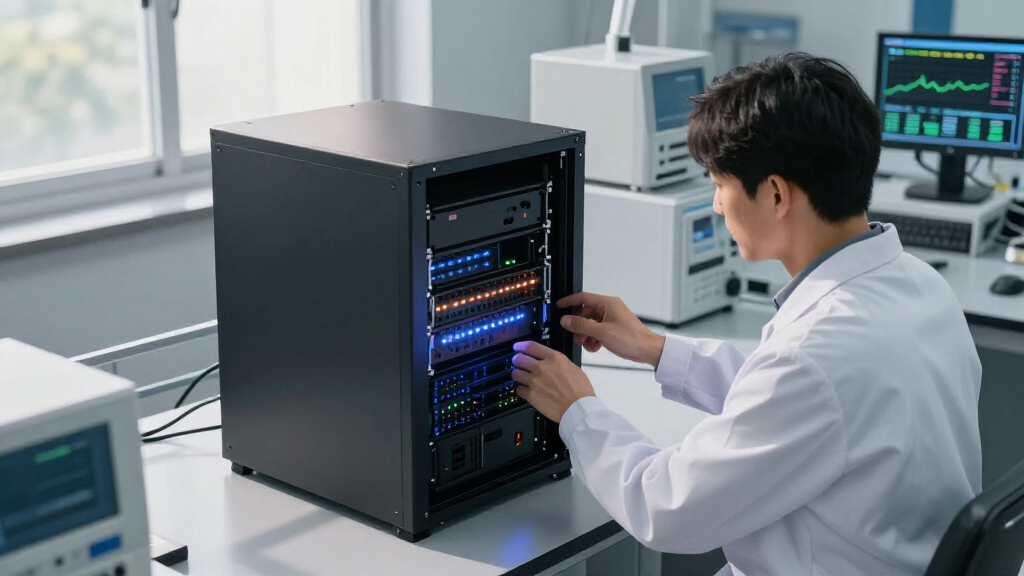

📊 Full opportunity report: Addressing The Energy Bottleneck In AI Innovation on ThorstenMeyerAI.com — validation score, market gap, and execution plan.

Prime made for students and young adults
- Fast, free delivery for dorm and study essentials
- Prime Video and Amazon Music included
- Member-only deals
TL;DR
AI development is increasingly limited by physical energy infrastructure rather than chip availability. The capacity to supply peak power is the main bottleneck, with significant geopolitical and economic implications. The situation is evolving as demand outpaces infrastructure build-out.
AI infrastructure is now constrained by physical energy capacity, not chip supply, as data centers demand increasing power capacity faster than grids can expand. This shift has significant implications for global AI progress and geopolitics, with capacity bottlenecks emerging as the primary obstacle to scaling AI infrastructure.
Despite over $650 billion committed by the four largest US hyperscalers to AI infrastructure in 2025–2026, the ability to connect new data centers is hampered by a lack of physical capacity in the power grid. The US grid’s interconnection queue holds approximately 2,300 GW, with wait times doubling to around five years, and existing infrastructure is aging, with many plants dating back to the 1980s. This capacity shortfall is not due to funding but to physical limitations in building transformers, transmission lines, and new generation facilities.
Meanwhile, China has deployed nearly 10 times the new capacity of the US in 2025, totaling 543 GW, and is adding capacity at a pace that outstrips US growth. China’s electricity generation exceeds US levels, and its data centers benefit from lower power costs and faster deployment timelines. The US faces a geopolitical challenge: while it leads in chip innovation, China leads in power generation capacity, creating a race to close these gaps.
For three years AI was a chip story. It quietly stopped being the binding constraint — the way it always does in a physical build-out, from the clever thing to the boring thing underneath.
When someone says AI is “only 3% of electricity,” they’re quoting consumption to make it sound modest. Capacity is where the bottleneck bites.
Why Infrastructure Limits Could Slow Global AI Progress
This capacity bottleneck could slow the pace of AI innovation, especially in the US, where demand is outstripping infrastructure growth. It also influences geopolitical power, as access to reliable, affordable energy becomes a strategic advantage. Large investments alone are insufficient without physical infrastructure expansion, which faces permitting, manufacturing, and aging grid challenges.
As an affiliate, we earn on qualifying purchases.
Energy Infrastructure Challenges in the AI Race
For years, the focus in AI has been on chip supply, particularly NVIDIA GPUs. However, the recent shift highlights energy capacity as the critical limiting factor. The US has invested heavily in AI chips but struggles to expand its power grid fast enough to support the growth of data centers. Conversely, China’s aggressive expansion of energy capacity has enabled it to deploy vast amounts of power, supporting its AI and data center ambitions. The global energy infrastructure is aging, with many transmission assets nearing end-of-life, complicating expansion efforts.
"The bottleneck in AI is no longer chips but electrons—physical infrastructure that takes years to build and expand."
— Thorsten Meyer
high capacity transformers for data centers
As an affiliate, we earn on qualifying purchases.
As an affiliate, we earn on qualifying purchases.
Unresolved Questions About Infrastructure Expansion
It remains unclear how quickly and effectively the US and other regions can overcome the physical and permitting barriers to expanding their energy infrastructure. The pace of grid modernization, manufacturing of transformers, and regulatory reforms are still uncertain, as is the potential impact of geopolitical tensions on supply chains and investments.
renewable energy solutions for AI infrastructure
As an affiliate, we earn on qualifying purchases.
As an affiliate, we earn on qualifying purchases.
Next Steps in Overcoming Energy Capacity Bottlenecks
Efforts will likely focus on accelerating grid modernization, streamlining permitting processes, and increasing manufacturing capacity for key infrastructure components. Monitoring policy changes, investment flows, and technological innovations in energy storage and transmission will be critical. Additionally, the US and China will continue their competitive push to close their respective gaps in power and chip capabilities, shaping the future of AI development.
As an affiliate, we earn on qualifying purchases.
Key Questions
Why is energy capacity now the main bottleneck for AI growth?
Because the physical ability to supply peak power to data centers is limiting new deployments, even with sufficient chip supply and funding. Infrastructure expansion takes years, and current grids cannot meet the rising demand.
How does China's energy capacity compare to the US?
China has deployed nearly ten times the new power capacity of the US in 2025 and is expanding faster, giving it a significant advantage in supporting large-scale AI infrastructure.
What are the main challenges in expanding energy infrastructure?
Permitting delays, aging infrastructure, manufacturing bottlenecks for transformers and transmission lines, and geopolitical tensions are key hurdles to rapid expansion.
Could this bottleneck slow global AI development?
Yes, especially in regions like the US where infrastructure expansion is lagging behind demand, potentially delaying AI progress and affecting competitiveness.
What can be done to address these energy constraints?
Accelerating grid modernization, streamlining regulatory processes, increasing manufacturing capacity, and investing in energy storage and transmission innovations are critical next steps.
Source: ThorstenMeyerAI.com
Halloween Picks
halloween
As an affiliate, we earn on qualifying purchases.