🔍 Read the full analysis: Behind The Disruptions To Banks, Flights, Email, And The NSA In A Week Of US Tech Outages on ThorstenMeyerAI.com

Prime made for students and young adults
- Fast, free delivery for dorm and study essentials
- Prime Video and Amazon Music included
- Member-only deals
TL;DR
From Nov. 12 to 17, outages affected Microsoft 365, U.S. air travel, JPMorgan Chase, United Airlines, Apple services and an NSA network. Organizations have named different technical or maintenance causes, and officials say they have no evidence so far that the incidents were attacks or connected; investigations remain incomplete.
Six outages over one week disrupted business email, U.S. flights, banking, airline operations, Apple services and an NSA network, but the organizations involved have reported separate technical or maintenance explanations. As of Nov. 18, officials said they had no evidence that the incidents were cyberattacks or linked, though investigations were still underway and only Microsoft had published a preliminary technical report.
The disruptions began on Nov. 12, when Microsoft 365 email failed for many business users. Microsoft’s service-status timeline put the outage at 23 hours and 50 minutes, ending Nov. 13. Its preliminary report attributed the failure to a latent software defect, a shift of Teams traffic to a gateway also supporting Exchange Online, and about 14% of gateway capacity being unavailable because of a separate issue. Microsoft said more than 80% of servers were unresponsive at the worst point. A final report was expected Nov. 20.
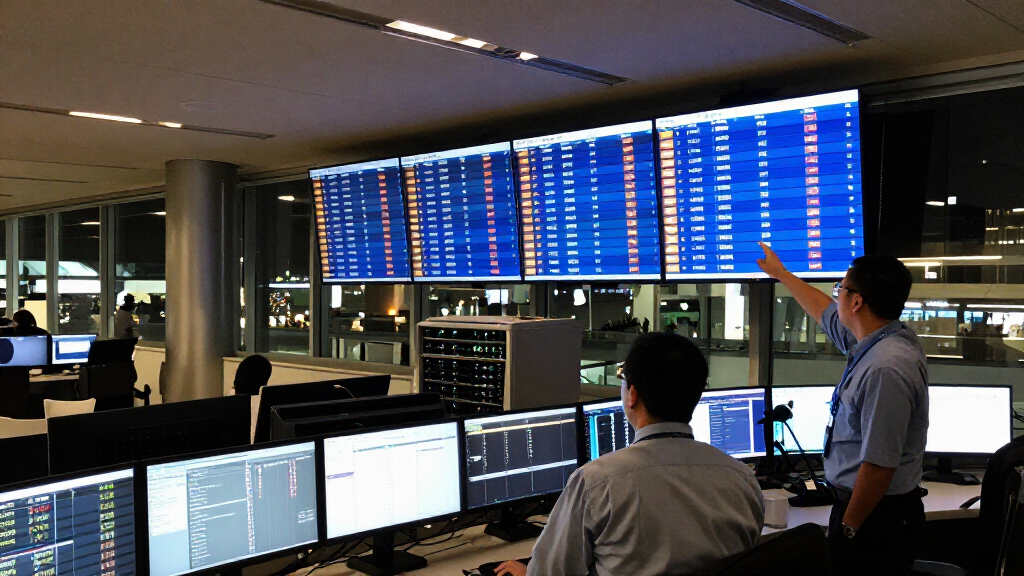
On Nov. 13, the FAA issued a ground stop affecting airports nationwide. Its account said legacy equipment became unstable after data flooded its FAA telecommunications network, with 1,000 connection attempts every four to five seconds. The FAA’s initial investigation pointed to work at a radar site in Amarillo, Texas, and a radio site in El Dorado, Arkansas. The agency counted about 12,462 flights affected Friday, including 9,082 cancellations by major airlines; it said not all were directly caused by the ground stop.
Further disruptions followed on Nov. 16 and 17. JPMorgan Chase said a software bug in on-premise hardware systems affected transactions, while United Airlines described its disruption as a “technology issue” that prevented it from sending pilots final aircraft weights. Apple attributed problems affecting iCloud and the App Store to “an internal update.” The NSA said its classified internal network outage was due to scheduled routine maintenance; Director of National Intelligence Jay Clayton linked it to security patching.
The incidents affected services that many people and organizations rely on at the same time. Email supports calendars, collaboration tools and customer operations; a flight ground stop can disrupt schedules well beyond the period when it is in force; and failures in banking or airline systems can delay transactions or departures even when the underlying service remains available.
The reported explanations point to a practical operational risk, not a proven common cause: changes to live systems can expose defects or interact badly with older equipment and limited capacity. Microsoft described a cascading server failure, while the FAA cited instability in legacy equipment amid a surge of network connection attempts. Those cases do not establish that the other incidents had the same technical mechanism.
For businesses and users, the week highlights the value of fallback communications and payment options and of understanding which vendors or systems are single points of failure. Those are general resilience lessons, not evidence that another outage is imminent.
Popular right now

Dyson V9 Motorbar Cordless Vacuum

Sony BRAVIA 5 85-Inch Mini LED 4K HDR Smart Google TV (K-85XR50)

De'Longhi Magnifica Duo Fully Automatic Espresso Machine with Milk Frother, Silver
As an affiliate, we earn on qualifying purchases.
A Week of Separate Outages
The incidents were quickly grouped online as a possible coordinated attack or a sign of AI-related failure. But the available accounts describe distinct events and causes. Microsoft said its issue was not related to cyber activity or AI agents. The FAA’s account focused on data flooding its network during equipment work; the bank, airline and Apple gave shorter explanations. The NSA described scheduled maintenance.
Clayton offered a broader explanation for the NSA incident, saying institutions were patching systems after newly found vulnerabilities and that systems do not always return as expected. He tied that explanation directly to the NSA outage; it was his general interpretation, not a documented finding explaining the other incidents. The source material also reports that the FAA’s investigation was initial and Microsoft’s report preliminary.
Some effects extended beyond the named services. Reuters reported that Australia’s spy agency and federal police, the U.S. House of Representatives, and Indian airlines IndiGo and Akasa Air were among those affected by the Microsoft outage. For the flight disruption, NPR cited FlightAware figures of nearly 25,000 delays and more than 9,000 cancellations on Friday. Such figures use different counting methods and do not mean every disruption was directly caused by the FAA ground stop.
““The FAA’s legacy equipment became unstable when data began flooding the FAA FTI network, at a rate of 1,000 connection attempts every 4 to 5 seconds.””
— The FAA, in its written account of the Nov. 13 disruption
Investigations Are Still Open
No public evidence in the source material establishes a link among the six outages, but the absence of a reported link is not proof that every investigation is finished. Microsoft’s technical account was preliminary, and its final report was due Nov. 20. The FAA described its findings as an initial investigation.
Several organizations offered only brief descriptions: JPMorgan Chase cited a software bug in on-premise hardware systems, United said it had a technology issue, and Apple attributed its service problems to an internal update. The source does not provide detailed technical reports or full timelines for those incidents. It also does not establish whether the NSA outage affected users outside its internal network or how long each of the later disruptions lasted.
Clayton’s comments about widespread patching provide a possible general explanation for why systems may fail during maintenance, but they do not demonstrate that patching caused the bank, airline, FAA or Apple problems. Cause, scope and any downstream effects may change as organizations release more information.
Reports and Service Reviews Ahead
The clearest near-term milestone in the available information is Microsoft’s expected final incident report on Nov. 20. It may add detail to the company’s preliminary account of the defect, gateway traffic shift and reduced capacity. The FAA’s initial account also leaves room for further findings about the two sites and the equipment work under investigation.
Readers should look for follow-up statements from JPMorgan Chase, United, Apple and the NSA if they want more detail on the duration, scope and remediation of those outages. Until those details are published, the causes should be treated as the organizations’ stated explanations, not independently confirmed findings. Officials had not announced a shared investigation or a common cause as of Nov. 18.
Key Questions
Were the six outages caused by a coordinated cyberattack?
Officials said they had no evidence of a coordinated attack or a connection among the incidents as of Nov. 18. Investigations were not all complete, so that assessment reflects the evidence reported at that time.
What caused the Microsoft 365 outage?
Microsoft’s preliminary report described a latent software defect, a change in gateway traffic and reduced server capacity as factors in a cascading failure. The company’s final report was expected Nov. 20.
Why were U.S. flights disrupted?
The FAA said legacy equipment became unstable as data flooded its network, with its initial investigation pointing to work at two sites. The agency said its Friday total included cancellations not all directly caused by the ground stop.
Did all six incidents have the same cause?
No common cause has been established. The organizations named different explanations, including software defects, network instability, hardware-system bugs, an internal update and scheduled maintenance.
Source: ThorstenMeyerAI.com