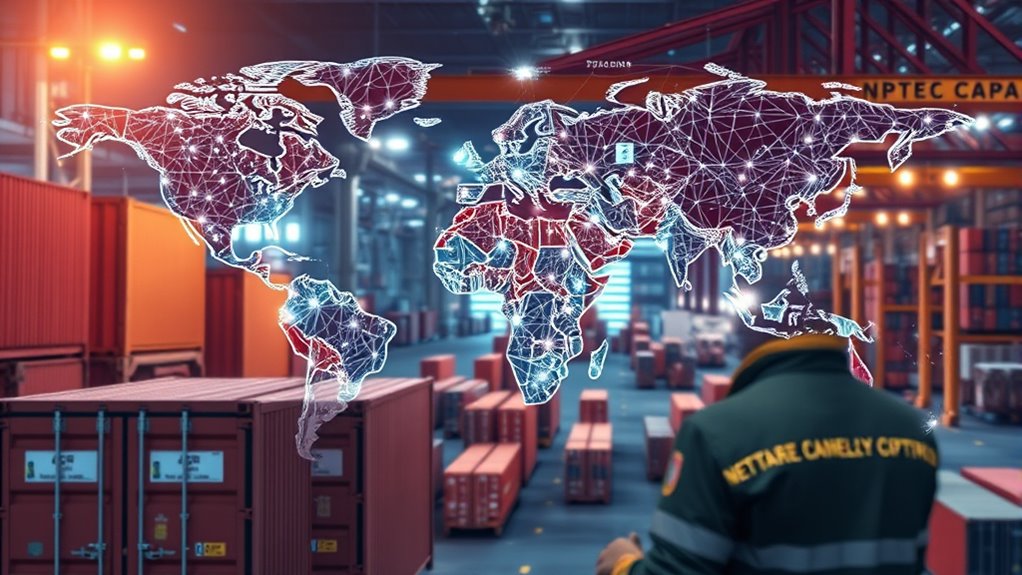

Blockchain helps secure supply chains worldwide by creating an unchangeable digital ledger that verifies product authenticity at every stage. It reduces counterfeits, automates processes with smart contracts, and provides transparent traceability from raw materials to consumers. This technology also enhances security, builds trust, and protects brand reputation. As organizations adopt blockchain, counterfeiters find it harder to infiltrate, making supply chains more trustworthy. If you’re curious, there’s more to discover about how this technology transforms global trade.
Key Takeaways
- Blockchain provides a tamper-proof ledger to verify product authenticity at each supply chain stage.
- Digital certificates and signatures enable instant origin verification and traceability of products.
- Smart contracts automate compliance, reducing fraud and administrative costs.
- Blockchain’s decentralization enhances security, making counterfeiting detection more effective.
- Transparency and trust built through blockchain strengthen supply chain integrity and consumer confidence.
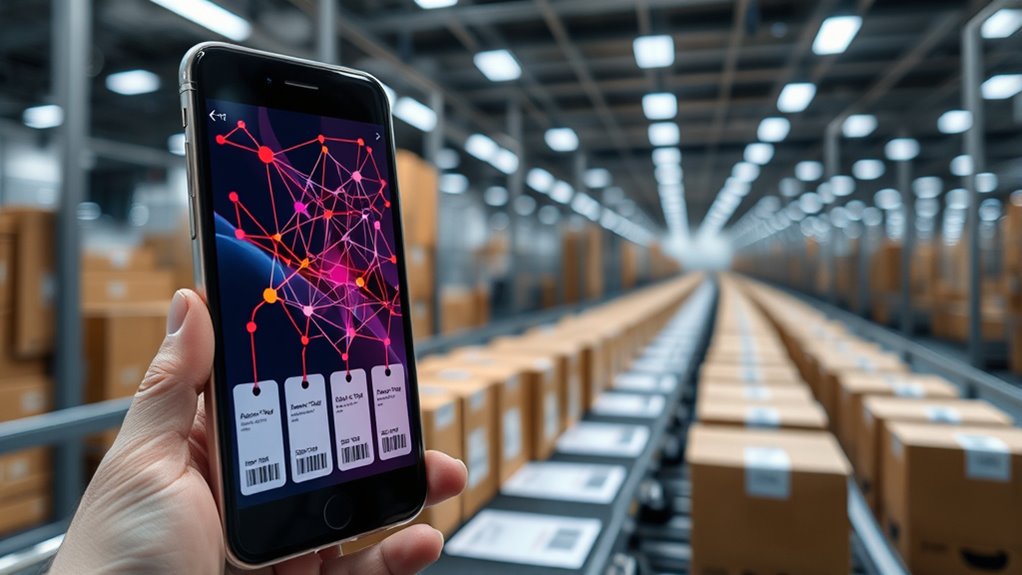
As global supply chains become increasingly complex, blockchain technology is emerging as a crucial tool to enhance security and combat counterfeiting. You can leverage blockchain’s transparent and tamper-proof ledger to verify the authenticity of products at every stage, ensuring that what reaches consumers is genuine. One of the most powerful features of blockchain for this purpose is the use of smart contracts. These self-executing agreements automatically enforce the terms of a transaction once predefined conditions are met, reducing the risk of fraud and unauthorized alterations. For example, a smart contract can confirm that a product has passed quality checks or that a shipment has arrived at its destination before releasing payment. This automation not only streamlines processes but also adds an extra layer of security, making it harder for counterfeiters to infiltrate the supply chain.
Digital authentication is another key benefit you gain from blockchain. By assigning a unique digital certificate to each product, you can verify its origin instantly, whether you’re a manufacturer, distributor, or consumer. These digital signatures are stored securely on the blockchain, providing an immutable record that confirms authenticity. When a product’s digital authentication details are scanned or checked, you can trace its entire journey, from raw materials to the point of sale. This level of traceability helps identify counterfeit items quickly and deters fraudsters, who know that their attempts are more likely to be detected. It also builds trust among consumers, who increasingly demand proof of product authenticity before making purchases.
Implementing blockchain for digital authentication and smart contracts can seem complex initially, but the long-term benefits outweigh the challenges. You gain a reliable method to combat counterfeit goods, reduce losses, and improve consumer confidence. The decentralized nature of blockchain means no single entity controls the data, reducing the risk of manipulation or tampering. This decentralization makes it nearly impossible for counterfeiters to corrupt the system without detection. Additionally, smart contracts automate compliance and verification processes, saving you time and administrative costs. As supply chains grow more global and intricate, adopting blockchain-enabled digital authentication and smart contracts becomes a strategic move to safeguard your products and reputation.
Furthermore, the personality traits of those involved in the supply chain can influence how effectively blockchain solutions are adopted and maintained, underscoring the importance of trust and transparency among stakeholders. In essence, by integrating these blockchain features into your supply chain operations, you create a more transparent, secure, and trustworthy system. Counterfeiters will find it much harder to infiltrate, and your stakeholders will appreciate the increased confidence in your products’ authenticity. As technology evolves, blockchain’s role in securing supply chains and fighting counterfeits will only become more vital, helping you stay ahead in a competitive marketplace.
blockchain supply chain verification device
As an affiliate, we earn on qualifying purchases.
As an affiliate, we earn on qualifying purchases.
Frequently Asked Questions
How Does Blockchain Improve Transparency in Supply Chains?
Blockchain improves transparency in supply chains by acting as a secure digital ledger that records every transaction. You can access real-time tracking data, allowing you to see where products are at each stage. This transparency helps identify issues quickly, reduces fraud, and builds trust among all parties. As a result, you get a clear, immutable record of your supply chain activities, making the entire process more open and accountable.
What Are the Main Challenges in Implementing Blockchain Globally?
You’ll face challenges like maneuvering varying cross-border regulations, which can slow down adoption and cause compliance issues. Technological standardization also poses a problem since different countries and companies use incompatible systems, making integration difficult. To succeed, you need to work on harmonizing standards and policies globally, ensuring seamless interoperability and legal clarity. Overcoming these hurdles is critical for the widespread, effective use of blockchain in supply chains worldwide.
How Does Blockchain Handle Data Privacy Concerns?
A picture is worth a thousand words, and with blockchain, you’re in control. It handles data privacy by using data encryption to protect sensitive info and access control to restrict who can view or change data. This way, you can share essential information securely while keeping private details safe. Blockchain ensures transparency without compromising privacy, giving you peace of mind in a complex digital world.
Can Small Businesses Afford Blockchain Integration?
Small businesses can afford blockchain integration, but they face cost barriers and scalability issues. While initial setup may seem expensive, many blockchain providers offer cost-effective solutions tailored for smaller operations. As technology advances, scalability improves, making it easier and more affordable to implement. You should explore different platforms and consider phased adoption to manage costs and guarantee your business benefits from enhanced security and transparency without overwhelming expenses.
What Future Developments Are Expected in Blockchain Supply Chain Tech?
Picture blockchain technology as a river carving new paths, shaping supply chain futures. You’ll see smart contract innovations streamline transactions and enforce agreements automatically, reducing delays and errors. Cross-border compliance will become smoother, like a well-orchestrated dance across borders. Expect more real-time tracking, enhanced transparency, and stronger anti-counterfeit measures. These advancements will make your supply chain more resilient, efficient, and trustworthy, paving the way for a global marketplace that’s more connected and secure.
digital product authenticity certificate
As an affiliate, we earn on qualifying purchases.
As an affiliate, we earn on qualifying purchases.
Conclusion
Imagine your supply chain as a mighty ship steering treacherous waters; blockchain acts as your steadfast lighthouse, guiding you past hidden reefs of counterfeits and fraud. With its unbreakable light, you can confidently direct through the global marketplace, knowing every cargo, every transaction, is illuminated with transparency and security. Embrace this beacon of trust, and you’ll guarantee your journey remains smooth and true, safeguarding your reputation amidst the stormy seas of counterfeit risks.
smart contract supply chain management
As an affiliate, we earn on qualifying purchases.
As an affiliate, we earn on qualifying purchases.
blockchain traceability scanner
As an affiliate, we earn on qualifying purchases.
As an affiliate, we earn on qualifying purchases.