

When AI runs on your device instead of the cloud, it responds faster by processing data locally, so you get immediate answers and smoother interactions. Your privacy improves because sensitive info stays on your device, reducing security risks. This setup also works well even without an internet connection, making it reliable in critical situations. Hardware and software improvements are key to supporting this shift. If you’re curious about how this all benefits you further, there’s more to explore.

Prime made for students and young adults
- Fast, free delivery for dorm and study essentials
- Prime Video and Amazon Music included
- Member-only deals
Key Takeaways
- AI processes are handled locally, reducing reliance on internet connectivity for quick, real-time responses.
- Data privacy is enhanced as sensitive information remains on the device, minimizing exposure risks.
- On-device AI enables faster reactions and seamless interactions in applications like augmented reality and gaming.
- Hardware and software optimizations are essential to support complex AI tasks efficiently within limited device resources.
- Running AI locally decreases server load and cloud dependency, improving reliability and reducing latency.
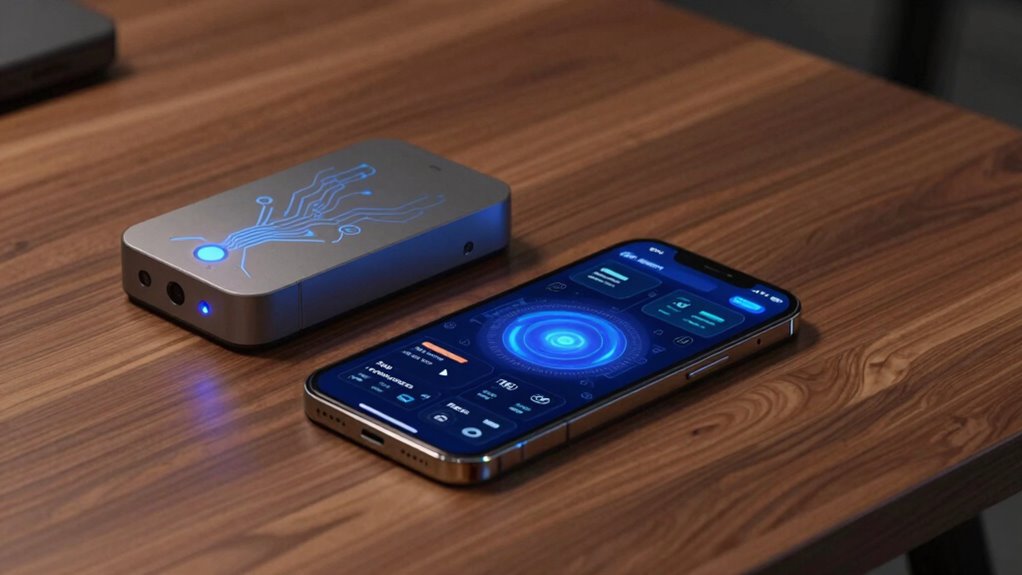
As advancements in hardware and algorithms accelerate, more AI processing is shifting from the cloud to devices themselves. This shift transforms how you experience AI-powered technology, bringing benefits like faster responses and enhanced data privacy. When AI runs directly on your device, it can process data locally, eliminating the need to send sensitive information over the internet. This means your personal data stays on your device, reducing the risk of breaches or misuse. You gain greater control over your privacy, knowing that your private conversations, photos, or health data aren’t constantly transmitted to remote servers. This local processing aligns with increasing concerns over data privacy, giving you peace of mind while still enjoying intelligent features.
Another major benefit is real-time processing. When AI operates on your device, it can analyze data instantly without waiting for cloud servers to respond. For example, in voice assistants, this enables you to get immediate answers or commands without noticeable lag. In augmented reality or gaming, real-time processing ensures smooth, seamless interactions that respond instantly to your actions. This immediacy enhances user experience and allows for more responsive, interactive applications. Plus, since the data doesn’t need to travel across networks, you avoid delays caused by internet speed or server load. This makes AI more reliable, especially in situations where fast, accurate responses are critical, like in safety features or emergency alerts. The ongoing improvements in hardware capabilities are crucial to supporting this shift towards on-device AI. Additionally, edge computing enables smarter processing at the device level, further enhancing the efficiency of local AI. Moreover, advancements in power efficiency allow devices to run complex AI tasks without significantly draining the battery, making on-device AI more practical for everyday use. These improvements contribute to making AI more accessible and functional in various scenarios.
Furthermore, increasing software optimization helps to maximize the performance of AI on these devices, ensuring smooth operation even with limited resources.
As an affiliate, we earn on qualifying purchases.
Frequently Asked Questions
How Does On-Device AI Impact Battery Life?
Running AI on your device increases power consumption because it requires continuous processing, which can drain your battery faster. However, hardware optimization helps mitigate this effect by making processors more efficient and reducing energy use. When AI is optimized for device hardware, it balances performance with power savings, allowing you to enjoy smarter features without substantially impacting your device’s battery life.
What Are the Security Risks of Local AI Processing?
You face security risks with local AI processing, like data breaches if your device isn’t properly secured. To protect your information, guarantee data encryption is in place, making data unreadable to outsiders. Also, implement access control, restricting who can access AI data and functions. Without these measures, malicious actors could exploit vulnerabilities, risking your privacy and device integrity. Stay vigilant by regularly updating security protocols and software.
Can On-Device AI Improve Real-Time Data Privacy?
On-device AI can dramatically boost your data privacy, making it feel like your personal data is locked in a fortress. By processing data locally, you gain greater control over your information, ensuring it stays within your device. This enhances data sovereignty, prevents unnecessary data transfers, and minimizes exposure to breaches. So, yes, on-device AI truly empowers you with real-time privacy, keeping your sensitive data safe and in your hands.
How Does Device AI Handle Complex Computations?
Device AI handles complex computations through edge computing, which processes data directly on the device, reducing latency. It uses neural processing units (NPUs) that accelerate deep learning tasks, enabling real-time analysis without relying on cloud servers. You’ll notice faster responses and improved privacy because sensitive data stays on the device. This setup allows for efficient, on-the-spot decision-making, making AI more seamless and responsive in everyday applications.
What Hardware Is Required for Effective On-Device AI?
You need powerful hardware optimized for edge computing to run AI effectively on your device. This includes specialized processors like AI accelerators, GPUs, or NPUs that handle complex computations efficiently. Hardware optimization guarantees your device can process data locally, reducing latency and conserving bandwidth. Look for devices with these advanced components, as they enable seamless AI performance without relying on cloud resources, making your applications faster and more private.
As an affiliate, we earn on qualifying purchases.
Conclusion
When AI runs on your device instead of the cloud, it’s like having a personal genie in your pocket—quick, private, and always at your fingertips. You get instant responses without relying on internet speed or risking data leaks. Sure, it might not handle the heaviest tasks yet, but as technology advances, your device becomes a mighty fortress of intelligence, ready to surprise you at every turn. It’s the future, unfolding right in your hand.
As an affiliate, we earn on qualifying purchases.
As an affiliate, we earn on qualifying purchases.
Columbus Day / Indigenous Peoples' Day Picks
long weekend sales
As an affiliate, we earn on qualifying purchases.