🔍 Read the full analysis: Records Detail A Chinese University’s Rental Of Nvidia H200 Servers on ThorstenMeyerAI.com

Prime made for students and young adults
- Fast, free delivery for dorm and study essentials
- Prime Video and Amazon Music included
- Member-only deals
TL;DR
Archived procurement notices show Northwestern Polytechnical University awarded two contracts in January 2026 to rent servers equipped with eight Nvidia H200 GPUs each. The records identify Shenzhen suppliers but do not establish where the servers were located, how the chips reached China, or whether any U.S. export license applied.
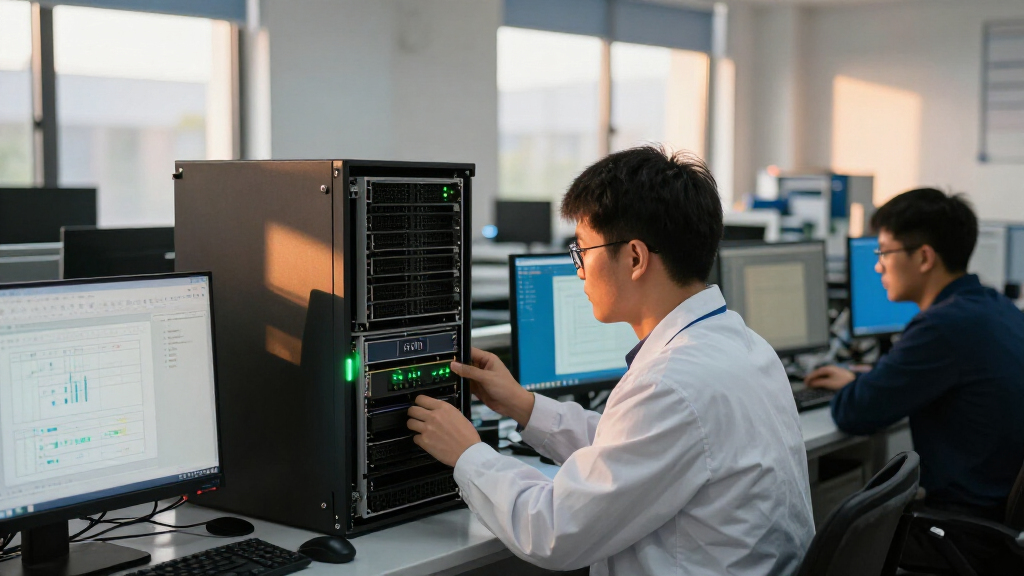
Northwestern Polytechnical University awarded two contracts in January 2026 to rent servers containing eight Nvidia H200 GPUs apiece, according to procurement notices preserved by the Internet Archive. The records concern AI model training and matter because the Xi’an university has been on the U.S. Commerce Department’s Entity List since 2001, while the documents do not show where the servers were or whether the transactions had U.S. authorization.
The two notices were issued by the university’s School of Cyberspace Security on January 28, 2026. Copies captured by the Internet Archive’s Wayback Machine on March 15 show contracts for server rental, rather than a direct purchase of the listed GPU hardware. The notices have since disappeared from the school’s website, according to the source material.
One contract, for computing services to fine-tune a large model using reinforcement learning, is valued at 441,000 yuan and covers February 16 through September 16, 2026. The second, for a large-model multitask fine-tuning project, is valued at 441,700 yuan and covers February 1 through August 31. Both list an “NVIDIA HGX H200 8-GPU SXM” system, with 141 gigabytes of memory per GPU. The first notice says the system can provide access and continuous operation around the clock.
Each notice names a Shenzhen-based supplier. The records identify the winning suppliers but do not establish where the equipment was physically located, who owned the GPUs, or how the hardware reached China. The publisher says it is not naming the companies because the notices alone do not show the origin of their equipment.
Export controls · buying vs. renting
Shipping the chips is controlled. Renting time on them is the open question.
How a university on the US Entity List can use Nvidia H200 chips without owning them, step by step.
Schematic
export of chipsunknown or reportedremote access
What the records and rules show
- 1Buying: exporting chips to a listed buyer needs a US license. For this university the policy is a presumption of denial.
- 2Reported, not verified: Reuters and AFP describe H200 purchase notices that were removed. We found no archived copy.
- 3Renting: the chips sit in a supplier’s server. How they got there is not in the records.
- 4Remote access: two notices dated January 28, 2026 award server rentals with eight H200 chips per server, for 441,000 and 441,700 yuan.
- 5The January 2026 H200 rule bars Entity List parties from remote access, but only as a condition on licensed exports.
Sources: eCFR, 15 CFR 744.11 and Part 744 Supplement No. 4 (as of November 10, 2026); Federal Register, 91 FR 1684 (January 15, 2026); NWPU School of Cyberspace Security award notices of January 28, 2026 (Wayback Machine copies); Reuters, November 11, 2026; AFP, November 12, 2026. Schematic, not a map of real locations. Not legal advice.
Graphic: Powered by Thorsten Meyer AI
Why H200 Server Rentals Matter
The records highlight a practical distinction in technology controls: a customer may obtain computing capacity by renting a server without buying the chips outright. That distinction makes the location, ownership and access arrangements relevant to understanding whether a particular transaction involved controlled U.S.-origin items and whether licensing rules applied.
The university’s Entity List entry requires a license for all items subject to the Export Administration Regulations, with a review policy of “presumption of denial.” The regulations describe coverage of exports, reexports and transfers within a country when a listed entity is a party to a transaction. But the archived notices do not resolve the legal question here. They show rental awards and specified hardware, not the route by which the GPUs were supplied or the terms governing access.
That uncertainty matters beyond this university. The case illustrates why reporting on AI compute access cannot rely only on records of chip sales: rented infrastructure can also provide access to advanced processors. The available documents establish the contracts, but not whether any transfer or service breached U.S. rules.
Popular right now

Dyson Ball Animal 3 Upright Corded Vacuum

Ninja Foodi DualZone Smart XL Air Fryer, 10 Qt, 6-in-1, Black (DZ550)

Shark WANDVAC Power PET Cordless Handheld Vacuum, White, WV410WH
As an affiliate, we earn on qualifying purchases.
The Entity List and H200 Rules
Northwestern Polytechnical University, in Xi’an, has appeared on the U.S. Commerce Department’s Entity List since 2001. The listing, as described in the source material, covers all items subject to the EAR and sets a “presumption of denial” for license applications. Section 744.11 of the regulations says a license is required to the extent specified in an entry when a listed entity is a party to a covered export, reexport or in-country transfer. The rule also addresses companies that are at least 50 percent owned by listed entities.
The source material also points to a January 15, 2026 rule change by the Commerce Department’s Bureau of Industry and Security concerning exports of certain semiconductors to China and Macau. It says the revised policy opened a route for licensed H200 exports subject to conditions, including requirements related to remote access and cloud infrastructure users. The material provided does not set out the full conditions, and the rental notices do not say whether a shipment or service fell within them.
Reuters reported on November 11 that the university had awarded the two rental contracts and had also rented servers using Nvidia A100 and A800 chips. Reuters described five computing-rental contracts in total, but the source publisher says it had not reviewed the other notices. Reuters and AFP also reported separate outright H200 purchases by university schools. Those purchase notices were no longer available on the website, and the publisher says it found no archived copies, so it could not independently verify those records.
“The system “can guarantee 24-hour access and continuous operation.””
— Northwestern Polytechnical University School of Cyberspace Security procurement notice for the reinforcement-learning project
What the Procurement Notices Cannot Show
The notices do not identify the servers’ physical location, chip ownership, supply route or access arrangements. They also do not say whether the hardware was subject to the EAR in a way that triggered a license requirement, whether any U.S. license was sought or issued, or whether the January 2026 conditions for licensed H200 exports applied. The procurement awards alone do not establish a violation.
Separate reports of outright H200 purchases remain attributable to Reuters and AFP. The source publisher says it could not locate archived copies of those purchase notices and therefore could not verify them independently. It also says it had not reviewed the additional A100 and A800 rental records cited by Reuters. The available material does not provide a response from the university, the suppliers or U.S. officials on these questions.
Questions for Suppliers and Regulators
The next step in clarifying the story would be documentation showing where the servers operated and how the GPUs were supplied, alongside any relevant export-license or compliance records. Responses from the university, the named suppliers or the Commerce Department could establish whether the rentals involved covered items or transactions under U.S. rules.
The two contracts ran through August and September 2026, respectively, according to the notices. The records provided do not say whether the rentals were extended, whether the systems remained in service, or whether authorities are reviewing the arrangements. Further conclusions should wait for corroborating documents or statements from the parties and regulators.
Key Questions
What do the archived records show?
Two January 28, 2026, procurement notices show Northwestern Polytechnical University’s School of Cyberspace Security awarding contracts to rent servers equipped with eight Nvidia H200 GPUs each. The contracts were valued at 441,000 yuan and 441,700 yuan.
Did the university buy the H200 chips?
The two archived notices concern server rentals, not direct chip purchases. Reuters and AFP separately reported outright H200 purchases, but the source publisher says those notices were unavailable and could not be independently verified from archived copies.
Does the Entity List mean the rentals violated U.S. export controls?
The records do not establish that. The university’s listing imposes license requirements for covered items and transactions, but the notices do not show where the servers were, how the GPUs were supplied, whether a license applied or whether one was issued. The contracts alone do not prove a violation.
Who supplied the rented servers?
The notices name one winning supplier for each contract and place both suppliers in Shenzhen. The source publisher does not name them, and the records do not establish who owned or supplied the GPUs themselves.
What is still unknown?
The available records leave open the servers’ location, the chips’ ownership and supply route, the terms of remote access, and whether U.S. licensing requirements applied to the arrangements. No regulator’s finding or official determination is included in the source material.
Source: ThorstenMeyerAI.com