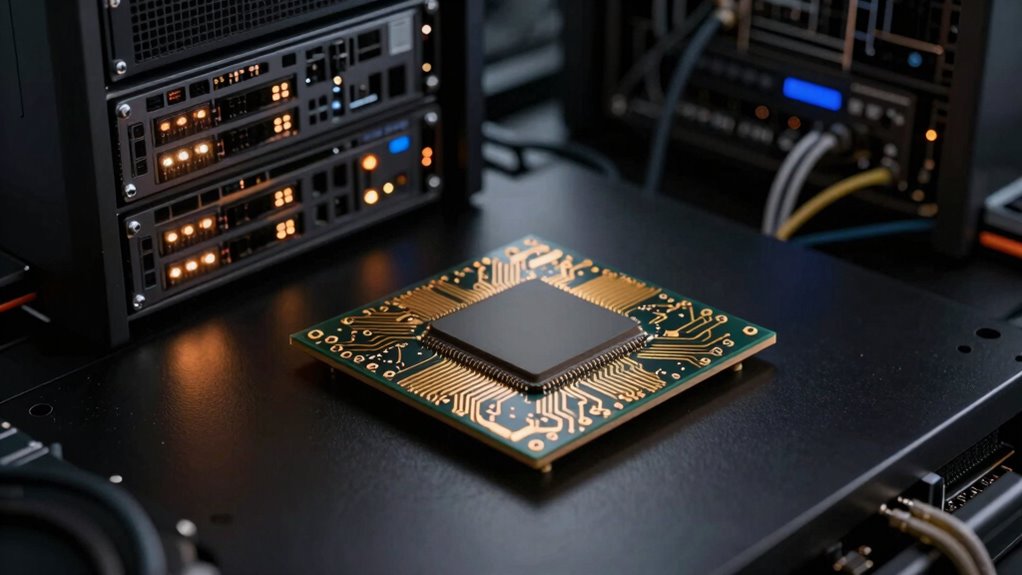

Smaller AI models are safer, faster, and more practical because they are easier to understand, tweak, and control. They require less computing power, which speeds up responses and makes them easier to deploy on edge devices. Plus, they help reduce risks and privacy concerns through local processing. If you want to discover how these compact models can outperform larger ones and fit your needs, keep exploring further.
Key Takeaways
- Smaller models are easier to interpret, enabling better control, bias reduction, and transparency for safer deployment.
- They require less computing power, allowing faster inference and real-time responses in time-sensitive applications.
- Their simplified architecture makes error detection, correction, and updates more efficient, increasing overall reliability.
- Local processing enhances data privacy, reduces exposure risks, and simplifies compliance with security standards.
- Cost-effective and scalable, small models facilitate widespread deployment across diverse environments, improving practical usefulness.
What Are the Main Benefits of Small AI Models

Small AI models offer several key benefits that make them increasingly popular. One major advantage is their improved model interpretability, allowing you to understand how decisions are made, which builds trust and helps with debugging. Unlike larger models, they are easier to analyze and explain, making them more transparent. Additionally, small models help address scalability challenges, as they require less computing power and memory, making deployment more flexible and cost-effective. This reduced resource requirement also enables edge computing capabilities, allowing models to run directly on devices with limited resources, such as smartphones or embedded systems. Their efficiency accelerates development cycles, enabling rapid updates and customization. The role of contrast ratio in model performance also illustrates how smaller models can maintain high image quality with less complexity. Moreover, smaller models contribute to self-sufficiency by reducing dependency on extensive infrastructure and external support. This can be particularly important in remote or resource-constrained environments. Overall, these benefits make small AI models ideal for many real-world applications, especially when speed, transparency, and resource constraints are critical considerations.
How Small AI Models Improve Safety and Reduce Risks
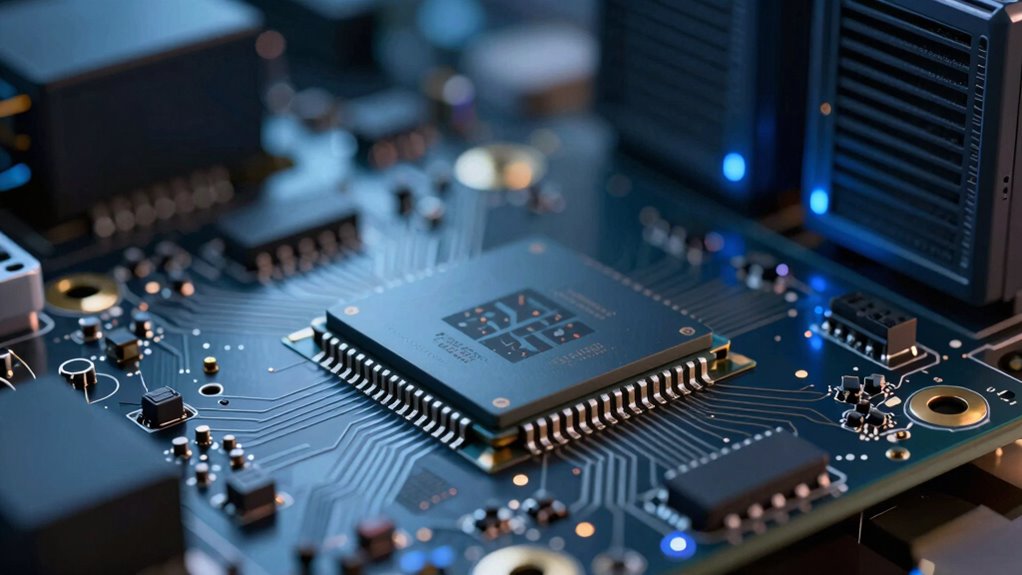
Smaller AI models give you better control over their behavior, making it easier to manage and adjust their outputs. Because they process less data, they’re less prone to making mistakes that could cause harm. This simplicity helps you reduce potential risks and guarantee safer, more reliable results. Additionally, Free Floating capabilities in smaller models can facilitate more flexible and adaptable performance in various contexts.
Enhanced Control Mechanisms
Because they are less complex, smaller AI models allow you to implement more effective control mechanisms that enhance safety. With fewer parameters, you can closely monitor and adjust the model’s behavior, ensuring it aligns with ethical considerations. This simplicity also makes it easier to reduce bias, as you can identify and correct problematic tendencies more quickly. Smaller models provide transparency, allowing you to understand decision pathways and prevent unintended outputs. You can also incorporate safeguards directly into the architecture, reducing the risk of harmful or unpredictable responses. Overall, these enhanced control mechanisms give you better oversight and agility, making smaller AI models safer and more reliable for sensitive applications where controlling risks is essential. Understanding affiliate disclosure helps maintain transparency and user trust in the process.
Reduced Error Potential
Enhanced control mechanisms in smaller AI models directly contribute to reducing errors and unintended outputs. This makes these models safer by minimizing mistakes that could harm users or violate ethical considerations. Smaller models are easier to scrutinize, ensuring better data privacy and compliance with regulations. They also allow you to fine-tune responses more effectively, reducing the risk of biased or inappropriate outputs. Plus, their simplified architecture helps you identify and correct errors quickly, lowering overall risk. Furthermore, their simplified architecture allows for more targeted improvements and easier troubleshooting, further enhancing safety. Additionally, implementing security measures is vital to protect customer payment data and prevent cyber threats. The ease of testing and validation in smaller models ensures ongoing compliance with regulatory standards, making them a safer choice overall. Moreover, their reduced complexity facilitates faster updates and iterations, which can enhance overall safety and performance.
Why Small AI Models Are Faster and Easier to Deploy

Small AI models are easier to deploy because they require simpler setup processes that save you time and effort. They also need less powerful hardware, making it possible to run them on standard devices instead of specialized servers. This combination allows for faster implementation and quicker results, helping you get started more efficiently.
Simplified Deployment Processes
Simplified deployment processes are a key advantage of smaller AI models, making them quicker and easier to implement. Their lightweight nature means you spend less time configuring hardware, managing dependencies, or troubleshooting complex systems. This streamlined process enhances model scalability, allowing you to quickly adapt to changing needs without overhauling your setup. Additionally, smaller models help preserve data privacy because they require less data for training and deployment, reducing exposure risks. You can also test and iterate faster, accelerating your project timelines. Plus, these models fit seamlessly into various environments, from edge devices to cloud infrastructure. Smaller models also tend to involve fewer security vulnerabilities, making them potentially safer options for sensitive applications. Their simplified architecture also means they are less prone to overfitting, which can improve their reliability across different tasks. Moreover, their reduced complexity can lead to faster inference times, further boosting efficiency and responsiveness. Incorporating model interpretability techniques can also help ensure transparency and build trust in smaller AI systems.
Reduced Hardware Requirements
Because smaller AI models require less computational power, deploying them often demands minimal hardware resources. This is achieved through techniques like model compression, which reduces the size of the model without sacrificing performance. Smaller models are more hardware-efficient, meaning they run faster and consume less energy. You can deploy them on a wider range of devices, from smartphones to edge devices, without needing specialized or expensive infrastructure. This ease of deployment accelerates development cycles and makes AI accessible to more users. Reduced hardware requirements also lower operational costs, enabling quicker updates and scaling. Additionally, model optimization techniques help enhance performance further while maintaining a small footprint. This approach also supports scalability, allowing AI solutions to grow seamlessly with user needs. Overall, smaller models simplify deployment, improve hardware efficiency, and make AI solutions more practical across diverse environments.
Cost Savings With Compact AI Architectures

Compact AI architectures markedly reduce operational costs by requiring less computational power and energy. This means you save money on infrastructure, cooling, and maintenance. Smaller models also help you navigate scalability challenges more easily, allowing you to deploy AI solutions across diverse environments without hefty investments. Plus, their lightweight nature enhances data privacy by minimizing data transfer and storage needs. You can process sensitive information locally, reducing exposure risks. Additionally, these architectures enable faster iteration and deployment, cutting down time-to-market. Here’s what you gain:
- Lower hardware and energy expenses
- Easier scalability across platforms
- Improved data privacy through local processing
- Faster deployment cycles
- Reduced ongoing operational costs
How Smaller AI Systems Are Easier to Audit and Understand

Smaller AI models inherently make the process of auditing and understanding their behavior more straightforward. With fewer parameters and simpler structures, you can more easily identify how the model processes information and makes decisions. This enhances model transparency, allowing you to see what’s happening inside rather than treating it as a black box. Audit simplicity improves because it’s easier to trace outputs back to specific inputs and internal processes. You can quickly pinpoint potential biases or errors, reducing the time and effort needed for thorough evaluation. This clarity helps build trust in the AI system and ensures compliance with safety standards. Overall, smaller models make it more feasible for you to maintain oversight and understand their workings, promoting safer and more responsible AI deployment.
Customizing and Flexing Small AI Models for Specific Needs

When tailoring small AI models for specific tasks, you can efficiently adapt their structures and parameters to meet your unique needs. This process, known as model customization, allows you to fine-tune models for better accuracy, speed, and relevance. To enhance flexibility, you might simplify or expand model layers, adjust training data, or incorporate domain-specific knowledge. These tweaks enable you to optimize performance without overcomplicating the model. Here are some ways to achieve this:
- Modify model architecture for targeted tasks
- Fine-tune with specialized data sets
- Adjust hyperparameters for better responsiveness
- Incorporate domain-specific features
- Streamline models for faster inference
Such customization maximizes utility while maintaining safety and speed benefits.
Real-World Examples Where Small AI Outperforms Larger Models

Real-world applications consistently show that small AI models often outperform larger ones in efficiency and practicality. For example, in healthcare, small models enable faster diagnosis with better model interpretability, helping clinicians make ethical decisions swiftly. In customer service, lightweight AI handles queries efficiently, reducing bias and promoting ethical considerations in automated responses. Small models also excel in embedded systems, like IoT devices, where speed and resource constraints matter most. Here’s a quick comparison:
| Aspect | Small AI Models | Large AI Models |
|---|---|---|
| Model interpretability | High | Low |
| Speed | Faster | Slower |
| Ethical considerations | Easier to audit and control | More opaque, harder to audit |
| Resource efficiency | High | Less efficient |
| Practical deployment | Widely adaptable | Often limited to powerful servers |
Additionally, small models tend to be more compliant with data privacy regulations, making them safer choices for sensitive applications.
Limitations of Large AI Models That Small Models Can Overcome

Large AI models often struggle with transparency and efficiency, which can hinder their practical use. Their complexity makes model interpretability challenging, leaving users unsure how decisions are made. This opacity raises ethical considerations, such as bias and accountability issues. Smaller models, however, excel by:
- Offering clearer insights into decision-making processes
- Reducing computational resources and energy consumption
- Accelerating response times for real-time applications
- Simplifying updates and maintenance
- Facilitating compliance with ethical standards
- Youngster Choice provides an example of how smaller models can successfully transition from niche to mainstream applications.
How to Choose the Right AI Model Size for Your Project

Choosing the right AI model size depends on your project’s specific needs and constraints. Smaller models often excel in model interpretability, making it easier to understand decisions and guarantee data privacy. Larger models may offer more accuracy but at the cost of increased complexity and risk. Consider your priorities: if data privacy is critical, opt for a smaller, transparent model. If interpretability matters, smaller models are easier to audit and explain. Use the table below to compare options:
| Model Size | Best For | Key Benefit |
|---|---|---|
| Small | Data privacy, interpretability | Easy to understand |
| Medium | Balanced accuracy, privacy | Slightly more complex |
| Large | High accuracy, complex tasks | Less transparent |
| Extra Large | Cutting-edge research | Less suitable for privacy |
Additionally, model interpretability is crucial for ensuring your AI decisions are transparent and trustworthy. Choose wisely based on your project’s goals.
Frequently Asked Questions
Can Small AI Models Handle Complex Tasks as Effectively as Large Ones?
Small AI models can handle complex tasks effectively, but their success depends on balancing model complexity and data requirements. You might find they work well for specific, focused issues, especially when optimized properly. However, for highly intricate tasks needing broad understanding, larger models often have an edge due to their extensive data and complexity. Ultimately, choosing the right size depends on your task’s scope and the data you can provide.
How Do Small AI Models Impact Long-Term Scalability?
You might think small AI models solve everything, but they face scalability challenges that could trip you up long-term. As demands grow, resource management becomes tricky, forcing you to constantly optimize or rebuild. While they’re nimble now, their limited capacity might hinder future expansion. So, if you want sustainable growth, don’t overlook how the size of your models impacts scalability and the resources you’ll need to keep up.
Are Small AI Models Suitable for Real-Time, High-Stakes Applications?
Yes, small AI models are suitable for real-time, high-stakes applications. They excel in edge deployment, allowing you to process data locally, reducing latency and dependence on internet connectivity. Plus, their smaller size helps preserve privacy, as sensitive data stays on your device. This combination makes them ideal for scenarios where quick decision-making and data security are critical, ensuring you get fast, reliable results without compromising safety or privacy.
What Are the Challenges in Developing Small AI Models for Niche Domains?
You face challenges developing small AI models for niche domains due to data scarcity and domain specificity. Limited data makes training tough, risking overfitting and poor accuracy. Balancing these models’ simplicity with the need for specialized knowledge requires clever techniques, like transfer learning or data augmentation. While smaller models are faster and safer, ensuring they capture nuanced domain details without abundant data remains a key hurdle.
How Does Model Size Influence AI Bias and Fairness?
You might find that smaller AI models often offer greater model transparency, making it easier to identify and understand biases. This transparency helps you implement bias mitigation strategies effectively. Since smaller models are less complex, you can more readily scrutinize their decision-making processes, promoting fairness. By focusing on model transparency and bias mitigation, you guarantee your AI system is more equitable and trustworthy, reducing the risk of unintended bias.
Conclusion
Choosing a smaller AI model can markedly boost safety, speed, and cost-efficiency. Did you know that small models can be up to 10 times faster and more affordable to implement? By tailoring models to your specific needs, you not only reduce risks but also gain better control and transparency. So, before jumping into the biggest, most complex AI, consider how a compact model might deliver smarter, safer, and more practical solutions for your projects.