
📊 Full opportunity report: Sovereignty Is a Pipe, Not a Passport on ThorstenMeyerAI.com — validation score, market gap, and execution plan.
Listen free for 30 days with Audible
Thousands of audiobooks and originals — cancel anytime.
Start your free trialAs an affiliate, we earn on qualifying purchases.
TL;DR
While European AI firms like Mistral promote data sovereignty by hosting models domestically, reliance on American cloud infrastructure undermines this claim. Jurisdiction follows the data pipeline, not just the company’s origin.
Mistral, a European AI company valued at $14 billion, claims to offer a sovereign alternative by hosting models within EU jurisdictions. However, experts warn that the legal jurisdiction governing data depends on the cloud platform used to deliver the models, not just where the company is based. This raises questions about the true sovereignty of European AI services.
While Mistral emphasizes its European ownership and hosting infrastructure—such as its Paris data center and certifications like SecNumCloud—its models are distributed through American cloud providers like Microsoft Azure, Google Cloud, and Amazon Web Services. This situation is discussed in Different Game, or Already Lost? Reading Mistral’s Sovereignty Bet. This creates a legal exposure: under the US CLOUD Act, American authorities can compel access to data stored on servers operated by US-based companies, regardless of physical location.
Experts note that hosting models on European infrastructure can provide genuine sovereignty advantages, especially when models are run locally or within EU-controlled data centers. However, once these models are accessed via US cloud platforms, the jurisdictional risk re-emerges because the cloud provider’s legal obligations follow its corporate domicile, not the physical server location. For more insights, see Different Game, or Already Lost? Reading Mistral’s Sovereignty Bet.
European regulators have been cautious, with some questioning whether hosting within the EU fully shields data from US legal reach. The controversy over France’s Health Data Hub exemplifies this concern, as European data hosted by US companies remains potentially accessible under US law.
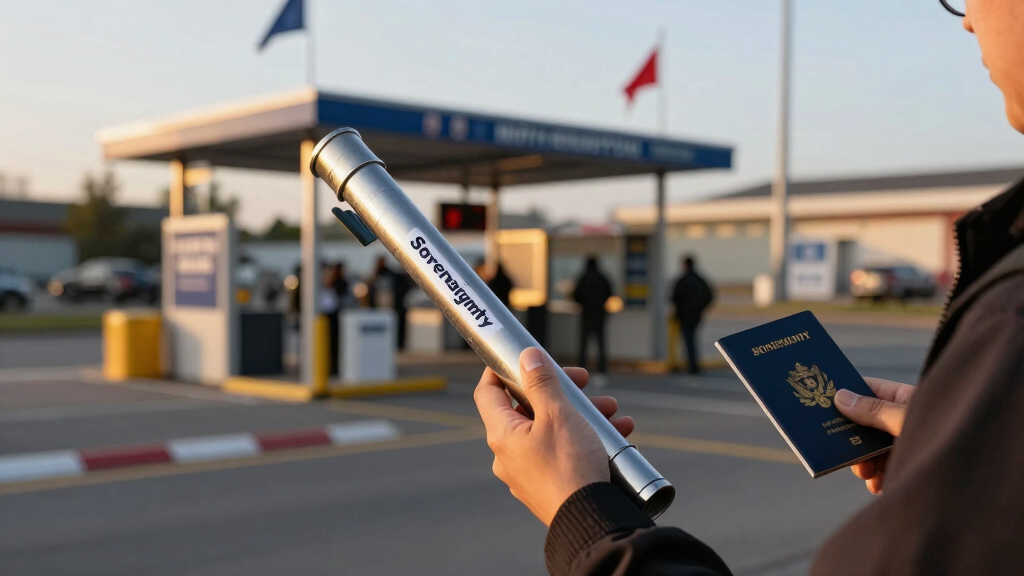
Sovereignty is a pipe, not a passport
Mistral sells European data sovereignty — then distributes its models through Azure, Bedrock & Google Cloud, the American infrastructure it tells customers to flee. A French passport on the lab doesn’t travel down an American wire.
Mistral-direct
hyperscaler
The CLOUD Act lets US authorities compel a US-headquartered provider to hand over data wherever it physically sits. Picking the “EU region” in AWS or Azure doesn’t resolve it — jurisdiction follows the company’s HQ, not the server’s location. Schrems II established the same from the EU side.
Mistral isn’t selling a lie — it’s selling a conditional truth, and the condition is the part the marketing skips. Sovereignty holds on Mistral’s own iron; it leaks the moment convenience routes the model through the American cloud. The deeper lesson cuts at Brussels: sovereignty is an end-to-end property of the whole stack — model, cloud, chips, supply chain — that Europe owns at no layer except the model itself. As Mensch put it: you “cannot regulate your way to computing supremacy.”
Implications for European Data Sovereignty Strategies
This analysis underscores that true sovereignty depends on the entire data stack—from hardware to cloud services—and not merely on where a company is incorporated or where data is physically stored. European enterprises must consider the legal jurisdiction of the cloud platforms they use, as reliance on US-based infrastructure exposes them to US legal authority, regardless of local hosting.
For policymakers and buyers, this means that certifications like SecNumCloud and BSI C5 are necessary but not sufficient for sovereignty. The dependency on US hardware suppliers like Nvidia and the legal reach of US laws complicate the sovereignty promise, potentially limiting the effectiveness of European data protection efforts.
European data sovereignty cloud hosting
As an affiliate, we earn on qualifying purchases.
As an affiliate, we earn on qualifying purchases.
European Sovereignty Efforts and Cloud Jurisdiction Challenges
European countries have long sought to establish sovereign cloud solutions to protect sensitive data from US legal reach. Initiatives like France’s Health Data Hub and certifications such as SecNumCloud aim to reinforce this goal. However, legal frameworks like the US CLOUD Act and the Schrems II ruling have revealed that jurisdiction follows the legal domicile of the service provider, not just the physical location of data.
Recent industry developments include US cloud providers extending EU data residency options, but regulators remain cautious. The dependency on US hardware, especially Nvidia’s GPUs, further complicates sovereignty, as the supply chain is dominated by US-controlled companies, making complete independence difficult.
“Our models are hosted within European data centers, ensuring compliance with EU laws.”
— Mistral spokesperson
As an affiliate, we earn on qualifying purchases.
Legal and Technical Limits of European Sovereignty
It remains unclear to what extent European regulators and courts will accept or challenge the legal risks posed by US cloud providers hosting European data and models. The effectiveness of new EU controls and the potential for legal recourse are still being tested in courts and industry standards.
Additionally, the hardware dependency on US-controlled companies like Nvidia presents a technical vulnerability that complicates sovereignty efforts, but the full extent of this issue has yet to be assessed.
EU data center security certifications
As an affiliate, we earn on qualifying purchases.
As an affiliate, we earn on qualifying purchases.
Future Legal and Industry Developments in Data Sovereignty
European regulators are expected to continue scrutinizing cloud providers and enforcing stricter controls on data jurisdiction. US cloud providers may further extend EU-specific data residency options, but legal challenges remain.
Industry players like Mistral might focus on increasing on-premise, fully European-hosted models, or develop hardware alternatives to reduce dependency on US technology. The ongoing legal debates and technological innovations will shape the future landscape of European data sovereignty.
private cloud infrastructure for AI
As an affiliate, we earn on qualifying purchases.
As an affiliate, we earn on qualifying purchases.
Key Questions
Does hosting a model in Europe guarantee data sovereignty?
Not necessarily. While hosting within European data centers helps, the legal jurisdiction depends on the cloud provider’s domicile and the applicable laws, such as the US CLOUD Act.
Can European companies fully escape US legal reach?
Currently, full escape is difficult due to the legal jurisdiction following the company and the hardware supply chain, which is largely US-controlled.
What role do certifications like SecNumCloud play?
They set standards for security and compliance, but do not fully address jurisdictional legal risks associated with US cloud providers.
Will US cloud providers offer more EU-residency options?
Yes, US providers are expanding EU data residency options, but regulators remain cautious, and legal uncertainties persist.
What can European firms do to improve sovereignty?
They can focus on on-premise hosting, develop local hardware supply chains, and push for legal reforms to limit US jurisdiction over European data.
Source: ThorstenMeyerAI.com
NFL season / tailgating Picks
team gear
As an affiliate, we earn on qualifying purchases.