
📊 Full opportunity report: The Unexpected Toll Of Free Artificial Intelligence on ThorstenMeyerAI.com — validation score, market gap, and execution plan.

Prime made for students and young adults
- Fast, free delivery for dorm and study essentials
- Prime Video and Amazon Music included
- Member-only deals
TL;DR
As AI becomes increasingly cheap and ubiquitous, the true sources of value shift from models to physical infrastructure and human oversight. This change impacts regional sovereignty and economic strategy, raising new concerns about control and dependence.
Experts warn that as artificial intelligence becomes increasingly cheap and ubiquitous, the value shifts away from the models themselves toward the physical infrastructure and human oversight, fundamentally altering the AI economy and geopolitical landscape.
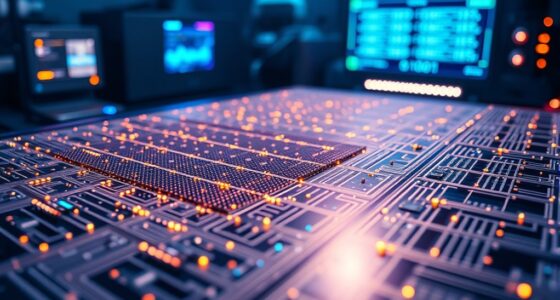
The core development is that AI models are rapidly approaching the status of commodities, with model quality becoming a fungible, price-driven market. The true value now resides in the compute fleet—the physical capacity to produce AI—such as chips, data centers, and power. This physical layer is costly and slow to build, thus remaining a scarce resource.
Additionally, despite the proliferation of AI, human judgment retains its unique importance. People continue to value accountability, trust, and responsibility, which cannot be fully delegated to AI systems. This human element is becoming increasingly valuable as models become more accessible and less differentiated.
The forecast is right: intelligence becomes a commodity, cheap and ambient like electricity. But “commodity” is a statement about where value leaves. The whole game is being early to where it goes instead.
▲ Opinion & analysis · not investment adviceWhen the crude is cheap, value moves to the refinery, the trusted name on the deal, and the buyer who can only drink so much. Same shape here.
When a capability becomes abundant and free, we stop exercising it. Some of that is fine. Some of it hollows us out.
knowing which wishes are worth making — and being a person who can still tell.
Implications of Physical Infrastructure and Human Judgment
This shift means that regional sovereignty depends less on AI capabilities and more on control over physical production. Countries that lack the infrastructure to build and maintain AI hardware risk becoming dependent on external providers, affecting economic independence and strategic power. The enduring importance of human oversight also underscores the need for trust and accountability in AI-driven decisions, influencing business practices and regulatory policies.
As an affiliate, we earn on qualifying purchases.
Shifts in AI Economics and Strategic Control
Historically, AI development was driven by model innovation. However, recent industry insights suggest that model quality is now a commodity, with the real value lying in the physical infrastructure that supports AI production. This inversion aligns with broader economic patterns where scarcity shifts toward tangible assets like factories and supply chains.
Thorsten Meyer emphasizes that physical capacity—the compute fleet—is the true moat, especially for regions like Europe that may lack the manufacturing base needed to sustain AI independence. Meanwhile, the human element remains vital, as accountability and trust are inherently human qualities that AI cannot replicate.
"The moat is the means of production, not the intelligence itself. Physical capacity—chips, data centers, power—is what remains scarce and valuable."
— Thorsten Meyer
As an affiliate, we earn on qualifying purchases.
Unclear Impact of Infrastructure Concentration
It remains uncertain how quickly physical infrastructure will consolidate or decentralize, and whether regions can develop independent supply chains. The long-term effects of reliance on external hardware providers versus self-sufficient infrastructure are still emerging, and geopolitical responses are unpredictable.
enterprise data center power supplies
As an affiliate, we earn on qualifying purchases.
As an affiliate, we earn on qualifying purchases.
Monitoring Infrastructure and Regulatory Developments
Next steps include tracking investments in physical AI infrastructure, regional policies on hardware manufacturing, and evolving regulations around AI accountability. Industry shifts and geopolitical strategies will shape how control over physical capacity influences AI dominance and sovereignty in the coming years.
AI infrastructure management tools
As an affiliate, we earn on qualifying purchases.
As an affiliate, we earn on qualifying purchases.
Key Questions
Why is physical infrastructure more important than AI models?
Because building and maintaining AI hardware—such as chips and data centers—is costly and slow, making it a scarce resource. It provides a durable economic and strategic advantage that models alone cannot offer.
How does this shift affect regional AI sovereignty?
Regions lacking the physical capacity to produce AI hardware risk becoming dependent on external providers, which could limit their control over AI development and strategic influence.
Will human judgment remain relevant in AI-driven decision-making?
Yes, because accountability, trust, and responsibility are inherently human qualities. Despite advances in AI, humans will continue to play a crucial role in overseeing and validating AI outputs.
What are the risks of over-reliance on external AI infrastructure?
Dependence on external providers can lead to strategic vulnerabilities, including supply chain disruptions, geopolitical conflicts, and loss of sovereignty over AI capabilities.
Source: ThorstenMeyerAI.com
Halloween Picks
halloween
As an affiliate, we earn on qualifying purchases.