
TL;DR

Prime made for students and young adults
- Fast, free delivery for dorm and study essentials
- Prime Video and Amazon Music included
- Member-only deals
AI is central to the development of digital twins used in city surveillance, influencing governance, privacy, and social dynamics. Cities are adopting AI-powered platforms for urban management, raising questions about control and accountability.
Artificial intelligence is increasingly integral to city digital twins, which are virtual replicas of urban environments used for surveillance, planning, and management. This development is reshaping urban governance, raising questions about control, privacy, and social impact. The trend underscores the importance of understanding who profits, who is exposed, and how social costs are managed.
City digital twins are continuously-updated virtual models fed by sensors, satellite imagery, and mobility data. They are used in applications such as flood response, traffic management, and urban planning. AI algorithms power these platforms, enabling real-time analysis and decision-making. Major vendors are creating proprietary, lock-in platforms that embed these AI systems deeply into city infrastructure, making exit difficult. European cities like Barcelona and Rotterdam are experimenting with governance models to prevent vendor lock-in and ensure public control. Meanwhile, the data ingested by these twins often includes private business information, raising privacy and legal concerns under GDPR. Privacy-preserving AI techniques are emerging to mitigate these issues, but standardization remains lacking.
Societally, digital twins with AI capabilities are climbing Gartner’s hype cycle, from operational models to citizen-level replicas. While they offer benefits like reduced emergency response costs and emissions, they also pose risks of surveillance, social inequality, and erosion of democratic contestation. The debate centers on how to govern these technologies effectively, balancing utility and social safeguards.
Impacts of AI-Driven City Digital Twins on Urban Governance
The integration of AI into city digital twins fundamentally alters urban governance, shifting control from public authorities to platform vendors and private entities. This creates dependencies that are difficult to reverse, potentially undermining democratic accountability. For citizens and businesses, the stakes involve privacy, data control, and the ability to influence urban policies. The development of shared ownership models, like Rotterdam’s approach, could serve as a template for balancing innovation with public oversight. The direction these initiatives take will determine whether AI-enhanced surveillance enhances city resilience or erodes civil liberties.
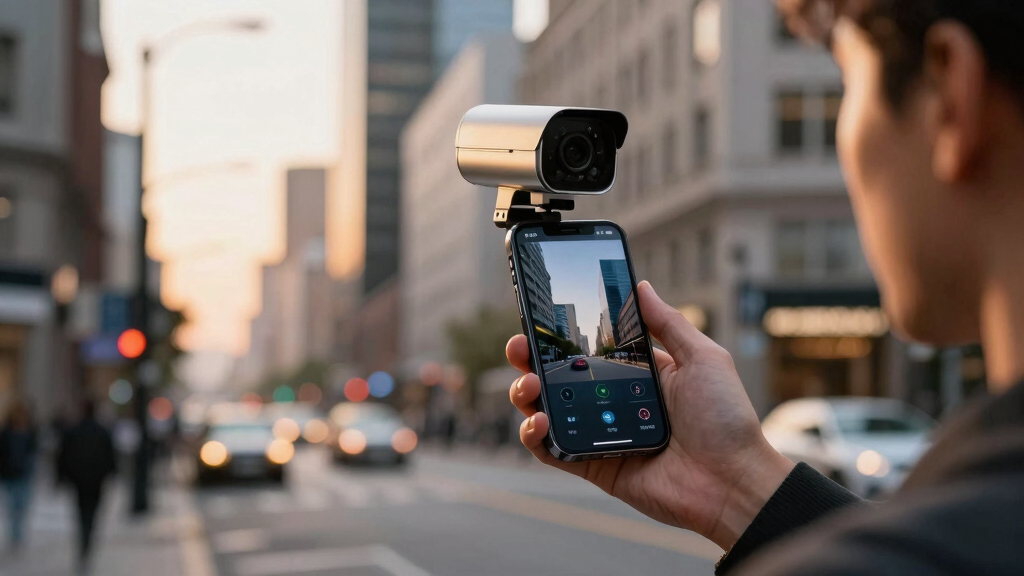
AI city surveillance camera systems
As an affiliate, we earn on qualifying purchases.
As an affiliate, we earn on qualifying purchases.
Evolution and Risks of AI-Enabled Urban Digital Twins
Since 2018, digital twins have evolved from business applications to government and citizen models, driven by urban needs for flood modeling, traffic optimization, and environmental monitoring. AI enables these models to analyze vast data streams in real time, improving responsiveness and efficiency. However, the technology’s rapid adoption has outpaced governance frameworks, leading to concerns about opaque data processing, privacy violations, and societal impacts. Cities like Rotterdam are pioneering shared governance models to address these issues, but widespread adoption remains uncertain.
“City digital twins are not just technical tools; they are social architectures that embed economic dependencies and social costs.”
— Thorsten Meyer, researcher
As an affiliate, we earn on qualifying purchases.
Unresolved Questions About AI, Data Control, and Governance
It is still unclear how widespread shared ownership models like Rotterdam’s will succeed in practice. The effectiveness of privacy-preserving AI techniques at scale remains to be proven, and legal frameworks are still catching up with technological capabilities. The long-term societal impacts of AI-enabled city surveillance are also uncertain, especially regarding civil liberties and democratic oversight.
As an affiliate, we earn on qualifying purchases.
Next Steps for Regulating and Governing Urban AI Surveillance
Future developments will likely include broader adoption of shared governance models, enhanced legal standards for data control, and increased transparency requirements for twin platforms. Cities and regulators will need to establish enforceable purpose limitations and public oversight mechanisms to prevent unchecked vendor lock-in and privacy violations. Monitoring these trends will be critical as urban AI surveillance continues to evolve.
As an affiliate, we earn on qualifying purchases.
Key Questions
How does AI improve city surveillance and management?
AI enables real-time analysis of large data streams from sensors and imagery, improving responsiveness in flood response, traffic management, and urban planning.
What are the risks of relying on AI-powered city twins?
The risks include privacy violations, social inequality, vendor lock-in, and potential erosion of democratic oversight.
Are there models for public control of city digital twins?
Yes, Rotterdam is experimenting with shared ownership structures aimed at public governance, which could serve as a template for other cities.
How are privacy concerns being addressed?
Emerging privacy-preserving techniques like differential privacy are being developed, but standardization and enforcement remain challenges.
What is the future outlook for AI and city surveillance?
Advances in governance, legal frameworks, and technical safeguards will shape whether AI enhances urban resilience or undermines civil liberties.
Source: ThorstenMeyerAI.com
Fall Picks
fall essentials
As an affiliate, we earn on qualifying purchases.