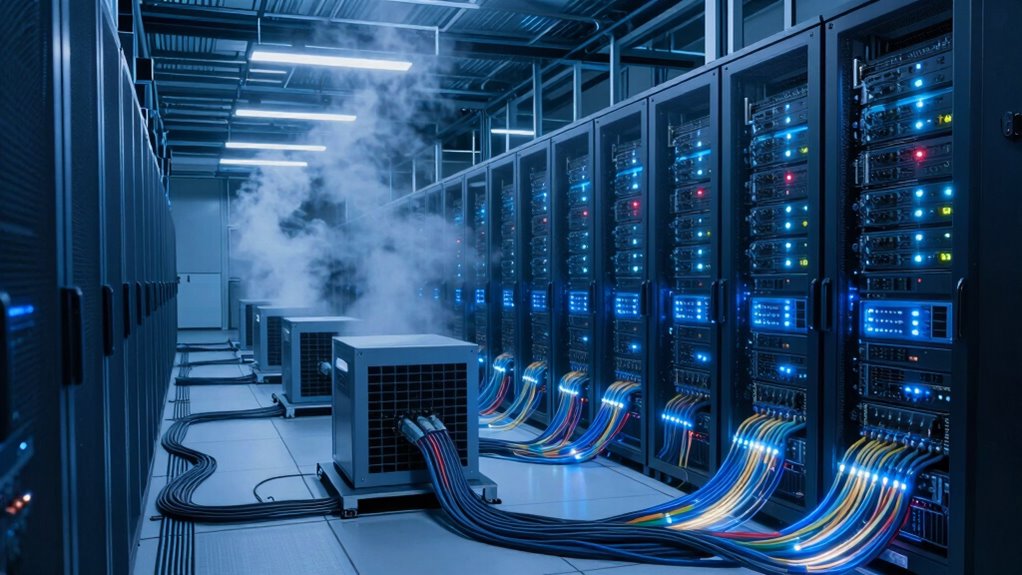

AI needs a lot of electricity because training advanced models requires powerful hardware that runs continuously for days or weeks, consuming huge amounts of energy. Data centers hosting these processes also need extensive cooling and support infrastructure, which further increases energy use. As AI models grow more complex, they demand even more processing power, pushing energy consumption higher. If you keep exploring, you’ll discover how efforts are underway to make AI energy use more sustainable.

Get school and study supplies delivered free — and shop member deals
- Fast, free delivery on millions of items
- Access to Prime Big Deal Days deals on October 6–7
- Prime Video, Amazon Music and more included
Key Takeaways
- Training complex AI models requires intensive computational power over extended periods, leading to high energy consumption.
- Data centers hosting AI workloads need substantial cooling systems to manage server heat, increasing energy use.
- Growing demand for cloud-based AI services prompts expansion of infrastructure, raising overall electricity requirements.
- Advanced hardware and larger datasets push AI’s processing needs higher, resulting in greater energy demands.
- Efforts to improve hardware efficiency and cooling are essential to reduce AI’s environmental impact and energy use.
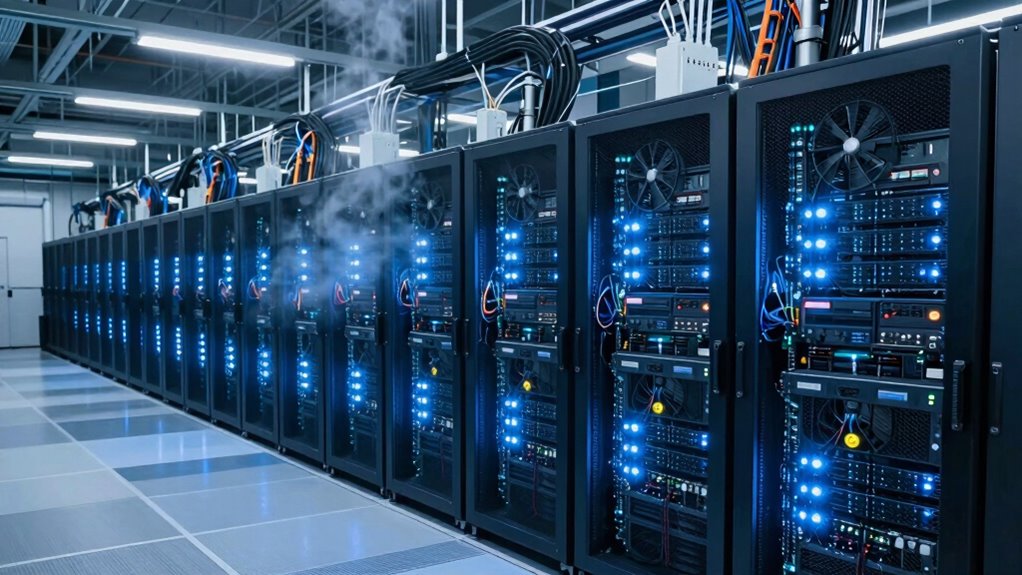
Have you ever wondered how much electricity AI systems consume? It’s a question that’s becoming more pressing as artificial intelligence continues to grow in complexity and capability. AI’s energy consumption is largely driven by the massive data centers that support these systems. These data centers house countless servers working around the clock to process, store, and analyze data. As AI models become larger and more sophisticated, they require substantial computational power, which directly translates to increased energy demands. The energy needed to run these data centers isn’t just for powering the servers but also for cooling them. Servers generate significant heat during operation, and maintaining ideal temperatures demands extensive cooling systems, further boosting energy consumption.
AI’s growing complexity increases data center energy use for powering and cooling servers constantly processing data.
When you think about training an advanced AI model, the energy costs skyrocket. Training involves running complex algorithms over vast datasets multiple times, which demands high-performance hardware operating continuously for days or even weeks. This intensive process consumes a tremendous amount of electricity. Because of this, data centers hosting AI training tasks must be equipped with robust power supplies and cooling infrastructure, both of which consume additional energy. The size and scale of these operations mean that AI’s energy footprint is substantial, especially when compared to traditional computing tasks.
The growth of cloud-based AI services amplifies this issue. As more users access AI-powered tools online, data centers must expand to meet the demand, leading to even higher energy consumption. Cloud providers often build new, larger facilities to keep pace, which consumes more resources. While some companies are investing in renewable energy sources to power their data centers, many still rely heavily on fossil fuels, contributing to environmental concerns. The energy consumption of AI isn’t just about operational costs; it also impacts the environment, especially when the electricity comes from non-renewable sources.
Furthermore, as AI advances, the models themselves become more complex, requiring exponentially more processing power. This trend pushes data centers into higher energy brackets. Although hardware efficiency improves over time, the sheer scale of AI’s current and future demands means that energy consumption remains a crucial challenge. It’s not just about powering individual models but sustaining the entire infrastructure that supports AI development and deployment. Additionally, innovations in hardware efficiency and alternative cooling techniques could help mitigate some of this energy demand.
Additional energy demands are driven by the need for more powerful hardware and larger datasets, further increasing the environmental impact. As AI continues to evolve, ongoing research into energy-efficient algorithms could play a vital role in reducing the overall footprint of these systems.
high performance cooling systems for data centers
As an affiliate, we earn on qualifying purchases.
As an affiliate, we earn on qualifying purchases.
Frequently Asked Questions
How Does AI Electricity Consumption Compare to Traditional Computing?
You’ll find that AI’s electricity consumption is higher than traditional computing because it demands intense processing power. However, advancements in hardware innovations aim to boost energy efficiency, reducing overall power needs. While AI systems may currently use more energy, ongoing improvements are making them more efficient. You can expect future AI developments to be more sustainable, thanks to smarter hardware that balances performance with lower energy consumption.
What Renewable Energy Sources Are Used for AI Data Centers?
You’ll find that many AI data centers prioritize renewable integration, using sources like solar and wind power to reduce their carbon footprint. They often incorporate energy storage systems to balance supply and demand, ensuring continuous operation even when renewable sources are intermittent. This approach helps make AI’s electricity consumption more sustainable, allowing data centers to harness clean energy while maintaining high performance and efficiency.
Can AI Models Be Optimized to Use Less Electricity?
Absolutely, you can optimize AI models to use less electricity. Think of it as tuning a car engine for efficiency; techniques like model compression reduce the size and complexity of models, while hardware efficiency guarantees they run smarter, not harder. By focusing on these strategies, you make AI more energy-friendly, saving power without sacrificing performance. This way, your AI becomes a lean, green machine, driving innovation sustainably.
How Does AI Energy Use Impact Global Carbon Emissions?
Your AI energy use considerably impacts global carbon emissions by increasing its carbon footprint. As AI models consume large amounts of electricity, especially from fossil fuel sources, they contribute to greenhouse gas emissions. To reduce this impact, you can advocate for better energy efficiency in AI systems and support renewable energy sources. Lowering AI’s energy consumption helps lessen its environmental impact and promotes a more sustainable future for everyone.
What Future Technologies Might Reduce Ai’s Electricity Needs?
Future technologies like advanced AI hardware and improved data efficiency could profoundly cut AI’s electricity needs. You might see more energy-efficient chips designed specifically for AI tasks, reducing power consumption. Additionally, optimizing algorithms for data efficiency helps AI do more with less energy. These innovations will enable you to run powerful AI systems sustainably, lowering environmental impact while maintaining performance.
As an affiliate, we earn on qualifying purchases.
Conclusion
As you see, AI’s energy hunger is like a relentless storm, constantly expanding and demanding more power. While these intelligent systems push boundaries and revolutionize our world, they also pull a hefty toll on our electricity resources. If we’re not careful, we risk running out of fuel just when we need AI the most. So, it’s up to us to find a balance—taming this energy beast before it consumes us all.
As an affiliate, we earn on qualifying purchases.
renewable energy power supplies for data centers
As an affiliate, we earn on qualifying purchases.
As an affiliate, we earn on qualifying purchases.
Fall Picks
fall essentials
As an affiliate, we earn on qualifying purchases.