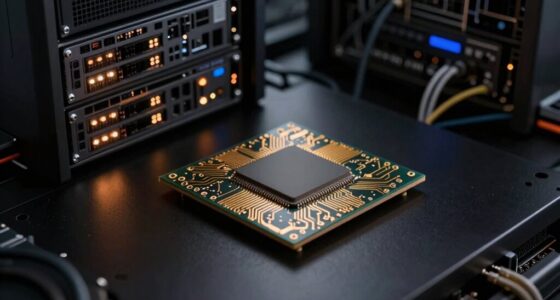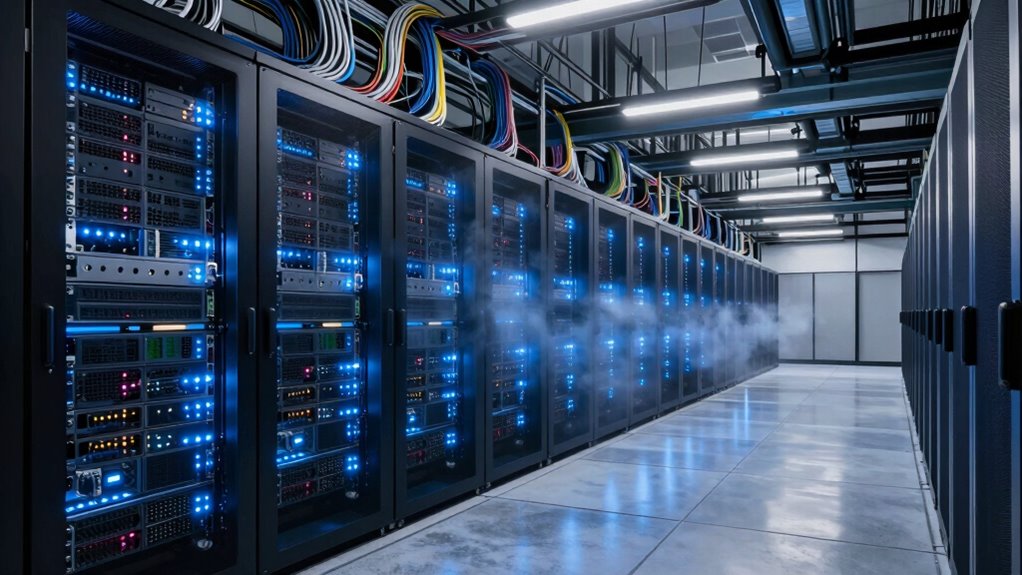

You might think cooling in data centers is just about preventing overheating, but it’s actually more about protecting your hardware and ensuring everything runs smoothly. Overheating can cause damage, downtime, and data loss, which cost a lot. Efficient cooling keeps servers at ideal temperatures, saves energy, and lowers operational costs. If you want to see how advanced cooling strategies help achieve these goals, keep exploring this essential aspect of data center design.
Key Takeaways
- Overheating can cause hardware failures, data loss, and costly downtime, making cooling critical for reliability.
- Efficient cooling reduces energy consumption, lowering operational costs and environmental impact.
- Precise thermal management ensures servers operate at optimal temperatures, maintaining performance.
- Advanced cooling technologies enable higher server densities without risking overheating.
- Proper cooling practices support sustainability goals by minimizing carbon emissions and conserving energy.
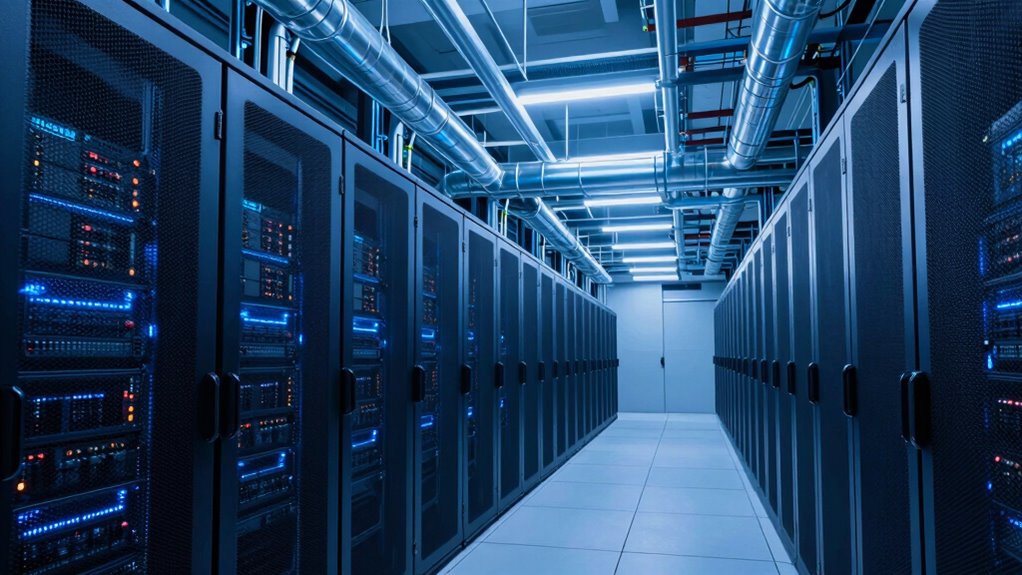
Have you ever wondered how data centers keep their servers from overheating? It’s a fundamental question because these facilities house thousands of high-powered computers that generate enormous heat. Without proper cooling, these servers could quickly become damaged or fail, leading to costly downtime and data loss. To prevent that, data centers prioritize thermal management, which involves controlling temperature and airflow to keep equipment operating at ideal levels. This focus on thermal management isn’t just about protecting hardware; it’s also about maximizing energy efficiency. Cooling systems consume a significant portion of a data center’s energy, so engineers work tirelessly to develop methods that reduce power usage without compromising performance.
You might be surprised how much effort goes into cooling strategies. For example, many data centers use liquid cooling, which involves circulating coolants directly through components or racks. This method transfers heat more effectively than traditional air cooling, allowing servers to run at higher densities while using less energy. Additionally, some facilities are designed with hot and cold aisle containment systems. These barriers separate the cold air intake from the hot exhaust, preventing airflow from mixing and improving overall thermal management. By refining airflow pathways, data centers can operate at higher temperatures, reducing the load on cooling units and boosting energy efficiency. Implementing advanced cooling technologies can further optimize these systems and lead to even greater energy savings.
Another reason cooling is so essential is that it directly impacts the sustainability of a data center. As energy consumption grows globally, data center operators are under increasing pressure to cut energy waste. Efficient thermal management helps achieve this by lowering cooling demands, which translates into less electricity used for air conditioning and refrigeration. This not only reduces operational costs but also aligns with environmental goals to cut carbon emissions. The drive for energy efficiency has led to innovative solutions like free cooling systems, which utilize outside air when conditions permit, further decreasing reliance on mechanical cooling. Moreover, advancements in thermal management technologies continue to push the boundaries of sustainable data center design. Proper cooling practices also contribute to reducing the carbon footprint of digital infrastructure, making it an integral part of sustainable development.
In essence, the importance of cooling in data centers extends beyond mere temperature control. It’s a strategic component of energy efficiency, helping data centers operate sustainably and cost-effectively. You can see that every aspect of thermal management, from airflow design to advanced cooling technologies, aims to keep servers running smoothly while using as little energy as possible. This delicate balance between cooling and energy conservation underscores why data centers invest so heavily in their thermal management systems. They understand that maintaining ideal temperatures isn’t just about hardware safety; it’s about creating a resilient, efficient, and environmentally responsible digital infrastructure.

Dynatron L3-UH All in One 1U Server Liquid Cooler for LGA1700, AM3
Supports Intel Socket LGA 115X/2011/2066/1356/1366/1700
As an affiliate, we earn on qualifying purchases.
As an affiliate, we earn on qualifying purchases.
Frequently Asked Questions
How Do Cooling Systems Impact Data Center Energy Efficiency?
Cooling systems directly impact your data center’s energy efficiency by optimizing thermal management and airflow. When you improve airflow, you reduce hotspots and lower the workload on cooling units, conserving energy. Effective thermal management ensures equipment stays within safe temperatures without overcooling, which wastes energy. By focusing on airflow optimization and thermal control, you can greatly cut energy costs while maintaining reliable, high-performance data center operations.
What Innovative Cooling Technologies Are Emerging in Data Centers?
Imagine a data center using liquid cooling to optimize thermal management. This innovative technology circulates coolant directly through servers, drastically reducing energy use compared to traditional air cooling. For example, some facilities now deploy immersion cooling, submerging hardware in specially designed liquids. This approach not only enhances cooling efficiency but also allows for higher server densities, making data centers more sustainable and cost-effective by streamlining thermal management.
How Do Cooling Needs Differ Between Various Data Center Sizes?
You’ll find that cooling needs vary greatly with data center size. Smaller centers often rely on strategic server placement and airflow optimization to efficiently manage heat, since they have limited space for large cooling systems. Larger centers, however, require advanced cooling solutions like liquid cooling and raised floors to handle higher heat loads. In all cases, optimizing airflow and server placement helps prevent hotspots and reduces energy consumption.
What Are the Environmental Impacts of Data Center Cooling Methods?
You might not realize it, but your data center’s cooling methods considerably impact the environment. Inefficient thermal regulation and climate control often lead to high energy consumption, contributing to carbon emissions and heat pollution. Some cooling solutions, like free cooling or using renewable energy, reduce these effects. By choosing eco-friendly climate control options, you help lower the data center’s carbon footprint and support a healthier planet.
How Do Data Centers Manage Cooling During Unexpected Power Outages?
During unexpected power outages, you can imagine the data center’s thermal management system as a vigilant guardian, swiftly switching to backup cooling methods like liquid cooling or free cooling. These systems, designed for resilience, keep servers from overheating, even when power is interrupted. Automated controls activate emergency cooling, ensuring the data center’s temperature stays steady, safeguarding essential data from the heat of chaos.

Tripp Lite Roof Panel Kit for Hot/Cold Aisle Containment System – Wide 750 mm Racks – Black – 29.5" Width
SRCTMTCVR750
As an affiliate, we earn on qualifying purchases.
As an affiliate, we earn on qualifying purchases.
Conclusion
You might think cooling is just a technical detail, but in data centers, it’s the silent guardian of your digital world. Without it, servers overheat, chaos ensues. Yet, it’s also a symbol of the delicate balance between innovation and sustainability. As you rely on the cloud, remember that behind the scenes, cooling keeps everything running smoothly—proving that sometimes, the coolest solutions are the ones you never see.

WMC-2500, 10,000 BTU/Hr Portable Industrial Spot Cooler Air Conditioner, 115V Commercial AC Unit for Indoor, Server rooms & Data centers Use, 15A 1P
SWITCH BETWEEN 4 INSTALLATIONS: The AmeriCool industrial air conditioner offers exceptional versatility with four installation options, including portable,…
As an affiliate, we earn on qualifying purchases.
As an affiliate, we earn on qualifying purchases.

Data Center Cooling Solutions: Harnessing Ventilation and Free Cooling for Sustainability
As an affiliate, we earn on qualifying purchases.
As an affiliate, we earn on qualifying purchases.