
Gimbals still matter because they offer unmatched stability, precise control, and ergonomic comfort that digital stabilization can’t fully replace. They help you maintain smooth, sharp footage during complex or fast movements, reducing fatigue even after long shoots. With physical stability, you can execute professional camera moves easily, especially in unpredictable environments. If you want to learn how gimbals continue to enhance filmmaking, keep exploring the key benefits they bring to your projects.

Prime made for students and young adults
- Fast, free delivery for dorm and study essentials
- Prime Video and Amazon Music included
- Member-only deals
Key Takeaways
- Gimbals provide physical stability and control that digital stabilization can’t fully replicate, especially in complex or rapid movements.
- They offer extended battery life and power management, enabling longer shooting sessions without draining device batteries.
- Ergonomic design reduces fatigue and enhances user comfort during prolonged filming, improving overall footage quality.
- Gimbals support precise, professional-level camera movements for dynamic shots that digital stabilization may struggle to achieve.
- Technological advancements keep gimbals relevant by integrating advanced features, maintaining their importance in fast-paced, complex filming environments.
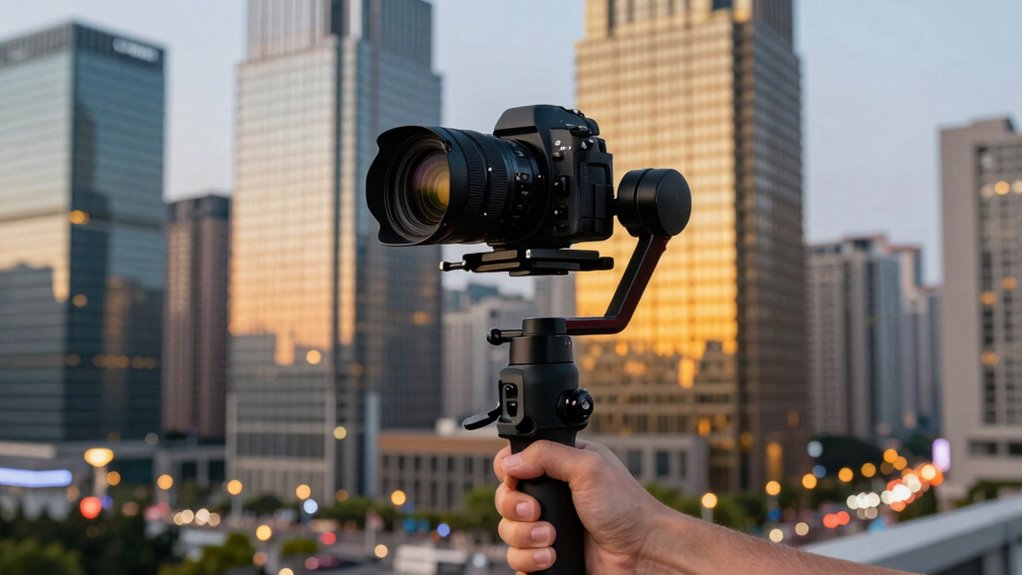
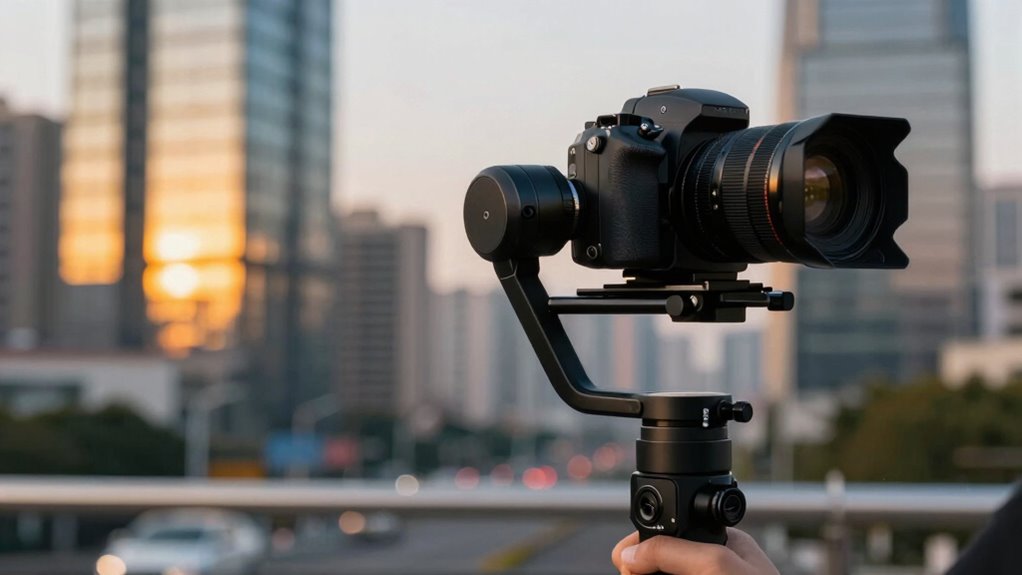
Have gimbals become obsolete in the age of advanced digital stabilization? Not quite. While software-based stabilization has improved dramatically, gimbals still offer unique advantages that digital solutions can’t fully replicate. When you’re capturing smooth footage on the move, handheld ergonomics plays an essential role. Gimbals are designed with comfort and control in mind, allowing you to hold your camera steadily for extended periods. Their balanced weight distribution reduces fatigue, so you can shoot longer without your arms tiring or your footage becoming shaky. This ergonomic design makes a noticeable difference, especially during long shoots or when you’re moving around a lot. Plus, gimbals provide a level of physical stability that helps you maintain precise control over your camera’s position and movement, which is harder to achieve through digital stabilization alone. Additionally, ergonomic design enhances user comfort, enabling longer shooting sessions without strain. Battery longevity is another critical factor that keeps gimbals relevant. Most modern digital stabilization systems rely on the camera or phone’s internal processing power, which consumes battery life quickly. Gimbals, on the other hand, have dedicated motors powered by their own batteries. This means your device’s battery isn’t drained as rapidly, and you can shoot for longer periods without worrying about losing power. If you’re filming a lengthy event or an outdoor adventure, this extended battery life can be a game-changer. It also offers the flexibility to shoot in environments where charging options are limited. Plus, quality gimbals often feature intelligent power management, ensuring you get the most out of every charge, so your workflow remains smooth and uninterrupted. Moreover, the **physical stability** offered by gimbals is particularly valuable in unpredictable environments where digital stabilization may struggle to keep up with rapid or complex movements. As technology advances, the precision control that gimbals provide continues to improve, further solidifying their place in professional filmmaking. Gimbals still shine when it comes to dynamic shots or complex movements. Digital stabilization can only do so much; it tends to smooth out small jitters but struggles with rapid, multi-directional movements or when you need to follow fast-moving subjects. They also provide a tactile feedback that helps filmmakers make precise adjustments during shooting. Gimbals allow you to execute fluid, professional-level camera movements like pans, tilts, and tracking shots with ease. They give you a level of creative control that software alone can’t duplicate, especially in unpredictable or fast-paced filming scenarios. In essence, while digital stabilization has come a long way, it doesn’t replace the tangible benefits of a well-designed gimbal. Handheld ergonomics and battery longevity are just two reasons why gimbals remain an indispensable tool for filmmakers and content creators who demand stability, comfort, and extended shooting capacity. As technology continues to evolve, the integration of advanced stabilization features in gimbals further emphasizes their ongoing relevance. They continue to be an essential piece of equipment that elevates your footage from good to professional.
Popular right now

Vitamix Propel Series 510 Professional-Grade Blender, 3 Programs, Black

Vitamix Propel Series 750 Professional-Grade Blender, 4 Programs, Black

Vitamix 5200 Professional-Grade Blender, 64 oz. Container, Black
As an affiliate, we earn on qualifying purchases.
Frequently Asked Questions
Can Gimbals Improve Footage Quality in Low-Light Conditions?
Yes, gimbals can improve footage quality in low-light conditions by providing better lighting enhancement and stability. They help you maintain smooth, steady shots, reducing camera shake that often worsens in dim environments. This stability allows your camera to focus more effectively, which can lead to less noise and clearer images. Overall, gimbals enable you to capture sharper, more professional-looking footage even when lighting is less than ideal.
Are Gimbals Suitable for Professional Filmmaking or Just Hobbyist Use?
Gimbals are suitable for professional filmmaking because they offer excellent ergonomics, allowing you to shoot smoothly over long periods without fatigue. Their battery life supports extended filming sessions, making them reliable for demanding projects. While digital stabilization is advanced, gimbals provide precise control and stability in dynamic scenes. As a result, they’re invaluable tools that elevate your footage quality, whether you’re a seasoned pro or serious hobbyist.
How Do Gimbals Compare in Weight and Portability to Handheld Stabilizers?
You’ll find gimbals are generally heavier but more portable than handheld stabilizers, making them easier to carry around without sacrificing stability. While they often come with longer battery life, they tend to be pricier, especially high-end models. It’s a balancing act—you get better performance, but at the cost of added weight. Think of it as trading a heavy load for smoother shots, which can be worth its weight in gold.
What Maintenance Is Required to Keep a Gimbal Operating Smoothly?
To keep your gimbal operating smoothly, regularly check its battery longevity and recharge as needed to guarantee peak performance. You should also perform calibration procedures periodically, especially after crashes or if you notice instability. Clean the motors and sensors gently with a soft cloth to prevent dust buildup. Following these maintenance steps keeps your gimbal reliable, extends its lifespan, and guarantees steady shots, no matter your filming conditions.
Do Gimbals Support All Camera Types and Sizes?
Gimbals support many camera types and sizes, but your choice depends on camera compatibility and weight considerations. You need to check if the gimbal can handle your camera’s weight and size, especially for larger DSLRs or cinema cameras. Some gimbals are versatile and support a wide range of gear, while others are specialized. Always verify the gimbal’s specifications to guarantee it matches your camera’s requirements for smooth, stable footage.
Conclusion
While digital stabilization offers convenience, a gimbal is like the steady hand guiding your shot through chaos. Imagine a camera on rough terrain—digital tech smooths the ride, but a gimbal keeps it perfectly balanced, like a tightrope walker on a wire. Both serve to stabilize, yet one brings a precision that digital can’t quite match. In a world of pixels and algorithms, a gimbal remains your trusted partner, ensuring your footage stays flawless—no matter the chaos around you.