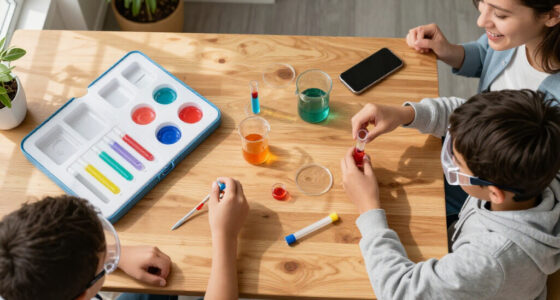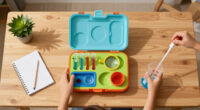
Interactive science kits for kids range from single-topic chemistry sets to 100+ experiment mega kits, and the right choice depends mostly on your child’s age and attention span. My top overall pick is the Doctor Jupiter Ultimate Science Experiments Kit, which balances a large experiment count with clear instructions and independent play for kids 8 and up. For younger siblings, the Science Can Human Body Model offers hands-on anatomy learning without any messy mixing, while the National Geographic Microscope delivers the deepest long-term engagement if your kid is patient enough for it. The main tradeoff in this category is variety versus depth: big multi-experiment kits thrill kids who like novelty, but focused tools like microscopes and anatomy models hold interest for years instead of weeks. Keep reading for the full breakdown, including which kits are worth the premium price and which ones fall flat after the first weekend.

Prime made for students and young adults
- Fast, free delivery for dorm and study essentials
- Prime Video and Amazon Music included
- Member-only deals
Key Takeaways
- Experiment count is misleading: the National Geographic 100+ activity kits include many variations of the same core experiment, while the Doctor Jupiter Ultimate kit’s smaller-feeling lineup delivers more genuinely distinct activities.
- Age labels matter more than usual here — kits marked 4+ (Doctor Jupiter My First Science) rely heavily on parent involvement, while 8-12 kits assume kids can read instructions and measure independently.
- The National Geographic Microscope was the only kit in this lineup with multi-year replay value; every chemistry-style kit is consumable and effectively ‘ends’ once the powders run out.
- Magic-themed kits (Science Magic, Magic Chemistry) ranked lower for actual science learning — the trick framing hooks reluctant kids but the scientific explanation is often an afterthought.
- This roundup contains two identical Doctor Jupiter My First Science listings at different prices, so check which seller and price point you’re actually buying before checkout.
| Science Can Human Body Model for Kids, Interactive Anatomy Learning Toys |  | Best for Anatomy Learning | Model Number: 160022 | Age Range: 6-12 years | Removable Parts: 15+ organs, muscles, bones | VIEW LATEST PRICE | See Our Full Breakdown |
| National Geographic Magic Chemistry Set with 10 Tricks for Kids Ages 8-12 |  | Best Magic-and-Science Hybrid | Recommended Age: 8-12 years | Number of Tricks: 10 | Included Components: Experiment tools, magic wand, gloves, illustrated guide | VIEW LATEST PRICE | See Our Full Breakdown |
| National Geographic Earth Science Kit with 100+ Activities for Kids 8-12 | 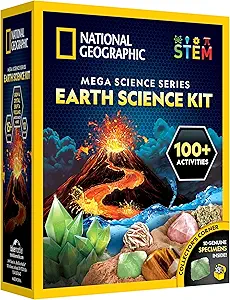 | Best Overall | Brand: Blue Marble / National Geographic | Age Range: 8 years and up | Number of Activities: 100+ experiments | VIEW LATEST PRICE | See Our Full Breakdown |
| Doctor Jupiter My First Science Experiments Kit for Kids Ages 4+ |  | Best for Young Beginners | Brand: Doctor Jupiter | Age Range: 4 years and up | Model Number: DJ Junior Science | VIEW LATEST PRICE | See Our Full Breakdown |
| Doctor Jupiter Ultimate Science Experiments Kit for Kids Ages 8+ |  | Best Premium Pick | Brand: Doctor Jupiter | Number of Experiments: 135+ | Bonus Experiments: 90+ | VIEW LATEST PRICE | See Our Full Breakdown |
| National Geographic Science Magic Kit with 100+ Experiments for Kids 8-12 |  | Best for Kids Who Resist ‘Learning’ | Brand: Blue Marble | Age Range: 8 years and up | Experiments: 20 included + 85+ bonus booklet | VIEW LATEST PRICE | See Our Full Breakdown |
| National Geographic Amazing Chemistry Set with 100+ Experiments for Ages 8-12 |  | Best Overall | Brand: Blue Marble | Age Range: 8 years and up | Experiments: 100+ included, 85+ bonus guide | VIEW LATEST PRICE | See Our Full Breakdown |
| National Geographic Microscope for Kids with Up to 400x Magnification |  | Best for Independent Discovery | Magnification: Up to 400x | Prepared Slides: 6 plant slides | Specimens: 6 rocks and minerals | VIEW LATEST PRICE | See Our Full Breakdown |
| Science Kit for Kids, 80 Science Lab Experiments, Scientist Role Play |  | Best Value Party-and-Play Kit | Brand: Kuovei | Age Range: 6+ years | Number of Experiments: 80 | VIEW LATEST PRICE | See Our Full Breakdown |
| Doctor Jupiter My First Science Experiments Kit for Kids Ages 4+ |  | Best for Preschoolers | Brand: Doctor Jupiter | Recommended Age: 4+ years | Number of Experiments: 50+ | VIEW LATEST PRICE | See Our Full Breakdown |
| National Geographic Junior Chemistry Set with 50 Experiments for Kids |  | Best for Preschool Scientists | Brand: Blue Marble (National Geographic) | Recommended Age: 4 years and up | Number of Experiments: 50 | VIEW LATEST PRICE | See Our Full Breakdown |
| interactive science kits for kid | Brand | Model Number | Age Range |
|---|---|---|---|
| Science Can Human Body Model f | — | 160022 | 6-12 years |
| National Geographic Magic Chem | National Geographic | — | — |
| National Geographic Earth Scie | Blue Marble / National Geographic | NGMEGAEARTH | 8 years and up |
| Doctor Jupiter My First Scienc | Doctor Jupiter | DJ Junior Science | 4 years and up |
| Doctor Jupiter Ultimate Scienc | Doctor Jupiter | — | — |
| National Geographic Science Ma | Blue Marble | NGMEGAMAGIC | 8 years and up |
| National Geographic Amazing Ch | Blue Marble | NGMEGACHEMAR | 8 years and up |
| National Geographic Microscope | — | — | — |
| Science Kit for Kids | Kuovei | MYJ886-A | 6+ years |
| Doctor Jupiter My First Scienc | Doctor Jupiter | — | — |
| National Geographic Junior Che | Blue Marble (National Geographic) | — | — |
More Details on Our Top Picks
Science Can Human Body Model for Kids, Interactive Anatomy Learning Toys
Most kits in this roundup are about mixing and reacting; this one goes deeper into a single subject. The 15+ removable organs, muscles, and bones give kids a tactile map of the body that no experiment kit can replicate, and the interactive quiz mode turns passive study into a game. Compared with the National Geographic Earth Science Kit, which spreads attention across dozens of topics, this model builds focused, repeatable knowledge of anatomy. The tradeoff is narrowness — after the organs are memorized, the quiz content runs out. Parents should also note it needs 3 AA batteries that aren’t included, and smaller pieces can snap if handled roughly by kids at the younger end of the 6–12 range.
Pros:- Hands-on removable organs make anatomy tangible and memorable
- Quiz and explanation modes reinforce learning without a parent’s constant involvement
- Included booklet and knowledge cards extend play beyond the model itself
- Compact 11-inch size fits on a desk or shelf
Cons:- Batteries not included, adding hidden cost and setup friction
- Delicate parts can break with rough handling by younger kids
- Single-topic scope limits long-term replay value
Best for: Parents of kids ages 6–10 who show curiosity about how the body works and prefer focused learning over scattered experiments
Not ideal for: Families wanting variety — once anatomy is covered, there’s nothing new to explore, unlike multi-experiment kits
- Model Number:160022
- Age Range:6-12 years
- Removable Parts:15+ organs, muscles, bones
- Model Height:11 inches
- Included Components:Human body model, learning booklet, knowledge cards, base
- Batteries:3 AA (not included)
Our verdict“This pick makes the most sense for a child fascinated by biology who will repeatedly revisit one subject rather than sample many.”
National Geographic Magic Chemistry Set with 10 Tricks for Kids Ages 8-12
Where the Doctor Jupiter Ultimate Science Kit emphasizes volume, this set bets everything on showmanship. Ten experiments double as magic tricks kids can perform, complete with a wand and gloves, which changes the outcome entirely: instead of quietly observing a reaction, your child gets to entertain family and friends. That performance angle builds confidence in a way straightforward chemistry sets don’t. The obvious tradeoff is quantity — only 10 tricks versus 100+ activities in larger kits, so it can feel finished within a weekend. Adult supervision is needed, and kids who want pure science rather than themed presentation may find the magic framing gimmicky. Still, for a reluctant scientist, this hook works.
Pros:- Combines real chemistry with performance, boosting engagement and confidence
- All tools, wand, and gloves included so kids can start immediately
- Illustrated guide is genuinely kid-friendly and easy to follow
Cons:- Only 10 experiments, far fewer than competing kits
- Requires adult supervision for most tricks
- Magic theme may not appeal to kids who want straightforward science
Best for: Kids ages 8–12 who love performing and need a persuasive hook to care about science
Not ideal for: Families seeking long-term value — 10 tricks burn out fast compared to 100+ experiment kits
- Recommended Age:8-12 years
- Number of Tricks:10
- Included Components:Experiment tools, magic wand, gloves, illustrated guide
- Brand:National Geographic
- Theme:Magic-themed chemistry
- Supervision:Adult recommended
Our verdict“Buy this if your goal is converting a magic-obsessed kid into a science fan, not if you want months of experiments.”
National Geographic Earth Science Kit with 100+ Activities for Kids 8-12
This is the kit I’d point most families toward first, because it balances breadth, quality, and replayability better than anything else here. With over 100 experiments spanning volcano eruptions, crystal growing, and geologic digs, it covers multiple science disciplines in one box — unlike the Science Can Human Body Model, which is confined to anatomy. The instruction guides explain the science behind each activity, so kids aren’t just making a mess; they’re connecting cause to effect. Compared with the Doctor Jupiter Ultimate Science Kit, it trades a higher experiment count for more memorable, showcase-worthy projects. The tradeoffs are real: some activities demand adult supervision, safety documentation is thinner than I’d like, and younger siblings under 8 will struggle with several experiments.
Pros:- 100+ experiments across geology, chemistry, and earth science for lasting value
- Guides explain the science behind each activity, not just the steps
- Great for shared family or group activities
- Backed by a manufacturer warranty
Cons:- Adult supervision needed for several experiments
- Safety precautions are sparsely documented
- Too advanced for children under 8
Best for: Families with kids 8+ who want one kit that covers many science topics and lasts for months
Not ideal for: Households with kids under 8 or no adult available — several experiments require supervision and reading skill
- Brand:Blue Marble / National Geographic
- Age Range:8 years and up
- Number of Activities:100+ experiments
- Objective:STEM learning
- Model Number:NGMEGAEARTH
- Manufacturer:JMW Sales, Inc.
- Warranty:Manufacturer warranty available
Our verdict“The safest default choice in this roundup — broad, durable fun for kids old enough to work semi-independently.”
Doctor Jupiter My First Science Experiments Kit for Kids Ages 4+
Most kits here start at age 8; this one opens the door at age 4, and that difference defines it. The experiments lean on food-safe materials — baking powder, corn starch, food coloring, dried lemongrass — rather than harsher chemicals, so a spill isn’t a crisis. Compared with the National Geographic Earth Science Kit, the science is simpler and the wow factor smaller, but that’s the point: it’s about building comfort with beakers, funnels, and goggles early. The inclusion of real lab equipment sized for small hands, plus a bonus experiment booklet, gives it surprising longevity for a preschool-oriented kit. Drawbacks include small parts that pose a choking hazard for the youngest users, and kids over 7 will likely outgrow the content quickly.
Pros:- Age-appropriate entry point starting at 4 years old
- Food-grade materials meet U.S. safety standards for peace of mind
- Includes real equipment like beakers, goggles, and a conical flask
- Bonus experiment booklet stretches value beyond the initial activities
Cons:- Small parts present a choking hazard for the youngest end of the range
- Content is too simple for children over 7
- Some experiments still need a grown-up’s help
Best for: Parents of preschoolers and early elementary kids (4–7) who want a gentle, safe introduction to science
Not ideal for: Kids 8 and up — the experiments will feel babyish compared to chemistry sets designed for their age
- Brand:Doctor Jupiter
- Age Range:4 years and up
- Model Number:DJ Junior Science
- Number of Experiments:100+
- Key Components:2 beakers, conical flask, spatula, stirring sticks, spray bottles, funnel, safety goggles, tray, food colors, food additives, dried leaves
- Materials Standard:Meets U.S. safety standards
- Manufacturer:Metis Learning Solutions Pvt. Ltd.
Our verdict“The right first science kit for little ones — buy it for the 4-to-6 crowd, skip it for anyone older.”
Doctor Jupiter Ultimate Science Experiments Kit for Kids Ages 8+
For sheer volume, nothing in this lineup matches it: 135+ experiments plus 90+ bonus activities, with highlights like glowing water and underwater volcanoes that deliver genuine spectacle. The leak-proof chemical bottles are a thoughtful touch — compared with the National Geographic Magic Chemistry Set, which packs loose accessories, this kit is built for storage and repeated use over months. Instructions are written for kids and parents together, which fits its 8+ recommendation honestly: several experiments genuinely need an adult partner, and the chemicals demand careful handling. The tradeoff against the Earth Science Kit is topic cohesion — this is general novelty science rather than a themed curriculum. It’s also the priciest tier, so budget-conscious buyers may get 90% of the joy for less money elsewhere.
Pros:- Largest experiment count in the roundup at 135+, plus 90+ bonus activities
- Leak-proof bottles make storage and repeated use practical
- High-spectacle experiments like glowing water keep kids coming back
- Instructions designed for parent-child collaboration
Cons:- Chemical materials require careful handling and adult supervision
- Higher price point than simpler kits
- Complexity makes it unsuitable for children under 8
Best for: Families willing to spend more for maximum experiment volume and a kit that stays engaging for months
Not ideal for: Parents who want a set a child can use unsupervised — chemicals and complexity require adult involvement
- Brand:Doctor Jupiter
- Number of Experiments:135+
- Bonus Experiments:90+
- Recommended Age:8+ years
- Materials:Chemical materials in leak-proof bottles
- Supervision:Adult required for some experiments
Our verdict“The volume king — pick it if budget allows and an adult can share the lab time.”
National Geographic Science Magic Kit with 100+ Experiments for Kids 8-12
The gimmick here is disguising science as magic, and it works precisely because some kids tune out the moment something looks educational. With 20 fully stocked magic experiments plus a bonus booklet of 85 more, this kit delivers the sheer volume of the National Geographic Amazing Chemistry Set but wraps it in performance: kids learn the chemistry, then show it off. That showmanship angle makes it a stronger fit for skeptical eight-year-olds who loved the tricks more than the teaching. The tradeoff is depth — compared with the Amazing Chemistry Set, the explanations lean lighter and the wow factor leans heavier, so kids who genuinely want to understand reactions may outgrow it faster.
Pros:- 100+ experiments and tricks provide exceptional content volume for the price
- Magic framing motivates kids who normally avoid educational toys
- Bonus booklet extends value with 85 additional experiments
Cons:- Some experiments require adult supervision and setup
- Science explanations are shallower than dedicated chemistry kits
- Complexity can frustrate children at the younger end of the range
Best for: Parents of kids aged 8-12 who show little interest in traditional science toys but love performing tricks
Not ideal for: Families wanting rigorous chemistry learning — the emphasis on magic tricks comes at the expense of deeper scientific explanation
- Brand:Blue Marble
- Age Range:8 years and up
- Experiments:20 included + 85+ bonus booklet
- Focus:Magic tricks and chemistry activities
- Model Number:NGMEGAMAGIC
- ASIN:B0876F6STP
Our verdict“This pick makes the most sense for turning a magic-obsessed kid into a curious scientist rather than the reverse.”
National Geographic Amazing Chemistry Set with 100+ Experiments for Ages 8-12
This is the kit I’d point most families toward first, because it balances breadth, real equipment, and genuine STEM substance better than anything else in this lineup. Unlike the Science Magic Kit, which prioritizes performance, this set includes actual scientific tools — beakers and instruments kids will recognize from a real lab — and experiments like crystal growing and color-changing reactions that teach proper chemistry concepts. The bonus guide with 85 household-item experiments means the kit keeps producing value after the boxed supplies run out. Compared with the Kuovei 80-experiment kit, the instructions and material quality feel more consistent and polished. The tradeoff: parents are on the hook for supervision, and some experiments send you scavenging for baking soda or vinegar.
Pros:- 100+ experiments plus 85 more using household items
- Real scientific tools rather than toy-grade plastic imitations
- Award-winning STEM design with clear instructional support
- Crystal growing and reaction experiments have lasting display value
Cons:- Requires adult supervision for younger children
- Some experiments need additional household materials not included
Best for: Families with kids aged 8-12 who want a long-lasting, genuinely educational chemistry kit with real lab tools
Not ideal for: Households wanting zero parental involvement — many experiments require supervision and occasional household materials
- Brand:Blue Marble
- Age Range:8 years and up
- Experiments:100+ included, 85+ bonus guide
- Highlights:Crystal growing, chemical reactions, color-changing solutions
- Educational Objective:STEM
- Model Number:NGMEGACHEMAR
- Manufacturer:JMW Sales, Inc.
- Warranty:Backed by quality standards and customer support
Our verdict“If you’re buying one serious science kit for an eight-to-twelve-year-old, this option stands out for combining depth, tools, and replayability.”
National Geographic Microscope for Kids with Up to 400x Magnification
While the chemistry sets in this roundup are about following instructions to a result, this microscope flips the dynamic: kids explore whatever they want, from the included plant slides to a leaf from the backyard. That makes it the best pick here for self-directed curiosity — a child who asks ‘what does that look like up close?’ gets an answer without a parent setting up an experiment. The bundled specimens (six prepared slides, six rocks and minerals, plus blank slides) mean there’s something to view on day one, and the lab guide and activities structure the exploration. The honest limitation is the 400x ceiling, which is fine for plant cells and fabric fibers but won’t satisfy a kid hoping to see bacteria.
Pros:- Encourages open-ended exploration rather than one-time experiments
- Includes prepared slides, rocks, minerals, and blank slides for custom specimens
- Large focus knobs and adjustable platform are genuinely kid-friendly
- Lab guide with activities gives structure to free exploration
Cons:- Magnification caps at 400x, limiting what kids can actually see
- Some components may break under rough handling by younger children
Best for: Curious kids aged 6-10 who like exploring on their own rather than following scripted experiments
Not ideal for: Buyers expecting serious magnification — 400x tops out well below hobbyist microscopes, and some parts are fragile
- Magnification:Up to 400x
- Prepared Slides:6 plant slides
- Specimens:6 rocks and minerals
- Blank Slides:6 included
- Accessories:Pipette, specimen dish, tweezers, lab guide, stickers
- Design Features:Large focus knobs, adjustable platform
Our verdict“This model is better suited to a self-starter who wants to investigate the world than a kid who needs the guided structure of a chemistry kit.”
Science Kit for Kids, 80 Science Lab Experiments, Scientist Role Play
The role-play angle is what separates this from every other kit here: it comes with goggles, gloves, test tubes, and petri dishes, so a six-year-old doesn’t just do science — they become a scientist. That costume-like framing makes it a smart choice at birthday parties or for siblings playing together, something the more single-user National Geographic Microscope can’t offer. At 80 experiments for the price, the per-experiment value undercuts the Doctor Jupiter 50+ kit as well. The compromises are real, though: material quality is less documented than the National Geographic options, and parents should expect to gather and reset components between experiments rather than open a fresh pouch each time.
Pros:- 80 experiments deliver strong per-dollar value
- Includes full safety gear (goggles and gloves) and detailed guidance
- Role-play elements make it social and great for group settings
- Accessible entry age of 6, lower than most kits in this lineup
Cons:- Multiple experiments require adult supervision and setup time
- Limited transparency on chemical material durability and sourcing
- Loose components need organized storage space between sessions
Best for: Budget-conscious families with kids aged 6+ who want maximum experiment count and dress-up-style role play
Not ideal for: Parents who prioritize verified material quality and brand accountability — durability documentation for the chemicals is thin
- Brand:Kuovei
- Age Range:6+ years
- Number of Experiments:80
- Included Components:Goggles, gloves, chemical materials, petri dishes, balloons, pigments, test tubes, droppers
- Play Style:Scientist role play with safety gear
- Model Number:MYJ886-A
- Manufacturer:Kuovei
Our verdict“This pick makes the most sense for families wanting affordable, social, dress-up science fun — not for those demanding brand-grade material guarantees.”
Doctor Jupiter My First Science Experiments Kit for Kids Ages 4+
Every other kit in this roundup starts at age 6 or 8; this one starts at age 4, and that gap defines its role. The 50+ experiments are built around safe, simple reactions — think color mixing and fizzing — rather than the crystal growing and chemical tools of the National Geographic Amazing Chemistry Set, which would be wasted on a preschooler anyway. Instructions are heavily illustrated so pre-readers can follow along visually, and the ASTM F963-17 safety certification gives parents of very young kids reassurance the other kits don’t explicitly advertise. The obvious tradeoff is lifespan: a four-year-old will love it, but by age seven or eight they’ll have outgrown it and need something like the Doctor Jupiter Ultimate kit for ages 8+.
Pros:- One of the few genuinely preschool-appropriate science kits available
- ASTM F963-17 safety certification offers explicit peace of mind
- Illustrated instructions work for children who can’t read yet
- 50+ experiments provide days of screen-free engagement
Cons:- Experiments are too basic for children beyond early elementary age
- Sparse documentation on the exact materials and tools included
- Some activities still require adult supervision despite the young target age
Best for: Parents of children aged 4-6 who want a certified-safe first introduction to hands-on science
Not ideal for: Kids aged 7 and up — the experiments are deliberately simple and will be outgrown quickly
- Brand:Doctor Jupiter
- Recommended Age:4+ years
- Number of Experiments:50+
- Safety Standards:ASTM F963-17
- Instruction Style:Well-illustrated, easy to follow
- Format:Screen-free STEM activity kit
Our verdict“This is the right first science kit for a four-to-six-year-old, and the wrong one for anyone older — buy it for the age it’s built for.”
National Geographic Junior Chemistry Set with 50 Experiments for Kids
This set earns its spot as the gentlest entry point in the lineup, aimed squarely at ages 4 and up while most competitors — like the National Geographic Amazing Chemistry Set — start at 8. Where the bigger kits assume reading fluency and patience, this one leans on illustrated, step-by-step instructions and over 20 chunky, kid-safe tools like test tubes and goggles sized for small hands. Compared with the Doctor Jupiter My First Science Kit, the other true preschool option here, this set trades some of Doctor Jupiter’s playful props for a more authentic lab feel, which matters if you want a child to feel like a real chemist early. The honest tradeoff: 50 experiments built on household items means reactions are simple, and an 8-year-old will outgrow it fast.
Pros:- Over 20 durable, kid-safe lab tools sized for preschool hands
- 50 experiments offer weeks of varied activities without repeat purchases
- Illustrated instructions let pre-readers follow along with minimal help
- Uses common household items, so refills are cheap and easy
- Goggles and test tubes create an authentic lab experience that builds STEM identity early
Cons:- Experiments are basic; kids over 7 will likely find them too easy
- Requires frequent adult supervision since it’s designed for very young children
- Depends on supplying your own household ingredients, which can interrupt the fun if you’re missing something
Best for: Parents of 4-to-6-year-olds who want a first chemistry set with real lab tools and safe, supervised experiments
Not ideal for: Families with kids 8 and older — the experiments rely on basic household items and will feel too simple next to kits like the Amazing Chemistry Set
- Brand:Blue Marble (National Geographic)
- Recommended Age:4 years and up
- Number of Experiments:50
- Included Tools:20+ lab tools including test tubes and goggles
- Educational Focus:STEM / Chemistry
- Materials Required:Common household items
- Instruction Style:Illustrated, kid-friendly guide
Our verdict“If your scientist is still in preschool, this is the best-fitting kit in the roundup — just plan to upgrade to an 8+ set within a couple of years.”

How We Picked
I evaluated each kit against five criteria: age-appropriate independence (can a child at the low end of the age range actually do the activities without constant adult help), experiment quality over quantity (whether activities teach a real concept or just produce a visual effect), instruction clarity, replay and refill value, and total cost per meaningful activity. I also weighed how well each kit holds attention beyond the first unboxing, because most kits in this category are consumable and lose their appeal once the included materials are used up.
The ranking rewards kits that match their promised age range, offer genuinely distinct experiments, and justify their price per activity. That’s why the Doctor Jupiter Ultimate kit leads for older kids and the Science Can Human Body Model stands out for younger ones — both deliver what their packaging promises. Kits that pad their activity count with near-duplicate experiments, or that lean on magic tricks at the expense of scientific explanation, ranked lower even when their marketing numbers looked impressive.
| interactive science kits for kid | Brand |
|---|---|
| Science Can Human Body Model f | — |
| National Geographic Magic Chem | National Geographic |
| National Geographic Earth Scie | Blue Marble / National Geographic |
| Doctor Jupiter My First Scienc | Doctor Jupiter |
| Doctor Jupiter Ultimate Scienc | Doctor Jupiter |
| National Geographic Science Ma | Blue Marble |
| National Geographic Amazing Ch | Blue Marble |
| National Geographic Microscope | — |
| Science Kit for Kids | Kuovei |
| Doctor Jupiter My First Scienc | Doctor Jupiter |
| National Geographic Junior Che | Blue Marble (National Geographic) |
Factors to Consider When Choosing Interactive Science Kits For Kids
Before picking a kit, it helps to understand what actually drives satisfaction in this category — and where most buyers go wrong. These are the factors that separated the winners from the disappointments in this comparison.
Match the Kit to the Child’s Actual Age, Not the Box
The single most common mistake is buying an 8-12 kit for a 6-year-old and expecting to supervise occasionally. Kits labeled 4+ are built around shared parent-child time, with oversized components, color-coded steps, and forgiving measurements. Kits labeled 8+ assume reading fluency, fine motor control for measuring powders, and the patience to follow multi-step directions. Buying up an age bracket almost always means the adult ends up running the experiment while the child watches — the opposite of interactive learning. Buying down is less risky but can bore a capable kid within a session or two. If you’re buying for a birthday that’s weeks away, buy for the age the child will be, not the age they are.
Understand What ‘100+ Experiments’ Really Means
Marketing numbers in this category are inflated by design. A “100+ activities” kit often contains 15-20 core experiments with the rest counted as variations, color swaps, or repeat runs. That’s not necessarily bad — variations can reinforce a concept — but it changes the cost per genuinely new experience. Before buying, look at the included materials list: a kit advertising dozens of experiments but shipping with only three or four chemical components is telling you the activities overlap heavily. Single-topic kits with 10-15 distinct, well-explained experiments often teach more than mega kits with 100 superficial ones.
Consumable vs. Durable: Plan for the Kit’s End Date
Most chemistry kits are consumable — once the powders, dyes, and reaction tablets run out, the kit is essentially a memory. A microscope, an anatomy model, or a role-play lab set is durable and can be used for years, often becoming a platform you expand with household materials or prepared slide kits. Neither approach is wrong, but the value math is completely different: a $30 consumable kit that provides three weekends of fun may be a fair purchase, while a $50 durable kit that’s used monthly for two years is a bargain. Decide whether you’re buying an experience or a tool, and price your expectation accordingly.
Supervision and Mess Requirements
Read the fine print on what each kit needs from you and your home. Some experiments require boiling water, a stove, or refrigeration; others produce fizzing overflow, staining dyes, or odors that demand a outdoor setup or a well-covered table. Kits that seem parent-free rarely are, especially for the first run-through of each experiment. If you’re hoping for an independent activity during work calls or sibling nap times, prioritize kits with cold-water-only reactions and self-contained trays. If you enjoy doing experiments together, messier kits often produce the most memorable reactions.
Instruction Quality Determines Whether the Kit Gets Used
A kit with beautiful components and confusing instructions will sit on a shelf — this is where cheap kits cut corners. Look for illustrated, step-by-step manuals with photos of expected results, and ideally a short explanation of the science behind each activity. The best manuals in this category, like those from Doctor Jupiter and National Geographic, include a ‘what happened and why’ section that turns a fun fizz into an actual lesson. If your child is a reluctant reader, check whether the kit includes online video walkthroughs. Instruction quality is the strongest predictor of whether a kit gets used twice.
Refills, Expansion, and Gift Longevity
Check whether a kit’s brand sells refill packs or expansion sets before you buy — this dramatically changes long-term value for durable items like microscopes and for popular consumable kits. Also consider whether the kit connects to a broader ecosystem: National Geographic’s line spans chemistry, earth science, and magic kits, so a kid who loves one can graduate to another without a steep learning curve. Gifting strategically beats gifting bigger: a focused kit that matches a child’s current obsession (dinosaurs, the human body, crystals) will outperform an expensive generalist kit every time.
Frequently Asked Questions
Which kit is best if I have two kids of different ages?
For a mixed-age household, the Doctor Jupiter My First Science kit (4+) paired with parent-led demos works surprisingly well for a 4-7 age gap, because the experiments are visual and simple enough that an older sibling can actually run them for the younger one — which reinforces the older child’s learning too. If both kids are 8+, the Doctor Jupiter Ultimate kit has enough distinct experiments that kids can take turns leading activities without fighting over a single result. Avoid single-result kits like one-off crystal grows for siblings, since only one child gets the payoff. The Science Can Human Body Model also works across ages because the younger child can manipulate the pieces while the older one reads the organ facts aloud.
Are the National Geographic 100+ experiment kits really worth it, or is the count padded?
The count is padded, but not dishonestly — the Earth Science Kit and Amazing Chemistry Set include roughly 15-25 genuinely distinct activities, with the rest counted as variations, repeats, or open-ended play prompts. Whether that’s worth it depends on your child: kids who love novelty and will happily re-run a volcano eruption in three colors get full value, while kids who want a new concept every time may stall after the first dozen activities. Price per distinct experiment is still competitive compared with smaller kits, so the value is real even if the marketing number isn’t literal. My advice: buy one mega kit, not several, and see how your child responds before investing in another from the same line.
What’s the safest option for a 4 or 5-year-old who wants to do ‘experiments’?
At that age, avoid anything with powders, dyes, or reaction chemicals entirely — the Doctor Jupiter My First Science kit (4+) is the best fit in this lineup because its experiments use household-safe materials like baking soda and vinegar with pre-measured, oversized components. The Science Can Human Body Model is even safer since it involves no chemicals at all, just hands-on anatomy play. Expect to be actively involved at this age regardless of the kit’s claims; ‘independent play’ marketing rarely holds up for preschoolers. The realistic goal at 4-5 isn’t chemistry knowledge, it’s building the habit of asking ‘what happens if’ — simple cause-and-effect experiments do that job well.
Is a kids’ microscope a better buy than a chemistry kit?
It depends entirely on your child’s temperament. A microscope like the National Geographic Kids model (400x) is a durable tool with years of potential use, but it demands patience — focusing, preparing slides, and hunting for interesting specimens. Kids who like slow, careful investigation will love it; kids who want instant spectacle will abandon it in a week. Chemistry kits deliver immediate wow-factor reactions but are consumable and eventually run dry. If budget allows one purchase, I’d lean microscope for a child 9 or older who already shows curiosity about nature, and chemistry for younger kids or those who respond to dramatic visual results. You can always add the other category as a later gift.
Do these kits teach actual science, or are they just entertainment?
The honest answer is that most are entertainment with a science wrapper, and how much learning happens depends on the adult conversation around each activity. The kits that teach best in this lineup — the Doctor Jupiter Ultimate and the National Geographic Earth Science Kit — include written explanations of the underlying concepts, but a child who just watches the fizz and walks away absorbs little. Your role in asking ‘why do you think that happened?’ matters more than the kit’s brand. Magic-framed kits are the weakest for learning because the reveal is the point, not the mechanism. If education is your top priority, favor kits with strong manuals and real scientific tools over trick-based sets, and plan to do the experiments alongside your child rather than setting them up solo.
Conclusion
For most families, the Doctor Jupiter Ultimate Science Experiments Kit is my best overall pick — it has the strongest balance of distinct experiments, clear instructions, and age-appropriate independence for kids 8 and up. The best value goes to the National Geographic Junior Chemistry Set, which delivers a solid 50-experiment experience at a friendlier price than its 100+ sibling. For beginners and preschoolers, the Doctor Jupiter My First Science Kit (4+) is the safest, most age-appropriate entry point, while the Science Can Human Body Model is the best choice for a no-mess, durable option that works from age 4 through elementary school. On the premium end, the National Geographic Microscope earns its price for patient, curious kids who will use it for years. For specific needs: choose the National Geographic Earth Science Kit for a nature-loving child, the Science Magic Kit for a reluctant scientist who needs a hook, and the Amazing Chemistry Set for a kid who’s already declared chemistry their favorite subject. Whatever you choose, match the kit to your child’s age and temperament rather than the biggest number on the box — that single decision separates the kits that get played with for months from the ones that gather dust by February.
Fall Picks
fall essentials
As an affiliate, we earn on qualifying purchases.