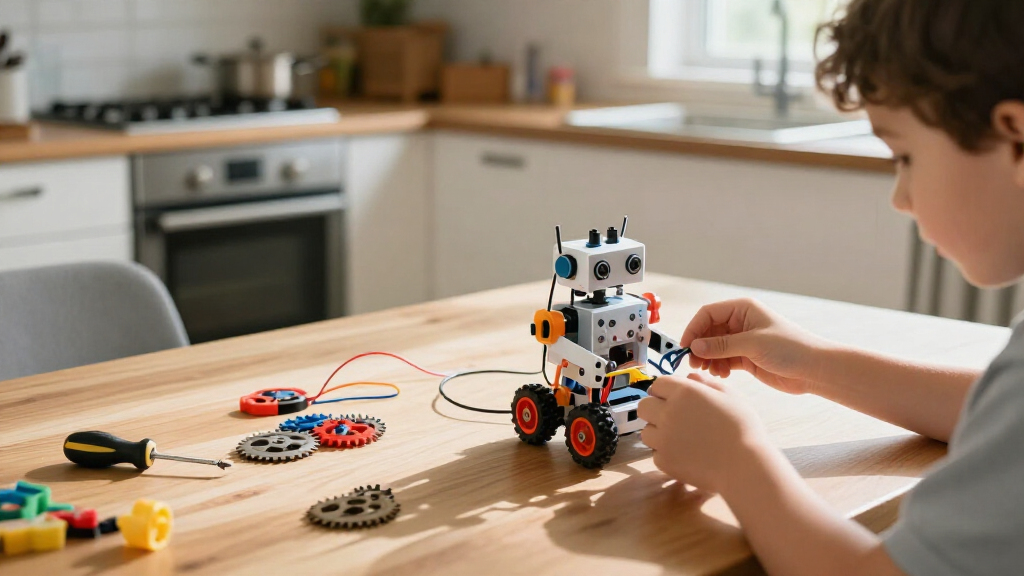

Robotic kits for kids range from simple mechanical builds to programmable robots, so the right choice depends on a child’s age, patience, and interest in coding. I’d rank the Makeblock mBot as the best overall for its clear coding focus, while the BeAndge 6-in-1 offers multiple builds and the ELEGOO UNO R3 Smart Robot Car gives older learners a more technical project. The main tradeoff is between approachable, guided construction and kits that offer deeper programming but demand more setup. Power source, instructions, and whether a child can rebuild the model also affect how much use a kit gets. Read on for the full breakdown and help choosing among all 12 options.

Prime made for students and young adults
- Fast, free delivery for dorm and study essentials
- Prime Video and Amazon Music included
- Member-only deals
Key Takeaways
- The Makeblock mBot is the strongest all-round choice when the goal is to connect a physical robot with beginner coding rather than focus only on assembly.
- Build count does not tell the whole story: 40-in-1 and 10-in-1 kits promise variety, but buyers should weigh model changes against the child’s tolerance for rebuilding.
- Programmable car and arm kits ask for more adult involvement than mechanical or solar builds, particularly when setup, software, and troubleshooting are part of the project.
- Power source shapes where and how a kit works: solar and hydraulic designs teach different mechanisms, while electronic kits depend on batteries, controls, or a suitable coding device.
- Age labels are only a starting point: fine-motor demands, reading instructions, and prior coding experience can matter more than a one-number age recommendation.
| BeAndge 6-in-1 Robotics STEM Kit for Kids Ages 8–12 |  | Best for Variety in a First Kit | Brand: BeAndge | Age range: 8–14 years | Projects: 6 | VIEW LATEST PRICE | See Our Full Breakdown |
| Smartivity Robotic Mechanical Hand STEM Toy for Kids Ages 8–14 |  | Best for a Focused Mechanical Build | Brand: Smartivity | Recommended age: 8–14 years | Material: Engineered wood | VIEW LATEST PRICE | See Our Full Breakdown |
| Sillbird 5-in-1 Programmable Robot Building Kit with App and Remote Control |  | Best for App-and-Remote Robot Play | Brand: Sillbird | Model: US-B897R1 | Number of pieces: 488 | VIEW LATEST PRICE | See Our Full Breakdown |
| Sillbird 5-in-1 Programmable STEM Robot Building Kit with Remote and App Control |  | Best for App-Based Programming Exploration | Brand: Sillbird | Model: B883 | Pieces: 488 | VIEW LATEST PRICE | See Our Full Breakdown |
| ANNISOKA DIY Wooden Robot Arm Kit |  | Best for Hands-On Circuits and Mechanisms | Brand: ANNISOKA | Material: Wood | Recommended age: 8 years and up | VIEW LATEST PRICE | See Our Full Breakdown |
| Butterfly EduFields 10-in-1 STEM Robotics Kit for Kids |  | Best for Exploring Robotics and Electronics | Brand: Butterfly EduFields | Model number: 506 | Project count: 10-in-1 | VIEW LATEST PRICE | See Our Full Breakdown |
| ELEGOO UNO R3 Smart Robot Car Kit V4 with Camera |  | Best for Older Kids Ready to Program | Brand: ELEGOO | Model: US-EL-KIT-012 | Controller: UNO R3 | VIEW LATEST PRICE | See Our Full Breakdown |
| Makeblock mBot STEM Coding Robot Kit for Kids Ages 8–12 | 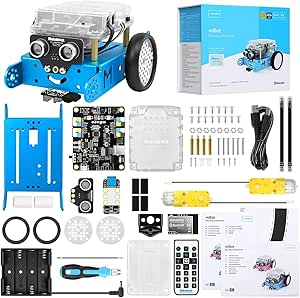 | Best for First-Time Coding | Brand: Makeblock | Model: 90053 | Age range: 8 years and up | VIEW LATEST PRICE | See Our Full Breakdown |
| Butterfly EduFields 40-in-1 STEM Robotics Kit for Kids |  | Best for Project Variety Without Coding | Brand: Butterfly EduFields | Age range: 8–17 years | Projects: 40+ | VIEW LATEST PRICE | See Our Full Breakdown |
| Teach Tech HydroBot Arm Hydraulic STEM Building Kit for Ages 12+ |  | Best for a Mechanical Engineering Challenge | Brand: Teach Tech | Model: TTR-632 | Recommended age: 12 years and up | VIEW LATEST PRICE | See Our Full Breakdown |
| Sillbird 12-in-1 Solar Robot Building Kit, 190 Pieces |  | Best for Solar-Powered Variety | Brand: Sillbird | Model number: US-SB-SolarRobot | Buildable models: 12 | VIEW LATEST PRICE | See Our Full Breakdown |
| ACEBOTT 4-in-1 Programmable Robot Arm and Tank Car STEM Kit |  | Best for Advanced Coding and Robotics | Brand: ACEBOTT | Recommended age: 12 years and up | Robot arm: 5DOF programmable arm | VIEW LATEST PRICE | See Our Full Breakdown |
| robotic kits for kid | Brand | Recommended age |
|---|---|---|
| BeAndge 6-in-1 Robotics STEM K | BeAndge | — |
| Smartivity Robotic Mechanical | Smartivity | 8–14 years |
| Sillbird 5-in-1 Programmable R | Sillbird | 8 years and up |
| Sillbird 5-in-1 Programmable S | Sillbird | 8–16 years |
| ANNISOKA DIY Wooden Robot Arm | ANNISOKA | 8 years and up |
| Butterfly EduFields 10-in-1 ST | Butterfly EduFields | 8–12 years |
| ELEGOO UNO R3 Smart Robot Car | ELEGOO | 12 years and up |
| Makeblock mBot STEM Coding Rob | Makeblock | — |
| Butterfly EduFields 40-in-1 ST | Butterfly EduFields | — |
| Teach Tech HydroBot Arm Hydrau | Teach Tech | 12 years and up |
| Sillbird 12-in-1 Solar Robot B | Sillbird | 10 years and up |
| ACEBOTT 4-in-1 Programmable Ro | ACEBOTT | 12 years and up |
More Details on Our Top Picks
BeAndge 6-in-1 Robotics STEM Kit for Kids Ages 8–12
The BeAndge 6-in-1 is a good fit for kids who want several short builds rather than one robot to assemble and keep. Projects such as the reptile robot, balance car, bubble machine, fiber lamp, and buzzer wire game mix simple mechanisms with circuit activities, giving children different ways to practice problem-solving and motor skills. Its mini screwdriver and step-by-step instructions make it more approachable than the 488-piece Sillbird programmable kits, which ask children to manage a much larger build and app or remote controls. The tradeoff is that BeAndge offers a set of varied projects rather than the programmable, reusable robot play of those Sillbird kits. Families also need to supply AA batteries and bubble solution, and some builds may need adult help.
Pros:- Includes six different project types, from a robot to a bubble machine
- Step-by-step instructions and a mini screwdriver support guided building
- Projects introduce circuits, problem-solving, and hands-on motor skills
- Lifetime warranty against manufacturer’s defects
Cons:- AA batteries and bubble solution are not included
- Some projects may need adult guidance
- Does not offer the app-based programming and remote control found in the Sillbird kits
Best for: Families seeking a variety of guided STEM activities for children who are ready to build simple circuits and mechanisms.
Not ideal for: Kids focused on programming or remote-controlled robots, or families who want a kit with all operating supplies included.
- Brand:BeAndge
- Age range:8–14 years
- Projects:6
- Included components:Electronic STEM kit components, mini screwdriver, step-by-step instructions
- Educational objectives:Coding skills, motor skills, problem-solving, STEM
- Batteries:AA batteries required; not included
- Bubble solution:Required; not included
- Warranty:Lifetime warranty against manufacturer’s defects
Our verdict“Choose BeAndge for a broad set of guided, varied projects; choose a Sillbird kit instead if programmable remote-control play is the priority.”
Smartivity Robotic Mechanical Hand STEM Toy for Kids Ages 8–14
Rather than spread the experience across several gadgets, the Smartivity Robotic Mechanical Hand centers on one clear idea: building a hand-shaped mechanism. That focus can help children connect the assembly steps to how a mechanical hand moves, while the screen-free, step-by-step build keeps the activity away from app setup and remote controls. Compared with the BeAndge 6-in-1, it offers less project variety, but its single-build format gives the learning a more defined mechanical theme. It is also different from ANNISOKA’s motorized wooden arm, which adds motors, a microcontroller board, and circuit work. Smartivity is a better match for a guided construction activity than for children seeking powered operation or programming. Assembly is part of the activity, so younger builders may need support, and the listed package is a single kit.
Pros:- Focused mechanical-hand build gives the project a clear theme
- Step-by-step instructions guide assembly
- Screen-free format supports hands-on STEM play
- Engineered wood construction and replacement parts are included
Cons:- Offers one main build rather than several different projects
- Requires the child to complete an assembly process
- Does not provide the powered movement and circuit work of the ANNISOKA arm
Best for: Children ages 8–14 who prefer a screen-free, guided build centered on how a mechanical hand works.
Not ideal for: Kids who want multiple projects, app-based control, or a powered robotic arm with motors and circuitry.
- Brand:Smartivity
- Recommended age:8–14 years
- Material:Engineered wood
- Theme:Anatomy, robotics
- Educational objective:STEM
- Dimensions:40.2 × 29 × 8.9 cm
- Package quantity:1
- Replacement parts:Included
Our verdict“Pick Smartivity for a guided, screen-free mechanical-hand project, not for a multi-build or motorized robotics experience.”
Sillbird 5-in-1 Programmable Robot Building Kit with App and Remote Control
The Sillbird 5-in-1 programmable kit is the strongest match here for kids who want a build that can be controlled after assembly. Its 488 pieces can form a robot, car, tank, dinosaur, or custom model, while Bluetooth app and remote control give the finished build an active play role. Compared with the Smartivity mechanical hand, this kit trades a focused, screen-free construction lesson for multiple configurations and electronic control. It also offers more model variety than the ANNISOKA wooden arm, though that arm puts more emphasis on circuits and motorized movement in a single mechanism. The cost of Sillbird’s versatility is a substantial assembly task: children need to sort and connect many pieces before play begins. Its rechargeable battery supports up to 40 minutes per charge, so longer sessions require a pause for charging.
Pros:- 488-piece set supports five model types and custom builds
- Bluetooth app and remote control provide two ways to operate builds
- Colorful step-by-step instructions support assembly
- Rechargeable battery avoids disposable batteries during regular play
Cons:- Assembly from 488 pieces can take patience and organization
- Play time is limited to up to 40 minutes per charge
- App and remote features make it less screen-free than the Smartivity hand
Best for: Children age 8 and up who enjoy detailed building and want to control several robot-style models through an app or remote.
Not ideal for: Younger or impatient builders, and families seeking a screen-free activity or extended play without charging breaks.
- Brand:Sillbird
- Model:US-B897R1
- Number of pieces:488
- Build options:Robot, car, tank, dinosaur, or custom model
- Control methods:Bluetooth app and remote control
- Battery:Rechargeable
- Play time:Up to 40 minutes
- Recommended age:8 years and up
Our verdict“Choose this Sillbird kit for varied, controllable robot builds if the child is ready for a substantial assembly project and charging breaks.”
Sillbird 5-in-1 Programmable STEM Robot Building Kit with Remote and App Control
This Sillbird version makes sense for children who want to move beyond building and try basic programming through the app. Like the US-B897R1 Sillbird kit, it has 488 pieces, several model options, remote control, Bluetooth app control, and up to 40 minutes of play per charge. The distinction is its stated focus on programming and varying build difficulty, which may give a child more ways to explore movement as skills grow. Compared with the BeAndge 6-in-1, it offers fewer kinds of activities but a more direct path into controlled robot play. Its main drawback is the same one faced by other large Sillbird builds: assembly takes patience, and the battery limits uninterrupted play. It suits a child ready to handle both a complex build and app interaction better than a beginner wanting quick projects.
Pros:- App supports basic programming and movement exploration
- Remote and Bluetooth app control offer different operating options
- Multiple models with varying difficulty extend the building choices
- Rechargeable battery provides up to 40 minutes of play per charge
Cons:- Requires assembly from 488 pieces
- Up to 40 minutes of play per charge can limit longer sessions
- More dependent on app and remote interaction than the screen-free Smartivity hand
Best for: Ages 8–16 who already enjoy construction kits and want to explore app-based programming alongside remote-controlled movement.
Not ideal for: Children who want quick, low-assembly activities or families prioritizing screen-free projects and long sessions between charges.
- Brand:Sillbird
- Model:B883
- Pieces:488
- Builds:Robot, dinosaur, car, tank, and more
- Control:Remote control and Bluetooth app
- Play time:Up to 40 minutes per charge
- Recommended age:8–16 years
- Weight:1.8 pounds
Our verdict“Choose this Sillbird model when app-based programming is a stronger priority than quick assembly or screen-free play.”
ANNISOKA DIY Wooden Robot Arm Kit
The ANNISOKA wooden robot arm is aimed at builders who want to see how circuits and moving parts work together in a single device. Its wooden construction, motors, microcontroller board, and wires make it a more mechanically focused project than the Smartivity hand, while no soldering is required. Compared with the Sillbird 5-in-1 kits, it gives up multiple robot forms, app control, and remote play in favor of assembling and operating one arm. That narrower scope can suit a child interested in mechanisms, but the build is described as challenging and calls for patience. Families also need to provide six AA batteries, so it is not ready to operate straight from the box. The assembly tutorial helps, though this is a better fit for a supported project than an effortless first build.
Pros:- Combines wooden construction with motors, a microcontroller board, and wires
- Build introduces circuits and mechanical movement through assembly
- No soldering is required
- Assembly tutorial is included
Cons:- Six AA batteries are required and not included
- Assembly is described as challenging and requires patience
- Offers one arm build rather than the multiple models in the Sillbird kits
Best for: Children age 8 and up who enjoy patient construction and want hands-on exposure to circuits, motors, and mechanical movement.
Not ideal for: Beginners seeking a quick project, children wanting several interchangeable models, or families who do not want to supply six AA batteries.
- Brand:ANNISOKA
- Material:Wood
- Recommended age:8 years and up
- Power requirement:6 AA batteries; not included
- Soldering required:No
- Dimensions:6.8 × 4.48 × 4.3 inches
- Included components:Robot arm kit
- Educational objectives:Creative skills, logical thinking, motor skills, problem-solving, STEM
Our verdict“Choose ANNISOKA for a focused, hands-on robot-arm build if the child is patient and an adult can help with setup.”
Butterfly EduFields 10-in-1 STEM Robotics Kit for Kids
For kids who want to build more than a single robot, the 10-in-1 project format and 100-plus components offer room to explore basic mechanics and electronics. The step-by-step manual gives this kit more structure than a parts-only set, while projects can introduce line following and obstacle avoidance. Compared with the Butterfly EduFields 40-in-1, this version offers fewer project options, but its narrower scope may feel more manageable for an 8-to-12-year-old starting out. It also does not require coding as a stated part of the experience, unlike the ELEGOO UNO R3 kit, which centers on Arduino programming. The tradeoff is that assembly remains part of the learning process, and the listing does not spell out every component, making it harder to plan projects in advance.
Pros:- More than 100 components support varied hands-on builds.
- Step-by-step illustrated instructions provide structure for young builders.
- Projects introduce engineering, mechanics, and electronics.
- Line-following and obstacle-avoidance functions offer moving-robot challenges.
Cons:- Projects require assembly, so younger builders may need adult help.
- The complete component list is not specified, which limits project planning.
Best for: Ages 8–12 who want guided, hands-on practice with basic robotics and electronics across several projects.
Not ideal for: Families who want a fully specified parts inventory or a kit with a larger project library and clear no-coding setup.
- Brand:Butterfly EduFields
- Model number:506
- Project count:10-in-1
- Components:100+
- Recommended age:8–12 years
- Robot functions:Line following and obstacle avoidance
- Included components:Wires, switches, connectors, LED lights, and instruction manual
Our verdict“Choose this for a school-age beginner who wants guided robotics projects without making Arduino programming the main focus.”
ELEGOO UNO R3 Smart Robot Car Kit V4 with Camera
The ELEGOO UNO R3 kit is the most programming-focused choice in this group: kids build a robot car around an UNO R3 controller, then explore Arduino IDE examples, sensors, and camera-based FPV video. App and IR remote control give beginners a way to operate the car before they are ready to write code, while line tracking and obstacle avoidance add concrete challenges to programming practice. Compared with the Makeblock mBot, this kit is aimed at older learners and adds a camera and Wi-Fi module, but its assembly and coding demands are higher. That added depth brings a real learning curve: first-time builders may need adult guidance, and the build requires both assembly and programming. Choose it for a motivated learner aged 12 or older, not a child seeking a quick, mostly ready-to-run robot.
Pros:- UNO R3 controller and Arduino IDE support hands-on programming practice.
- Camera and Wi-Fi module enable FPV video.
- App and IR remote offer two ways to control the car.
- Keyed connectors and an illustrated tutorial guide assembly.
Cons:- Assembly and programming can be demanding for first-time builders.
- Adult guidance may be needed to work through wiring and setup.
Best for: Learners aged 12 and up who want to build a sensor-equipped robot car and progress from remote control to Arduino programming.
Not ideal for: Younger beginners or families looking for a simple, short-build robot that does not need coding or adult help.
- Brand:ELEGOO
- Model:US-EL-KIT-012
- Controller:UNO R3
- Camera and Wi-Fi module:ESP32-WROVER-based
- Sensors:Line-tracking and ultrasonic
- Battery:2000 mAh rechargeable lithium-ion
- Control methods:App and IR remote
- Programming platform:Arduino IDE
- Recommended age:12 years and up
Our verdict“Pick this for an older child ready to take on Arduino programming, rather than for a younger beginner who mainly wants to play.”
Makeblock mBot STEM Coding Robot Kit for Kids Ages 8–12
The Makeblock mBot makes the most sense for a child whose main goal is to connect building with coding. Its guided lessons introduce Scratch and Arduino, and a build time of about 15 minutes means a new learner can get to remote control, line following, and obstacle avoidance without a long initial assembly session. Compared with the ELEGOO UNO R3 car, the mBot is positioned for younger builders and offers a gentler entry into coding, while ELEGOO adds a camera and more involved Arduino-oriented construction. The mBot’s longer-term appeal comes from compatibility with Makeblock modules, parts, and LEGO parts, but those options are separate additions rather than included projects. One practical catch: the robot needs four AA batteries, and the remote needs a CR2025 battery; none are included.
Pros:- Guided lessons introduce electronics, robotics, Scratch, and Arduino.
- About 15 minutes of build time gets learners to robot activities quickly.
- Remote control, line following, and obstacle avoidance provide varied ways to interact.
- Compatible with Makeblock modules and parts, as well as LEGO parts.
Cons:- Four AA batteries and one CR2025 battery are not included.
- Some expansion possibilities depend on obtaining compatible add-on parts.
Best for: Ages 8 and up who want guided Scratch lessons, a quick first build, and room to add compatible parts later.
Not ideal for: Families who need batteries included or buyers seeking a camera-equipped, advanced robot car out of the box.
- Brand:Makeblock
- Model:90053
- Age range:8 years and up
- Programming platforms:Scratch and Arduino
- Functions:Remote control, line following, and obstacle avoidance
- Build time:About 15 minutes
- Battery requirements:4 AA batteries for the robot and 1 CR2025 battery for the remote; not included
- Compatibility:Makeblock add-on packs, 100+ electronic modules, 500+ parts, and LEGO parts
Our verdict“Choose the mBot for a younger beginner who wants a quick build and guided coding lessons, with batteries ready separately.”
Butterfly EduFields 40-in-1 STEM Robotics Kit for Kids
With 40-plus projects and more than 100 electronic components, this Butterfly EduFields kit suits kids who would rather try a succession of builds than focus on one programmable robot. The listed projects span a line-following car, a drawing robot, and home automation gadgets, while reusable sensors and plug-and-play assembly keep the work accessible without soldering or coding. Compared with the 10-in-1 Butterfly EduFields kit, it offers a much wider project menu and a broader stated age range; the smaller kit may be the simpler pick for a child who wants a more contained introduction. The tradeoff here is practical: AA batteries are required, and the included holder is not compatible with Duracell batteries. It also offers less programming depth than the Makeblock mBot, so coding-focused learners may prefer that route.
Pros:- More than 40 projects provide a wider range of builds than the 10-in-1 kit.
- Over 100 components and reusable sensors support repeated experimentation.
- Plug-and-play assembly requires no soldering, tools, or coding knowledge.
- Detailed instructions and concept manuals guide projects.
Cons:- AA batteries are required and must be supplied separately.
- Duracell batteries are not compatible with the included battery holder.
Best for: Ages 8–17 who want to try many robotics and basic home-automation builds without soldering or coding.
Not ideal for: Kids primarily seeking Scratch or Arduino lessons, or families who only have Duracell AA batteries available.
- Brand:Butterfly EduFields
- Age range:8–17 years
- Projects:40+
- Components:100+
- Sensors:IR, flame, touch, LDR, and others
- Battery requirement:AA batteries
- Battery compatibility:Duracell batteries are not compatible with the included battery holder
- Dimensions:8 x 5 x 1 inches
- Weight:0.8 kg
Our verdict“Pick this for a curious builder who wants many no-code projects, but choose the mBot instead for structured programming lessons.”
Teach Tech HydroBot Arm Hydraulic STEM Building Kit for Ages 12+
Rather than building a wheeled robot, the HydroBot lets older kids assemble and operate a six-axis hydraulic arm. Water-powered levers control its movements, and the braking system gives users a way to handle tasks with more control; its base rotates up to 270 degrees and the gripper can be removed for suction components. That makes it a distinct pick beside the ELEGOO UNO R3 car, which focuses on sensors, camera, and programming instead of mechanical manipulation. The HydroBot needs no batteries, but it asks for a different kind of commitment: assembly takes several hours, and the lifting capacity is limited to 50 g. It suits a patient builder interested in mechanisms and precise movement, but not a child looking for a quick, mobile, codeable robot.
Pros:- Water hydraulics power the arm without batteries.
- Six axes and a 270-degree rotating base allow varied movement.
- Lever controls and a braking system support precise operation.
- Removable gripper can be replaced with suction components.
Cons:- Assembly takes several hours and calls for patience.
- The 50 g lifting limit restricts the objects it can handle.
Best for: Ages 12 and up who enjoy extended builds and want to learn how hydraulic mechanisms control a robotic arm.
Not ideal for: Kids who want a quick-start robot car, coding activities, or an arm for lifting heavier objects.
- Brand:Teach Tech
- Model:TTR-632
- Recommended age:12 years and up
- Power source:Water hydraulics; no batteries required
- Axes:6
- Base rotation:270 degrees
- Gripper opening:47 mm (1.89 in.)
- Vertical reach:16.35 in.
- Lifting capacity:50 g
Our verdict“Choose the HydroBot for an older, patient builder drawn to mechanical engineering, not for someone seeking a programmable or fast-building robot.”
Sillbird 12-in-1 Solar Robot Building Kit, 190 Pieces
The 12 build options make this a strong pick for kids who enjoy rebuilding more than mastering one robot. Its 190 pieces form robots and cars across varying difficulty levels, while step-by-step instructions help keep assembly approachable. Solar power gives the project a practical link to renewable energy, but operation depends on sunlight or a strong artificial light source; it is less flexible indoors than the ACEBOTT kit, which offers app, remote, and coding controls. Compared with the Sillbird 5-in-1 programmable kits in this roundup, this set favors repeated mechanical builds and solar learning over programmable behavior. The tradeoff is a narrower play experience once the models have been assembled: the light-dependent motor may limit when children can run them. Its age guidance of 10 and up also makes it a less suitable choice for younger builders.
Pros:- Offers 12 robot and car models, giving builders multiple projects to return to.
- Includes step-by-step instructions and models with varied difficulty.
- Solar operation connects building play with renewable-energy concepts.
- Can use sunlight or a strong artificial light source.
Cons:- Needs sufficiently strong light to operate, which can restrict play indoors or on cloudy days.
- Recommended for ages 10 and up, so it may be challenging for younger children.
- Emphasizes assembly and solar-powered motion rather than programmable control.
Best for: Families with children 10 and up who want several guided robot and car builds plus a hands-on introduction to solar power.
Not ideal for: Younger children or kids who want indoor, app-controlled play and programmable challenges without relying on bright light.
- Brand:Sillbird
- Model number:US-SB-SolarRobot
- Buildable models:12
- Number of pieces:190
- Power source:Solar panel or strong artificial light
- Material:ABS
- Recommended age:10 years and up
- Dimensions:10.24 x 7.87 x 2.56 inches
Our verdict“Choose this for ages 10 and up who want a variety of guided solar builds, but skip it if dependable indoor or programmable play matters more.”
ACEBOTT 4-in-1 Programmable Robot Arm and Tank Car STEM Kit
For older kids ready to move beyond assembly, the ACEBOTT combines a programmable 5DOF arm with four modular builds: a robot car, tank, robotic arm car, and robotic arm tank. Its ESP32 controller and compatibility with Arduino and Scratch offer a more substantial coding path than the Sillbird solar kit, which focuses on guided construction and light-powered movement. App and IR remote controls provide ways to operate the builds alongside coding, and 16 guided tutorials give learners a starting structure. Tank treads are designed for surfaces such as grass, gravel, slopes, and carpet, expanding where the robot can travel. That capability comes with a steeper commitment: assembly and coding are required, and the description does not specify a battery or power source. Compared with the Sillbird 5-in-1 programmable kits, this option centers on a working arm and tracked mobility, rather than a simpler build-and-control experience.
Pros:- Four configurations let builders switch between car, tank, and arm-equipped designs.
- The programmable 5DOF arm can grab, lift, and place objects.
- Supports Arduino and Scratch as well as app and IR remote control.
- Tank treads are designed for varied surfaces, including grass, gravel, slopes, and carpet.
Cons:- Assembly and coding are required, making it a larger commitment than a basic build-and-play kit.
- The product description does not specify a battery or power source.
- Recommended for ages 12 and up, limiting its fit for younger builders.
Best for: Ages 12 and up who want to assemble a modular robot, program a movable arm, and explore Arduino or Scratch with guided tutorials.
Not ideal for: Younger beginners or families seeking a ready-to-run kit with clearly specified power requirements and minimal assembly or coding.
- Brand:ACEBOTT
- Recommended age:12 years and up
- Robot arm:5DOF programmable arm
- Controller:ESP32
- Compatible platforms:Arduino and Scratch
- Control methods:iOS and Android app, IR remote
- Guided tutorials:16
- Manufacturer part number:QD043
Our verdict“Pick the ACEBOTT for an older learner seeking coding, a programmable arm, and tracked builds; choose a simpler kit for younger or less technically motivated children.”
How We Picked
I compared these 12 robotic kits for kids by the kind of learning they support, how approachable the build appears for its intended age group, and whether the finished robot offers something to do beyond sitting on a shelf. I gave weight to clarity of the learning path, the balance between assembly and coding, construction variety, and the practical demands of power, controls, and setup. A kit with fewer builds could rank above a higher-count set if its main activity offers a clearer, more repeatable route into robotics.
The order reflects usefulness across a broad range of families, not a claim that one style suits every child. Programmable options rank well for learners ready to connect code and movement; mechanical, hydraulic, and solar kits serve narrower interests and can be better choices for a specific kind of hands-on learning. I also considered likely friction points, such as adult help, software or device needs, and whether a child is likely to enjoy rebuilding. Each option has a distinct role, and no kit earns a high place on build count alone.
Factors to Consider When Choosing Robotic Kits For Kids
Before choosing a kit, decide what kind of robotics experience the child actually wants: constructing a mechanism, controlling a moving robot, or writing code that changes its behavior. The right match often matters more than the number of models or parts listed on the box.
Match the challenge to the child, not just the age label
Age guidance can help screen options, but it does not capture reading confidence, patience with small parts, or experience following diagrams. A younger child who enjoys detailed projects may manage a more involved build with an adult, while an older beginner may prefer a guided kit over a technically demanding one. Look at the expected steps and the skills needed to finish them, not only the suggested age range. A project that is too easy can lose its appeal once assembled; one that is too hard can turn into an adult-led build. Choose a challenge that leaves the child with meaningful tasks they can complete independently.
Decide whether the goal is building, coding, or both
Robotics kits vary in what they teach: mechanical builds focus on motion and linkages, while programmable models add logic and cause-and-effect through code. Neither is automatically better, but a kit can disappoint if its main activity does not match the child’s interest. Ask whether they want to make something move with a hand control, assemble a working mechanism, or change behavior through programming. For a first coding project, a clear progression from simple commands to more involved tasks can matter more than advanced features. If the child mainly enjoys construction, prioritize a build that can be handled and rebuilt without making software the main hurdle.
Check device, software, and power requirements before buying
Electronic and app-connected kits may rely on a compatible phone, tablet, computer, or operating system. Check the manufacturer’s current compatibility information before purchase, especially if the child will use a school-managed device. Also find out whether batteries or other accessories are required and whether they are included; missing supplies can interrupt the first session. A remote-controlled robot and a code-driven robot can look similar in a product listing but call for different setup and learning time. If convenient, screen-free play is a priority, a mechanical, hydraulic, or solar design may fit better, though each brings its own build conditions.
Treat model count as a starting point, not a value measure
A kit advertising many builds can offer variety, but each alternate model may require taking apart and rebuilding much of the project. That works well for children who enjoy repeated construction and following new instructions; it can frustrate a child who wants to keep one robot ready to use. Compare the range of activities and the difference between models rather than relying on the number alone. Also check whether the kit supports open-ended changes or mostly guides the child through fixed designs. A smaller set with a strong central activity may get more repeat use than a larger set whose models feel similar.
Plan for adult help and workspace
Some projects ask for more than a child can comfortably manage alone, especially when parts are small, instructions are dense, or electronics need setup. Adult participation can be a benefit when it becomes a shared project, but it should not be mistaken for independent play. Think about where the build will happen and whether it can stay assembled between sessions. Kits with loose components need a storage plan, while larger builds may need a clear work surface. If a child is easily discouraged by troubleshooting, choose a kit with a shorter path from opening the box to a working result.
Pay more for a better learning path, not a bigger feature list
When comparing kits, look for features that change what the child can learn or do, such as adjustable behavior, repeatable coding challenges, or a mechanism that makes movement easy to observe. Extra sensors or controls have little value if the instructions do not show how to use them. A more technical kit can be a good step for a child ready to experiment, but it may be a poor first purchase if setup consumes the available build time. For a beginner, approachable instructions and a satisfying first result may matter more than advanced capability. Choose the added complexity only when it supports a clear next step in the child’s interests.
Frequently Asked Questions
Should I choose a programmable robot or a mechanical building kit for a first robotics project?
Start with the activity the child is most likely to enjoy repeating. A mechanical kit makes movement and simple mechanisms tangible without adding a software learning curve, while a programmable robot introduces instructions, logic, and experimentation alongside building. If the child already likes coding games or solving logic puzzles, programming may hold their interest. If they prefer construction and hands-on cause and effect, a mechanical design may be a smoother entry. A first kit does not need to teach every part of robotics at once.
Do app-controlled kits need a separate phone, tablet, or computer?
Some kits use an app or computer software for control or coding, while others rely on a dedicated remote or physical mechanisms. Check the product’s current device and operating-system requirements before buying, rather than assuming a household device will work. Confirm whether the app is available in your region and whether the child can use the device without restrictions from school or parental controls. Also distinguish remote control from programming: an app may simply steer a robot rather than teach coding. A dedicated control option can help if device access is limited.
Are kits with many build options better for siblings or repeat play?
Multiple designs can help siblings take turns with different projects and give an enthusiastic builder reasons to return to the kit. The tradeoff is that switching models often means dismantling the current build, so variety does not always mean several robots can be used at once. Check whether the alternate designs teach different mechanisms or mainly change the shape. For siblings with different interests, a kit that supports distinct kinds of play may be more useful than one with many similar variations. If a child dislikes rebuilding, a single robot with adjustable functions may suit them better.
What should I check before buying a kit for a child with no coding experience?
Look for a clear starting activity and instructions that explain what the child should do before introducing more complex ideas. Check whether the kit uses visual blocks, typed code, a remote, or a mixture, since those approaches involve different levels of reading and computer familiarity. Confirm whether an adult needs to install software or connect hardware before the child can begin. A first coding kit should let the child make a visible change and see the robot respond; that feedback helps connect instructions to outcomes. Avoid choosing solely by the most advanced programming feature listed.
How can I tell whether a kit is likely to need adult help?
Look at the recommended age alongside the number and type of assembly steps, any electronics setup, and the tools or devices the kit expects. Projects involving wiring, software installation, or small mechanical parts often need more support than a straightforward guided build. If the manufacturer provides sample instructions or a parts list, use those to judge how independently the child can follow the process. Plan for a shared first session if the kit has setup tasks, even when the child can handle later play alone. Adult help is less frustrating when it is expected and available from the start.
Conclusion
For one broadly useful recommendation, I’d choose the Makeblock mBot as best overall for families who want a physical robot tied to coding. The BeAndge 6-in-1 is my best-value-style pick for children drawn to building several designs, while the ELEGOO UNO R3 Smart Robot Car is the premium-leaning choice for older learners ready for a more technical project. For beginners who want a less code-centered start, the Smartivity Robotic Mechanical Hand offers a focused mechanical challenge. Choose the HydroBot Arm for hands-on hydraulics, the solar Sillbird for a power-source theme, or the ACEBOTT arm-and-tank kit when two distinct robot formats are the draw. Match the build to the child’s interests and willingness to troubleshoot, and the kit is more likely to become a continuing project rather than a one-time assembly.