
Children’s chemistry experiment kits range from approachable activity sets to advanced chemistry programs, and my best overall pick is the National Geographic Chemistry Set with 45 Experiments for its focused, age-conscious introduction. The Thames & Kosmos CHEM C2000 stands out for older kids ready for a structured, longer-term chemistry experience, while the UNGLINGA 40+ Experiments Science Kit suits families seeking variety in a starter set. The main tradeoff is between a high experiment count and clearer instruction, equipment, and chemistry depth. Age recommendations, adult help, storage, and the need for household supplies can also change which kit is the practical choice. Read on for my full comparison, selection criteria, and advice for matching a kit to your child.

Prime made for students and young adults
- Fast, free delivery for dorm and study essentials
- Prime Video and Amazon Music included
- Member-only deals
Key Takeaways
- Focused chemistry sets beat broad experiment counts when a child wants chemistry specifically: the National Geographic 45-experiment set and Ooze Labs station have clearer chemistry identities than general science kits.
- The Thames & Kosmos sets serve a different stage of learning: C2000 offers a substantial intermediate path, while C3000 is aimed at older learners ready for a much larger, more demanding program.
- UNGLINGA’s range is about breadth and choice: its 40+, 70-, 150-, 210-, 250+, and 272-experiment options vary in stated volume, so buyers should compare organization and age fit rather than treating the largest number as an automatic win.
- National Geographic offers several distinct entry points: the Junior set is geared toward younger beginners, the 45-experiment set gives a more direct chemistry introduction, and the Mega Science Lab and Science Magic Kit broaden the activity mix.
- Age guidance matters more than the headline count: the C3000 is listed for ages 12+, while several National Geographic and Doctor Jupiter options target children around age 8 and up; adult involvement can still vary by activity.
| UNGLINGA 40+ Experiments Science Kit for Kids |  | Best for Creative First Experiments | Brand: UNGLINGA | Experiments: 40+ | Recommended age: 8 years and up | VIEW LATEST PRICE | See Our Full Breakdown |
| Doctor Jupiter Ultimate Science Experiments Kit for Kids, Ages 8+ |  | Best for Experiment Variety | Brand: Doctor Jupiter | Recommended age: 8 years and up | Number of experiments: 135+ | VIEW LATEST PRICE | See Our Full Breakdown |
| Thames & Kosmos CHEM C3000 Chemistry Set, 333+ Experiments, Ages 12+ |  | Best Advanced Chemistry Set | Brand: Thames & Kosmos | Model: CHEM C3000 | Experiments: More than 333 | VIEW LATEST PRICE | See Our Full Breakdown |
| National Geographic Chemistry Set with 45 Experiments for Kids Ages 8+ |  | Best for Big, Visual Reactions | Brand: National Geographic | Experiments: 45 | Recommended age: 8 years and up | VIEW LATEST PRICE | See Our Full Breakdown |
| Thames & Kosmos CHEM C2000 Intermediate Chemistry Set, 250 Experiments |  | Best for Intermediate Learners | Brand: Thames & Kosmos | Experiments: 250 | Chapters: 18 | VIEW LATEST PRICE | See Our Full Breakdown |
| UNGLINGA 210-Experiment Science Kit for Kids |  | Best for Broad Exploration | Brand: UNGLINGA | Experiments: More than 210 | Recommended age: 8 years and up | VIEW LATEST PRICE | See Our Full Breakdown |
| National Geographic Mega Science Lab: 75 Experiments for Kids Ages 8–12 |  | Best for Mixed Science and Specimens | Brand: Blue Marble | Age range: 8 years and up | Number of experiments: 75 | VIEW LATEST PRICE | See Our Full Breakdown |
| National Geographic Science Magic Kit with 100+ Experiments for Kids Ages 8+ |  | Best for Science-Minded Magic Fans | Brand: Blue Marble | Recommended age: 8 years and up | Experiments: 20 included experiments plus 85+ in the bonus booklet | VIEW LATEST PRICE | See Our Full Breakdown |
| UNGLINGA 272-Experiment Science Kit for Kids |  | Best for Maximum Activity Variety | Brand: UNGLINGA | Number of experiments: 272 | Recommended age: 8 years and up | VIEW LATEST PRICE | See Our Full Breakdown |
| Ooze Labs Chemistry Station Science Experiment Kit |  | Best Focused Chemistry Lab | Brand: Thames & Kosmos | Age range: 6 years and up | Number of pieces: 57 | VIEW LATEST PRICE | See Our Full Breakdown |
| UNGLINGA 150-Experiment Science Kit for Kids | 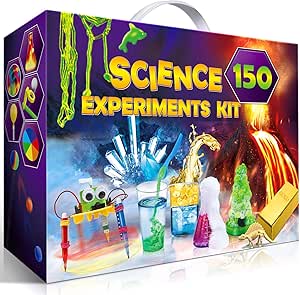 | Best for Broad Science Variety | Brand: UNGLINGA | Experiments: 150 | Recommended age: 8 years and up | VIEW LATEST PRICE | See Our Full Breakdown |
| UNGLINGA 70-Experiment Chemistry Science Kit for Kids |  | Best for Chemistry Beginners | Brand: UNGLINGA | Experiments: 70 | Age range: 8 years and up | VIEW LATEST PRICE | See Our Full Breakdown |
| UNGLINGA 250+ Science Experiments Kit for Kids |  | Best for Activity Variety | Brand: UNGLINGA | Experiments: 250+ | Subjects: Chemistry, earth science, physics | VIEW LATEST PRICE | See Our Full Breakdown |
| National Geographic Amazing Chemistry Set, 100+ Experiments for Ages 8–12 |  | Best for Guided At-Home Experiments | Brand: Blue Marble | Age range: 8 years and up | Experiments: 100+ total: 15 with included materials and 85 bonus activities | VIEW LATEST PRICE | See Our Full Breakdown |
| National Geographic Junior Chemistry Set with 50 Experiments |  | Best for Youngest Chemists | Brand: Blue Marble | Age range: 4 years and up | Experiments: 50 | VIEW LATEST PRICE | See Our Full Breakdown |
| children’s chemistry experiment kit | Brand | Experiments | Recommended age | Dimensions |
|---|---|---|---|---|
| UNGLINGA 40+ Experiments Scien | UNGLINGA | 40+ | 8 years and up | 8 x 5.7 x 2.7 inches |
| Doctor Jupiter Ultimate Scienc | Doctor Jupiter | — | 8 years and up | — |
| Thames & Kosmos CHEM C3000 Che | Thames & Kosmos | More than 333 | 12 years and up | — |
| National Geographic Chemistry | National Geographic | 45 | 8 years and up | 8.78 x 3.19 x 11.93 inches |
| Thames & Kosmos CHEM C2000 Int | Thames & Kosmos | 250 | — | — |
| UNGLINGA 210-Experiment Scienc | UNGLINGA | More than 210 | 8 years and up | 11 x 8 x 3 inches |
| National Geographic Mega Scien | Blue Marble | — | — | — |
| National Geographic Science Ma | Blue Marble | 20 included experiments plus 85+ in the bonus booklet | 8 years and up | 8.86 x 3.15 x 12 inches |
| UNGLINGA 272-Experiment Scienc | UNGLINGA | — | 8 years and up | 9.8 x 7.7 x 4 inches |
| Ooze Labs Chemistry Station Sc | Thames & Kosmos | Approximately 20 | — | — |
| UNGLINGA 150-Experiment Scienc | UNGLINGA | 150 | 8 years and up | — |
| UNGLINGA 70-Experiment Chemist | UNGLINGA | 70 | — | 11 x 8.66 x 3.54 inches |
| UNGLINGA 250+ Science Experime | UNGLINGA | 250+ | 8 years and up | 12 x 10.8 x 3.9 inches |
| National Geographic Amazing Ch | Blue Marble | 100+ total: 15 with included materials and 85 bonus activities | — | 8.78 x 3.19 x 11.93 inches |
| National Geographic Junior Che | Blue Marble | 50 | — | 11 x 4.22 x 9.64 inches |
More Details on Our Top Picks
UNGLINGA 40+ Experiments Science Kit for Kids
The UNGLINGA 40+ Experiments Science Kit suits children who want varied, playful activities such as making bouncy balls and lava lamps, with an illustrated manual to guide each step. Its compact box is easier to store than the larger Thames & Kosmos CHEM C2000, though its chemistry activities are less extensive and less lab-focused. The emphasis here is on observation and creative exploration, rather than a structured course through chemistry topics. More than 40 experiments offer variety, but some require household items that are not included, so families should check the instructions before starting. Compared with the Doctor Jupiter Ultimate Science Experiments Kit, this is a smaller commitment for families seeking a selection of guided activities rather than a very large experiment library.
Pros:- Includes materials for more than 40 hands-on experiments
- Illustrated, step-by-step manual supports independent following
- Activities encourage observation, imagination, and creative skills
- Compact dimensions make the kit easy to store
Cons:- Some experiments depend on household items that are not included
- The activity range is smaller and less chemistry-focused than the Doctor Jupiter kit
- The product data lists experiment materials but does not specify laboratory tools
Best for: Families with children aged 8 or older who want a compact kit for playful, guided experiments and have common household supplies available.
Not ideal for: Buyers seeking a detailed chemistry curriculum, extensive lab equipment, or experiments that can all be completed using only kit contents.
- Brand:UNGLINGA
- Experiments:40+
- Recommended age:8 years and up
- Material:Plastic
- Dimensions:8 x 5.7 x 2.7 inches
- Weight:0.32 kg
- Educational objectives:Creative skills, imagination development, observation skills
Our verdict“Choose this kit for an 8+ child who wants playful, illustrated experiments in a compact package and can get help gathering household supplies.”
Doctor Jupiter Ultimate Science Experiments Kit for Kids, Ages 8+
For families who want a long menu of activities, the Doctor Jupiter Ultimate Science Experiments Kit offers more than 135 experiments in the kit plus access to over 90 bonus activities using household items. Color-changing reactions, glowing water, and underwater volcanoes give children several kinds of visible results, while the illustrated instructions support step-by-step participation. Its breadth puts it ahead of the UNGLINGA 40+ Experiments Science Kit for sheer variety, and its included measuring cylinder, flask, funnel, and other tools provide a more defined experiment setup. The tradeoff is that the bonus activities are not all ready to go from the box: some need supplies from home. This is a general science kit with chemistry activities, rather than a focused, equipment-heavy chemistry course like the Thames & Kosmos CHEM C2000.
Pros:- Includes materials and instructions for more than 135 experiments
- Offers access to over 90 additional household-item experiments
- Includes measuring and mixing equipment such as a cylinder, flask, and funnel
- Separate leak-proof bottles help contain the chemical materials
Cons:- Some bonus experiments require supplies not included in the kit
- Its broad STEM activity mix is less focused on chemistry than the Thames & Kosmos CHEM C2000
- The large experiment count may require families to sort activities and supplies before starting
Best for: Families with children aged 8 or older who want many guided science activities, basic experiment tools, and opportunities to work together.
Not ideal for: Young experimenters who need every activity to use only included materials, or older learners seeking a structured, advanced chemistry set.
- Brand:Doctor Jupiter
- Recommended age:8 years and up
- Number of experiments:135+
- Bonus experiments:90+ using household items
- Educational objective:STEM
- Included equipment:Measuring cylinder, conical flask, spatula, stirring sticks, test tube stand, cups, funnel, tray, soap moulds
- Included materials:Glycerin flakes, food essences, food colours, experiment ingredients
- Model number:DJ Parent
Our verdict“Pick this for an 8+ child who will enjoy a broad supply of guided activities and has an adult available to help source household materials.”
Thames & Kosmos CHEM C3000 Chemistry Set, 333+ Experiments, Ages 12+
The Thames & Kosmos CHEM C3000 is the most advanced chemistry-focused option in this group. Its more than 333 experiments span inorganic, electrochemical, and organic chemistry across 27 chapters, supported by a 192-page illustrated manual with explanations and safety guidance. Real lab equipment, including glass test tubes, beakers, an Erlenmeyer flask, an alcohol burner, and safety goggles, makes it better suited to sustained study than the Thames & Kosmos CHEM C2000, which has fewer experiments and topics. That depth comes with a higher supervision burden: it is intended for ages 12 and up and requires adult supervision. Some activities also call for household materials. Families looking for short, low-preparation activities for younger children will likely find the National Geographic 45 Experiments Chemistry Set a simpler fit.
Pros:- Covers more than 333 experiments across 27 chapters
- Introduces inorganic, electrochemical, and organic chemistry
- Includes real laboratory equipment and 16+ chemicals
- 192-page illustrated manual provides scientific explanations and safety guidance
Cons:- Adult supervision is required throughout
- The alcohol burner and chemicals call for careful handling
- Some experiments require common household materials beyond the kit
Best for: Families with a learner aged 12 or older who wants a broad, structured chemistry program and can work with an adult supervisor.
Not ideal for: Families seeking a simple activity kit for younger children, minimal adult involvement, or experiments that need no extra household materials.
- Brand:Thames & Kosmos
- Model:CHEM C3000
- Experiments:More than 333
- Chapters:27
- Manual:192-page full-color illustrated manual
- Chemicals:16+
- Recommended age:12 years and up
- Safety and supervision:EN 71-4; adult supervision required
- Included equipment:Glass test tubes, beakers, Erlenmeyer flask, tripod stand, alcohol burner, safety goggles, and other lab tools
Our verdict“Choose the CHEM C3000 for a teen ready for a supervised, chapter-based chemistry course with extensive equipment and experiments.”
National Geographic Chemistry Set with 45 Experiments for Kids Ages 8+
The National Geographic Chemistry Set with 45 Experiments centers on showy activities such as a volcano eruption, geyser, and rocket launch. That makes it a strong match for children drawn to visible cause and effect, while its illustrated, kid-friendly instructions introduce chemistry ideas and safe experiment practices. It offers fewer activities than the Doctor Jupiter Ultimate Science Experiments Kit, which lists over 135 included experiments and more equipment, but the National Geographic set keeps its appeal focused on memorable demonstrations. Some experiments may need adult supervision, so the age guidance does not mean every activity is a solo project. Families looking for a deeper study of chemistry topics or real lab apparatus should look instead at the Thames & Kosmos CHEM C2000, which is aimed at older learners and requires closer adult involvement.
Pros:- Includes 45 activities with visual hooks such as a volcano, geyser, and rocket
- Kid-friendly illustrated instructions introduce scientific process and safety
- No batteries are required
- Designed for children aged 8 and up
Cons:- Some experiments may require adult supervision
- Offers fewer activities than the Doctor Jupiter kit
- The supplied details do not list the same range of lab equipment as the Thames & Kosmos sets
Best for: Families with children aged 8 or older who enjoy dramatic, visual demonstrations and benefit from illustrated guidance.
Not ideal for: Learners seeking extensive chemistry equipment, a broad multi-topic curriculum, or activities that never need adult help.
- Brand:National Geographic
- Experiments:45
- Recommended age:8 years and up
- Educational objective:STEM
- Included activities:Volcano eruption, geyser, rocket, and chemical reactions
- Battery requirement:No batteries required
- Dimensions:8.78 x 3.19 x 11.93 inches
- Weight:2.9 pounds
- Model number:NGMEGACHEMX
Our verdict“Pick this for an 8+ child who prefers dramatic demonstrations and approachable instructions over a large chemistry curriculum.”
Thames & Kosmos CHEM C2000 Intermediate Chemistry Set, 250 Experiments
The Thames & Kosmos CHEM C2000 offers a structured step up for learners ready to move beyond short, spectacle-led activities. Its 250 experiments cover 18 topics, with 13 chemicals, lab equipment, and a 128-page full-color manual; the alcohol burner adds heat-based work that the UNGLINGA 40+ Experiments Science Kit does not list. This makes the C2000 a more involved chemistry learning option for ages 11 and up, with instructions designed to support a wider range of topics. The added depth also means adults need to supervise, especially for experiments involving heat or chemicals. Compared with the CHEM C3000, it has fewer experiments, chapters, and chemicals, so it is the more approachable of the two Thames & Kosmos sets while still demanding careful adult participation.
Pros:- Provides 250 experiments across 18 chemistry topics
- Includes 13 chemicals and real lab equipment
- 128-page full-color manual supports step-by-step work
- Alcohol burner enables heat-based experiments
Cons:- Adult supervision is required, particularly for heat and chemical handling
- Has fewer experiments and topics than the CHEM C3000
- Some activities require extra common household materials
Best for: Families with an 11+ learner who wants structured chemistry experiments with real lab equipment and an adult available to supervise.
Not ideal for: Younger children, families seeking low-supervision activities, or students who want the broader topic range of the CHEM C3000.
- Brand:Thames & Kosmos
- Experiments:250
- Chapters:18
- Manual:128-page full-color manual
- Chemicals:13
- Age range:11 years and up
- Included:Alcohol burner, lab equipment, chemicals, and experiment manual
- Safety standard:EN 71-4
- Award:Parents’ Choice Silver Award
Our verdict“Choose the CHEM C2000 for an 11+ learner ready for supervised, structured chemistry work without the larger scope of the C3000.”
UNGLINGA 210-Experiment Science Kit for Kids
The 210-plus activities give curious children room to move between chemistry, geology, physics, and nature projects instead of staying with one kind of experiment. For a chemistry-focused roundup, that breadth is a tradeoff: volcanoes and crystal growing are among the examples, but this kit is less narrowly centered on chemistry than the Ooze Labs Chemistry Station, which supplies dedicated lab gear for activities such as chromatography and fizzing reactions. Its step-by-step manual gives children a route through projects, while the range also makes it useful for shared family or school sessions. The listing says some activities may need adult guidance, and it does not detail every material required, so parents should expect to help with preparation. Choose it for variety over a more focused chemistry lab setup.
Pros:- More than 210 activities span several science subjects
- Step-by-step manual supports independent progress
- Includes chemistry examples such as volcano and crystal activities
- Suited to group activities and school projects
Cons:- Broad science coverage gives chemistry less focus than the Ooze Labs Chemistry Station
- Some experiments may need adult guidance
- The listed description does not detail materials needed for every activity
Best for: Families or teachers seeking a broad activity set that mixes chemistry with geology, physics, and nature projects
Not ideal for: Children who want a chemistry-centered lab with specified equipment and materials for each experiment
- Brand:UNGLINGA
- Experiments:More than 210
- Recommended age:8 years and up
- Theme:Chemistry, geology
- Material:Plastic
- Dimensions:11 x 8 x 3 inches
- Number of items:1
Our verdict“Pick this for a large mix of science activities, but choose the Ooze Labs Chemistry Station for a more dedicated chemistry setup.”
National Geographic Mega Science Lab: 75 Experiments for Kids Ages 8–12
This kit’s strongest distinction is its mix of Earth science, chemistry, and science magic, backed by real rock, mineral, and crystal specimens. The 45 hands-on activities are joined by a guide to 30 more using common household items, so it offers a different kind of variety from the UNGLINGA 210-Experiment Science Kit, whose much larger activity count spans several science fields. Here, the specimens add a tangible geology element, while projects such as crystal growing and bubbling reactions keep chemistry in the mix. The compromise is that this is not a dedicated chemistry set: some additional activities depend on household supplies, and the magic component takes space that a chemistry-focused buyer may prefer devoted to lab work. It suits children who like switching subjects and handling natural specimens.
Pros:- Combines Earth science, chemistry, and science magic
- Includes rock, mineral, and crystal specimens
- Provides 45 hands-on activities plus 30 household-item activities
- Projects support observation and critical thinking
Cons:- Some activities require household items that are not included
- Chemistry shares space with Earth science and magic rather than being the sole focus
Best for: Ages 8–12 who enjoy combining hands-on chemistry with rocks, minerals, and science magic
Not ideal for: Families seeking a chemistry-only kit or an activity set that supplies every material
- Brand:Blue Marble
- Age range:8 years and up
- Number of experiments:75
- Experiment categories:Earth science, chemistry, and science magic
- Educational objectives:Critical thinking, observation skills, STEM
- Included components:Earth science kit, chemistry kit, science magic kit, and experiment guide
- Model number:NGMEGASCIKIT
Our verdict“Choose this for a varied science experience with real specimens; choose the UNGLINGA 210-Experiment kit for a larger activity count.”
National Geographic Science Magic Kit with 100+ Experiments for Kids Ages 8+
Magic tricks give this kit an engaging hook for children who might be less drawn to a conventional lab activity. It supplies materials for 20 magic experiments and adds a booklet with more than 85 further activities, blending tricks with chemistry and STEM concepts. Compared with the National Geographic Mega Science Lab, this option puts more emphasis on magic and less on Earth science specimens such as rocks and minerals. That makes its identity clearer for performance-minded kids, though the headline activity count includes a large booklet section rather than only experiments with included materials. The listed materials are metal and paper, so buyers should not assume every activity is fully equipped in the box. Its ages 8 and up recommendation also excludes younger children who might otherwise enjoy the presentation.
Pros:- Connects magic tricks with hands-on science and STEM activities
- Includes materials for 20 magic experiments
- Bonus booklet adds more than 85 activities
- Compact box measures 8.86 x 3.15 x 12 inches
Cons:- A large share of the activity count is in the bonus booklet
- Listed materials are limited to metal and paper, with no full inventory of experiment supplies
- Recommended age starts at 8 years
Best for: Children ages 8 and up who enjoy performing tricks and want science activities tied to the presentation
Not ideal for: Younger children or families looking for a kit with a broad set of supplied chemistry lab materials
- Brand:Blue Marble
- Recommended age:8 years and up
- Experiments:20 included experiments plus 85+ in the bonus booklet
- Educational objective:STEM learning
- Materials:Metal, paper
- Dimensions:8.86 x 3.15 x 12 inches
- Weight:1.5 pounds
- Model number:NGMEGAMAGIC
Our verdict“Pick this for an older child who likes science with a performance angle, while the Mega Science Lab is a better fit for specimen-based exploration.”
UNGLINGA 272-Experiment Science Kit for Kids
With 272 experiments, this is the lineup’s biggest activity count, spanning familiar chemistry projects such as a volcano and crystal growing alongside holographic projections. Its illustrated manual and child-sized plastic tools give kids a more tangible starting point than a booklet-led option like the National Geographic Science Magic Kit, which pairs supplied magic activities with a large bonus booklet. The tradeoff is that the UNGLINGA description does not identify all the materials needed across its activities, so the high count does not tell parents how many projects can be completed directly from the box. Some experiments also call for adult supervision. Compared with the Ooze Labs Chemistry Station, this kit offers far more activities but less clearly specified lab equipment and a less focused chemistry setup. It is a fit for families who prize variety and can help fill in supplies.
Pros:- Offers 272 experiments across varied activities
- Illustrated, step-by-step manual supports children through projects
- Includes child-sized plastic lab tools
- Features chemistry activities such as volcanoes, crystals, and chemical reactions
Cons:- The description does not specify all materials needed for the experiments
- Some activities require adult supervision
- Less clearly equipped for focused chemistry work than the Ooze Labs Chemistry Station
Best for: Families with children ages 8 and up who want a high-count activity set and can assist with gathering supplies
Not ideal for: Buyers who want a clearly itemized chemistry lab setup or a kit with every experiment material specified
- Brand:UNGLINGA
- Number of experiments:272
- Recommended age:8 years and up
- Material:Plastic
- Theme:Chemistry
- Included components:Experiments kit
- Number of items:1
- Dimensions:9.8 x 7.7 x 4 inches
- Manufacturer part number:HZDZKH56
Our verdict“Choose this for the broadest activity count in this batch if you are comfortable checking and supplying materials as needed.”
Ooze Labs Chemistry Station Science Experiment Kit
This is the most chemistry-centered pick in the batch: a plastic lab station, vessels, measuring tools, experiment cards, non-hazardous chemicals, and a full-color manual support around 20 activities. That equipment is a more defined setup than the UNGLINGA 272-Experiment Science Kit, whose listing does not specify every material needed despite its much larger activity count. The Ooze Labs activities cover slime, fizzing reactions, chromatography, crystals, and an underwater volcano, giving children varied ways to explore chemistry without stretching into unrelated science subjects. The tradeoff is a smaller experiment selection, and some activities need adult supervision. Its ages 6 and up recommendation makes it accessible to younger children than the other chemistry-focused options here, though the listing still calls for adult help with some projects.
Pros:- Includes a lab station, vessels, measuring tools, chemicals, and manual
- Around 20 varied chemistry experiments
- Uses non-hazardous chemicals and does not contain borax
- Experiment cards clip onto the station for easy reference
Cons:- Around 20 experiments is a much smaller selection than the UNGLINGA 272-Experiment kit
- Some experiments require adult supervision
Best for: Families seeking a defined chemistry lab setup for children starting at age 6, with tools and materials for guided activities
Not ideal for: Older children who want hundreds of projects or a broad mix of science subjects
- Brand:Thames & Kosmos
- Age range:6 years and up
- Number of pieces:57
- Experiments:Approximately 20
- Included components:Plastic chemistry station, experiment cards, vessels, syringe, measuring cup, pipette, spatula, tube, petri dish, funnel, non-hazardous chemicals, and full-color manual
- Educational objective:Science
- Model number:642105
- Manufacturer warranty:1 year against manufacturer defects
Our verdict“Choose this for a more fully equipped, chemistry-centered introduction, while the UNGLINGA 272-Experiment kit suits families prioritizing activity volume.”
UNGLINGA 150-Experiment Science Kit for Kids
The 150 activities across chemistry, physics, and earth science make this a fit for children who want to explore beyond a single subject. Its illustrated, step-by-step manual gives families a way to follow each activity, while the included tools and materials support hands-on work. Compared with the UNGLINGA 70-Experiment Chemistry Science Kit, this set trades a narrower chemistry focus for a wider mix of topics and more activities. That variety can keep a curious child interested, though it may offer less depth for someone set on chemistry alone. Some projects call for household items, so the experiment count does not mean every activity is ready to start from the box. The listed age is 8 and up, and the compact box measures 11.42 x 8.67 x 3.94 inches.
Pros:- Covers chemistry, physics, earth science, and surface tension
- Includes tools and materials for hands-on activities
- Illustrated manual provides step-by-step guidance
- Some experiments use common household items
Cons:- Some activities require household items that are not included
- Its broad subject mix may feel less focused for children primarily interested in chemistry
Best for: Families with children ages 8 and up who want a guided mix of chemistry, physics, and earth science activities
Not ideal for: Children focused specifically on chemistry, or families expecting every listed experiment to use only included materials
- Brand:UNGLINGA
- Experiments:150
- Recommended age:8 years and up
- Subjects:Chemistry, physics, earth science, surface tension
- Educational objective:Creative skills
- Included components:Science experiment tools and materials
- Item dimensions:11.42 x 8.67 x 3.94 inches
Our verdict“Choose this kit for a guided, multi-subject science assortment; pick the UNGLINGA 70-Experiment Chemistry Science Kit for a more chemistry-centered set.”
UNGLINGA 70-Experiment Chemistry Science Kit for Kids
For a child ready to try recognizable chemistry activities, this set pairs 70 experiments with an illustrated guide that explains both the steps and the science behind them. Crystal growing, an erupting volcano, and fruit circuits offer more subject focus than the broader UNGLINGA 150-Experiment Science Kit, which also covers physics and earth science. The smaller activity count may be a better match for families who want a chemistry-led set rather than a sprawling survey. The product details do not specify which components are included, however, so it is harder to tell how much is ready to use without supplies from home. Some activities may also need adult supervision. At ages 8 and up, it suits guided exploration more than unsupervised experimentation.
Pros:- Chemistry-led selection includes crystal growing and an erupting volcano
- Illustrated guide explains steps and scientific concepts
- Includes varied activities such as fruit circuits and a balloon rocket
Cons:- Product details do not specify the included components
- Some experiments may require adult supervision
Best for: Families with children ages 8 and up seeking a chemistry-centered introduction with guided, varied activities
Not ideal for: Buyers who need a clearly itemized list of included materials or expect children to complete every project independently
- Brand:UNGLINGA
- Experiments:70
- Age range:8 years and up
- Educational objective:STEM
- Highlighted experiments:Crystal growing, erupting volcano, fruit circuits, balloon rocket
- Dimensions:11 x 8.66 x 3.54 inches
- Material:Plastic
- Model number:HZDZKH030
Our verdict“Pick this for a guided first chemistry set, while the UNGLINGA 150-Experiment kit is a better fit for children seeking broader science topics.”
UNGLINGA 250+ Science Experiments Kit for Kids
The headline here is more than 250 experiments, spanning chemistry, earth science, and physics. Tools such as pipettes and test tubes give children tangible equipment to handle, while the color, step-by-step manual supports activities including a lava lamp, making snow, and building a volcano. Compared with the UNGLINGA 150-Experiment Science Kit, this set offers a larger activity library and names specific lab tools, making it the stronger choice for families who prize variety. The tradeoff is that a high count across several subjects can be less chemistry-focused, and some projects depend on household items outside the box. Its 12 x 10.8 x 3.9-inch dimensions also make it a larger package than the 150-experiment set. The listed age is 8 and up.
Pros:- More than 250 activities across three science subjects
- Includes tools such as pipettes and test tubes
- Color manual provides step-by-step instructions
- Features varied projects such as a lava lamp and making snow
Cons:- Some experiments require household items not included
- Broad subject coverage may be less suitable for chemistry-only learners
- Box dimensions are larger than the UNGLINGA 150-Experiment kit
Best for: Families with children ages 8 and up who want a large, multi-subject activity library and basic lab tools
Not ideal for: Children seeking a chemistry-only sequence, or households that want all project materials included
- Brand:UNGLINGA
- Experiments:250+
- Subjects:Chemistry, earth science, physics
- Recommended age:8 years and up
- Educational objective:STEM
- Included components:Science experiment kit, including pipettes and test tubes
- Material:Plastic
- Dimensions:12 x 10.8 x 3.9 inches
Our verdict“Choose this for the largest activity mix in the UNGLINGA options here, provided you are comfortable supplying household materials for some projects.”
National Geographic Amazing Chemistry Set, 100+ Experiments for Ages 8–12
This set makes its experiment count easier to interpret: 15 activities include materials, while 85 more use common household items. Test tubes, beakers, and pipettes give children familiar lab tools for projects such as growing crystals and making color-changing solutions. Compared with the National Geographic Junior Chemistry Set, which lists 50 activities and is designed for ages 4 and up, this option is aimed at older children and offers a larger guide to chemistry ideas. Its main compromise is clear: most of the 100-plus experiments are not supplied with all required materials. That can extend the kit’s usefulness if a household has the needed items, but families seeking a long run of fully equipped experiments may prefer a set that specifies more included activities.
Pros:- Separates 15 supplied experiments from 85 household-item activities
- Includes test tubes, beakers, and pipettes
- Offers chemistry projects such as crystal growing and color-changing solutions
Cons:- Only 15 experiments include all required kit materials
- Many activities depend on suitable household items
- Age guidance makes it a less suitable choice for younger children than the National Geographic Junior Chemistry Set
Best for: Families with children ages 8 and up who want chemistry tools plus a mix of supplied experiments and household-material projects
Not ideal for: Buyers who want materials for most or all activities included, or who need a kit for children under 8
- Brand:Blue Marble
- Age range:8 years and up
- Experiments:100+ total: 15 with included materials and 85 bonus activities
- Educational objective:STEM
- Included items:Chemistry kit, scientific tools, and experiment guide
- Tools:Test tubes, beakers, and pipettes
- Dimensions:8.78 x 3.19 x 11.93 inches
- Weight:1.8 pounds
- Model number:NGMEGACHEMAR
Our verdict“Pick this for an older child who can use household supplies alongside the included lab tools and experiment materials.”
National Geographic Junior Chemistry Set with 50 Experiments
With a listed age of 4 years and up, this is the youngest-child option in the batch. More than 20 child-safe lab tools, including test tubes and goggles, give little learners equipment to handle as illustrated instructions guide 50 chemistry activities. Compared with the National Geographic Amazing Chemistry Set, which is aimed at ages 8 and up and divides its 100-plus ideas between supplied and household materials, this junior set is more clearly pitched to early learners. Its activity count is lower, and some experiments still rely on household items, so the kit does not remove the need for adult preparation. The product details list no batteries required and a 0.72 kg weight, which may help families planning storage or cleanup, though the description does not state that every activity is self-contained.
Pros:- Designed for children ages 4 and up
- Includes more than 20 child-safe lab tools
- Illustrated instructions guide 50 hands-on activities
- No batteries required
Cons:- Some experiments use household items that are not included
- Its 50 activities may offer less variety than the National Geographic Amazing Chemistry Set
- The product description does not specify that all experiments are fully supplied
Best for: Families introducing basic chemistry to children ages 4 and up who want child-safe tools and illustrated directions
Not ideal for: Older children seeking a larger or more advanced chemistry activity set, or families expecting every experiment to have included materials
- Brand:Blue Marble
- Age range:4 years and up
- Experiments:50
- Lab tools:20+
- Included components:Test tubes, goggles, and other lab tools
- Educational objective:STEM
- Batteries required:No
- Dimensions:11 x 4.22 x 9.64 inches
- Weight:0.72 kg
Our verdict“Choose this for a young child’s first guided chemistry activities, while older learners may get more from the National Geographic Amazing Chemistry Set.”
How We Picked
I compared these kits by how well they serve a child who wants to explore chemistry, not just by the number printed on the box. My main criteria were the clarity of the chemistry focus, the range and progression of activities, age guidance, likely ease of following instructions, and whether the format supports repeat use. I also weighed how the kit fits a household: a defined station or guided set can be easier to manage than a large assortment, while a broad science kit may suit families who want activities beyond chemistry.
The ranking gives priority to a useful balance of chemistry content, accessible learning, and fit for the intended age. Focused sets with a clear route into the subject rank ahead of kits whose strongest appeal is sheer activity volume; advanced Thames & Kosmos sets are placed for their depth, not as universal picks for younger children. Because the product names alone do not establish details such as refill availability, exact adult assistance, or which household supplies are needed, I treat those as questions buyers should verify in the included instructions rather than assume.
| children’s chemistry experiment kit | Brand | Educational objective |
|---|---|---|
| UNGLINGA 40+ Experiments Scien | UNGLINGA | — |
| Doctor Jupiter Ultimate Scienc | Doctor Jupiter | STEM |
| Thames & Kosmos CHEM C3000 Che | Thames & Kosmos | — |
| National Geographic Chemistry | National Geographic | STEM |
| Thames & Kosmos CHEM C2000 Int | Thames & Kosmos | — |
| UNGLINGA 210-Experiment Scienc | UNGLINGA | — |
| National Geographic Mega Scien | Blue Marble | — |
| National Geographic Science Ma | Blue Marble | STEM learning |
| UNGLINGA 272-Experiment Scienc | UNGLINGA | — |
| Ooze Labs Chemistry Station Sc | Thames & Kosmos | Science |
| UNGLINGA 150-Experiment Scienc | UNGLINGA | Creative skills |
| UNGLINGA 70-Experiment Chemist | UNGLINGA | STEM |
| UNGLINGA 250+ Science Experime | UNGLINGA | STEM |
| National Geographic Amazing Ch | Blue Marble | STEM |
| National Geographic Junior Che | Blue Marble | STEM |
Factors to Consider When Choosing Children’s Chemistry Experiment Kits
A good choice depends less on finding the kit with the biggest number and more on matching its format and difficulty to how your child likes to learn. I would check the following before choosing among these 15 options.
Match the age label to patience and reading ability
Age guidance is a starting point, not a guarantee that every activity will suit every child. A child who enjoys reading step-by-step instructions may be comfortable with a more structured set, while one who prefers quick demonstrations may lose interest in a dense program. Check whether the child can follow written directions, measure carefully, and wait for results. For younger children, plan on an adult working alongside them even when the box lists a school-age range. A common mistake is buying up several age levels for future use; a kit that feels hard today may simply sit unopened. Choose for the child’s current interest and skills, then move up when they want more challenge.
Choose chemistry depth or broad science variety
Some kits focus closely on chemistry, while others combine chemistry activities with experiments from other science areas. A focused chemistry set is a better match when a child already asks about reactions, mixtures, or materials. A broader kit can hold attention across different interests, but its chemistry activities may form only part of the experience. Do not assume a general science kit teaches chemistry in greater depth just because it lists many activities. Think about what the child will choose to repeat: a budding chemistry fan may value a coherent subject path, while a curious sampler may prefer variety. This distinction matters more than comparing raw experiment totals across unlike kits.
Read experiment counts as a guide, not a measure of value
Headline counts can refer to short demonstrations, variations on one activity, or experiments that rely on supplies from home. The number alone does not tell you how much setup each activity needs or whether the kit explains the science behind the result. Before buying, check the product details and instructions for examples of experiments, required materials, and whether activities build on one another. A smaller set with clear steps may lead to more independent use than a larger collection that needs frequent adult help. Families with limited storage may also prefer a compact, organized selection over a sprawling assortment. Treat repeatability and usability as part of the count’s real value.
Plan for adult supervision and workspace
Chemistry activities can involve liquids, small tools, careful measuring, and cleanup, so consider where experiments will happen and who can help. A kitchen table with a washable surface may be more practical than a child’s desk, especially if several activities are done in one sitting. Look for clear safety directions and check the recommended protective equipment before starting. Adult involvement can turn a complicated step into a useful lesson, but it may disappoint a child expecting to work entirely alone. Set expectations in advance about which activities need a grown-up and who handles cleanup. This helps prevent an exciting gift from becoming a chore for the household.
Check what is included and what runs out
Before settling on a kit, inspect its listed contents and identify any household ingredients, containers, or tools the experiments require. Consumable materials may limit how often some activities can be repeated, even if the equipment remains usable. Find out whether replacement supplies are available or whether you will need to source suitable materials yourself. Avoid assuming that every item shown in product imagery is included; rely on the package contents and manufacturer information. If convenience matters, a set with clearly listed materials can be a better fit than one that requires a lot of preparation. If experimentation and sourcing supplies are part of the fun, that tradeoff may be acceptable.
Pay for a learning path when your child is ready
A higher-complexity set makes sense when a child has already enjoyed simpler activities and wants more explanation, progression, or challenge. The Thames & Kosmos C2000 and C3000 are positioned for a more substantial chemistry experience than beginner-oriented options, but that depth can be wasted if the learner is not ready to work through detailed instructions. For a first kit, prioritize easy entry and adult-child participation over advanced scope. For a committed older learner, a more developed set may hold attention longer than a collection of disconnected demonstrations. Consider the child’s follow-through, not just their initial excitement about a large box. The right upgrade is one they can use with growing independence.
Frequently Asked Questions
Should I choose a chemistry-only kit or a general science kit?
Choose a chemistry-focused kit if your child is already interested in reactions, mixtures, or how materials change. A general science kit is a stronger fit when their curiosity shifts between subjects and variety will keep them engaged. In this lineup, several UNGLINGA kits and National Geographic’s Mega Science Lab are broad science options, while the Thames & Kosmos sets and dedicated National Geographic chemistry kits have a clearer chemistry identity. Check the activity list rather than relying on the word “science” or “chemistry” on the box. The best choice is the one whose actual experiments match what your child wants to explore.
Is a kit with more experiments a better buy for a child?
Not automatically. A larger count can mean more variety, but it does not tell you whether activities are distinct, easy to follow, or repeatable with the supplies provided. Compare the contents, example experiments, and age guidance alongside the number. A smaller, well-organized chemistry set may be more rewarding for a child who wants to understand each activity, while a high-count general kit may suit a family that prefers sampling different kinds of science. Also check whether the listed activities require extra household materials, since that can affect how often the kit gets used.
Can an eight-year-old use these kits without an adult?
Age labels do not mean every child can complete every experiment alone. Reading directions, measuring accurately, handling materials, and cleaning up all affect how much support is needed. For kits listed for ages 8 and up, plan to review the instructions and safety notes before the first activity, then decide which steps your child can manage. Younger or less experienced children may enjoy the kit more as a shared activity than as independent play. For the older Thames & Kosmos sets, check the stated age range and the activity instructions carefully before buying for a younger learner.
When does it make sense to choose the Thames & Kosmos C2000 or C3000?
These sets make more sense for a child who wants a sustained chemistry challenge than for someone looking for a quick introductory activity. The C2000 is labeled intermediate and lists 250 experiments, while the C3000 is listed for ages 12+ and offers 333 or more. That makes the C3000 the more advanced choice on paper, but its larger scope is not a reason to buy it for a beginner. Check the product information for instructional demands, equipment, and any supplies needed. If the child is new to hands-on science, start with a more accessible set and move to an advanced program when they ask for added depth.
What should I check if I want the kit to be easy to use at home?
Look beyond the experiment count and check how much preparation, storage, and cleanup the activities involve. Read the contents list for required household ingredients and note whether tools or containers are included. A defined station or neatly organized kit can simplify setup, but it still needs a suitable work surface and adult oversight where the directions call for it. Check whether consumable materials support repeat activities or are used up after a few experiments. If limited space or time is a concern, favor a kit whose instructions and materials make it easy to start one activity without setting up a whole project.
Conclusion
For most families seeking a clear chemistry introduction, I would start with the National Geographic Chemistry Set with 45 Experiments as the best overall balance of focus and approachability. The UNGLINGA 40+ Experiments Science Kit is my best value-style pick for families who want a starter range of activities, while the Thames & Kosmos CHEM C3000 is the best premium-style choice for an older, committed learner ready for a larger program. For beginners, I would look at the National Geographic Junior Chemistry Set and confirm its age fit and activity details before purchase. If your child wants a more guided, chemistry-centered setup, the Ooze Labs Chemistry Station is a distinct option; for broad activity variety, compare the UNGLINGA kits and National Geographic Mega Science Lab. Match the kit to the child’s current skills, interest, and tolerance for adult help rather than choosing by experiment count alone.