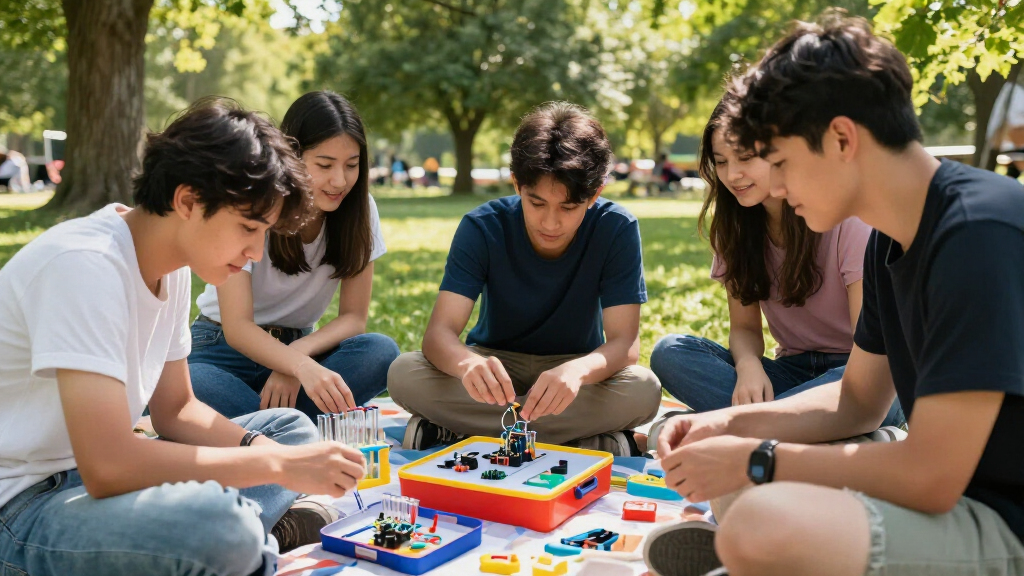

Finding the right educational science kit for a teenager comes down to matching the kit’s depth to their attention span and interest — and that tradeoff defines this entire category. The Thames & Kosmos Chem C3000 stands out as the best overall pick for teens because its 333-experiment chemistry curriculum reads more like a real lab course than a toy box, which is exactly what older kids need to stay engaged. For teens who prefer building over mixing chemicals, the Thames & Kosmos Structural Engineering kit offers genuine engineering challenge, while the Evviva Sciences Microbiology Kit delivers authentic lab technique with pre-poured agar plates at a friendlier price. The main tension you’ll face is between replay value and simplicity: big-count experiment kits like the National Geographic sets are exciting out of the box but can run dry quickly, while deeper kits demand more patience and parental investment. Read on for the full breakdown of all 15 kits and who each one actually suits.

Prime made for students and young adults
- Fast, free delivery for dorm and study essentials
- Prime Video and Amazon Music included
- Member-only deals
Key Takeaways
- Kits originally labeled for ages 8-12 (all three National Geographic sets, the UNGILINGA 150, and the Playz candy kit) generally underserve teens unless the teen is new to hands-on science — only the Chem C3000 is explicitly rated 12+.
- Consumable-heavy kits (chemistry and microbiology) offer a hard stop once reagents run out, whereas build-and-rebuild kits like the Robot Arm Kit and Structural Engineering set deliver far better cost-per-hour value.
- The Chem C3000’s price is justified by genuine lab equipment and curriculum depth, but it requires alcohol burners and adult supervision — a real tradeoff against safer, shallower alternatives.
- Electricity-themed kits overlap heavily: the Delinx kit, the STEM Electric Circuit Kit, and the Robot Arm all teach circuits, but they differ sharply in guided instruction quality and whether the finished project survives being played with afterward.
- The 58-Piece Microscope Kit and the 4M Clean Water Science kit are the budget anchors of this lineup — fine as gateway purchases, but teens with sustained science interest will outgrow both within months.
| Delinx Fun Physics Science Experiment Kit |  | Best for Renewable Energy Learning | Number of Items: 23 | Age Range: 12 years and up | Learning Focus: Physics, circuitry, energy conversion, problem solving | VIEW LATEST PRICE | See Our Full Breakdown |
| Evviva Sciences Microbiology Science Project Kit |  | Best Biology Pick for Older Teens | Agar Plates: 10 pre-poured | Cotton Tipped Sticks: 10 | Pipette: 1 | VIEW LATEST PRICE | See Our Full Breakdown |
| ANNISOKA Robot Arm Kit for Kids and Teens |  | Best Robotics Starter | Brand: ANNISOKA | Age Range: 8 years and up | Learning Focus: Robotics, circuits, problem solving, logical thinking | VIEW LATEST PRICE | See Our Full Breakdown |
| National Geographic Science Magic Kit |  | Best for Engagement and Repeat Value | Brand: Blue Marble (National Geographic) | Age Range: 8 years and up | Total Experiments: 100+ (20 boxed, 85+ in bonus booklet) | VIEW LATEST PRICE | See Our Full Breakdown |
| National Geographic Gross Science Kit |  | Best Value Chemistry Intro | Number of Experiments: 45 | Recommended Age: 8-12 | Brand: National Geographic | VIEW LATEST PRICE | See Our Full Breakdown |
| 58-Piece Kids Microscope Kit – 100X-1200X Magnification, Metal Body, LED Light, Carrying Box |  | Best Hardware Starter Pick | Magnification: 100X-1200X | Number of Pieces: 58 | Body Material: Metal | VIEW LATEST PRICE | See Our Full Breakdown |
| UNGLINGA 150 Experiments Science Kits for Kids | 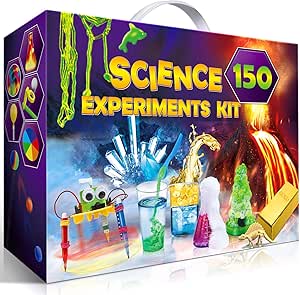 | Best Value Variety Pack | Brand: UNGLINGA | Number of Experiments: 150 | Subjects: Earth science, surface tension, chemistry, physics | VIEW LATEST PRICE | See Our Full Breakdown |
| 4M Clean Water Science – Desalination and Water Purification Kit |  | Best Single-Topic Deep Dive | Subjects: Environmental science, chemistry | Core Activities: Desalination and water purification | Contents: Plastic filter system, active carbon, sand, rock, filter paper, instructions | VIEW LATEST PRICE | See Our Full Breakdown |
| Thames & Kosmos Structural Engineering: Bridges & Skyscrapers Science & Engineering Kit |  | Best for Aspiring Engineers | Number of Models: 20 | Pieces: 285+ | Manual: 36 pages | VIEW LATEST PRICE | See Our Full Breakdown |
| National Geographic Amazing Chemistry Set with 100+ Experiments |  | Best Overall Chemistry Set | Number of Experiments: 100+ | Bonus Experiments: 85 (using household items) | Recommended Age: 8-12 | VIEW LATEST PRICE | See Our Full Breakdown |
| Doctor Jupiter Ultimate Science Experiments Kit for Kids Ages 8+ |  | Best Value for Volume | Number of Experiments: 135+ | Bonus Experiments: 90+ | Recommended Age: 8+ | VIEW LATEST PRICE | See Our Full Breakdown |
| STEM Electric Circuit Kit for Kids and Teens – Light Bulb Experiments and Fruit Energy Projects |  | Best for Physics and Circuit Learning | Number of Experiments: 8 | Projects Included: Series Circuit, Parallel Circuit, Saltwater Power, Fruit Battery | Batteries Required: AA batteries (not included) | VIEW LATEST PRICE | See Our Full Breakdown |
| National Geographic Chemistry Set with 45 Experiments for Kids 8-12 |  | Best Structured Chemistry Curriculum | Brand: National Geographic | Number of Experiments: 45 | Age Range: 8 years and up | VIEW LATEST PRICE | See Our Full Breakdown |
| Thames & Kosmos 640132 Chem C3000 Chemistry Set, Includes Components From C2000 Plus, 333 Experiments, 103 Pieces, for Ages 12+ |  | Best Premium Pick for Serious Scientists | Number of Experiments: 333 | Pieces: 103 | Age Range: 12+ | VIEW LATEST PRICE | See Our Full Breakdown |
| Playz Edible Exploding Candy Making Kit for Kids Age 8-12 |  | Best for Reluctant Scientists | Experiments Included: Over 29 | Guide Pages: 72 | Recommended Age: 8-12 | VIEW LATEST PRICE | See Our Full Breakdown |
More Details on Our Top Picks
Delinx Fun Physics Science Experiment Kit
Most science kits in this price bracket pick a single discipline, but this one threads together solar, wind, and hand-cranked power into a single narrative about energy conversion — a topic that maps directly onto middle school physics curriculum. Compared with the STEM Electric Circuit Kit elsewhere in this roundup, Delinx goes beyond lighting bulbs and fruit batteries to show where electricity actually comes from, which makes the abstract concept of generation tangible. The tradeoff is friction in the details: instructions must be downloaded separately rather than arriving in the box, and younger teens may need a parent nearby for wiring steps. Where the National Geographic kits optimize for spectacle, this one optimizes for understanding, and that focus is what earns it a place here.
Pros:- Covers three power generation modes for genuinely comparative energy learning
- Aligns with school physics curriculum on circuits and energy conversion
- 23 pieces support multiple builds rather than one disposable project
- Strong fit for science fair and demonstration projects
Cons:- No printed instructions included — setup requires a download
- Assembly complexity can frustrate teens at the younger end of the range
Best for: Teens aged 12+ working on physics or energy-focused science fair projects who need real circuit-building experience
Not ideal for: Families wanting an open-the-box-and-go experience — the missing printed manual and wiring complexity demand preparation
- Number of Items:23
- Age Range:12 years and up
- Learning Focus:Physics, circuitry, energy conversion, problem solving
- Power Modes:Solar, wind, hand-crank
- Manufacturer:Delinx
- UPC:613966166231
Our verdict“This pick makes the most sense for a teen who already has some patience with wiring and wants to understand energy generation, not just watch a reaction fizz.”
Evviva Sciences Microbiology Science Project Kit
In a lineup dominated by chemistry sets and physics toys, this is the only option that touches actual biology lab work, and it treats the user like a serious student rather than a spectator. The pre-poured agar plates are the key differentiator — unlike budget kits that make you melt and pour agar yourself (a messy, error-prone step), Evviva lets a 15-year-old go straight to swabbing doorknobs and growing cultures. Compared with the 58-Piece Kids Microscope Kit in this guide, which is about observing prepared specimens, this kit is about running your own experiment from hypothesis to result, which is far more valuable for a science fair. The honest limitation: it is strictly educational, not professional-grade, and younger teens will need adult supervision around bacterial growth.
Pros:- Pre-poured agar plates eliminate the messiest and most failure-prone prep step
- Includes swabs, pipette, and vial for a complete experiment workflow
- Companion ebook walks students through proper technique
- Genuinely inquiry-based — students design their own sampling experiments
Cons:- Not suitable for professional or advanced laboratory work
- Requires adult supervision and safe handling of grown cultures
- Only 10 plates, limiting the number of repeat trials
Best for: High school students aged 15+ who need a legitimate microbiology experiment for a biology class or science fair
Not ideal for: Younger teens or squeamish households — growing real bacterial cultures demands supervision and careful disposal
- Agar Plates:10 pre-poured
- Cotton Tipped Sticks:10
- Pipette:1
- Plastic Vial:1
- Age Range:15+
- Guide Format:Educational experiment ebook
Our verdict“The clear choice for an older teen who wants authentic lab experience in biology rather than another fizzing chemistry demo.”
ANNISOKA Robot Arm Kit for Kids and Teens
Robotics is the one STEM branch most kits in this roundup ignore, and this build-your-own arm fills that gap at a price parents can justify. The appeal is structural: assembling an arm that actually grips and moves teaches mechanical linkages, motors, and basic circuits in a way no chemistry set can. Compared with the Delinx physics kit, which demonstrates energy concepts through observation, the robot arm rewards the builder with a tangible machine they操控 afterward — a stronger motivator for kids who learn by building. The tradeoffs are real, though: it needs six AA batteries that aren’t included, and once built, the arm’s functions are basic, so teens already comfortable with coding or Arduino will outgrow it quickly. Think of it as an on-ramp to robotics, not a destination.
Pros:- No soldering required, making it safe and accessible for first-time builders
- Combines electrical and mechanical engineering in a single build
- Produces a functional toy that keeps engaging kids after assembly
- Develops logical thinking and fine motor skills through extended construction
Cons:- Requires 6 AA batteries not included in the box
- Limited to basic gripper and movement functions with no programmability
- Assembly can be challenging for children at the younger end of the range
Best for: Hands-on builders aged 8-16 who are curious about robotics and engineering but new to both
Not ideal for: Teens with prior robotics or coding experience — the functions are too basic to hold their interest
- Brand:ANNISOKA
- Age Range:8 years and up
- Learning Focus:Robotics, circuits, problem solving, logical thinking
- Assembly:No soldering required
- Power:6 AA batteries (not included)
- Included Components:Robot Arm Kit
Our verdict“An ideal first robotics project for a builder who wants a working machine at the end, provided you stock up on AA batteries first.”
National Geographic Science Magic Kit
If the goal is keeping a teen’s attention across many sessions rather than teaching one deep concept, this kit wins on sheer volume: 20 boxed magic experiments plus a bonus booklet with 85 more, over 100 activities in total. Compared with the National Geographic Gross Science Kit, which offers 45 experiments built around one gross-out theme, the Magic Kit casts a wider net across chemistry and physics principles disguised as performance, and each trick ends with an explanation of the science behind it. That said, the depth per experiment is shallower than what the Thames & Kosmos Chem C3000 delivers — this is breadth over rigor. Some reactions need adult supervision, and supplies will run thin if siblings share one box. It is a gateway kit: brilliant for sparking interest, less useful for serious study.
Pros:- Over 100 total experiments and tricks deliver exceptional repeat value
- Magic framing motivates kids who resist traditional science activities
- Bonus booklet extends the kit well beyond the boxed contents
- Backed by National Geographic’s proven instruction quality
Cons:- Some experiments require adult supervision and additional household materials
- One shared kit can cause friction between siblings
- Depth per experiment is shallow compared with dedicated chemistry sets
Best for: Parents of kids aged 8-12 who want maximum activities per dollar and a hook that gets science-shy kids interested
Not ideal for: Teens seeking rigorous chemistry instruction — the emphasis on performance means thinner scientific depth per experiment
- Brand:Blue Marble (National Geographic)
- Age Range:8 years and up
- Total Experiments:100+ (20 boxed, 85+ in bonus booklet)
- Model Number:NGMEGAMAGIC
- Category:Toys & Games — STEM
- UPC:816448027680
Our verdict“Best treated as an engagement tool — the kit to buy when the mission is getting a reluctant kid to like science, not mastering it.”
National Geographic Gross Science Kit
Where the Science Magic Kit sells spectacle, this one sells disguised chemistry: boiling boogers and glowing worms are polymers and chemical reactions in costume, and the illustrated guide makes the connection explicit. At 45 experiments it undercuts the Magic Kit’s total count but concentrates them on genuinely teachable reactions, giving it slightly more scientific substance per activity. Compared with the National Geographic Amazing Chemistry Set in this guide, it is the lighter and cheaper entry point — better judged against the UNGILINGA 150 Experiments kit as a themed alternative with higher polish and clearer instructions. The tradeoff is the theme itself: kids who find slime and snot unappealing get nothing here, and younger users still need an adult for mixing steps. As a low-risk first chemistry kit, though, the price-to-engagement ratio is hard to beat.
Pros:- 45 experiments focused on real polymer and reaction chemistry
- Illustrated, kid-friendly instructions support independent exploration
- Includes household items that extend experiments beyond the kit
- Strong price-to-activity ratio for a first chemistry set
Cons:- Gross-out theme actively repels some children and most teens
- Requires adult supervision for younger users
- Hard age ceiling — most 13+ buyers will find it juvenile
Best for: Kids aged 8-12 who love slime and gross-out humor and would otherwise refuse to touch a chemistry set
Not ideal for: Teens and sensitive kids — the gross theme skews young and will read as childish to anyone over 12
- Number of Experiments:45
- Recommended Age:8-12
- Brand:National Geographic
- Learning Focus:Polymers, chemical reactions, hands-on STEM
- Includes:Experiment guide, household items for extra experiments
- ASIN:B08VDDKVL5
Our verdict“A smart budget pick for a younger sibling who needs chemistry smuggled in under a slime-and-boogers disguise.”
58-Piece Kids Microscope Kit – 100X-1200X Magnification, Metal Body, LED Light, Carrying Box
Most kits in this roundup are consumables — experiments you run once and discard. This microscope is the opposite: a durable piece of lab equipment teens can return to for years. The 58 pieces, including prepared specimens and slides, mean there is real exploration material on day one, and the metal body and carrying case give it a lifespan the UNGLINGA 150 Experiments kit simply can’t match. Where the UNGLINGA box is about breadth of one-off activities, this one is about depth in a single discipline — biology and microscopy. The tradeoff is that the 100X-1200X magnification range is beginner-tier, so a teen already serious about microbiology will outgrow it and should step up to the Evviva Sciences agar plate kit or a research-grade scope instead.
Pros:- Reusable year after year, unlike consumable experiment kits
- 58 pieces including prepared specimens means immediate exploration out of the box
- Metal body and carrying case add durability and portability
- LED illumination makes specimens actually visible at higher powers
Cons:- Batteries not included, so budget for an extra purchase
- Some smaller parts and tools feel fragile and can break with rough handling
- Magnification tops out at beginner level and won’t satisfy advanced users
Best for: Teens who want a lasting, reusable science tool rather than single-use experiments, especially those curious about biology
Not ideal for: Advanced students — the magnification ceiling and plastic accessories limit it to beginner-level exploration
- Magnification:100X-1200X
- Number of Pieces:58
- Body Material:Metal
- Illumination:LED light
- Size:4.6″L x 2.75″W x 8.15″H
- Power:2 AA batteries (not included)
- Includes:Prepared specimens, slides, lab tools, carrying box
- Recommended Age:5-12
Our verdict“Buy this if you want science hardware with staying power; skip it if your teen has already moved past beginner microscopy.”
UNGLINGA 150 Experiments Science Kits for Kids
For sheer experiments per dollar, nothing else in this lineup competes — 150 activities spanning chemistry, physics, and earth science in a single box. Compared with the National Geographic Amazing Chemistry Set, which also offers 100+ experiments, the UNGLINGA wins on breadth: it isn’t confined to chemistry, so it works as a sampling platter that helps a teen figure out which branch of science actually hooks them. The flip side of that breadth is depth. None of the 150 experiments go very far into any single concept, and unlike the Thames & Kosmos Structural Engineering kit, there’s no progressive skill-building — activity 90 feels much like activity 5. Some projects also lean on household items you’ll need to gather yourself, so the real count is slightly lower than advertised.
Pros:- 150 experiments is the largest activity count in this roundup
- Spans multiple sciences rather than one narrow subject
- Clear, kid-friendly instructions keep activities accessible
- Quality safety tools and materials included for supervised play
Cons:- Experiments are shallow — breadth comes at the cost of depth
- Certain projects require household items not in the box
- Younger teens will need adult supervision for most activities
Best for: Families wanting maximum experiment volume on a budget, and teens who haven’t yet settled on a favorite science discipline
Not ideal for: Teens who already know they love one subject — a dedicated chemistry or engineering kit will go much deeper
- Brand:UNGLINGA
- Number of Experiments:150
- Subjects:Earth science, surface tension, chemistry, physics
- Age Range:8 years and up
- Includes:Science experiment tools and materials
- Product Type:Multi-subject science kit
- Supervision:Recommended for younger children
Our verdict“The smart pick for volume and variety on a budget, as long as you accept that it samples science rather than teaching any one field deeply.”
4M Clean Water Science – Desalination and Water Purification Kit
This is the specialist’s choice. Where the UNGLINGA 150 Experiments kit touches everything briefly, the 4M Clean Water kit drills into one meaningful real-world problem — how desalination and filtration turn seawater into drinkable water — and teaches it through layered filters of active carbon, sand, and rock. For a teen interested in environmental science, that focus is a feature, not a limitation: building the filter system teaches more about the scientific method than a dozen quick demos. The honest tradeoff is longevity. Once the filter media is spent, the kit is largely done, and the setup can frustrate younger users without adult help. If your teen prefers spectacle — bubbling, glowing reactions — the National Geographic Amazing Chemistry Set delivers far more repeatable wow for similar money.
Pros:- Teaches a genuinely important real-world topic: water scarcity and purification
- Multi-stage filter system demonstrates authentic scientific layering
- Compact, affordable, and includes complete materials and instructions
- Connects well to school environmental science curricula
Cons:- Requires additional water and containers you supply yourself
- Very limited scope — only basic desalination activities
- Setup can be complex for younger children working alone
Best for: Environmentally minded teens and STEM students who want to deeply understand one real-world scientific process
Not ideal for: Kids who want lots of flashy, repeatable experiments — this covers a narrow set of desalination activities only
- Subjects:Environmental science, chemistry
- Core Activities:Desalination and water purification
- Contents:Plastic filter system, active carbon, sand, rock, filter paper, instructions
- Recommended Age:8 years and up
- Additional Requirements:Water and extra containers
- Product Type:Single-topic science kit
Our verdict“A focused, curriculum-friendly pick for teens who care about environmental science; skip it if variety is the priority.”
Thames & Kosmos Structural Engineering: Bridges & Skyscrapers Science & Engineering Kit
This is the only kit in the batch that teaches physics through building rather than mixing. With 285+ interchangeable pieces and 20 models demonstrating force, load, compression, and tension, it turns abstract structural concepts into something a teen can hold, stress-test, and rebuild. Compared with the Robot Arm Kit, which is also construction-based, this one offers far more model variety and a stronger physics curriculum via its 36-page manual — but it lacks the programmable payoff that makes robotics exciting. The intermediate skill rating is real: a beginner will hit frustration quickly, and the first few builds need patience. The subject ceiling is also narrow — if bridges and skyscrapers don’t intrigue your teen, the National Geographic Amazing Chemistry Set covers far more scientific ground for the same age group.
Pros:- 20 different models provide long-term building value
- Teaches genuine engineering concepts like compression, tension, and load distribution
- 285+ interchangeable pieces allow custom designs beyond the manual
- Detailed 36-page manual explains the physics behind each build
Cons:- Intermediate skill level — genuinely challenging for first-time builders
- No stated age range, making it hard to judge fit before buying
- Strictly limited to structural engineering; no chemistry or biology content
Best for: Teens who love building, physics, and understanding why structures stand up — especially those considering engineering studies
Not ideal for: Beginners or impatient builders — the intermediate difficulty and patient assembly will frustrate them
- Number of Models:20
- Pieces:285+
- Manual:36 pages
- Skill Level:Intermediate
- Concepts Taught:Force, load, compression, tension
- Discipline:Structural engineering
- Piece Type:Interchangeable building components
Our verdict“The clear choice for a future engineer who learns by building; wrong choice for anyone who wants quick, chemistry-style experiments.”
National Geographic Amazing Chemistry Set with 100+ Experiments
This is the strongest all-around pick for a teen who wants real chemistry with real equipment. Unlike the UNGLINGA 150 Experiments kit, which mixes thin activities across subjects, every experiment here builds actual lab competence — bubbling reactions, color changes, glowing test tubes — using genuine glassware-style tools like test tubes, beakers, and pipettes. Add 85 bonus experiments using household items and you get close to 200 activities, which pushes the value close to UNGLINGA territory while staying far more rigorous. Compared with the Thames & Kosmos Chem C3000, it’s much cheaper and easier to start, but it won’t carry a teen into advanced secondary-school chemistry the way that premium set does. Younger users in the 8-10 range will still need supervision, and a few activities require pantry items you’ll have to supply.
Pros:- 100+ core experiments plus 85 bonus activities for exceptional volume
- Includes real scientific tools — test tubes, beakers, pipettes — for authentic lab practice
- Focused on a single discipline, so skills genuinely compound over time
- Award-winning design with clear instructions and strong STEM credentials
Cons:- Younger teens need adult supervision for many experiments
- Some activities require household items not included in the box
- Not advanced enough for teens already past introductory chemistry
Best for: Teens who want an authentic, high-volume chemistry experience with real lab tools at a mid-range price
Not ideal for: Advanced students aiming for high-school-level chemistry — they should step up to the Thames & Kosmos Chem C3000 instead
- Number of Experiments:100+
- Bonus Experiments:85 (using household items)
- Recommended Age:8-12
- Tools Included:Test tubes, beakers, pipettes
- Discipline:Chemistry
- Recognition:Award-winning STEM product
- Supervision:Recommended for younger children
Our verdict“The best balance of volume, authenticity, and price for a teen serious about chemistry — just not a teen already beyond the basics.”
Doctor Jupiter Ultimate Science Experiments Kit for Kids Ages 8+
No kit in this lineup matches the sheer quantity of experiments here — 135 plus another 90 bonus activities for under the price of most mid-range sets. Where the National Geographic Chemistry Set offers polish across 45 experiments, Doctor Jupiter bets on variety over depth, which makes it a smarter buy for teens who bore quickly and want something new every weekend. The leak-proof bottles are a thoughtful touch that the Playz candy kit, for instance, doesn’t bother with.
The tradeoff is quality control: instructions are clear but less rigorously edited than Nat Geo’s illustrated guide, and the complexity swings wildly from activity to activity. Adults will need to stay involved for the chemical-based experiments, and a few of the bonus activities lean more toward filler than real science.
Pros:- Unmatched experiment count at 225+ total activities
- Leak-proof bottles reduce mess and spills
- Reusable materials stretch value across repeat experiments
- Instructions accessible enough for joint parent-teen sessions
Cons:- Uneven difficulty — some experiments feel like padding
- Chemical materials demand careful storage and adult oversight
Best for: Families on a budget who want months of weekend experiments rather than one polished curriculum
Not ideal for: Teens seeking rigorous chemistry foundations — the Nat Geo or Chem C3000 sets teach concepts more systematically
- Number of Experiments:135+
- Bonus Experiments:90+
- Recommended Age:8+
- Materials:Leak-proof bottles, chemical materials
- Focus:General STEM variety
- Supervision:Required for some experiments
Our verdict“The best price-per-experiment pick for teens with broad curiosity and short attention spans.”
STEM Electric Circuit Kit for Kids and Teens – Light Bulb Experiments and Fruit Energy Projects
Most kits in this roundup chase chemical reactions, but this one builds genuine electrical literacy — series and parallel circuits, saltwater power, fruit batteries. For a teen who has already outgrown volcano kits like the National Geographic Chemistry Set, this is a natural next step because it teaches concepts that transfer directly to physics class and science fair projects. The Delinx physics kit covers similar ground with generators and solar, but this option’s guided instruction book makes it friendlier for independent learning.
Eight experiments feels thin next to Doctor Jupiter’s 135, and the AA batteries aren’t included, so factor in an extra purchase. Younger teens may stall on the trickier builds without help.
Pros:- Teaches transferable physics concepts, not just spectacle
- Detailed instruction book supports self-guided learning
- Fruit battery and saltwater projects are science-fair ready
- Works at home or in the classroom
Cons:- Batteries not included
- Only 8 experiments limits long-term replay value
Best for: Teens preparing for physics coursework or science fairs who want hands-on circuit fundamentals
Not ideal for: Buyers who want lots of experiments per dollar — eight projects won’t sustain months of use
- Number of Experiments:8
- Projects Included:Series Circuit, Parallel Circuit, Saltwater Power, Fruit Battery
- Batteries Required:AA batteries (not included)
- Recommended Age:8+
- Focus:Electricity and circuits
- Settings:Home, classroom, science fairs
Our verdict“A focused, curriculum-friendly pick that trades quantity for genuine electrical understanding.”
National Geographic Chemistry Set with 45 Experiments for Kids 8-12
This set carves out a middle ground that nothing else in the lineup occupies quite as well: real chemistry with editorial polish. The illustrated, kid-friendly instructions are noticeably tighter than Doctor Jupiter’s, and the volcano, geyser, and rocket experiments deliver the dramatic payoff teens expect while still teaching reaction science. Compared with the Chem C3000, it sacrifices depth and lab-grade equipment for accessibility — a fair trade for younger teens who aren’t ready for a 103-piece professional set.
The limitation is scope: 45 experiments will run dry faster than Doctor Jupiter’s 225+, and there’s little room for open-ended exploration. Some reactions still need an adult nearby, and it’s a guided learning tool rather than a toy for freestyle play.
Pros:- Best-edited instruction guide in this price bracket
- Exciting flagship experiments (volcano, geyser, rocket)
- Trusted National Geographic branding and content quality
- Well-paced for the 8-12 age range
Cons:- Smaller experiment library than competing kits
- Purely educational — no unstructured play value
Best for: Younger teens (8-12) who want properly explained chemistry with dramatic results and clear instructions
Not ideal for: Older teens or ambitious homeschoolers — the Chem C3000 offers far more rigorous content
- Brand:National Geographic
- Number of Experiments:45
- Age Range:8 years and up
- Educational Objective:STEM / Chemistry
- Model Number:NGMEGACHEMX
- Manufacturer:JMW Sales, Inc.
Our verdict“The most reliable choice for teaching actual chemistry concepts to younger teens without overwhelming them.”
Thames & Kosmos 640132 Chem C3000 Chemistry Set, Includes Components From C2000 Plus, 333 Experiments, 103 Pieces, for Ages 12+
This is the only kit here that behaves like real lab equipment — 103 pieces, glassware, and a full-color manual that explains the science behind all 333 experiments rather than just the steps. For a teen heading toward AP Chemistry or a homeschool family building a serious curriculum, nothing else compares: the National Geographic set teaches concepts accessibly, but the C3000 teaches them the way a high school course will, covering inorganic, organic, and electrochemistry.
That seriousness cuts both ways. It’s the most expensive option in this roundup, it demands constant adult supervision, and the chemicals are genuinely hazardous if mishandled. A casual teen who enjoyed the Playz candy kit will likely find this intimidating rather than inspiring.
Pros:- Authentic lab equipment, not toy-grade components
- Manual explains scientific principles, not just procedures
- Covers inorganic, organic, and electrochemistry
- Excellent long-term value for multi-year use
Cons:- Highest price in the roundup by a wide margin
- Chemicals require strict adult supervision and careful storage
Best for: Motivated teens ages 12+ preparing for high school chemistry, especially homeschoolers building a lab curriculum
- Number of Experiments:333
- Pieces:103
- Age Range:12+
- Safety Standard:EN 71-4
- Coverage:Inorganic, organic, electrochemistry
- Manual:Comprehensive full-color experiment manual
Our verdict“A genuine investment in a serious young scientist’s education rather than a one-off gift.”
Playz Edible Exploding Candy Making Kit for Kids Age 8-12
Sometimes the fastest way to interest a science-averse teen is through their stomach, and this kit’s edible-experiment angle does exactly that — exploding rock candy, jellies, chocolates, and lollipops tied to real STEM concepts in a 72-page lab guide. It won’t teach chemistry the way the Chem C3000 or even the Nat Geo set does, but it removes the intimidation factor entirely, which is its whole job. Compared with Doctor Jupiter’s leak-proof chemical bottles, this trades rigor for motivation.
Parents should expect mess — molten sugar and powdered ingredients get everywhere — and some recipes call for household supplies beyond the box. The 8-12 age ceiling is firm; older teens will find the content too young.
Pros:- Edible results give instant, tangible payoff
- 72-page guide ties candy-making to real STEM concepts
- Safe with no hazardous chemicals
- Strong hook for reluctant learners
Cons:- Messy experiments require cleanup commitment
- Additional household supplies needed for some recipes
Best for: Kids aged 8-12 who resist traditional science kits but engage instantly with food-based projects
Not ideal for: Teens over 12 or families wanting substantive chemistry — the science here is light and age-gated
- Experiments Included:Over 29
- Guide Pages:72
- Recommended Age:8-12
- Focus:Edible candy-based STEM
- Safety:No hazardous chemicals
- Supplies:Some household items required
Our verdict“A gateway kit best judged on engagement, not depth — perfect for winning over skeptics.”

How We Picked
I judged each kit against four criteria, weighted for a teen audience rather than the younger kids most of these products are marketed to. Intellectual depth came first: does the manual explain why a reaction or structure works, or just how to perform it? Kits that treat teens as capable learners — like the Chem C3000 and the Structural Engineering set — ranked above kits that optimize for visual wow-factor. Replay value was second, because a kit finished in one afternoon is a poor investment at any price; reusable hardware and open-ended experiments scored higher than single-use consumables.
I also weighed build quality and instruction clarity, since teens abandon kits with vague manuals or flimsy components faster than younger kids do, and value for money, which accounts for consumables, refill costs, and whether the equipment (microscopes, circuit parts, lab glassware) has life beyond the included experiments. Ranking then followed a simple logic: kits that combine depth with durability sit at the top, one-and-done spectacle kits fill the middle, and narrow or shallow kits round out the bottom. Where two kits overlap — the three National Geographic chemistry options, for instance — I differentiated them by experiment count, safety requirements, and originality of the activities rather than treating them as interchangeable.
Factors to Consider When Choosing Educational Science Kits For Teens
Before settling on a kit, it helps to understand what actually separates a science kit a teen will respect from one they’ll quietly shelve after a weekend. These are the factors I’d weigh first.Match the Age Rating to the Teen, Not the Box
Most kits in this category are designed and marketed for the 8-12 range, which creates a real trap for teen buyers: the box says “educational” but the content is pitched below a 13-year-old’s patience. A teen who is genuinely new to hands-on experiments may still enjoy a younger-skewing kit, but a teen who has had school chemistry or physics will find step-by-step color-mixing activities condescending. The workaround is to check whether the manual includes explanations of underlying principles, not just instructions — that’s usually the tell that a kit respects older users. Also watch for kits with 12+ ratings and real lab components, which signal more advanced content. When in doubt, a physics or engineering build tends to age up better than a novelty chemistry set, because the construction challenge itself carries the difficulty.
Consumables vs. Reusability: The Hidden Cost Question
The sticker price of a science kit rarely tells the whole story, because kits fall into two economic categories. Consumable kits — chemistry sets, agar plates, candy-making kits — have a built-in expiration: once the reagents are used, the kit is done unless you buy refills or source your own materials. Hardware-based kits — microscopes, circuit sets, robot arms, engineering builds — can be used indefinitely, paired with household materials, or resold. A $60 consumable kit used once may cost more per hour than a $40 microscope used for a year. Before buying, ask what happens on day two: can experiments be repeated, extended, or invented? The best-value purchases in this category are almost always the ones where the equipment outlives the included curriculum. This is also why refills matter — check whether the manufacturer sells them before committing to a chemistry brand.
Supervision and Safety Requirements
Safety demands scale with sophistication, and this is where many buyers get surprised. The advanced chemistry kits in this space require alcohol burners, glassware, and in some cases diluted chemicals that demand adult supervision, good ventilation, and a workspace you’re not worried about staining. If the teen will be working alone after school, a lower-risk domain — structural engineering, circuits at battery voltage, or water purification — is the smarter call. Microbiology sits in the middle: growing bacteria is safe if plates are sealed and disposed of properly, but sloppy handling can grow genuinely unpleasant things, so check whether the kit includes disposal guidance. Reading the safety section of the manual before purchasing (most manufacturers publish PDFs online) takes five minutes and prevents the most common regret in this category: a kit a parent doesn’t feel comfortable letting their teen actually use.
Instruction Quality Determines Whether the Kit Gets Finished
The single most common failure mode for science kits isn’t danger or boredom — it’s a confusing manual that stalls the project halfway through. Teens are old enough to follow written procedures but young enough to abandon them when steps are vague or diagrams don’t match the included parts. Before buying, look for reviews that specifically mention the instructions, and favor manufacturers with a track record of educational publishing, since their manuals tend to explain concepts rather than just list steps. A well-written manual also extends the kit’s life, because clear foundational explanations let a motivated teen design their own follow-up experiments. Kits with video supplements or manufacturer support channels earn extra credit here. If a kit is cheap but the manual is thin, expect it to be a one-afternoon experience regardless of how many experiments the box advertises.
Align the Domain With Real Interests
One pattern emerged clearly across this lineup: teens finish kits that connect to interests they already have, and abandon technically excellent kits in domains they don’t care about. A teen who loved biology class will get more from a microbiology kit than from a superior engineering set, and vice versa. The mistake to avoid is buying the kit you think is educational rather than the one matching their curiosity — a candy-making science kit can teach genuine chemistry to a teen who would never open a formal chemistry set. If you’re unsure of their interests, electricity and circuit kits are the safest crossover domain, since they touch physics, engineering, and even biology (fruit-battery experiments) in one package. And if a teen shows serious sustained interest in one branch of science, that’s the moment to pay up for a premium kit in that specific domain rather than buying another generalist set.
Frequently Asked Questions
Is the Thames & Kosmos Chem C3000 worth the high price compared to cheaper 100-experiment sets?
For a teen who is seriously interested in chemistry, yes — but the value depends entirely on commitment level. The C3000 includes real lab equipment (glassware, an alcohol burner, a spirit thermometer) and a manual structured like an actual chemistry course, so a teen who works through it gains skills that transfer directly to high school and early college labs. A $40 set with 100 color-change experiments delivers more instant gratification but teaches observation without technique. The honest caveat: the C3000 requires adult supervision, a heat source, and a teen patient enough to read substantial explanatory text before each experiment. If your teen prefers spectacle over methodology, the cheaper sets will actually get used more, and the C3000 will gather dust — which makes it the worse purchase despite being the better product.
Which kit is best if my teen will be doing experiments completely unsupervised?
Avoid anything involving heat sources, open flames, or bacterial culturing — that rules out the Chem C3000 and puts real limits on the microbiology kit, which needs careful handling and disposal of grown cultures. The safest unsupervised domains in this roundup are structural engineering, circuits, and water purification: the Thames & Kosmos bridges and skyscrapers kit, the robot arm kit, and the 4M Clean Water kit all run on mechanical assembly, battery-level electricity, or household-safe materials. Circuit kits are a strong middle ground because they teach a genuinely technical subject with essentially zero hazard. If you want chemistry specifically, the edible candy-making kit is the only option here that’s fundamentally safe to run alone. Whichever you choose, check the manual’s stated supervision requirements rather than the age rating, since age ratings in this category are set by marketing as much as by safety.
How much do refill and consumable costs matter after the initial purchase?
More than most buyers expect, and it changes the real ranking of this category. Chemistry kits consume reagents, agar plates expire and are single-use, and even candy kits run out of ingredients — so a mid-priced kit can end up costing double once you source replacements. Microbiology is the clearest example: pre-poured agar plates are the main consumable, and buying sterile replacements costs nearly as much as a fresh kit unless you learn to pour your own. My practical advice is to check refill availability and price before buying, and to favor brands that sell refills directly. Alternatively, tilt toward hardware-based kits where consumables are cheap household items — vinegar, baking soda, fruit — because those kits stay usable for years at near-zero added cost. For a teen with sustained interest, hardware kits plus DIY materials is the most economical long-term path.
My teen is 14 and most kits say ages 8-12. Will they be too young for them?
Usually yes for novelty-focused sets, but not universally — it depends on whether the kit teaches technique or just produces visual effects. The 8-12 chemistry sets from National Geographic and Doctor Jupiter lean heavily on color changes and fizzing reactions that a 14-year-old with any science schooling will find shallow, and they’ll likely be finished within a couple of afternoons. However, kits that involve building skill — the structural engineering set, the robot arm, or any circuit kit — remain genuinely challenging for teens because the difficulty is in the construction and troubleshooting, not the target age sticker. A reasonable rule: if the kit’s advertised outcome is a visual effect, it skews young; if the outcome is a working device or structure, it ages up well. For a 14-year-old with real science interest, the C3000 or the microbiology kit are the only options in this lineup built with their level in mind.
Is a microscope kit still worth buying when phones have decent magnifying cameras?
Yes, if you buy the right one and understand its limits — phone cameras genuinely cannot replace even a basic compound microscope at 100X-plus magnification, so the capability is real. What phones have done is make cheap novelty microscopes obsolete, which is why the bar matters: the 58-piece kit in this lineup is serviceable as a gateway but its optics and prepared slides won’t hold a curious teen’s attention for more than a few sessions. The better question is whether your teen will actually have specimens to look at, because a microscope without an ongoing supply of interesting samples becomes a shelf ornament fast. Pairing a modest microscope with a microbiology kit solves this — culturing your own samples gives the instrument a continuous purpose. If budget forces a choice, I’d put the money into the microbiology kit first and add a microscope only after the teen demonstrates sustained interest.
Conclusion
After comparing all 15 kits, the right choice comes down to who’s opening the box. For best overall, the Thames & Kosmos Chem C3000 is the only kit in this lineup that treats a teenager like a capable scientist, and it’s the pick I’d make for any teen with genuine chemistry curiosity — provided an adult is available for supervision. For best value, the Evviva Sciences Microbiology Kit delivers authentic lab technique and repeatable experiments at a mid-range price, while the 4M Clean Water Science kit is the budget pick if you want meaningful science under fifteen dollars. For beginners — teens new to hands-on science, or buyers unsure of their interests — the STEM Electric Circuit Kit or the Robot Arm Kit offer approachable, safe entry points with enough building challenge to hold a teen’s attention.
For specific needs: choose the Thames & Kosmos Structural Engineering kit for a future engineer who prefers building to mixing; the Doctor Jupiter or National Geographic Amazing Chemistry Set for a younger-skewing teen who wants immediate visual payoff; and the 58-Piece Microscope Kit only as a low-cost gateway paired with other specimen sources. The kits I’d approach with the most caution for actual teens are the novelty sets — the Gross Science and candy-making kits — which are fun gifts but rarely sustain interest past a weekend. Whatever you choose, prioritize a kit whose difficulty and domain match the teen in front of you; that match, more than price or experiment count, is what determines whether the kit gets finished.
Fall Picks
fall essentials
As an affiliate, we earn on qualifying purchases.