
The right educational science reference book can turn homework frustration into genuine curiosity — but the options span everything from picture-heavy encyclopedias for seven-year-olds to dense subject guides aimed at teens preparing for exams. My overall pick is the Knowledge Encyclopedia Science! 2nd Edition, which balances stunning cross-section illustrations with real explanatory depth better than anything else in this lineup. Close behind are The Usborne Science Encyclopedia for its internet-linked, curriculum-friendly coverage and The Science Book (DK Big Ideas) for older readers who want the big ideas of science explained chronologically. The main tradeoff you’ll face is visual appeal versus staying power: glossy, image-driven books hook reluctant readers but can be outgrown quickly, while text-heavy references last through high school but risk sitting unread on the shelf. Keep reading for the full breakdown of all fifteen titles.

Prime made for students and young adults
- Fast, free delivery for dorm and study essentials
- Prime Video and Amazon Music included
- Member-only deals
Key Takeaways
- DK’s Knowledge Encyclopedia series dominated the comparison because its annotated cross-sections explain mechanisms, not just facts — the 2nd Edition Science! volume edged out the Usborne encyclopedia on visual explanation quality.
- Six of the fifteen titles are effectively multi-subject encyclopedias covering the same ground, so buyer choice should hinge on reading level and illustration style rather than topic coverage, which is nearly identical across them.
- Box sets (the 6-book and 8-book collections) offer the lowest cost per page but weaker binding and more dated design — they make sense for classrooms and siblings, less so for a single motivated learner.
- Single-subject deep-dives like The Elements Book and Knowledge Encyclopedia Human Body! outperform general encyclopedias for kids with a specific passion, but they don’t work as a one-and-only reference.
- The Usborne Illustrated Dictionary of Science and DK Big Ideas’ The Science Book were the only two titles genuinely useful at GCSE/secondary level — everything else tops out around ages 11-12.
| National Geographic Kids Science Encyclopedia: Atom Smashing, Food Chemistry, Animals, Space, and More! |  | Best Overall for Curious Kids | Format: Science encyclopedia | Intended audience: Children | Subject areas: Chemistry, biology, space, animals, and other science topics | VIEW LATEST PRICE | See Our Full Breakdown |
| Super Simple Biology: The Ultimate Bitesize Study Guide |  | Best for Quick Biology Review | Format: Biology study guide | Subject: Biology | Organization: Bitesize sections | VIEW LATEST PRICE | See Our Full Breakdown |
| Simply Science (DK Simply) |  | Best for Hands-On Beginners | Format: Introductory science book | Series: DK Simply | Intended audience: Young readers | VIEW LATEST PRICE | See Our Full Breakdown |
| Knowledge Encyclopedia Science! 2nd Edition |  | Best for Visual Topic Browsing | Format: Science encyclopedia | Edition: 2nd Edition | Coverage: Various science topics | VIEW LATEST PRICE | See Our Full Breakdown |
| The Usborne Science Encyclopedia: An In-depth Guide for Young Scientists Exploring Gravity, Flight, Genes, DNA and More |  | Best for Further Exploration | Format: Science encyclopedia and in-depth guide | Intended audience: Young scientists | Named topics: Gravity, flight, genes, and DNA | VIEW LATEST PRICE | See Our Full Breakdown |
| The Elements Book: A Visual Periodic Table Encyclopedia for Kids |  | Best for Young Chemistry Fans | Format: Hardcover illustrated encyclopedia | Subject Focus: Periodic table and chemical elements | Target Age Range: Approximately 7–11 years | VIEW LATEST PRICE | See Our Full Breakdown |
| Knowledge Encyclopedia Human Body! Human Anatomy as You’ve Never Seen It Before |  | Best Anatomy Deep-Dive | Format: Hardcover illustrated encyclopedia | Subject Focus: Human anatomy and physiology | Target Age Range: Approximately 9 years to adult | VIEW LATEST PRICE | See Our Full Breakdown |
| Sciencia: Mathematics, Physics, Chemistry, Biology, and Astronomy for All |  | Best Compact All-in-One for Adults | Format: Paperback / compact single-volume edition | Subject Focus: Mathematics, physics, chemistry, biology, astronomy | Target Audience: General adult readers and older teens | VIEW LATEST PRICE | See Our Full Breakdown |
| Science Knowledge Encyclopedia for Children: Collection of 6 Books (Box Set) |  | Best Box Set for Homeschooling | Format: Boxed set of 6 books | Subject Focus: Multiple children’s science topics across six volumes | Target Age Range: Elementary-aged children | VIEW LATEST PRICE | See Our Full Breakdown |
| The Science Book (DK Big Ideas) |  | Best Big-Picture Survey | Format: Illustrated single-volume reference | Subject Focus: Major concepts and discoveries across all sciences | Target Age Range: Teen through adult | VIEW LATEST PRICE | See Our Full Breakdown |
| Knowledge Encyclopedia Planet Earth! Our Exciting World As You’ve Never Seen It Before |  | Best Earth Science Deep-Dive | Format: Hardcover encyclopedia | Subject focus: Earth science, geology, geography, ecosystems | Recommended age range: Approximately 8-14 years and up | VIEW LATEST PRICE | See Our Full Breakdown |
| Science Encyclopedia | 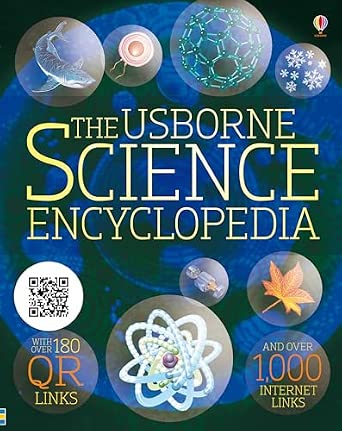 | Best All-Around General Reference | Format: Illustrated single-volume encyclopedia | Subject focus: General science: physics, chemistry, biology, earth and space | Recommended age range: Approximately 9-14 years | VIEW LATEST PRICE | See Our Full Breakdown |
| Encyclopedia of Science (Set of 8 books) |  | Best Multi-Volume Library Builder | Format: Boxed set of 8 books | Subject focus: General science split across dedicated volumes | Recommended age range: Approximately 8-14 years | VIEW LATEST PRICE | See Our Full Breakdown |
| Knowledge Encyclopedia – Science for Children |  | Best for Younger Readers | Format: Illustrated children’s encyclopedia | Subject focus: Introductory general science for young learners | Recommended age range: Approximately 5-9 years | VIEW LATEST PRICE | See Our Full Breakdown |
| The Usborne Illustrated Dictionary of Science |  | Best Quick-Lookup Study Aid | Format: Illustrated reference dictionary | Organization: Alphabetical entries for quick lookup | Subject focus: Core scientific terms across physics, chemistry, and biology | VIEW LATEST PRICE | See Our Full Breakdown |
| educational science reference book | Format | Subject focus |
|---|---|---|
| National Geographic Kids Scien | Science encyclopedia | — |
| Super Simple Biology: The Ulti | Biology study guide | — |
| Simply Science | Introductory science book | The natural world |
| Knowledge Encyclopedia Science | Science encyclopedia | — |
| The Usborne Science Encycloped | Science encyclopedia and in-depth guide | — |
| The Elements Book: A Visual Pe | Hardcover illustrated encyclopedia | Periodic table and chemical elements |
| Knowledge Encyclopedia Human B | Hardcover illustrated encyclopedia | Human anatomy and physiology |
| Sciencia: Mathematics | Paperback / compact single-volume edition | Mathematics, physics, chemistry, biology, astronomy |
| Science Knowledge Encyclopedia | Boxed set of 6 books | Multiple children’s science topics across six volumes |
| The Science Book | Illustrated single-volume reference | Major concepts and discoveries across all sciences |
| Knowledge Encyclopedia Planet | Hardcover encyclopedia | Earth science, geology, geography, ecosystems |
| Science Encyclopedia | Illustrated single-volume encyclopedia | General science: physics, chemistry, biology, earth and space |
| Encyclopedia of Science | Boxed set of 8 books | General science split across dedicated volumes |
| Knowledge Encyclopedia | Illustrated children’s encyclopedia | Introductory general science for young learners |
| The Usborne Illustrated Dictio | Illustrated reference dictionary | Core scientific terms across physics, chemistry, and biology |
More Details on Our Top Picks
National Geographic Kids Science Encyclopedia: Atom Smashing, Food Chemistry, Animals, Space, and More!
Wide-ranging topics make this a strong first reference for children who want to jump from animals to space, chemistry, and beyond. Its colorful illustrations and engaging facts suit browsing better than a lesson-by-lesson study plan, so it can help a young reader follow curiosity across fields. Compared with Super Simple Biology, which concentrates on concise biology review, this encyclopedia offers more variety but less focused revision. It also covers more ground than Simply Science, whose simple experiments give it a more hands-on angle. The tradeoff is depth: the supplied description gives no detail on chapter structure or reference tools, and the broad, child-friendly treatment may not satisfy older students looking for rigorous explanations. I’d choose it for exploration, not exam preparation.
Pros:- Covers several science fields, supporting broad-interest browsing
- Colorful illustrations can make unfamiliar topics easier for young readers to approach
- Engaging facts suit curiosity-led reading
- Broader subject range than the biology-focused Super Simple Biology
Cons:- The child-friendly overview may be too basic for older students
- The supplied product data does not specify depth, organization, or reference features
Best for: Children who like browsing illustrated science topics across biology, chemistry, and space
Not ideal for: Older students seeking detailed explanations, advanced material, or a focused study guide
- Format:Science encyclopedia
- Intended audience:Children
- Subject areas:Chemistry, biology, space, animals, and other science topics
- Content features:Facts and educational content
- Visual approach:Colorful illustrations
- Named topics:Atom smashing and food chemistry
Our verdict“Choose this as a broad, illustrated starting point for a curious child, rather than as an in-depth study reference.”
Super Simple Biology: The Ultimate Bitesize Study Guide
Bitesize sections give this guide a clear job in a science bookshelf: helping students revisit biology concepts without working through a broad encyclopedia. Compared with National Geographic Kids Science Encyclopedia, it trades subject variety and illustrated browsing for a tighter focus that better fits quick review. Its simplified explanations may also be easier to revisit than the wider-ranging Knowledge Encyclopedia Science! 2nd Edition, though that book is described as comprehensive and illustrated. The same brevity is the main limitation. Readers who need to understand a difficult idea from first principles, explore subjects beyond biology, or study advanced material may find too little detail. The supplied information identifies it as useful for exam preparation but gives no syllabus, level, or topic list, so buyers should not assume it matches a particular course.
Pros:- Concise sections support quick review
- Simplified explanations make concepts more approachable
- Biology focus gives it a clearer revision purpose than broad science encyclopedias
- Designed with exam preparation in mind
Cons:- Brief treatment may not explain difficult concepts in depth
- Does not cover science subjects beyond biology
- The supplied data does not identify an academic level or syllabus
Best for: Students who want a concise biology refresher for short study sessions or general exam review
Not ideal for: Learners needing advanced biology, extended explanations, or coverage across multiple science fields
- Format:Biology study guide
- Subject:Biology
- Organization:Bitesize sections
- Content approach:Concise overview of concepts
- Intended use:Quick review and exam preparation
- Explanation style:Simplified explanations
Our verdict“Pick this for short biology review sessions, but use a fuller reference when you need deeper explanations or broader coverage.”
Simply Science (DK Simply)
Simple experiments set this introductory book apart from reference works built mainly around facts and illustrations. For a young reader who learns by trying things, that practical angle may make basic scientific ideas feel more immediate than the broad browsing approach of National Geographic Kids Science Encyclopedia. It is also less review-oriented than Super Simple Biology: the latter is framed for concise biology study, while this book introduces foundational concepts through accessible explanations and activities. That beginner-friendly treatment comes with a limit. The supplied description does not specify the experiments, materials, or age range, and it cautions that scientific depth is limited. I’d treat it as an inviting introduction to the natural world, not as a detailed source for school research or a reference for older learners.
Pros:- Simple experiments offer a hands-on entry point
- Accessible explanations suit readers new to science
- Colorful illustrations can support understanding
- Natural-world focus gives it a practical introductory feel compared with study guides
Cons:- The supplied description indicates limited scientific depth
- No specific age range is provided
- Experiment details and materials are not specified in the supplied data
Best for: Young beginners who enjoy simple activities alongside accessible explanations of science
Not ideal for: Older readers or students who need detailed science explanations, advanced coverage, or a defined age-level match
- Format:Introductory science book
- Series:DK Simply
- Intended audience:Young readers
- Content:Fundamental scientific concepts
- Activities:Simple experiments
- Visual approach:Colorful illustrations
- Subject focus:The natural world
Our verdict“Choose this for a young beginner who wants to explore basic science through simple activities, not for in-depth reference work.”
Knowledge Encyclopedia Science! 2nd Edition
Detailed illustrations are the clearest reason to choose this broad science encyclopedia: they give readers a visual route into topics that can be hard to picture from text alone. The supplied description presents it as comprehensive and suitable for readers of different ages, making it a more reference-oriented pick than the introductory Simply Science, which emphasizes simple experiments. Compared with National Geographic Kids Science Encyclopedia, both offer broad science coverage and engaging visuals; the available information for this edition specifically highlights detailed illustrations and up-to-date facts. Still, the listing does not identify its subject breakdown, edition changes, or how facts are sourced. That makes it harder to judge whether it will answer a specific research question. I’d favor it for visual browsing across science topics, while students needing a clearly structured study guide should look to a more focused resource.
Pros:- Described as covering a broad range of science topics
- Detailed illustrations offer visual context for concepts
- The description highlights up-to-date scientific facts
- Wider age appeal than a book aimed only at young beginners
Cons:- The supplied data does not explain what changed in the second edition
- No specific subject list or organization details are provided
- Broad coverage may be less useful than a focused study guide for exam review
Best for: Families and school-age readers who want an illustrated, broad science reference for browsing together
Not ideal for: Students who need a clearly specified curriculum, detailed topic list, or targeted exam preparation
- Format:Science encyclopedia
- Edition:2nd Edition
- Coverage:Various science topics
- Visual approach:Detailed illustrations
- Content feature:Scientific facts described as up to date
- Intended audience:Readers of all ages, according to the supplied description
Our verdict“Choose this for illustrated browsing across science subjects, provided you do not need a defined syllabus or topic-by-topic study plan.”
The Usborne Science Encyclopedia: An In-depth Guide for Young Scientists Exploring Gravity, Flight, Genes, DNA and More
Links to more than 180 video clips and 1,000 recommended websites give this encyclopedia a clear advantage for young readers who want to follow a topic beyond the printed page. Its named subjects, including gravity, flight, genes, and DNA, suggest a wider-ranging and potentially more challenging reference than Simply Science, which is described as an accessible introduction with simple experiments. Compared with National Geographic Kids Science Encyclopedia, this Usborne title makes further exploration a more explicit part of the offer. Those resources may suit self-directed learners, but they also ask readers to move between the book and outside media. The supplied information does not explain how the links are organized or maintained, and it cautions that the content may be too advanced for very young children. I’d choose it for an older, curious child ready to explore independently.
Pros:- Covers named topics including gravity, flight, genes, and DNA
- More than 180 video clips extend learning beyond the book
- 1,000 recommended websites offer paths for further exploration
- More explicitly supports independent follow-up than the introductory Simply Science
Cons:- May be too advanced for very young children
- Online resources require readers to continue learning outside the book
- The supplied data does not explain how links are organized or maintained
Best for: Older children who enjoy science and want book-based explanations plus linked videos and websites for further exploration
Not ideal for: Very young readers who need a simpler introduction or families seeking a self-contained reference without online resources
- Format:Science encyclopedia and in-depth guide
- Intended audience:Young scientists
- Named topics:Gravity, flight, genes, and DNA
- Video resources:More than 180 video clips
- Website resources:1,000 recommended websites
- Resource type:Multimedia and online learning links
Our verdict“Choose this for an older young scientist who wants a broad reference with substantial linked material to explore further.”
The Elements Book: A Visual Periodic Table Encyclopedia for Kids
The Elements Book stands out as the most focused pick in this lineup — where The Science Book (DK Big Ideas) races across every discipline, this one goes deep on a single subject: the periodic table. Each element gets its own visual spread, which turns an abstract chart into something a curious eight-year-old can actually browse. Compared with the Science Knowledge Encyclopedia for Children box set, this offers far more depth per topic but covers a fraction of the ground.
The tradeoff is real, though. Explanations stay at surface level, so a middle schooler writing a report will outgrow it quickly. This pick makes the most sense for elementary readers who want chemistry made visual rather than comprehensive coverage.
Pros:- Every element gets its own visual spread, making the periodic table browsable
- Photography and layout keep young readers engaged without overwhelming them
- Strong single-subject depth compared with broader survey books
- Clear, kid-friendly explanations of what each element is and does
Cons:- Covers only chemistry — no use as a general science reference
- Too basic for middle school and beyond; lacks the scientific detail older students need
Best for: Elementary school kids (roughly ages 7–11) who are curious about chemistry and learn best through pictures
Not ideal for: Older students or adults — the explanations stop at introductory level and won’t support serious study
- Format:Hardcover illustrated encyclopedia
- Subject Focus:Periodic table and chemical elements
- Target Age Range:Approximately 7–11 years
- Reading Level:Elementary / introductory
- Visual Content:Full-color element photography and graphics
- Structure:Element-by-element spreads organized by the periodic table
Our verdict“A smart buy for parents nurturing a young chemistry obsession, but skip it if you need a general-purpose science reference.”
Knowledge Encyclopedia Human Body! Human Anatomy as You’ve Never Seen It Before
Where Super Simple Biology breaks anatomy into revision-friendly bites, this volume does the opposite — it presents the body as an immersive visual journey through rendered cross-sections and 3D-style imagery. That makes it the strongest single-subject option here for readers who want to understand how the body works, not just memorize terms.
The detail cuts both ways. Compared with The Elements Book, which a seven-year-old can flip through unaided, this option assumes patience and stronger reading skills, so it suits upper-elementary readers and up. Casual browsers may find the sheer density of anatomical information more than they wanted, and there’s no condensed study-guide version of the content for exam prep.
Pros:- Detailed 3D-style renderings show anatomy from angles textbooks rarely manage
- Explains body systems functionally, not just anatomically
- Wide age appeal — useful from late elementary through adult browsing
- More depth on its subject than any general encyclopedia in this roundup
Cons:- Density can overwhelm casual or younger readers
- Single-subject scope means it can’t serve as an all-around science reference
- Not structured as a study aid for tests or coursework
Best for: Upper-elementary through teen readers, and families, who want one visually rich, thorough anatomy reference
Not ideal for: Students needing quick exam revision — Super Simple Biology’s bitesize format serves that goal far better
- Format:Hardcover illustrated encyclopedia
- Subject Focus:Human anatomy and physiology
- Target Age Range:Approximately 9 years to adult
- Visual Content:3D-style cross-sections and anatomical renderings
- Structure:Organized by body systems
- Reading Level:Intermediate to advanced
Our verdict“The definitive anatomy choice in this lineup for readers who want depth and visuals together — but it’s a specialist tool, not a survey book.”
Sciencia: Mathematics, Physics, Chemistry, Biology, and Astronomy for All
Sciencia takes a different approach from everything else here: instead of glossy photo spreads, it compresses five disciplines into one slim, text-driven volume. Compared with The Science Book (DK Big Ideas), which covers similar breadth across a much larger, heavily illustrated format, Sciencia trades visual polish for portability and concision — it’s the one you can actually slip into a bag.
The compromise is depth and visual support. Explanations are genuinely accessible for a general audience, but a learner who depends on diagrams (as younger readers will) will find the sparse illustration a barrier, and none of the five subjects gets the room it would in a dedicated title like Knowledge Encyclopedia Human Body!. This option suits self-driven adults and older teens who read to learn.
Pros:- Five core sciences in one genuinely portable volume
- Written for a general adult audience rather than children
- Explanations assume zero prior background
- More concise than sprawling encyclopedia alternatives
Cons:- Minimal diagrams and illustrations compared with DK-style references
- Each subject only gets introductory-level treatment
- Less engaging for readers who browse visually
Best for: Adults and older teens who want a single portable volume covering math through astronomy without child-oriented framing
Not ideal for: Visual learners and younger kids — the text-forward layout and minimal diagrams make it a poor fit for picture-driven browsing
- Format:Paperback / compact single-volume edition
- Subject Focus:Mathematics, physics, chemistry, biology, astronomy
- Target Audience:General adult readers and older teens
- Reading Level:Accessible, non-technical
- Visual Content:Limited diagrams; primarily text-driven
- Structure:Five subject sections in one volume
Our verdict“A smart, travel-friendly primer for adults curious about all of science at once — not a reference for visual learners or kids.”
Science Knowledge Encyclopedia for Children: Collection of 6 Books (Box Set)
This six-volume box set takes the opposite bet from Sciencia: instead of one book covering everything thinly, it splits science across separate themed volumes kids can work through one at a time. For homeschool families and classrooms, that structure matters — a single volume like The Elements Book has to be shared or passed around, while a set lets different topics rotate between learners.
The drawbacks are structural too. Because the collection prioritizes breadth across six books, no single topic receives the depth of a dedicated title, and the set demands far more shelf space than a one-volume encyclopedia like The Science Book (DK Big Ideas). Buyers also can’t easily judge individual volumes before committing to the whole set, which makes it a bigger leap of faith than picking a standalone book.
Pros:- Six separate themed volumes allow topic-by-topic learning
- Multiple learners can use different books simultaneously
- Broad subject coverage suited to structured curricula
- Boxed packaging keeps the set organized between uses
Cons:- Individual volumes get less depth than dedicated single-subject books
- Large shelf footprint compared with one-volume encyclopedias
- Hard to evaluate individual titles before buying the full set
Best for: Homeschooling families and classrooms that want topic-by-topic coverage multiple kids can use in parallel
Not ideal for: Buyers wanting a single quick reference — six volumes is more book than most households need on one shelf
- Format:Boxed set of 6 books
- Subject Focus:Multiple children’s science topics across six volumes
- Target Age Range:Elementary-aged children
- Reading Level:Early reader to intermediate
- Structure:Separate themed volumes in a slipcase
- Primary Use Case:Homeschooling and classroom libraries
Our verdict“A practical curriculum-building purchase for homeschool households — overkill for anyone who just wants one good science book.”
The Science Book (DK Big Ideas)
The Science Book sits in a useful middle ground: broader than Knowledge Encyclopedia Human Body! or The Elements Book, yet far more visual than the text-heavy Sciencia. It organizes science around landmark ideas and discoveries rather than topics, so readers trace how understanding evolved — a framing that rewards cover-to-cover reading as much as dipping in for reference.
The tradeoff is that no single subject gets specialist treatment; a student researching, say, genetics specifically would be better served by a dedicated volume. And while the illustrations clarify concepts well, some explanations are compressed to fit the survey format, leaving readers who want rigor looking elsewhere. This pick makes the most sense for curious teens and adults building general scientific literacy.
Pros:- Frames science around landmark ideas, giving narrative context surveys usually lack
- Balances visuals and text better than text-only primers like Sciencia
- Wide accessibility from teen readers through adults
- Works both as a reference and as a readable cover-to-cover book
Cons:- No subject receives specialist-level depth
- Explanations are sometimes compressed to fit the survey format
- Less suited to younger children than photo-heavy kids’ encyclopedias
Best for: Teens and adults who want an engaging, idea-driven overview of all major science rather than depth in one field
Not ideal for: Students needing subject-specific depth for coursework — dedicated single-topic books cover more ground
- Format:Illustrated single-volume reference
- Subject Focus:Major concepts and discoveries across all sciences
- Target Age Range:Teen through adult
- Reading Level:Accessible non-fiction
- Visual Content:Diagrams and illustrations supporting each concept
- Structure:Organized by big ideas and milestones in scientific history
Our verdict“The best single-volume starting point for a big-picture understanding of science, provided you’ll buy dedicated titles for deeper dives.”
Knowledge Encyclopedia Planet Earth! Our Exciting World As You’ve Never Seen It Before
Where most books in this roundup spread themselves across all of science, this one goes deep on a single subject: Earth itself. That focus pays off. The CGI-rendered cross-sections of volcanoes, ocean floors, and atmospheric layers do what plain text cannot — they let a curious reader literally see how the planet works. Compared with The Usborne Science Encyclopedia, which treats geology as one chapter among many, this volume gives geology, geography, and ecosystems room to breathe. The tradeoff is obvious: it is not a general reference. A student needing physics or chemistry help will still need another book, like Science Encyclopedia from Usborne. This pick makes the most sense for families building a small shelf around specific interests rather than buying one do-everything volume.
Pros:- Stunning CGI visuals that explain structures text alone cannot
- Deep, focused coverage of Earth science rather than a thin overview
- Accessible to a wide age range, from middle-graders to adults skimming alongside them
- Strong fit for school projects on geography and natural science
Cons:- Single-subject scope means it cannot serve as an all-purpose science reference
- Light on technical data, formulas, or textbook-style depth for older students
Best for: Curious kids and students ages 8-14 who are fascinated by geology, weather, and ecosystems and want a visually rich single-subject reference
Not ideal for: Buyers who need one general science reference covering physics, chemistry, and biology — this is Earth-only by design
- Format:Hardcover encyclopedia
- Subject focus:Earth science, geology, geography, ecosystems
- Recommended age range:Approximately 8-14 years and up
- Visual style:Full-color CGI illustrations and cross-sections
- Publisher series:DK Knowledge Encyclopedia
- Use case:Home reference, school projects, curiosity-driven reading
Our verdict“Buy this as a richly visual Earth science companion, not as your family’s only science book.”
Science Encyclopedia
This is the workhorse pick of the roundup: one volume, broad sweep, dependable explanations across physics, chemistry, biology, and beyond. Compared with the Encyclopedia of Science (Set of 8 books), it trades sheer depth for convenience and affordability — a student can pull it off a shelf and find an answer in seconds instead of figuring out which volume to open. Its illustrated explanations are its real strength; diagrams carry concepts that dry definitions fumble. Where Knowledge Encyclopedia Planet Earth! dazzles visually within one subject, this book is plainer but wider, covering territory that title never touches. The compromise is that no single topic gets exhaustive treatment, so advanced students will eventually outgrow it and need something like The Science Book (DK Big Ideas).
Pros:- Broad coverage across all major science disciplines in one volume
- Clear illustrated explanations that support homework and independent study
- Single-volume format is easy to store, carry, and search
- Suits a wide span of ages and reading levels
Cons:- Each topic gets overview-level treatment only
- Less visually dramatic than DK’s Knowledge Encyclopedia line
Best for: Families and students ages 9-14 who want one affordable, dependable general science reference for homework and browsing
Not ideal for: High schoolers or adults who need rigorous depth on any single topic — coverage is intentionally broad rather than deep
- Format:Illustrated single-volume encyclopedia
- Subject focus:General science: physics, chemistry, biology, earth and space
- Recommended age range:Approximately 9-14 years
- Visual style:Diagrams, photographs, and annotated illustrations
- Publisher:Usborne
- Use case:Homework reference and general browsing
Our verdict“The sensible default choice if you only want to buy one general science encyclopedia.”
Encyclopedia of Science (Set of 8 books)
If the Science Encyclopedia is a workhorse, this set is a small library. Eight separate volumes let each scientific discipline get its own book, which means topics that general references compress into two pages here unfold across chapters. For a household that treats reference books as long-term infrastructure — think homeschool families or science-hungry middle schoolers — that modular depth is the whole point. The costs are physical and practical: eight books demand shelf space, and a younger child may find hunting through volumes harder than flipping one index. Compared with Science Knowledge Encyclopedia for Children: Collection of 6 Books, this set skews slightly older and more text-heavy. It also overlaps with books you may already own, so it makes the most sense as a foundation purchase, not an addition to a crowded shelf.
Pros:- Eight volumes give each discipline far more room than any single book here
- Modular format lets readers focus on one subject at a time
- Strong value per topic for families committed to long-term use
- Suits both study and casual browsing across interests
Cons:- Bulky to store, transport, and keep organized
- Redundant if you already own solid single-subject references
Best for: Homeschool families and middle-grade students building a lasting home science library with room to store it
Not ideal for: Small apartments or younger readers who need one grab-and-go book — eight volumes is a lot to manage and shelve
- Format:Boxed set of 8 books
- Subject focus:General science split across dedicated volumes
- Recommended age range:Approximately 8-14 years
- Visual style:Illustrated with diagrams and photographs
- Storage requirement:Significant shelf space for eight volumes
- Use case:Home library foundation, homeschooling, subject-by-subject study
Our verdict“Choose this set when shelf space exists and the goal is depth across all sciences at once.”
Knowledge Encyclopedia – Science for Children
This volume solves a specific problem the bigger encyclopedias create: reading level. Where Science Encyclopedia assumes a confident middle-school reader, this book pitches its language, layout, and pacing at early readers discovering science for the first time. Colorful illustration carries most of the explanatory load, so a child who stumbles over dense paragraphs still walks away understanding the idea. Compared with Knowledge Encyclopedia Planet Earth! — which shares the visual DNA but targets older kids — this one trades sophistication for approachability. The tradeoff is a short shelf life: children past roughly age ten will find the explanations too simple and should graduate to a general reference like the Science Encyclopedia or DK’s Knowledge Encyclopedia line. It functions best as a first science book, not a lasting one.
Pros:- Language and layout genuinely matched to early readers
- Bright illustrations make concepts legible before independent reading is strong
- Builds curiosity and confidence for later, heavier references
- Good shared-reading book for parents and young children
Cons:- Short usable lifespan as children’s reading advances
- Too shallow to serve as a homework reference
Best for: Parents of children ages 5-9 who want an inviting, illustration-led introduction to science before tackling bigger encyclopedias
Not ideal for: Readers over about age 10 — the simplified explanations will be outgrown quickly and offer little reference value
- Format:Illustrated children’s encyclopedia
- Subject focus:Introductory general science for young learners
- Recommended age range:Approximately 5-9 years
- Visual style:Colorful, child-friendly illustrations throughout
- Reading level:Early reader to confident beginner
- Use case:First science reference, shared reading, curiosity building
Our verdict“A great first science book for young kids, provided you expect them to outgrow it within a few years.”
The Usborne Illustrated Dictionary of Science
Most books in this roundup are built for browsing; this one is built for looking things up fast. Organized alphabetically like a dictionary, it lets a student mid-homework find a term in seconds — something chapter-structured encyclopedias like Science Encyclopedia handle more clumsily. Definitions come paired with compact diagrams, so it clarifies without requiring a reading session. Its closest rival here is Knowledge Encyclopedia – Science for Children, which is more inviting but far less efficient as a study tool. The limitation cuts the other way: dictionary entries are brief by design, so a learner who needs a full explanation of, say, genetics will have to move on to a proper encyclopedia. This pick makes the most sense as a second book beside a main reference — the fast-answer companion rather than the primary source.
Pros:- Alphabetical structure makes term lookup almost instant
- Definitions reinforced by clear, compact diagrams
- Compact enough to keep at a desk or in a school bag
- Excellent supplement to a fuller encyclopedia
Cons:- Brief entries cannot replace explanatory chapters
- Coverage thins out at advanced topic levels
Best for: Students ages 10-14 who need rapid definitions and diagrams during homework and revision
Not ideal for: Learners seeking deep explanations — entries are intentionally brief and skip advanced detail
- Format:Illustrated reference dictionary
- Organization:Alphabetical entries for quick lookup
- Subject focus:Core scientific terms across physics, chemistry, and biology
- Recommended age range:Approximately 10-14 years
- Visual style:Definitions paired with concise diagrams
- Use case:Homework lookup, revision, desk-side study aid
Our verdict“Buy this as a fast-lookup companion to a main encyclopedia, not as your only science reference.”

How We Picked
I judged each book against four criteria: explanatory depth (does it explain why, or just list what?), age-appropriate reading level (matched honestly against publisher claims, which often run optimistic), longevity (how many years of use before the reader outgrows it), and visual quality (whether the illustrations actually aid comprehension or merely decorate). I also weighed physical durability and how well each book works as a reference you can dip into, rather than read once.
The ranking logic is simple: books that combine accurate, mechanism-level explanation with visuals that clarify rather than distract rose to the top. General encyclopedias were ranked against each other on depth and staying power, while single-subject titles were judged on whether they justify owning alongside (or instead of) a general reference. Box sets ranked lower on polish but were credited where the sheer volume of content delivers genuine value for families and classrooms.
Factors to Consider When Choosing Educational Science Reference Books
Before choosing a title, it helps to understand what actually separates a reference book that gets used weekly from one that gathers dust. These are the factors that shaped my rankings — and the mistakes I see buyers make most often.Match the Reading Level, Not the Age on the Cover
Publisher age ranges are marketing tools, and they routinely run two to three years optimistic. A book labeled “8+” with dense paragraph text may frustrate an eight-year-old who decodes well but lacks background knowledge, while a confident ten-year-old reader might breeze through it. Flip through sample pages if you can and ask whether your child could read two consecutive pages without help. For reference use specifically, a slightly too-hard book is actually fine — children look things up with a specific question in mind and tolerate harder vocabulary when motivated. The bigger risk is buying too easy: books that feel babyish get rejected outright, especially by readers past age ten.
General Encyclopedia or Single-Subject Deep-Dive?
This is the decision most buyers get wrong by trying to buy only one book. A general encyclopedia covers everything at moderate depth and works as a first port of call for homework. A single-subject book like a periodic table or human anatomy encyclopedia goes deeper but serves a child who already has that interest. If budget allows one book only, go general — but if your child talks constantly about dinosaurs, space, or the body, a deep-dive will get ten times the use. The collections of six or eight themed books split the difference, which is why they’re popular with schools despite their plainer production.
Illustrations That Explain Versus Illustrations That Decorate
Not all visual books are equal, and this distinction drove my rankings more than any other factor. Explanatory visuals — labeled cross-sections, process diagrams, before/after comparisons, annotated cutaways — teach something a paragraph cannot. Decorative visuals are attractive pictures adjacent to the text that add mood but no information. DK’s cross-section style and Usborne’s diagram-heavy layouts sit firmly in the first camp. Before buying, check whether the pictures have labels and arrows pointing to named parts; if they don’t, the book is competing with video and losing. A text-heavy book with strong diagrams will outlast a gorgeous picture book by years.
Staying Power and Curriculum Relevance
Some buyers want a book that supports schoolwork; others want to fuel curiosity outside the classroom — and the best pick differs between the two. Curriculum-aligned references like the Usborne encyclopedia and the illustrated science dictionary organize content the way exams and syllabi do, with definitions and worked explanations. Big-picture narrative references like The Science Book organize by idea and history, which builds understanding but won’t directly help with Tuesday’s homework. If exam support is the goal, prioritize structured, dictionary-style content and check whether the edition matches your country’s curriculum structure. If genuine interest is the goal, narrative depth wins.
Binding, Edition, and Physical Durability
Reference books get abused — propped open flat, carried in backpacks, left open on the floor — so build quality matters more here than for novels. Single-volume hardcovers from DK and Usborne hold up well; thin paperback box-set volumes dog-ear and split at the spine within a school year of heavy use. Also check the edition: science references age faster than you’d think, especially sections on space exploration, climate data, and classification of species. Older editions at lower prices can be false economy if the astronomy chapter predates recent missions. For box sets, confirm the publisher hasn’t simply rebound older titles under new packaging.
Frequently Asked Questions
Do I need a general science encyclopedia if my child already owns single-subject books?
In most cases, yes. Single-subject books like The Elements Book or Knowledge Encyclopedia Human Body! are excellent, but school questions rarely respect subject boundaries — a question about volcanoes might pull in chemistry, physics, and geography in one assignment. A general encyclopedia acts as the first-stop reference that tells your child which subject they’re even dealing with, and the single-subject books then become the second step for deeper digging. If you can only buy one, buy the general encyclopedia first and add subject-specific titles as interests emerge. The exception is a child with an intense, sustained passion for one topic, where a deep-dive will see far more daily use.
Which of these books actually work for GCSE or middle-school exam revision?
Only two titles in this lineup genuinely hold up at that level: The Usborne Illustrated Dictionary of Science and The Science Book (DK Big Ideas). The Usborne dictionary is organized by the definitions and formulas students need to recall, which maps cleanly onto revision. The Science Book explains concepts at a level suitable for ages 14 and up but is organized by idea and history rather than syllabus, so it builds understanding rather than drilling content. The general encyclopedias — including my top pick — are written for ages 8-12 and will feel insufficient once exam-level detail is required. Buying an encyclopedia for exam revision is one of the most common mistakes in this category.
Are the cheap multi-book box sets a good deal compared to one big encyclopedia?
They can be, depending on who’s reading. The six- and eight-book collections deliver more total pages and topics than any single volume, and splitting content across slim books is genuinely friendlier for younger readers who find a heavy 500-page encyclopedia intimidating. The tradeoffs are real, though: the paper, printing, and binding are visibly lower quality, the layouts are busier and more dated, and individual volumes cover topics more shallowly. For a classroom, a family with several children, or a reluctant reader, the sets make sense. For one motivated child who will use the book for years, a well-made single encyclopedia from DK or Usborne is the better long-term buy.
How quickly do science encyclopedias go out of date?
Faster than most buyers expect, but unevenly across subjects. Physics, chemistry, and biology fundamentals are essentially permanent — a chapter on photosynthesis or Newton’s laws won’t age. The vulnerable sections are space exploration (missions, planned telescopes, planetary discoveries), climate data and projections, and anything touching computing or genetics, where the field moves quickly. A book even five or six years old may describe space programs as current when they’ve since launched or concluded. If you buy second-hand or an older edition to save money, the core science remains sound — just treat the astronomy and environment chapters with mild skepticism. For new purchases, check the copyright date and prefer the most recent edition available.
What’s the best choice for a reluctant reader who says science is boring?
Lead with visual spectacle rather than text density. Super Simple Biology and the Knowledge Encyclopedia series are built around images that do the explaining, with short text blocks a child can dip into for thirty seconds and still learn something — that’s exactly the entry point reluctant readers need. Avoid handing a reluctant reader the DK Big Ideas volume or the Usborne dictionary; both are text-first and will confirm their suspicion that science is homework. A single-subject book matched to an existing interest — animals, the human body, volcanoes — often works even better than a general encyclopedia, because the motivation is already there. The goal at this stage is a book they choose to open, not the most complete reference on the shelf.
Conclusion
The right pick here depends entirely on the reader in front of you. For best overall, the Knowledge Encyclopedia Science! 2nd Edition offers the best combination of explanatory depth, visual quality, and longevity for ages 8-12. For best value, the Science Knowledge Encyclopedia for Children 6-book box set delivers the most usable content for families and classrooms on a budget. For best premium pick, The Science Book (DK Big Ideas) justifies its price with content that stays relevant through secondary school and beyond. For beginners and younger readers, Super Simple Biology offers the friendliest entry point in the lineup. And for specific needs: The Usborne Illustrated Dictionary of Science for exam support, The Elements Book and Knowledge Encyclopedia Human Body! for topic-obsessed kids, and the Usborne Science Encyclopedia if you want internet-linked, curriculum-friendly coverage in one volume. Match the book to the reader, not the other way around, and you’ll get a reference that’s opened weekly rather than annually.
Fall Picks
fall essentials
As an affiliate, we earn on qualifying purchases.