Home science experiment kits range from broad activity collections to focused chemistry, crystal-growing, and renewable-energy sets. I’d choose the National Geographic Mega Science Lab as the best overall pick for its broad mix of 75 experiments, while the UNGLINGA 150 Experiments Science Kit stands out for sheer variety and the Thames & Kosmos Green Engineering Sustainable Energy Set for a more focused engineering challenge. The main tradeoff is breadth versus depth: large kits offer more activities, while specialist sets can make one subject easier to explore in detail. Age fit, adult help, repeatability, and any household materials needed also affect how often a kit gets used. Read on for the full comparison and help matching each option to your home.

Prime made for students and young adults
- Fast, free delivery for dorm and study essentials
- Prime Video and Amazon Music included
- Member-only deals
Key Takeaways
- The National Geographic Mega Science Lab is the strongest all-rounder: its 75 activities offer more subject variety than focused chemistry, crystal, or wind-power kits.
- UNGLINGA’s 150-experiment kit prioritizes breadth: it suits families seeking many activity choices, though a high experiment count alone does not tell you how involved or repeatable each project will be.
- Thames & Kosmos kits take a different route: the Wind Power V4.0, Wind Power V5.0, and Green Engineering set center on engineering and sustainable energy rather than a wide mix of quick experiments.
- National Geographic’s chemistry and magic kits split by style: the Amazing Chemistry Set offers 100+ experiments, while the 10-experiment Magic Chemistry Set emphasizes a smaller, performance-friendly selection.
- Age and adult involvement matter as much as activity count: several kits are aimed at children ages 8+, while the Junior Chemistry Set and beginner-friendly role-play approach may better suit younger or less experienced learners, subject to the maker’s age guidance.
| National Geographic Mega Science Lab, 75 Experiments for Kids Ages 8+ |  | Best Overall for Variety | Brand: Blue Marble | Recommended age: 8 years and up | Experiments: 75 total: 45 included and 30 using common household items | VIEW LATEST PRICE | See Our Full Breakdown |
| UNGLINGA 150 Experiments Science Kit for Kids | 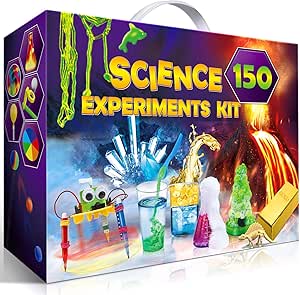 | Best for Maximum Experiment Count | Brand: UNGLINGA | Recommended age: 8 years and up | Experiment count: 150 | VIEW LATEST PRICE | See Our Full Breakdown |
| Doctor Jupiter Ultimate Science Experiments Kit for Kids, Ages 8+ |  | Best for Supplied Lab-Style Equipment | Brand: Doctor Jupiter | Recommended age: 8 years and above | Experiments: 135+ | VIEW LATEST PRICE | See Our Full Breakdown |
| National Geographic Magic Chemistry Set for Kids, 10 Experiments |  | Best for Short, Performance-Style Projects | Brand: Blue Marble | Recommended age: 8 years and up | Experiments: 10 | VIEW LATEST PRICE | See Our Full Breakdown |
| UNGLINGA Science Kit for Kids, 40+ Experiments |  | Best Compact Starter Kit | Brand: UNGLINGA | Recommended age: 8 years and up | Experiments: 40+ | VIEW LATEST PRICE | See Our Full Breakdown |
| National Geographic Science Magic Kit for Kids |  | Best for Science-Shy Performers | Brand: Blue Marble | Age range: 8 years and up | Kit-based experiments: 20 | VIEW LATEST PRICE | See Our Full Breakdown |
| Thames & Kosmos Wind Power V4.0 STEM Experiment Kit |  | Best for Renewable Energy Projects | Brand: Thames & Kosmos | Model: 627929 | Height: 3 ft | VIEW LATEST PRICE | See Our Full Breakdown |
| UNGLINGA 50+ Science Lab Experiments Kit for Kids |  | Best for Broad Activity Variety | Brand: UNGLINGA | Age range: 8 years and up | Experiment count: More than 50 | VIEW LATEST PRICE | See Our Full Breakdown |
| Thames & Kosmos Green Engineering Sustainable Energy Set |  | Best for Sustainable Home Modeling | Brand: Thames & Kosmos | Age range: 8–10 years | Model number: 627931 | VIEW LATEST PRICE | See Our Full Breakdown |
| National Geographic Amazing Chemistry Set with 100+ Experiments |  | Best for Hands-On Chemistry Tools | Brand: Blue Marble | Age range: 8 years and up | Kit-based experiments: 15 | VIEW LATEST PRICE | See Our Full Breakdown |
| Science Kit for Kids – 80 Science Lab Experiments – Scientist Role Play |  | Best for Broad Experiment Variety | Brand: Kuovei | Experiment count: 80 | Age range: 36 months to 12 years | VIEW LATEST PRICE | See Our Full Breakdown |
| National Geographic Mega Crystal Growing Kit |  | Best for Crystal-Growing Projects | Brand: National Geographic | Age range: 8 years and up | Crystal colors: 8, including glow-in-the-dark | VIEW LATEST PRICE | See Our Full Breakdown |
| Thames & Kosmos Wind Power V5.0 STEM Kit |  | Best for Renewable-Energy Engineering | Brand: Thames & Kosmos | Model: 627930 | Age range: 8 years and up | VIEW LATEST PRICE | See Our Full Breakdown |
| Discovery Super Reactions Science Kit, 66 Experiments, Ages 8+ |  | Best for Chemistry and Household Follow-Ups | Brand: Discovery | Model number: 1019069 | Age range: 8 years and up | VIEW LATEST PRICE | See Our Full Breakdown |
| National Geographic Junior Chemistry Set with 50 Experiments |  | Best for Younger Beginner Chemists | Brand: Blue Marble | Age range: 4 years and up | Experiment count: 50 | VIEW LATEST PRICE | See Our Full Breakdown |
| home science experiment kit | Brand | Age range |
|---|---|---|
| National Geographic Mega Scien | Blue Marble | — |
| UNGLINGA 150 Experiments Scien | UNGLINGA | — |
| Doctor Jupiter Ultimate Scienc | Doctor Jupiter | — |
| National Geographic Magic Chem | Blue Marble | — |
| UNGLINGA Science Kit for Kids | UNGLINGA | — |
| National Geographic Science Ma | Blue Marble | 8 years and up |
| Thames & Kosmos Wind Power V4. | Thames & Kosmos | 8 years and up |
| UNGLINGA 50+ Science Lab Exper | UNGLINGA | 8 years and up |
| Thames & Kosmos Green Engineer | Thames & Kosmos | 8–10 years |
| National Geographic Amazing Ch | Blue Marble | 8 years and up |
| Science Kit for Kids | Kuovei | 36 months to 12 years |
| National Geographic Mega Cryst | National Geographic | 8 years and up |
| Thames & Kosmos Wind Power V5. | Thames & Kosmos | 8 years and up |
| Discovery Super Reactions Scie | Discovery | 8 years and up |
| National Geographic Junior Che | Blue Marble | 4 years and up |
More Details on Our Top Picks
National Geographic Mega Science Lab, 75 Experiments for Kids Ages 8+
For a home kit that moves between several branches of science, I’d start with the National Geographic Mega Science Lab. Its 45 included experiments span Earth science, chemistry, and science magic, while the guide adds 30 more activities that use household items. That mix gives families more ways to pick a project than the focused National Geographic Magic Chemistry Set, which has 10 experiments centered on chemistry tricks. Rock and mineral specimens, crystal growing, and a volcano activity also give the kit tactile projects alongside reactions and demonstrations.
The tradeoff is that the advertised 75 activities aren’t all supplied as complete, ready-to-go experiments: the additional 30 rely on items from home. The age guidance is also aimed at children 8 and up, so younger kids may need more help. I’d choose this for breadth, not for a tightly focused chemistry course.
Pros:- Combines Earth science, chemistry, and science magic in one kit.
- Provides 45 included experiments plus a guide to 30 household-item activities.
- Rock, mineral, and crystal activities add hands-on specimen exploration.
- Offers a broader topic mix than the National Geographic Magic Chemistry Set.
Cons:- The 30 additional activities require common household items not included in the kit.
- The recommended age of 8 and up limits its fit for younger children.
- Its wide topic range means it is less focused than a dedicated chemistry kit.
Best for: Families with children 8 and up who want one kit to sample Earth science, chemistry, crystals, and science magic.
Not ideal for: Buyers who want every activity fully supplied in the box, or families seeking a kit for children younger than 8.
- Brand:Blue Marble
- Recommended age:8 years and up
- Experiments:75 total: 45 included and 30 using common household items
- Included topics:Earth science, chemistry, and science magic
- Included specimens:Rock, mineral, and crystal specimens
- Educational objectives:Critical thinking, observation skills, and STEM
- Model number:NGMEGASCIKIT
Our verdict“Choose this for a varied home science starter collection, provided you’re comfortable supplying some household materials.”
UNGLINGA 150 Experiments Science Kit for Kids
If the main goal is to keep a child supplied with a long sequence of guided activities, the UNGLINGA 150 Experiments Science Kit offers the largest stated experiment count among these five picks. Its subject range includes chemistry, physics, Earth science, and surface tension, so it reaches beyond the three-topic mix in the National Geographic Mega Science Lab. An illustrated, step-by-step manual can help children work through projects with less guesswork, while included tools and materials give the set a lab-style feel.
The number alone doesn’t mean every activity is self-contained: some projects call for household items, and the kit’s listed components are described broadly rather than as a detailed inventory. Its plastic construction and compact box dimensions may suit storage, but they don’t tell buyers how much of each material is supplied. I’d favor this for activity volume over the more specifically itemized Doctor Jupiter Ultimate Science Experiments Kit.
Pros:- Lists 150 experiments across chemistry, physics, Earth science, and surface tension.
- Illustrated step-by-step instructions support independent, guided activity.
- Includes science tools and kid-friendly materials for hands-on projects.
- Covers more stated experiments than the National Geographic Mega Science Lab.
Cons:- Some activities require additional household items.
- The product information does not give a detailed item-by-item materials inventory.
- The recommended age is 8 and up, so younger children may need another option.
Best for: Families with children 8 and up who want a high-count, guided activity set spanning several science topics.
Not ideal for: Buyers who want a fully specified materials list or activities that never require supplies from home.
- Brand:UNGLINGA
- Recommended age:8 years and up
- Experiment count:150
- Topics:Chemistry, physics, Earth science, and surface tension
- Included components:Science experiment tools and materials
- Instructions:Illustrated step-by-step manual
- Material:Plastic
- Dimensions:11.42 x 8.67 x 3.94 inches
Our verdict“Pick this when a large supply of guided activities matters more than a fully itemized list of included materials.”
Doctor Jupiter Ultimate Science Experiments Kit for Kids, Ages 8+
The Doctor Jupiter Ultimate Science Experiments Kit stands out for pairing a high activity count with a concrete selection of lab-style tools and separately bottled materials. Its measuring cylinder, conical flask, test tube stand, funnel, and other equipment make experiments feel more like structured lab work than the compact UNGLINGA Science Kit for Kids, 40+ Experiments. The listed projects include color-changing activities, glowing water, and underwater volcanoes, and the illustrated instructions give children a visual sequence to follow.
It also offers access to more than 90 bonus activities using household items, which can extend the kit after the supplied materials are used. That extension comes with a catch: the bonus projects depend on items from home, and the 8-and-up age guidance may call for adult help with some activities. Compared with the 150-experiment UNGLINGA kit, this one makes its included equipment and materials easier to evaluate, though its stated count is lower.
Pros:- Includes lab-style equipment such as a measuring cylinder, conical flask, and test tube stand.
- Separately bottled chemical materials help keep supplied ingredients organized.
- Offers 135+ experiments plus access to 90+ household-item bonus activities.
- Illustrated step-by-step instructions support guided projects.
Cons:- The 90+ bonus activities require household items.
- Its stated experiment count is lower than the UNGLINGA 150 Experiments kit.
- Recommended for ages 8 and up, so younger children may need close assistance.
Best for: Families with children 8 and up who want recognizable lab equipment and clearly listed experiment materials.
Not ideal for: Buyers who prioritize the highest stated experiment count or expect every bonus activity to use only boxed supplies.
- Brand:Doctor Jupiter
- Recommended age:8 years and above
- Experiments:135+
- Bonus experiments:90+ using household items
- Included equipment:Measuring cylinder, conical flask, spatula, stirring sticks, test tube stand, cups, funnel, and tray
- Included materials:Glycerin flakes, food essences, food colours, glow powder, baking soda, citric acid, corn starch, crystal powder, and vinegar
- Instructions:Instruction manual and bonus experiment booklet
- Manufacturer:Metis Learning Solutions Pvt. Ltd.
Our verdict“Choose this for a more lab-like setup and clearly listed equipment, rather than the biggest experiment count.”
National Geographic Magic Chemistry Set for Kids, 10 Experiments
For a child who is more interested in performing a surprising demonstration than working through a long lab sequence, the National Geographic Magic Chemistry Set is the most focused pick here. Its 10 chemistry activities include instant snow, a floating coin, and color-changing liquids, with a wand and gloves that make the experiments feel like tricks to present. The illustrated guide explains the science behind the effects, giving it more educational context than a magic prop set alone.
That focus is also its main limitation. It offers far fewer activities than the National Geographic Mega Science Lab or either larger UNGLINGA kit, and it does not provide their wider mix of science topics. For a first taste of chemistry with an entertainment angle, the smaller scope may be an advantage; for a child who wants weeks of varied experiments, it will likely feel narrow. It is designed for ages 8 and up.
Pros:- Uses magic-trick framing to make chemistry demonstrations engaging to perform.
- Includes tools, a magic wand, and gloves.
- Illustrated guide explains the science behind the effects.
- Provides a more focused chemistry activity than the broader Mega Science Lab.
Cons:- Includes only 10 experiments, far fewer than the other large kits in this group.
- Focuses on chemistry tricks rather than multiple branches of science.
- Recommended for ages 8 and up, so it may not suit younger children.
Best for: Children 8 and up who enjoy performing short chemistry demonstrations and explaining how the effects work.
Not ideal for: Families seeking a broad, long-running science kit with many experiments across different subjects.
- Brand:Blue Marble
- Recommended age:8 years and up
- Experiments:10
- Subject:Chemistry and science magic
- Included components:Experiment tools, full-color learning guide, magic wand, and gloves
- Educational objective:STEM
- Model number:NGSCIMAGIC
Our verdict“Choose this for a child who wants a small set of chemistry tricks to perform, not a broad experiment collection.”
UNGLINGA Science Kit for Kids, 40+ Experiments
For a smaller kit that can fit more easily into a cupboard or activity drawer, I’d look at the UNGLINGA Science Kit for Kids, 40+ Experiments. Its 8 x 5.7 x 2.7-inch dimensions and 0.32 kg weight make it much more compact than the UNGLINGA 150 Experiments Science Kit, a useful difference when storage space or carrying the kit matters. The activities include making bouncy balls and lava lamps, and an illustrated step-by-step manual helps children follow the projects while practicing observation and problem-solving.
The smaller footprint comes with a smaller activity collection: 40+ experiments can’t match the 150 listed for its UNGLINGA sibling, and the product details don’t specify a broad range of science subjects. Some projects also need everyday household items, so the box won’t cover every activity by itself. I’d choose it as a compact, approachable starter rather than as a long-term replacement for a larger lab kit.
Pros:- Compact dimensions and low listed weight make storage and carrying easier.
- Includes materials for more than 40 experiments.
- Illustrated step-by-step manual helps children follow activities.
- Includes familiar projects such as bouncy balls and lava lamps.
Cons:- Offers fewer experiments than the UNGLINGA 150 Experiments kit.
- Some activities require common household items.
- The listed product details do not specify a wide range of science subjects.
Best for: Families with children 8 and up who want a lightweight, space-saving kit for occasional home experiments.
Not ideal for: Children wanting a large, varied experiment collection or families who prefer activities requiring no extra household supplies.
- Brand:UNGLINGA
- Recommended age:8 years and up
- Experiments:40+
- Dimensions:8 x 5.7 x 2.7 inches
- Weight:0.32 kg
- Material:Plastic
- Included items:1 kit
- Instructions:Illustrated step-by-step manual
Our verdict“Pick this compact set for occasional hands-on projects when easy storage matters more than maximum activity variety.”
National Geographic Science Magic Kit for Kids
I’d pick this kit for a child who is more drawn to performing a trick than following a conventional lab activity. Its 20 supplied magic-style experiments pair hands-on science with a wand, gloves, and illustrated instructions, giving kids a reason to explain what is happening after the reveal. Compared with the National Geographic Amazing Chemistry Set, this one leans harder into presentation and a broader mix of trick-based activities rather than chemistry tools and solutions. The bonus booklet extends the activity list by more than 85 ideas, but those depend on household materials, so the included components do not cover every listed experiment. That makes it a flexible choice for repeat demonstrations, though buyers seeking a fully supplied set for every activity may prefer a kit with a larger proportion of ready-to-run experiments.
Pros:- Frames hands-on STEM activities as magic tricks that can hold an audience’s attention.
- Illustrated instructions and explanations connect each trick to its science.
- Bonus booklet adds more than 85 activities using common household items.
- Wand and white gloves support performance play.
Cons:- Only 20 experiments use the materials supplied in the kit.
- The bonus activities require families to source household items.
Best for: Families with children ages 8 and up who enjoy performing demonstrations and explaining the science behind a trick.
Not ideal for: Buyers who want materials included for every activity or who prefer a focused chemistry set with lab tools.
- Brand:Blue Marble
- Age range:8 years and up
- Kit-based experiments:20
- Bonus experiments:More than 85 using household items
- Included components:Experiment materials, illustrated guide, bonus booklet, magic wand, and white gloves
- Educational objective:STEM learning
- Model number:NGMEGAMAGIC
- Set name:Mega Science Kit
Our verdict“Choose this kit for a young performer who will enjoy turning science demonstrations into tricks and sharing the explanations.”
Thames & Kosmos Wind Power V4.0 STEM Experiment Kit
This is the clearest choice in this group for a child who wants to build a working system rather than cycle through many short experiments. The three-foot turbine lets kids adjust blade position and placement, then observe wind being converted into electricity for an LED, rechargeable battery, or small model car. That makes the cause-and-effect lesson more tangible than the activity-card approach of the UNGLINGA 50+ Science Lab Experiments Kit, but it also means the experience depends on assembly and suitable wind. Its weatherproof battery box and ground stakes support outdoor use, while the 32-page illustrated manual guides the build. I’d rank it for focused engineering exploration, not sheer activity variety: families wanting experiments that work indoors on demand may find wind-dependent testing limiting.
Pros:- Builds a three-foot turbine with adjustable rotor blades for exploring how setup affects power generation.
- Uses generated electricity to light an LED, charge a rechargeable battery, and run a small car.
- Weatherproof battery box and ground stakes support outdoor operation.
- Full-color illustrated manual helps guide the build and experiments.
Cons:- Assembly takes more time than starting a small tabletop experiment.
- Electricity generation varies with wind conditions, so demonstrations may not work on demand.
- The large turbine needs suitable outdoor space for meaningful testing.
Best for: Families with children ages 8 and up who want a substantial outdoor build that demonstrates electricity generation and renewable energy.
Not ideal for: Buyers seeking quick indoor activities, minimal assembly, or results that do not depend on weather conditions.
- Brand:Thames & Kosmos
- Model:627929
- Height:3 ft
- Age range:8 years and up
- Manual:32-page full-color illustrated manual
- Power components:Adjustable rotor blades, electric generator, rechargeable battery, LED, and small electric car
- Outdoor features:Weatherproof battery box and ground stakes
- Warranty:1 year against manufacturer defects
Our verdict“Pick this kit for a child who wants an engineering build and can test it outdoors when wind is available.”
UNGLINGA 50+ Science Lab Experiments Kit for Kids
I’d consider this set for households that want a broad mix of activities in one compact box, rather than a kit built around one engineering project. Its 50-plus experiments span Earth science, chemistry, and themed activities, including a volcano eruption, foamy fountain, and gemstone projects. That gives it more stated activity variety than the Thames & Kosmos Wind Power V4.0, which focuses on one substantial renewable-energy build; the tradeoff is less depth in a single system. A guide explains the science, and group activities can suit siblings or a small gathering. However, some experiments need common household liquids, and the product details do not spell out the full contents of the materials. I’d favor it for variety, while buyers who want a clearly itemized, specialized kit may prefer another option.
Pros:- Offers more than 50 activities across Earth science, chemistry, and themed experiments.
- Includes materials for featured projects such as a volcano eruption and foamy fountain.
- Guide explains the science behind activities.
- Designed for hands-on exploration and group participation.
Cons:- Some activities require household liquids that are not included.
- The product information does not specify the full contents of the experiment materials.
- Its broad activity mix offers less focus than a dedicated project such as the Thames & Kosmos Wind Power V4.0.
Best for: Families with children ages 8 and up who want varied chemistry and Earth science activities for shared home sessions.
Not ideal for: Buyers who need a fully specified component list or want one sustained build with clearly defined engineering outcomes.
- Brand:UNGLINGA
- Age range:8 years and up
- Experiment count:More than 50
- Subject areas:Earth science, chemistry, and themed activities
- Educational objective:STEM
- Dimensions:9.8 × 7.5 × 3.2 inches
- Included components:Experiment materials
- Manufacturer part number:HZDZKH033
Our verdict“Choose this set if you value a varied menu of home experiments more than a single detailed build or a fully itemized kit.”
Thames & Kosmos Green Engineering Sustainable Energy Set
This set suits children who want to explore how several sustainable technologies can work together in a home model. The project combines a solar panel, energy storage battery, water pump, and LED lights, with additional features such as a robotic lawn mower, so the learning centers on designing a system rather than completing a long list of separate experiments. Compared with the Thames & Kosmos Wind Power V4.0, it offers a broader look at green living in a model-house setting, but it does not provide the same outdoor turbine build. The 32-page manual supports step-by-step assembly and explanations; younger builders may need adult help. Its cardboard-and-plastic construction keeps the project model-based, so families expecting a durable playhouse or full-size functional home system should look elsewhere.
Pros:- Combines solar power, energy storage, water pumping, and LED lighting in one model.
- Includes working features that help connect sustainability concepts to a home setting.
- 32-page illustrated manual includes instructions and science explanations.
- Model-home format can support group activities and presentations.
Cons:- Assembly and experiments may need adult guidance, particularly for younger children.
- Cardboard and plastic construction is less suited to rough handling than a sturdier build.
- The model-home approach is less focused on outdoor energy generation than the Wind Power V4.0.
Best for: Families or educators seeking a collaborative model-home project about renewable energy, green architecture, and sustainable living.
Not ideal for: Children wanting a quick, independent experiment or buyers expecting a robust structure for regular rough play.
- Brand:Thames & Kosmos
- Age range:8–10 years
- Model number:627931
- Model-home dimensions:Approximately 14 × 8 × 7 inches
- Manual:32 pages
- Included components:Cardboard house parts, motor, solar panel, water pump, phototransistor and cable, thermometer, plastic sheets, plastic tray, and grass seeds
- Educational focus:Renewable energy, green architecture, and sustainable living
- Working models:Solar panel, energy storage battery, water pump, LED lights, and robotic lawn mower
Our verdict“Choose this set for a guided, collaborative project that connects renewable-energy components to a model home.”
National Geographic Amazing Chemistry Set with 100+ Experiments
I’d choose this kit for a child who is especially interested in mixing, measuring, and observing chemical changes. The test tubes, beakers, and pipettes make the activities feel more like a small home lab than the performance-oriented National Geographic Science Magic Kit. It supplies materials for 15 chemistry experiments, including a crystal tree and color-changing solutions, while a bonus guide adds 85 activities using household items. The headline count is broad, but the distinction matters: only the 15 core experiments are tied to included kit materials. Compared with the UNGLINGA 50+ Science Lab Experiments Kit, this set is more clearly focused on chemistry and lab tools, but it offers fewer supplied activities. It makes the most sense when those tools and subject focus matter more than having materials for every listed experiment.
Pros:- Includes test tubes, beakers, and pipettes for hands-on measuring and mixing.
- Supplies materials for 15 chemistry experiments, including a crystal tree and color-changing solutions.
- Bonus guide offers 85 additional household-item activities.
- Compact 1.8-pound kit is easy to store between sessions.
Cons:- Only 15 experiments use the materials included in the kit.
- The 85 bonus activities require common household items.
- Its chemistry focus is narrower than the UNGLINGA 50+ kit’s mix of science activities.
Best for: Families with children ages 8 and up who want chemistry activities that use basic lab-style tools and demonstrations.
Not ideal for: Buyers who want a large number of experiments fully supplied or who prefer a mix of science subjects over chemistry.
- Brand:Blue Marble
- Age range:8 years and up
- Kit-based experiments:15
- Bonus experiments:85 using common household items
- Included tools:Test tubes, beakers, and pipettes
- Dimensions:8.78 × 3.19 × 11.93 inches
- Weight:1.8 pounds
- Model number:NGMEGACHEMAR
Our verdict“Pick this set for a young learner who wants chemistry-specific activities and lab-style tools, and can source extras for the bonus guide.”
Science Kit for Kids – 80 Science Lab Experiments – Scientist Role Play
For families seeking a wide mix of activities in one box, this kit’s 80 experiments range from rainbow rain and volcanoes to balloon activities, giving children more variety than the focused National Geographic Mega Crystal Growing Kit. Goggles, test tubes, measuring tools, and sealed chemical materials support a scientist-at-home feel, while step-by-step cards help children follow each activity. Its stated age range reaches from 3 to 12, but the small parts and need for adult oversight make the youngest end a less hands-off fit. Compared with the more specialized Thames & Kosmos Wind Power V5.0, this set favors quick changes between experiment types over building a single working model. Expect some cleanup, and plan to keep small components organized.
Pros:- Offers 80 varied activities, including volcano and balloon experiments.
- Includes goggles, test tubes, measuring tools, and other lab accessories.
- Sealed chemical materials and step-by-step guidance support supervised use.
- Activities are described as ranging from simple to more challenging.
Cons:- Small beads and tablets require careful storage and adult supervision around young children.
- Some experiments can create messes that require extra cleanup.
Best for: Families with school-age children who want many different hands-on experiment types and lab-style accessories in one kit.
Not ideal for: Caregivers seeking low-mess activities or a kit suitable for toddlers to use independently, since small parts can be lost or pose choking risks and some experiments need cleanup.
- Brand:Kuovei
- Experiment count:80
- Age range:36 months to 12 years
- Theme:Scientist
- Included tools:Goggles, test tubes, measuring tools, and other accessories
- Material:Plastic
- Item weight:0.75 kg
Our verdict“Choose this for a broad, accessory-rich introduction to home experiments, but skip it if you need a tidy or toddler-independent activity set.”
National Geographic Mega Crystal Growing Kit
This is the most focused pick in the group: children grow eight colorful crystals over three to four days, then display some of them on a USB-powered light-up stand. The waiting period makes it less suited to families who want a new result in one sitting, but it gives the project a longer arc than the quick activities in the Discovery Super Reactions Science Kit. Two silicone growing chambers support setup, and five gemstone specimens plus a learning guide add context beyond the growing process itself. The main limitation is built into the display: it holds five crystals, not all eight. I’d choose it for a child drawn to minerals and gradual results, rather than as a broad chemistry sampler.
Pros:- Includes materials for growing crystals in eight colors, including glow-in-the-dark.
- Two silicone chambers support the growing process.
- USB-powered display lights and holds up to five crystals.
- Five gemstone specimens and a full-color learning guide extend the topic.
Cons:- Growing takes three to four days rather than producing an immediate result.
- The display holds only five of the eight crystals.
- No manufacturer warranty is listed.
Best for: Children ages 8 and up who enjoy minerals, patient multi-day projects, and displaying completed science activities.
Not ideal for: Families wanting many different experiments in a single session or a display solution for every crystal grown.
- Brand:National Geographic
- Age range:8 years and up
- Crystal colors:8, including glow-in-the-dark
- Growing time:3–4 days
- Growing chambers:2 silicone chambers
- Display:USB-powered light-up stand; holds 5 crystals
- Gemstone specimens:Quartz, rose quartz, fluorite, calcite, and amethyst
- Dimensions:7.99 x 4.92 x 10.24 inches
- Weight:3.7 pounds
Our verdict“Pick this for a child who wants a patient crystal project and displayable results, not a varied set of short experiments.”
Thames & Kosmos Wind Power V5.0 STEM Kit
Rather than offering a long list of unrelated activities, this kit builds understanding through one connected system: adjustable rotor blades turn a motor-generator, which can light an LED and store energy in a capacitor to power the included car. That cause-and-effect sequence gives it a more engineering-centered role than the National Geographic Mega Crystal Growing Kit, which focuses on growing and observing specimens. The 32-page illustrated manual adds assembly instructions alongside explanations of wind power and turbine history. The tradeoff is that children must first assemble the model, and its wind-powered experiments depend on suitable outdoor conditions or an indoor fan. It suits kids who like building and testing variables; it is less appealing for families seeking easy, self-contained experiments with immediate setup.
Pros:- Adjustable rotor blades let children compare turbine configurations.
- Motor-generator and capacitor connect generation and energy storage to an included car.
- LED and hand-crank activities provide additional ways to explore electricity.
- Illustrated 32-page manual covers assembly and renewable-energy concepts.
Cons:- Requires assembly before the main experiments can begin.
- Performance depends on available wind or an indoor fan setup.
Best for: Children ages 8 and up who enjoy assembling models and testing how blade angle and wind affect energy generation.
Not ideal for: Families without access to wind or an indoor fan, or children who prefer ready-to-run experiments without a build step.
- Brand:Thames & Kosmos
- Model:627930
- Age range:8 years and up
- Educational focus:STEM and renewable energy
- Included components:Capacitor, motor-generator, and plastic building parts
- Manual:32-page, full-color illustrated manual
- Activities:Wind turbine, LED, hand-crank, energy storage, and model car experiments
Our verdict“Choose this for a hands-on renewable-energy build with measurable variables, provided you can supply airflow and assembly time.”
Discovery Super Reactions Science Kit, 66 Experiments, Ages 8+
This kit splits its 66 activities between 26 guided experiments with included materials and 40 bonus activities that use common household items. That makes it a practical bridge between a supplied chemistry set and experiments families can repeat with things already at home. The topics include acid-base reactions, pH, slime, volcanoes, and states of matter; compared with the National Geographic Junior Chemistry Set, it is aimed at older children and emphasizes a larger mix of guided and DIY activities. The tradeoff is that the full activity count does not mean every experiment is ready from the box: some require household supplies, and adult supervision is recommended. I’d favor it for a parent-child project routine, not for children expected to work through every activity alone.
Pros:- Combines 26 guided experiments with 40 household-item activities.
- Includes tools and materials for reactions, slime, and volcano experiments.
- Manual provides step-by-step directions and science explanations.
- Covers acid-base reactions, pH, and states of matter.
Cons:- Some of the 40 DIY activities require supplies not included in the kit.
- Adult supervision is recommended.
Best for: Families with children ages 8 and up who want guided chemistry experiments plus follow-up activities using household supplies.
Not ideal for: Buyers who want every experiment’s materials included or need a kit children can use without adult supervision.
- Brand:Discovery
- Model number:1019069
- Age range:8 years and up
- Total activities:66
- Guided experiments:26
- DIY activities:40; use common household items
- Included items:Volcano mold, tornado connector, slime powder, citric acid, red baking soda, balloons, test tubes, ingredients, tools, and guide
Our verdict“Choose this for supervised chemistry sessions that can continue with household supplies, rather than a fully self-contained kit.”
National Geographic Junior Chemistry Set with 50 Experiments
With a stated starting age of 4 years, illustrated directions, and more than 20 child-safe lab tools, this set is the clearest fit here for younger children beginning supervised chemistry activities. Its 50 experiments include many that use common household items, so the kit can serve as a starting point rather than a box that supplies every ingredient. Compared with the older-child-focused Discovery Super Reactions Science Kit, it sets a younger age threshold and offers a smaller activity count, but its junior positioning and step-by-step illustrations better match a first lab experience. The drawback is the same household-supply dependence that can interrupt a session if ingredients are missing. Adult guidance remains a sensible part of using science tools with young children.
Pros:- Includes materials for 50 hands-on experiments.
- Provides more than 20 child-safe lab tools, including test tubes and goggles.
- Illustrated, step-by-step instructions suit beginning experimenters.
- Many activities use familiar household items such as baking soda and vinegar.
Cons:- Some activities need household ingredients that are not included.
- Younger children will need adult guidance when handling lab tools and materials.
Best for: Caregivers introducing children ages 4 and up to supervised chemistry experiments with clear illustrated directions.
Not ideal for: Families who want all ingredients included or older children seeking a more advanced, engineering-focused project.
- Brand:Blue Marble
- Age range:4 years and up
- Experiment count:50
- Lab tools:20+
- Included components:Test tubes, goggles, and other lab tools
- Educational objective:STEM
- Dimensions:11 x 4.22 x 9.64 inches
- Weight:0.72 kg
- Battery required:No
Our verdict“Choose this as a supervised first chemistry set for a young child, but plan to supply some ingredients from home.”

How We Picked
I compared these kits by subject range, activity count, and learning style, then looked at how each format may fit a real household: a broad kit can serve a child with changing interests, while a focused set can support deeper exploration of chemistry, crystals, or energy. I also weighed the stated age guidance, likely setup and supervision needs, and whether the activities suggest repeatable building or mostly one-time demonstrations. A large experiment count is a useful signal of choice, but it does not automatically mean better instruction, more durable materials, or less adult involvement.
The ranking gives priority to versatility and practical fit for the widest range of home learners, which puts the National Geographic Mega Science Lab ahead as the overall choice. Broad UNGLINGA collections rank well for activity variety and value-minded buyers, while specialist Thames & Kosmos sets rise for families seeking engineering focus rather than a sampler. Smaller chemistry and magic kits have a clear place for beginners or themed play, but rank lower as all-purpose picks because they cover a narrower slice of science.
Factors to Consider When Choosing Home Science Experiment Kits
The right kit depends less on the biggest number on the box than on how your household will use it. I’d match the subject and level of adult help to the learner first, then check what the activities ask you to supply, store, and clean up.
Choose Breadth or a Focused Subject
Broad collections make sense when a child wants to sample several areas or has not settled on a favorite topic. A kit built around chemistry, crystal growing, or wind power can be more satisfying when interest is already clear, since the activities reinforce one theme. One common mistake is treating a larger activity count as proof that a kit offers more learning; activities may vary in length, complexity, and how much they build on one another. Ask whether your learner likes switching tasks or sticking with a project over several sessions. If siblings have different interests, a broad kit may get shared more easily, while a specialist set can give one child a clearer path. Pick the format that matches attention and curiosity, not just the headline number.
Match the Age Guidance to the Actual Learner
Age labels are a starting point, not a guarantee that a child can work independently. Reading instructions, measuring materials, handling small parts, and waiting through a sequence can make an activity harder than its topic suggests. A child who enjoys pretend play may respond well to a role-play or magic format, while another may prefer instructions that feel more like a lab task. Buying a kit above a child’s comfort level can turn an exciting gift into a parent-led project. On the other hand, a very simple set may lose an older child’s interest quickly. Check the maker’s stated age range and consider patience, reading ability, and experience with hands-on tasks.
Plan for Adult Help and Household Materials
Before buying, check whether activities call for household supplies, careful measuring, or adult supervision. A kit may provide specialized pieces but still rely on common items that need to be gathered separately. That can be convenient for families with a ready work area, but frustrating when an activity is expected to start straight from the box. Adult involvement can also be part of the fun: younger children may enjoy working alongside a grown-up, while older children may want more independence. Do not assume that a high experiment count means low setup. Look for clear instructions and think about whether you can help at the times the child is likely to use the kit.
Consider Cleanup, Storage, and Repeat Use
Some science activities are quick demonstrations; others use materials that can be messy, take time, or produce a result that cannot be repeated in the same way. Decide where experiments will happen and where components will go between sessions. A kitchen table may suit occasional activities, but ongoing engineering builds can benefit from a place where parts can stay assembled. Small consumables may run out, so check whether the kit’s appeal depends on repeating the same experiment or moving through many different ones. Families with limited storage may prefer a compact, focused format over a broad collection with many pieces. A little planning around cleanup and storage can make a kit far more likely to be used.
Pay More for Depth Only When It Fits Your Goal
A more involved kit can be worthwhile when it supports a lasting interest, teaches a connected set of ideas, or invites building and testing rather than completing one-off demonstrations. It may be a poor match if the child mainly wants short activities or needs frequent adult guidance. For a first science kit, a modest, approachable selection can reveal which topics hold attention before you commit to a specialist project. Families choosing between two broad kits should compare instruction clarity, subject variety, and the kind of activities—not just the number printed on the package. If the goal is renewable energy or engineering, a focused set may add more than another general collection. Let the intended use justify added complexity.
Check That the Science Style Matches the Child
“Science kit” can mean very different experiences: chemistry demonstrations, visual magic-style effects, growing crystals, or constructing and testing a working design. Children who like visible reactions may gravitate toward chemistry and magic activities, while patient builders may get more from wind-power and sustainable-energy projects. A child who wants to perform a result for family may value a different kit than one who prefers to follow a question through several tests. Avoid buying solely around a school subject name; the activity format often determines whether the child stays engaged. Think about whether they enjoy reading, mixing, building, observing, or explaining what happened. Matching that style can matter more than adding extra activities.
Frequently Asked Questions
Is a kit with 150 experiments a better buy than one with fewer activities?
Not automatically. A high count can give children more choices, but activity length, variety, instruction quality, and required supplies affect how useful those choices are. A smaller kit may be a better fit if its activities build around a subject the child already loves. I’d compare the kinds of experiments included and whether the child can complete them with the help available at home. Treat the count as one clue, not a full measure of value.
Should I choose a general science kit or a chemistry-specific kit as a first gift?
A general kit is a safer match when you do not yet know which science topics the child prefers, because it offers a wider sampling of activities. A chemistry-focused set makes more sense when the child already enjoys mixing, observing reactions, or learning about materials. Also think about how the activities are presented: a magic-themed set may feel more like a performance, while a lab collection may suit a child who likes following instructions and recording results. Check age guidance and likely adult help before deciding. The best first kit is the one whose format the child will want to repeat or share.
Do children need an adult beside them for every experiment?
That depends on the child, the specific activity, and the kit’s instructions; the product name alone cannot answer it. Younger learners often need help reading steps, measuring, and organizing materials, while older children may manage parts independently. Supervision can still be needed for activities involving tools, small components, or careful handling. Read the maker’s guidance and plan on being nearby until you know how the child handles the tasks. If independent use is a priority, choose an age-appropriate kit with clear steps rather than relying on a large activity count.
Are wind-power and sustainable-energy kits worth choosing over a general experiment set?
They can be the stronger choice for a child who enjoys building, testing, and thinking about how energy systems work. Their focused subject gives the learner a more connected experience than a sampler, but it may not hold attention if the child prefers quick changes between topics. A general kit offers broader variety and can suit a household with uncertain or mixed interests. Consider whether the child wants to construct and investigate a system or sample many kinds of experiments. The choice is about learning style and interest, not which format is universally better.
What should I check before buying a kit for siblings to share?
Look at the age guidance for each child, whether activities can be done together, and how much adult help they may need. A broad kit may offer enough variety for different interests, but siblings can still compete for shared components or disagree about which activity to try. Focused kits work well when both children are curious about the same subject and can take turns building or observing. Check whether materials are consumed during activities, since that can limit repeat use or sharing. A kit that supports cooperative tasks may be a better household choice than one with a bigger activity count.
Conclusion
For most households, I’d start with the National Geographic Mega Science Lab as the best overall balance of varied activities and broad appeal. The UNGLINGA 150 Experiments Science Kit is my best value-minded pick for families who want a large menu of activities, while the Thames & Kosmos Green Engineering Sustainable Energy Set is the best premium-style choice for focused engineering exploration. New learners may prefer the more approachable format of the National Geographic Junior Chemistry Set or a compact magic-themed option, with age guidance and adult support checked before purchase. For a specific interest, choose the Mega Crystal Growing Kit for crystal growth or a Wind Power set for energy and building. Match the kit to the child’s preferred way to explore, and the activity count becomes a useful bonus rather than the whole decision.