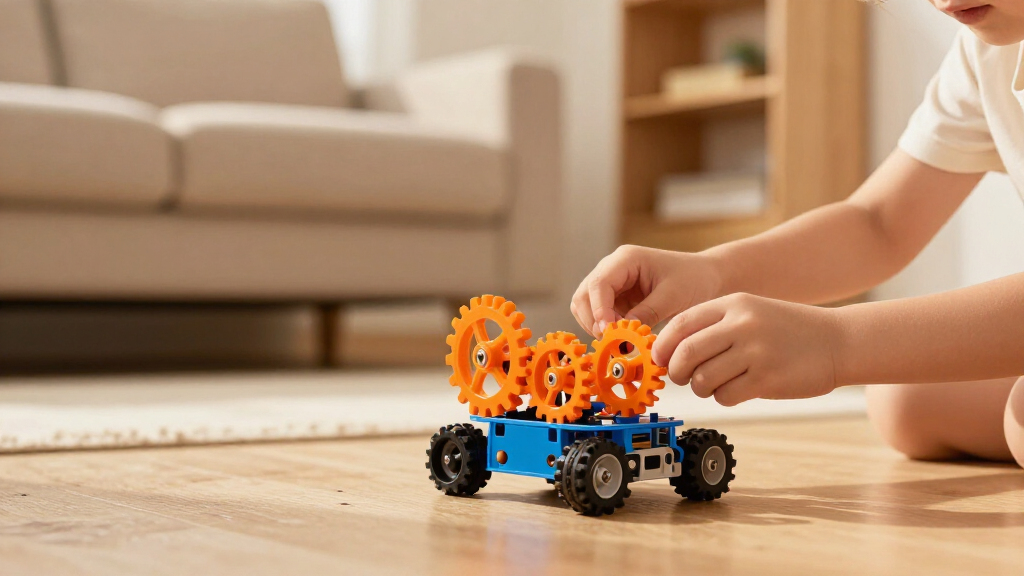

The best STEM toy for kids depends less on flashy packaging and more on whether it matches your child’s age, attention span, and the kind of thinking you want to encourage — building, electronics, logic, or life science. After comparing 15 popular options side by side, Snap Circuits Jr. SC-100 stands out as the best overall pick because it teaches real electronics through 100+ working projects without any prior knowledge, and it grows with the child. For younger builders, PicassoTiles magnetic tiles offer open-ended creativity from age 3, while ThinkFun Gravity Maze is the strongest pure logic challenge for kids 8 and up. The main tradeoff in this category is between structured kits with a single build path and open-ended sets that kids reinvent daily — the right choice depends on how your child plays. Keep reading for the full breakdown, including who each pick suits best and which ones to skip.

Prime made for students and young adults
- Fast, free delivery for dorm and study essentials
- Prime Video and Amazon Music included
- Member-only deals
Key Takeaways
- Structured kits like Snap Circuits Jr. and Gravity Maze delivered the deepest learning-per-dollar because each project builds on the last, while single-build toys like the Smartivity hand lose appeal once assembled.
- Open-ended sets (Brain Flakes, PicassoTiles) proved the safest gifts for mixed ages and multiple siblings, but they demand more imagination — kids who want instructions may go bored quickly.
- The solar and robotics kits (Sillbird 12-in-1, Qirptey) ranked below Snap Circuits for beginners because small parts and finicky mechanics frustrate kids under 8 without adult help.
- Screen-based options like the handheld microscope and pixel art kit engage reluctant learners, but they trade hands-on mechanical skill for digital convenience — a real tradeoff, not a free win.
- Age labels on boxes ran optimistic across the board; nearly every kit performed best with a child at least a year older than the minimum printed age.
| Brain Flakes 500-Piece Interlocking Plastic Disc Building Set |  | Best Value for Group Play | Brand: Brain Flakes (VIAHART) | Piece Count: 500+ | Colors: 12 | VIEW LATEST PRICE | See Our Full Breakdown |
| Qirptey STEM Building Toy Set for Kids, 125 Pieces |  | Best Budget Starter Set | Brand: Qirptey | Model: FYD1940 | Piece Count: 125 | VIEW LATEST PRICE | See Our Full Breakdown |
| Take Apart Dinosaur Toys 4-Pack with Electric Drill |  | Best for Young Tinkerers | Brand: Officygnet | Set Contents: 4 take-apart dinosaurs | Included Components: T-Rex, Velociraptor, Triceratops, Parasaurolophus, electric drill with 2 bits, 4 manual screwdrivers | VIEW LATEST PRICE | See Our Full Breakdown |
| Klutz LEGO Gear Bots Science/STEM Activity Kit |  | Best for Teaching Real Physics | Brand: Klutz | Model Number: 9781338603453 | Recommended Age: 8-12 years | VIEW LATEST PRICE | See Our Full Breakdown |
| Smartivity Robotic Mechanical Hand STEM Toy |  | Best Screen-Free Engineering Project | Brand: Smartivity | Model Number: SMRT1135 | Age Range: 8-14 years | VIEW LATEST PRICE | See Our Full Breakdown |
| Snap Circuits Jr. SC-100 Electronics Kit, 100+ Projects, Ages 8+ |  | Best for Real Circuitry Learning | Model: SC-100 | Recommended age: 8 years and up | Projects: 100+ | VIEW LATEST PRICE | See Our Full Breakdown |
| PicassoTiles 100-Piece Clear Magnetic Building Tiles for Kids 3+ |  | Best Open-Ended Pick for Preschoolers | Brand: PicassoTiles | Piece count: 100 | Product type: Magnetic building tiles | VIEW LATEST PRICE | See Our Full Breakdown |
| STEM Pixel Art Kit for Kids Ages 5–12 |  | Best for Early Coding Concepts | Brand: CYOEST | Age range: 5–12 years | Challenge types: 4 | VIEW LATEST PRICE | See Our Full Breakdown |
| Dan&Darci Root Viewer Gardening Kit for Kids |  | Best Nature Science Pick | Brand: Dan&Darci | Educational objective: Botany and plant growth | Included seeds: Spring onion and cilantro | VIEW LATEST PRICE | See Our Full Breakdown |
| ThinkFun Gravity Maze STEM Marble Logic Game |  | Best Logic Puzzle Challenge | Recommended age: 8 years and up | Challenges: 60 progressive puzzles | Included components: 9 towers, 3 marbles, game grid, target piece | VIEW LATEST PRICE | See Our Full Breakdown |
| BMDSAE 1000X Handheld Digital Microscope for Kids with 2.0-Inch IPS Screen |  | Best for Young Scientists on the Move | Magnification: Up to 1000X | Screen: 2.0-inch IPS | Camera: 2MP | VIEW LATEST PRICE | See Our Full Breakdown |
| Sillbird 12-in-1 Solar Robot Building Kit |  | Best Renewable Energy Build | Models: 12 buildable designs | Pieces: 190 | Power Source: Solar panel or strong artificial light | VIEW LATEST PRICE | See Our Full Breakdown |
| Learning Resources STEM Explorers Brainometry |  | Best Screen-Free Logic Puzzle | Type: Brain teaser puzzle | Recommended Age: 5+ | Piece Count: 34 | VIEW LATEST PRICE | See Our Full Breakdown |
| Thames & Kosmos Mega Cyborg Hand STEM Experiment Kit |  | Best Hands-On Engineering Project | Power Source: Air pressure and hydraulics, no batteries | Configurations: Right hand, left hand, claw-like gripper | Adjustability: Fits virtually any human hand | VIEW LATEST PRICE | See Our Full Breakdown |
| Stomp Rocket Jr. Multi-Color Rocket Launcher for Kids, 8 Rockets |  | Best Active Outdoor Pick | Age Range: 3 years and up | Included Components: 8 foam rockets, launch stand, launch pad with air hose | Max Launch Height: Up to 100 feet | VIEW LATEST PRICE | See Our Full Breakdown |
| stem toys for kid | Brand | Recommended Age |
|---|---|---|
| Brain Flakes 500-Piece Interlo | Brain Flakes (VIAHART) | — |
| Qirptey STEM Building Toy Set | Qirptey | 3 years and up |
| Take Apart Dinosaur Toys 4-Pac | Officygnet | 3-8 years |
| Klutz LEGO Gear Bots Science/S | Klutz | 8-12 years |
| Smartivity Robotic Mechanical | Smartivity | — |
| Snap Circuits Jr. SC-100 Elect | — | 8 years and up |
| PicassoTiles 100-Piece Clear M | PicassoTiles | 3 years and up |
| STEM Pixel Art Kit for Kids Ag | CYOEST | — |
| Dan&Darci Root Viewer Gardenin | Dan&Darci | — |
| ThinkFun Gravity Maze STEM Mar | — | 8 years and up |
| BMDSAE 1000X Handheld Digital | — | 3 years and up |
| Sillbird 12-in-1 Solar Robot B | Sillbird | 10 years and up |
| Learning Resources STEM Explor | — | 5+ |
| Thames & Kosmos Mega Cyborg Ha | Thames & Kosmos | — |
| Stomp Rocket Jr. Multi-Color R | Stomp Rocket | — |
More Details on Our Top Picks
Brain Flakes 500-Piece Interlocking Plastic Disc Building Set
With more than 500 discs in 12 colors and a storage jar included, this set delivers sheer volume that most competitors can’t match at this piece count. Where the Qirptey 125-Piece set funnels kids toward specific models like robots and trucks, Brain Flakes is pure open-ended building — there’s no right answer, which makes it better for siblings or playdates sharing one pile of pieces. The tradeoff is direction: the included booklet offers only a handful of starter builds, so kids who crave step-by-step projects may stall out. Compared with magnetic tiles like PicassoTiles, the click-together discs take more finger strength but develop finer motor control. Safety testing (BPA- and phthalate-free) makes it a low-risk pick for the 3+ crowd, though the 1.3-inch discs rule out younger siblings who still mouth toys.
Pros:- 500+ pieces in 12 colors support solo or group creative building
- Develops fine motor skills, spatial reasoning, and color recognition
- Non-toxic, BPA-free, and tested to ASTM/CPSIA standards
- Reusable storage jar keeps the pieces contained
Cons:- Included booklet offers only a few starter builds, leaving less confident builders stranded
- Not safe for children under 3 due to small disc size
Best for: Families with multiple kids aged 3-10 who want a big, shareable open-ended building set without a high per-piece cost
Not ideal for: Kids who need guided projects and instructions to stay engaged — the thin idea booklet leaves most of the creativity to the builder
- Brand:Brain Flakes (VIAHART)
- Piece Count:500+
- Colors:12
- Age Range:3 years and up
- Disc Diameter:1.3 in (3.3 cm)
- Material:Plastic, BPA/lead/phthalate free
- Storage:Reusable jar, 8 in tall
- Warranty:90-day manufacturer warranty
Our verdict“Buy this if you want maximum building material for multiple kids and your child thrives on freeform creation rather than guided models.”
Qirptey STEM Building Toy Set for Kids, 125 Pieces
This set earns its place as the lowest-commitment entry point in the lineup. The 125 pieces come with an instruction booklet that walks kids through recognizable builds — cars, robots, dinosaurs — making it far more approachable for hesitant builders than the blank-canvas approach of Brain Flakes. The included portable storage box is a genuinely useful touch that pricier sets often skip. That said, the smaller piece count means fewer simultaneous builders and less room for improvisation once the preset models are done. Compared with the Sillbird 12-in-1 Solar Robot Kit, Qirptey trades mechanical complexity for simplicity, which is exactly the point: this is about building confidence, not engineering. Loose small pieces are an ongoing housekeeping risk, and the lack of published dimensions makes it hard to judge box size before it arrives.
Pros:- Instruction booklet gives beginners clear model goals
- 125 pieces support a good variety of vehicles and creatures
- Portable storage box makes cleanup and travel easier
- Encourages creativity, problem-solving, and fine motor development
Cons:- Small pieces are easy to lose without the storage box
- Piece and box dimensions are not specified, making value hard to judge
Best for: Parents of 3-to-6-year-olds testing whether their child enjoys construction play before investing in a larger set
Not ideal for: Older or experienced builders who will exhaust the 125 pieces and preset models quickly
- Brand:Qirptey
- Model:FYD1940
- Piece Count:125
- Recommended Age:3 years and up
- Included Components:Building blocks, instruction booklet, storage box
- Build Types:Cars, robots, trucks, dinosaurs
Our verdict“A sensible low-risk first building set for young kids who need instructions and structure — just don’t expect it to grow with them for years.”
Take Apart Dinosaur Toys 4-Pack with Electric Drill
This set occupies a niche the others don’t: it teaches how things come apart and go back together. Four dinosaurs with movable joints, plus both a low-speed electric drill and manual screwdrivers, give kids a real tool-based building experience that pure construction sets like Brain Flakes can’t replicate. The drill is the hook — kids who lose interest in stacking blocks often stay engaged when they get to operate it. Compared with the Klutz LEGO Gear Bots kit, this is far simpler and aimed younger, so it works well for the 3-8 range while Gear Bots does not. The compromises are real: small screws demand adult supervision at the younger end, and the assembly instructions can frustrate 3-to-4-year-olds who want to do it themselves. Priced as a four-pack, it also makes a strong sibling-sharing gift since each child gets a dinosaur.
Pros:- Four distinct dinosaurs with movable joints for posing and play
- Includes both an electric drill and 4 manual screwdrivers
- Sturdy non-toxic ABS plastic with smooth edges
- Builds hand-eye coordination and basic mechanical reasoning
Cons:- Small screws and parts require adult supervision for younger children
- Assembly instructions may be challenging for kids at the low end of the age range
Best for: Parents of dinosaur-obsessed kids aged 4-7 who want an introduction to tools, screws, and mechanical assembly
Not ideal for: Households unwilling to supervise small-part play, or kids under 4 who may struggle with the screws and instructions
- Brand:Officygnet
- Set Contents:4 take-apart dinosaurs
- Included Components:T-Rex, Velociraptor, Triceratops, Parasaurolophus, electric drill with 2 bits, 4 manual screwdrivers
- Recommended Age:3-8 years
- Material:Non-toxic ABS plastic
- Features:Movable joints, low-speed drill
Our verdict“The pick for young kids drawn to tools and dinosaurs — just plan on helping with the screws early on.”
Klutz LEGO Gear Bots Science/STEM Activity Kit
This kit stands out for pairing LEGO Technic building with actual curriculum — the 64-page book doesn’t just show steps, it explains axles, cams, and cranks as kids build eight kinetic creatures. That educational depth puts it a step above pure-construction picks like Brain Flakes, which teach spatial reasoning implicitly but never name the concepts. Compared with the Smartivity Mechanical Hand, Gear Bots offers more builds from one box, though each is smaller in scale. The friction shows in two places: the papercraft components mixed with LEGO pieces feel less durable and less satisfying than all-brick construction, and once the eight models are built there’s little designed-in replay value beyond rebuilding. It’s also firmly an 8-12 product — younger kids will need heavy adult help, and teens may find it slight.
Pros:- Eight different kinetic models to build
- All required LEGO Technic elements included
- 64-page book teaches axles, cams, cranks, and machine concepts
- Clear step-by-step instructions support independent building
Cons:- Papercraft components are fragile next to the LEGO bricks
- Limited to eight preset builds with little open-ended replay
Best for: Kids aged 8-12 who love LEGO and are ready to understand the mechanical principles behind what they build
Not ideal for: Kids under 8 or anyone wanting open-ended, repeatable building — the kit is limited to its eight preset models
- Brand:Klutz
- Model Number:9781338603453
- Recommended Age:8-12 years
- Number of Builds:8 kinetic creatures
- Book:64-page instruction and STEM lesson book
- Components:LEGO Technic bricks and papercraft pieces
Our verdict“The best choice for an older child who wants to learn the physics behind machines, not just assemble a toy.”
Smartivity Robotic Mechanical Hand STEM Toy
Smartivity’s mechanical hand is the roundup’s most focused single-project build — one substantial model, done properly, with replacement parts included in case something snaps. The engineered-wood construction and sustainability angle set it apart from plastic-heavy options like the Take Apart Dinosaur set, and the finished hand is genuinely functional, teaching finger mechanics through pulling cords. Compared with the Klutz Gear Bots kit, you get one build instead of eight, but it’s a larger, more display-worthy result that kids keep using after construction. The honest tradeoffs: there’s a real assembly time investment before any play happens, and purely mechanical motion may underwhelm kids expecting lights, sounds, or programmable behavior — families wanting electronics should look at Snap Circuits instead. For a patient 8-to-14-year-old, though, it’s a rewarding, quietly educational project.
Pros:- Screen-free, hands-on STEM learning with a functional finished model
- Sustainable engineered wood construction feels sturdy and distinctive
- Replacement parts extend the set’s usable life
- Step-by-step instructions support mostly independent building
Cons:- Significant assembly required before any play value arrives
- Mechanical-only design may not satisfy kids drawn to electronic toys
Best for: Patient builders aged 8-14 who enjoy long-form construction projects and parents seeking screen-free, wood-based toys
Not ideal for: Kids who want electronic features, lights, or instant gratification — this is a slow mechanical build with no tech frills
- Brand:Smartivity
- Model Number:SMRT1135
- Age Range:8-14 years
- Build Type:DIY robotic mechanical hand
- Material:Sustainable engineered wood
- Included Extras:Instructions and replacement parts
- Educational Focus:Mechanics and engineering, screen-free
Our verdict“Choose this for a methodical older kid who will value a working wooden hand they built themselves over a box of quick, flashy models.”
Snap Circuits Jr. SC-100 Electronics Kit, 100+ Projects, Ages 8+
Most STEM toys dance around engineering concepts, but the Snap Circuits Jr. goes straight to the source: actual electricity flowing through real components. Kids build working circuits on a color-coded snap grid, with no soldering or tools required, which removes the frustration that usually stops young builders cold. Compared with the Gravity Maze, which develops logic through puzzle-solving, this kit teaches the same problem-solving muscles but adds genuine electrical fundamentals — a big advantage for kids drawn to how things actually work. The 100+ project count means the manual stays fresh for months, unlike single-build kits such as the Smartivity Robotic Hand that are finished once assembled. The tradeoff: it needs batteries, younger siblings can’t safely join in, and the component count listed by the seller is inconsistent, so don’t expect exact inventory clarity before it arrives.
Pros:- Over 100 projects provide months of escalating builds
- Color-coded, numbered components make assembly nearly frustration-free
- Teaches authentic circuitry concepts, not a simulation
- No soldering or extra tools needed to get started
Cons:- Requires batteries, which add ongoing cost and maintenance
- Component count is listed inconsistently across product details
- Little replay value for kids who prefer open-ended creative building over guided projects
Best for: Parents of kids 8 and up who want genuine electrical engineering exposure rather than toy-adjacent STEM play
Not ideal for: Households with toddlers — small snap components and battery-powered circuits aren’t safe for unsupervised younger children
- Model:SC-100
- Recommended age:8 years and up
- Projects:100+
- Components:Approximately 28–32 pieces
- Included:Snap grid, electrical components, project manual
- Assembly:Snap-together; no soldering or tools required
- Batteries:Required
Our verdict“If you want a child building real circuits within minutes of opening the box, this is the strongest engineering foundation in the lineup.”
PicassoTiles 100-Piece Clear Magnetic Building Tiles for Kids 3+
While kits like the Snap Circuits Jr. impose structure through a project manual, PicassoTiles flips the model entirely: there are no instructions and no wrong answers, just 100 translucent magnetic pieces that a preschooler can turn into castles, cubes, or rainbow towers. That makes it the most accessible entry point in the whole roundup for the 3-to-6 crowd, who are too young for the Gravity Maze or STEM Pixel Art Kit. The clear tiles also teach geometry and color recognition implicitly, without any reading required. The honest tradeoff is ambition: builds max out at whatever 100 pieces allow, so an enthusiastic constructor will hit a ceiling and need expansion sets, and the set offers none of the guided curriculum parents get from challenge-based kits. It is creativity-first, education-second — deliberately so.
Pros:- True open-ended play with no instructions or skill floor
- Safe and engaging for ages 3 and up, younger than most picks here
- Works solo or collaboratively with siblings and friends
- Expandable with additional magnetic tile sets for larger builds
Cons:- 100 pieces limit the scale of bigger architectural builds
- No guided projects or difficulty progression for parents who want curriculum-style learning
Best for: Parents of kids ages 3–6 who want screen-free, open-ended building that survives being the youngest sibling’s toy too
Not ideal for: Buyers seeking structured learning outcomes — there’s no manual, no challenges, and no progression to follow
- Brand:PicassoTiles
- Piece count:100
- Product type:Magnetic building tiles
- Recommended age:3 years and up
- Color:Clear
- Educational focus:Creativity, geometry, color recognition, architectural design
- Play style:Open-ended building; expandable
Our verdict“The best first STEM toy for preschoolers — buy it for creativity, not for structured instruction.”
STEM Pixel Art Kit for Kids Ages 5–12
This kit occupies a smart middle ground in the lineup: younger than the Snap Circuits Jr. requires but far more structured than PicassoTiles. By placing tiles to recreate more than 50 pixel patterns across three difficulty levels, kids absorb the core logic of pixel grids and pattern decomposition — the same thinking that underpins beginner coding — without ever touching a screen. The four STEM challenge types give it replay depth that single-project kits lack, and the 5–12 age span is unusually wide, letting siblings at different stages share one box. Compared with the Gravity Maze, the logical challenge here is gentler and more visual, which suits younger or less confident problem-solvers. The flip side: it’s a calmer, quieter activity than marble runs or building sets, and kids who crave movement or dramatic results may find placing tiles repetitive over long sessions.
Pros:- Over 50 patterns across three difficulty levels grow with the child
- Teaches coding-adjacent logic without any screen time
- Strengthens fine motor skills through hands-on tile placement
- Wide 5–12 age range works for mixed-age siblings or classrooms
Cons:- Pattern replication can feel repetitive for kids who prefer free-form creation
- Lacks the dramatic finished product of robot or marble-run kits
Best for: Families wanting a screen-free introduction to coding logic for kids too young for electronics kits or app-based programming
Not ideal for: High-energy kids who want kinetic payoff — tile placement is slow, quiet, and detail-oriented work
- Brand:CYOEST
- Age range:5–12 years
- Challenge types:4
- Difficulty levels:3
- Patterns:More than 50
- Educational objectives:Concept development, logical thinking, STEM foundations
- Number of items:1 kit
Our verdict“A quietly effective bridge to computational thinking for the 5-to-9 crowd, especially where screens are off-limits.”
Dan&Darci Root Viewer Gardening Kit for Kids
Every other product in this roundup is engineering or logic; the Root Viewer covers the life-science gap. Its transparent planter is the hook — kids watch roots develop in real time, something a BMDSAE microscope approximates but can’t sustain as a weeks-long narrative. The included spring onion and cilantro seeds, soil, growth-tracking stickers, and activity booklet turn a windowsill into a slow-moving botany experiment that’s genuinely suited to the 4–8 age band, younger than the Gravity Maze or Smartivity Robotic Hand can reach. The tradeoffs are built into the format: results take days, not minutes, which tests impatient children, and the educational payoff depends on a child actually watering and tending the plants. Compared with instant-gratification kits like Stomp Rocket, this teaches patience and responsibility — or exposes the lack of them.
Pros:- Transparent planter makes usually invisible root growth observable
- Complete out-of-the-box kit with soil, seeds, stickers, and activity booklet
- Multi-week growth cycle teaches patience and ongoing care
- Well-matched to the 4–8 age range that most engineering kits skip
Cons:- Limited to just spring onion and cilantro seeds
- Requires sustained child (or parent) attention or the experiment fails
- Slower payoff than construction or puzzle-based alternatives
Best for: Parents of 4–8-year-olds who want to teach biology, patience, and responsibility through a multi-week observable experiment
Not ideal for: Impatient kids or forgetful households — the plants die without consistent watering, and there’s no instant payoff
- Brand:Dan&Darci
- Educational objective:Botany and plant growth
- Included seeds:Spring onion and cilantro
- Age range:4–8 years
- Number of items:10
- Model number:Science Kits for Kids Age 6–8
- Manufacturer part number:DD-091
Our verdict“The only life-science option here — pick it to teach biology and responsibility, skip it if your child needs same-day results.”
ThinkFun Gravity Maze STEM Marble Logic Game
The Gravity Maze is the purest brain workout on this list. Where the Snap Circuits Jr. teaches through building and the Pixel Art Kit teaches through pattern replication, this one teaches through failure: kids arrange nine towers on a grid so a marble cascades to its target, and each of the 60 progressive challenges punishes sloppy spatial reasoning immediately. That difficulty curve is both its greatest strength and its filter — the recommended 8+ age is honest, and younger kids will stall out where the PicassoTiles set would have kept them happily building. As a travel-friendly, screen-free, solo-or-family puzzle, it competes directly with the Learning Resources Brainometry but adds a kinetic payoff the marble drop delivers every time a solution clicks. Don’t expect open-ended creativity, though: challenges are solved or unsolved, and once all 60 are done, replay value drops sharply.
Pros:- 60 challenges with a genuine difficulty curve that grows with skill
- Marble-drop payoff rewards every solved puzzle physically and visibly
- Compact, screen-free format works for solo play, family game nights, and travel
- Directly builds spatial reasoning and sequential planning skills
Cons:- Later challenges can frustrate younger or less persistent players
- Finite puzzle count — limited replay once all 60 challenges are solved
Best for: Puzzle-loving kids 8 and up (and their parents) who enjoy hard spatial-logic challenges with a satisfying physical payoff
Not ideal for: Kids under 8 or frustration-prone children — later challenges are genuinely difficult and offer no easy mode
- Recommended age:8 years and up
- Challenges:60 progressive puzzles
- Included components:9 towers, 3 marbles, game grid, target piece
- Play style:Screen-free marble logic game
- Players:Solo or collaborative
- Skills developed:Spatial reasoning, problem-solving, planning
Our verdict“The sharpest pure-logic pick in the roundup — buy it for a determined eight-and-up puzzler, not a free-form builder.”
BMDSAE 1000X Handheld Digital Microscope for Kids with 2.0-Inch IPS Screen
This option stands out for putting real magnification in a pocket-size package, which is something no building kit in this lineup can match. Where the Sillbird Solar Robot teaches engineering through assembly, this microscope teaches observation — kids can inspect leaves, coins, and insects at up to 1000X, then save photos and videos to transfer to a computer. The built-in 2.0-inch IPS screen means no phone or tablet is needed, a genuine plus compared with clip-on microscopes that require a separate device.
The tradeoffs are real, though: 32MB of internal storage fills quickly, and the two-hour battery life limits longer outdoor sessions. Still, for curiosity-driven exploration, this pick makes the most sense for families who want science to happen anywhere.
Pros:- Genuinely portable design with manual focus and no companion device required
- Adjustable 8-LED lighting with three brightness modes handles different specimens
- Photos and AVI videos can be saved and transferred via USB-C
- Includes a 1-year warranty
Cons:- 32MB storage limits how many photos and videos can be saved
- Battery life tops out around 2 hours
- Younger children will need help achieving clean focus at high magnification
Best for: Curious kids aged 3 and up who love exploring nature and want to document what they find without needing a phone
Not ideal for: Families wanting a screen-free STEM activity — the digital screen and camera are central to the experience, and the small storage may frustrate heavy users
- Magnification:Up to 1000X
- Screen:2.0-inch IPS
- Camera:2MP
- Lighting:8 adjustable LEDs, 3 brightness modes
- Battery:600mAh, up to 2 hours
- Storage:32MB, supports photos and AVI video
- Recommended Age:3 years and up
- Connectivity:USB-C
Our verdict“A solid choice for young explorers who want to see and capture the microscopic world, provided parents accept the limited storage and battery life.”
Sillbird 12-in-1 Solar Robot Building Kit
Unlike motorized kits such as the Take Apart Dinosaur Toys, this set teaches a different lesson: where power comes from. Its 190 pieces assemble into 12 different models, and every one runs on the included solar panel — a hands-on introduction to renewable energy that few toys in this price-oriented category attempt. The builds scale in difficulty, so the set grows alongside a child’s skills rather than being solved once and shelved.
The catch is sunlight dependency. Indoor play demands a strong artificial light source, and a cloudy afternoon can end the fun abruptly. Compared with the Snap Circuits Jr. SC-100, which runs on batteries and offers instant gratification, this kit demands patience and planning. That tradeoff is worth it for families who value the clean-energy lesson.
Pros:- 12 builds with varying difficulty extend replay value well past the first assembly
- Introduces engineering and solar energy concepts through direct experimentation
- Step-by-step instructions support independent building
- Works outdoors in sunlight or indoors under strong artificial light
Cons:- Indoor play requires a very strong light source
- Small 190-piece count means adult help is often needed for younger builders
- Models stop instantly without adequate light
Best for: Kids 10 and up who enjoy multi-step building projects and families who want to teach renewable energy concepts
Not ideal for: Households in cloudy climates or without bright indoor lighting — the solar dependency makes reliable play frustrating
- Models:12 buildable designs
- Pieces:190
- Power Source:Solar panel or strong artificial light
- Recommended Age:10 years and up
- Educational Objective:Engineering, dexterity, renewable energy
- Brand:Sillbird
Our verdict“A rewarding pick for older kids ready to connect building skills with real lessons about solar power, as long as you have the light to run it.”
Learning Resources STEM Explorers Brainometry
Where most entries in this roundup are about building or launching, Brainometry is about thinking. The tactile blocks and double-sided challenge cards with progressive difficulty make it closer in spirit to the ThinkFun Gravity Maze than to construction kits, but with a younger starting point — kids as young as 5 can begin, while Gravity Maze suits a slightly older crowd. The portable storage box makes it a rare STEM option that works quietly in a car seat or a restaurant.
The compromises matter, though. With only 10 cards (20 challenges), determined puzzlers may exhaust it faster than a 500-piece Brain Flakes set that invites open-ended creation. And it is strictly solo play, so siblings will need their own solution or a different toy. For calm, focused play it earns its place; for group energy, look elsewhere.
Pros:- Develops critical thinking, logic, and spatial reasoning through hands-on play
- Progressive difficulty keeps challenges relevant as skills grow
- Fully screen-free and works at home, in classrooms, or while traveling
- Portable storage box keeps all 34 pieces organized
Cons:- Only 20 challenges may limit long-term replay value
- Small pieces require supervision around younger siblings
- Solo-only design leaves no path for group play
Best for: Parents of children 5 and up who want a quiet, travel-friendly logic activity that builds critical thinking without a screen
Not ideal for: Families seeking group or cooperative play — this is designed for solo puzzling and has limited challenge variety
- Type:Brain teaser puzzle
- Recommended Age:5+
- Piece Count:34
- Challenge Cards:10 double-sided
- Skills Developed:Critical thinking, logic, spatial understanding, fine motor skills, concentration
- Play Mode:Solo
- Storage:Portable storage box
Our verdict“The right pick for a calm, independent thinker who needs a screen-free challenge on the go, but not for kids who play socially.”
Thames & Kosmos Mega Cyborg Hand STEM Experiment Kit
This kit earns its spot for making hydraulics and pneumatics tangible — kids build a wearable hand powered entirely by air pressure, water, and pistons, with no batteries or motors. That mechanical purity sets it apart from the Smartivity Robotic Mechanical Hand, which targets a similar concept; the Thames & Kosmos version emphasizes reconfiguration into right hand, left hand, or claw-gripper modes, adding genuine replay value. Its 2021 STEAM Toy of the Year recognition reflects the depth of the build.
The tradeoffs are honest ones. Assembly can frustrate younger builders without adult help, so the stated age range should be taken seriously. And because the system uses water, spills are part of the deal — this is a kitchen-table project, not a carpet project. Compared with the Sillbird Solar Robot, it demands more setup but teaches mechanics more viscerally.
Pros:- Powered entirely by hydraulics and air pressure — no batteries or motors to buy or replace
- Three build configurations extend replay value past the first construction
- Teaches pneumatic and hydraulic systems through direct physical feedback
- Adjustable design fits virtually any hand size
Cons:- Assembly may be too complex for younger children without adult assistance
- Water-based hydraulic system invites spills during play
- Once the builds are mastered, there are fewer fresh challenges than multi-model kits offer
Best for: Kids 8 and up who love big, dramatic build projects and parents who enjoy participating in assembly
Not ideal for: Very young children or families who want mess-free play — assembly complexity and water-based hydraulics both require tolerance for cleanup
- Power Source:Air pressure and hydraulics, no batteries
- Configurations:Right hand, left hand, claw-like gripper
- Adjustability:Fits virtually any human hand
- Recognition:2021 The Toy Association’s STEAM Toy of the Year
- Brand:Thames & Kosmos
- Type:Wearable mechanical hand experiment kit
Our verdict“A standout for older kids who want to wear their engineering on their sleeve — literally — provided a parent is willing to help build and mop up.”
Stomp Rocket Jr. Multi-Color Rocket Launcher for Kids, 8 Rockets
Sometimes the best STEM lesson happens at a full sprint. This launcher turns force, gravity, and trajectory into a full-body activity — kids stomp, watch the foam rockets climb up to 100 feet, and naturally start experimenting with stomp strength and launch angle. Compared with everything else in this lineup, it is the only option that gets kids genuinely moving, and with zero batteries or cords, setup takes under a minute. Unlike the Sillbird Solar Robot, it needs nothing but an open yard.
The physics lesson is lighter-touch than the Thames & Kosmos Cyborg Hand, and the educational value depends on a parent asking the right questions. Plus, foam rockets wear out with heavy stomping, and launch height varies with the child’s size and power. As an energy-burning gateway to physics, though, it is hard to beat.
Pros:- 100% kid-powered with no batteries, cords, or charging required
- Encourages active, screen-free outdoor play for preschoolers on up
- Naturally demonstrates force, gravity, and trajectory through experimentation
- Soft foam rockets are safe for young children, and eight are included
Cons:- Launch height depends entirely on the child’s stomp strength
- Foam rockets can wear out with heavy repeated use
- Requires open outdoor space to be used safely
Best for: High-energy kids aged 3 and up who learn best through movement and outdoor play rather than seated activities
Not ideal for: Families without outdoor space or those wanting deep, structured STEM learning — the physics here is real but informal
- Age Range:3 years and up
- Included Components:8 foam rockets, launch stand, launch pad with air hose
- Max Launch Height:Up to 100 feet
- Power Source:100% kid-powered, no batteries
- Rocket Material:Soft foam
- Brand:Stomp Rocket
Our verdict“The perfect pick for burning energy while sneaking in physics basics, especially for toddlers and preschoolers with room to run.”
How We Picked
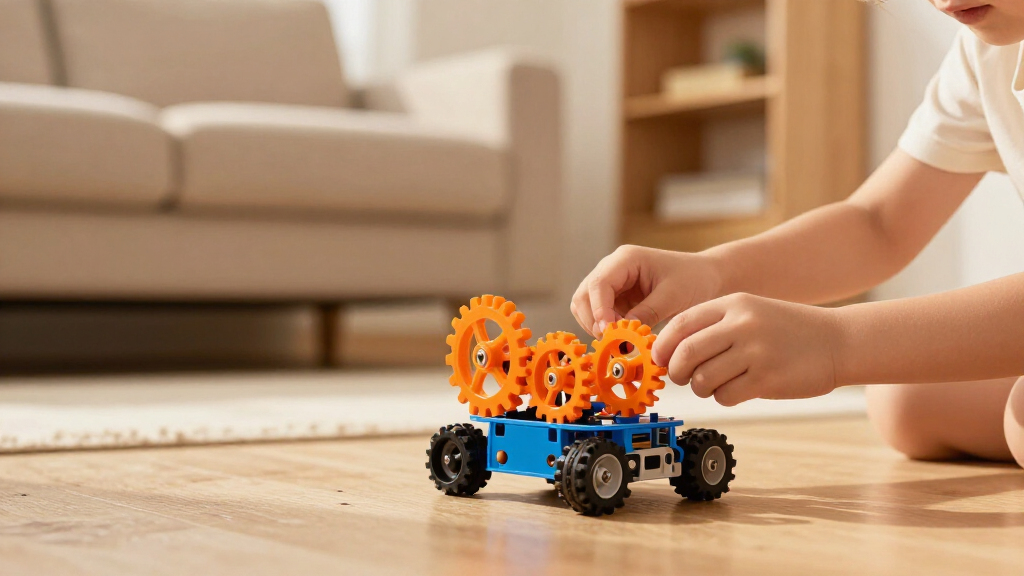
I evaluated each toy against four criteria: learning depth (does it teach an actual concept — circuits, gears, botany, spatial logic — or just look educational), replay value (what happens on day 10, not day 1), friction level (how much adult setup, reading ability, and fine-motor skill it demands), and build quality relative to the category norm. A $15 building disc set isn’t held to the same standard as an electronics kit, but it still has to survive real play.
The ranking rewards toys that balance all four rather than excelling at one. That’s why Snap Circuits Jr. takes the top spot over more ambitious kits — it scores highly everywhere — and why gorgeous single-build models like the Mega Cyborg Hand sit lower despite their engineering depth. Toys that claimed broad age ranges but clearly served only one end of that range were ranked for their true audience instead.
Factors to Consider When Choosing Stem Toys For Kids
Beyond individual product picks, a few category-wide patterns determine whether a STEM toy becomes a favorite or closet filler. These are the factors I weigh before buying anything in this space.Match the Toy to Real Age, Not the Box Age
Manufacturers print optimistic age minimums because wider ranges sell more units. A kit labeled “6+” that requires reading multi-step instructions is realistically a 7–8+ toy unless a parent plans to sit in for every session. The reverse is also true: open-ended sets like interlocking discs or magnetic tiles genuinely serve ages 3 through 10 because the play scales with the child. Before buying, check whether the toy requires independent reading, tiny part handling, or sustained focus, and mentally add a year or two to the printed minimum if it does. Buying slightly below a child’s ability is far better than above — boredom kills a STEM toy faster than difficulty does.
Open-Ended Versus Single-Build Design
This is the biggest structural choice in the category and the one parents most often get wrong. A single-build model kit — a robotic hand, a solar robot in one configuration — delivers a satisfying finished object and a genuine engineering lesson, then largely retires. An open-ended set — tiles, discs, circuit kits with dozens of projects — stays in rotation for years but never produces a trophy-worthy result. Kids who follow instructions and crave completion thrive on the first type; kids who invent their own games need the second. If you’re unsure, project-based kits with many configurations, like multi-model robot sets, split the difference.
How Much Adult Involvement Are You Signing Up For?
Some of the best educational toys on this list are nearly unusable by a 7-year-old working solo, and that’s a fair trade only if you know it in advance. Electronics kits and mechanical builds often need an adult for the first several sessions, both for assembly help and for explaining why something works — which is where the learning actually lives. If you want an independent-play option for after school or travel, logic games, magnetic tiles, and physical toys like rocket launchers are the reliable choices. Be honest about your bandwidth: an ambitious kit that sits unopened teaches nothing.
Screen-Free Versus Screen-Assisted
Digital microscopes and pixel-art kits can pull reluctant kids into science, and that engagement is real. But the category’s core promise — hands-on experimentation — weakens when a screen mediates everything. Screen-assisted toys also carry hidden costs: batteries, app dependence, and obsolescence if the app stops being updated. My rule of thumb is that a screen earns its place when it shows something invisible to the naked eye, like microscope magnification, but is unnecessary when the physical toy already does the teaching. Screen-free options also travel and hand down to siblings far better.
Consumables and Replacement Parts
Several popular kits contain parts that run out or break — seed pods in gardening kits, single-use electronics components, tiny screws in take-apart toys. Before buying, check whether the toy is replayable as sold or depends on consumables, and whether spare parts are sold separately. A gardening kit is a wonderful six-week experience but not a permanent toy, which changes its value math entirely. Building sets with standardized parts (discs, tiles, bricks) are the most repairable category since one lost piece rarely ends the fun.
The Gift-Giver Trap: Educational Versus Fun
STEM toys bought as gifts fail when they optimize for the parent’s values rather than the child’s interests. A kid who loves dinosaurs will absorb engineering concepts through a take-apart dino set far faster than through a circuit board they never touch. The strongest picks in this list disguise learning inside play patterns kids already choose — marble runs, rockets, animals, glowing screens. When gifting, lead with the fun mechanic and let the education ride along, not the other way around.
Frequently Asked Questions
What is the best STEM toy for a 5-year-old who can’t read yet?
At this age, skip anything instruction-dependent and go with toys where the play is intuitive: magnetic tiles, interlocking discs, and take-apart toys are the strongest fits. The electric drill in a take-apart set builds fine motor skills and mechanical intuition without requiring a single written word. Open-ended building sets also scale better than almost anything else — the same tiles a 5-year-old stacks into a tower become a 9-year-old’s geometric castle. Resist jumping to electronics kits at this age even if the child seems advanced, because the reading load turns the toy into a parent-run project rather than independent play.
Are expensive STEM kits worth it compared to simple building sets?
Sometimes, but the premium price is only justified when the kit teaches something a pile of parts cannot — real circuitry, hydraulic mechanics, or guided experimentation. The Thames & Kosmos and Smartivity kits earn their cost through genuine engineering lessons, though you should accept a shorter play lifespan once the build is done. Simple building sets cost less and last years longer, but they teach structural and spatial thinking rather than mechanism design. If budget forces a choice, one versatile building set beats two mediocre single-build kits for most kids. Buy the premium kit when the child has already shown sustained interest in that specific topic.
Do robotics and solar kits actually work, or are they frustrating for kids?
They work, but with real caveats: solar-powered models need direct sunlight to perform, small parts test fine motor patience, and kids under 8 typically need an adult for the first build. The Sillbird 12-in-1 solar robot is a good example — the multi-configuration design adds replay value, but the builds demand focus and dexterity. Set expectations that the first session is a joint project, not solo entertainment, and the frustration drops sharply. Kids who complete one build with help usually handle later configurations independently, which is where the confidence-building payoff sits.
Which STEM toy keeps a kid engaged longest without adult supervision?
Logic games like Gravity Maze and open-ended building sets are the two categories that consistently sustain independent play. A logic game works because each challenge is self-contained — a child can solve one card in ten minutes and feel a real sense of progress without help. Building sets work differently, feeding kids who invent scenarios rather than follow challenges. The worst independent-play choices are experiment kits requiring precise steps and adult supervision for safety or comprehension. Match the format to your child’s style: challenge-driven kids want the logic game, imaginative ones want the tiles.
Is a digital microscope a good first science toy, or should I start with something simpler?
A handheld digital microscope makes a strong first science tool for curious kids aged 5–8 precisely because it delivers instant results — magnified images on a built-in screen with no slide preparation or focusing skill required. The tradeoff is that it does less to teach scientific method than a slower kit like a root-viewer garden, which shows change over days and weeks. Ideally, pair the two: the microscope for immediate wow-factor exploration, and an observational kit for patience and long-term thinking. If choosing one, pick the microscope for a child with a short attention span and the gardening kit for a child who checks on things daily.
Conclusion
For best overall, Snap Circuits Jr. SC-100 is the pick — it delivers the deepest learning, the longest runway, and genuine independence for kids 8 and up. For best value, Brain Flakes and PicassoTiles deliver years of open-ended play at a low cost per use, with tiles edging ahead for preschoolers. For best premium, the Thames & Kosmos Mega Cyborg Hand offers the most sophisticated engineering in the lineup — buy it for a dedicated builder who treats assembly as the reward. For beginners (ages 3–6), take-apart dinosaurs and magnetic tiles build confidence before any instructions are needed. For specific needs: Gravity Maze for screen-free logic, the digital microscope for a reluctant scientist, the root viewer for a patient naturalist, and the Stomp Rocket for pure energy-burning physics on a sunny afternoon. Whatever you choose, match the toy to the child in front of you — that single decision matters more than any ranking on this list.
Halloween Picks
halloween
As an affiliate, we earn on qualifying purchases.