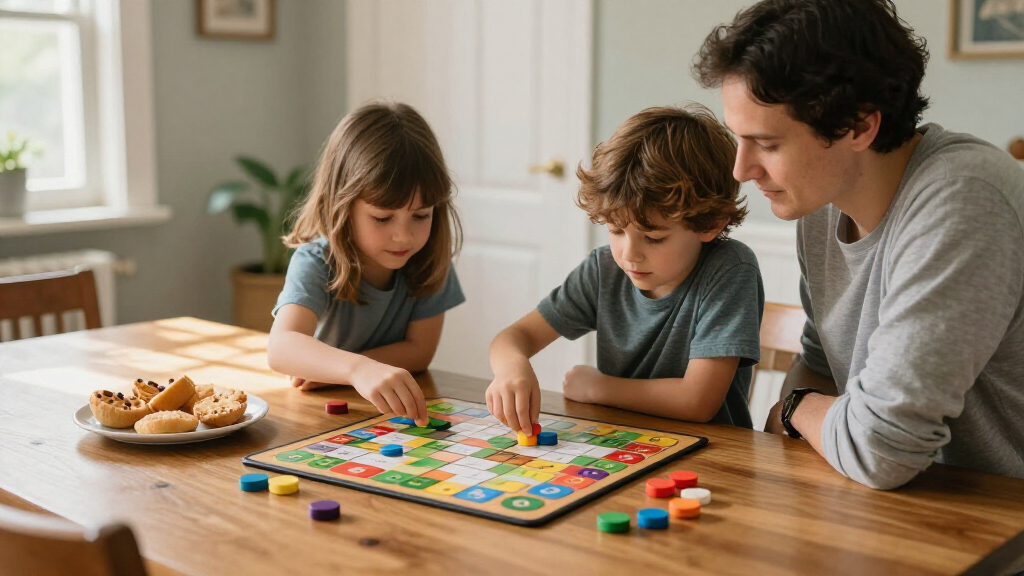

The best kids educational board games make a skill part of the fun, so children practice without feeling like they are doing a worksheet. I rank National Geographic My First Safari as the best overall for its cooperative format, while Zingo! stands out for early reading and Math Island for addition and subtraction practice. The main tradeoff is focus: a game built around one subject can give clearer practice, while a broader or cooperative game may suit more family play styles. Age, reading ability, player count, and tolerance for competition also affect the fit. Read on for how all nine options compare and which one best matches your child.

Prime made for students and young adults
- Fast, free delivery for dorm and study essentials
- Prime Video and Amazon Music included
- Member-only deals
Key Takeaways
- My First Safari is the roundup’s best overall fit for families who want shared play: cooperation makes it a different choice from the more skill-drill-focused math and literacy games.
- Zingo! and Alphabet Matching serve different early-literacy needs: Zingo! centers on fast-paced picture-and-word matching, while Alphabet Matching is better suited to practicing letter recognition and memory.
- Math choices vary by the kind of practice they offer: Math Island focuses on addition and subtraction, while Number Hunter is another math-centered option; choose based on the child’s current skills and preferred play style.
- Hi Ho! Cherry-O is the youngest-age entry point among these picks, while Scrabble Junior and Race Across the USA suit children ready for more reading or geography content.
- Junior Learning offers breadth rather than a single subject: its four social skills games make it the distinctive option for families prioritizing emotional and interpersonal practice.
| Learning Resources Math Island Addition & Subtraction Game | 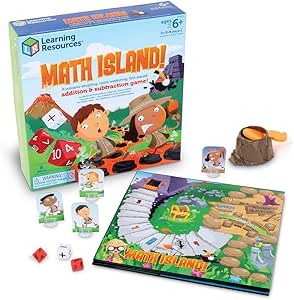 | Best for Hands-On Math Practice | Brand: Learning Resources | Players: 2–4 | Recommended age: 6–10 years | VIEW LATEST PRICE | See Our Full Breakdown |
| ThinkFun Zingo! Bingo Preschool Reading Game for Ages 4 and Up |  | Best for Early Readers | Brand: ThinkFun | Recommended age: 4–10 years | Number of players: 2–6; description says up to 7 with the extra card | VIEW LATEST PRICE | See Our Full Breakdown |
| Hasbro Gaming Scrabble Junior Board Game for Ages 5+ |  | Best for Growing Word Skills | Brand: Hasbro Gaming | Players: 2–4 | Age range: 5+ years | VIEW LATEST PRICE | See Our Full Breakdown |
| Chuckle & Roar Alphabet Matching Memory Game |  | Best for Preschool Letter Recognition | Brand: Chuckle & Roar | Age range: 3 years and up | Players: Up to 4 | VIEW LATEST PRICE | See Our Full Breakdown |
| Junior Learning Social Skills Board Games, 4 Games for Kids Ages 5–8 |  | Best for Social-Emotional Learning | Brand: Junior Learning | Age range: 5–8 years | Recommended grade: Grades 1–2 | VIEW LATEST PRICE | See Our Full Breakdown |
| Number Hunter Math Board Game for Kids |  | Best for Early Math Practice | Players: 2–5 | Recommended age: 5 years and up | Edition: Addition and subtraction | VIEW LATEST PRICE | See Our Full Breakdown |
| National Geographic My First Safari Cooperative Board Game for Kids |  | Best Cooperative Learning Game | Brand: Blue Marble | Genre: Educational | Number of players: 4 | VIEW LATEST PRICE | See Our Full Breakdown |
| Hasbro Gaming Hi Ho! Cherry-O Board Game for 2–4 Players, Ages 3+ | 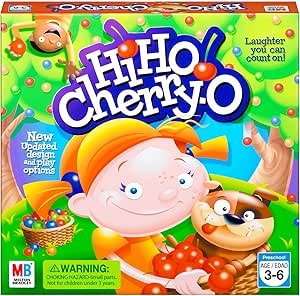 | Best for Preschool Counting | Brand: Hasbro Gaming | Players: 2–4 | Recommended age: 3 years and up | VIEW LATEST PRICE | See Our Full Breakdown |
| Scholastic Race Across the USA Geography Board Game for Kids, Ages 8+ |  | Best for U.S. Geography | Brand: University Games | Genre: Educational | Players: 2 to 4 | VIEW LATEST PRICE | See Our Full Breakdown |
| kids educational board game | Included components | Brand | Players | Language |
|---|---|---|---|---|
| Learning Resources Math Island | Game board, 4 character pieces, volcano popper, 2 number dice, 1 operation die, and instructions | Learning Resources | 2–4 | — |
| ThinkFun Zingo! Bingo Preschoo | 6 double-sided Zingo! cards, 72 double-sided tiles, parent’s guide, Zingo! Zinger with easy cleanup unit | ThinkFun | — | English |
| Hasbro Gaming Scrabble Junior | Double-sided gameboard, 4 tokens, 105 letter tiles, and game guide | Hasbro Gaming | 2–4 | English |
| Chuckle & Roar Alphabet Matchi | Cards | Chuckle & Roar | Up to 4 | — |
| Junior Learning Social Skills | 4 board games, 6 counters, spinner, die, and answer sheet | Junior Learning | — | — |
| Number Hunter Math Board Game | Game board, 5 game pieces, 2 number dice, 1 operation die, 50 challenge cards, game rules | — | 2–5 | English |
| National Geographic My First S | 1 game board, 5 safari explorers, 1 sun token, 36 item cards, 13 sun cards, learning guide | Blue Marble | — | English |
| Hasbro Gaming Hi Ho! Cherry-O | Game board, spinner with arrow and base, 9-piece puzzle, 4 fruit baskets, 40 fruit pieces, instructions | Hasbro Gaming | 2–4 | English |
| Scholastic Race Across the USA | Game board, cards, airplane pawns | University Games | 2 to 4 | English |
More Details on Our Top Picks
Learning Resources Math Island Addition & Subtraction Game
Math Island gives early elementary players a reason to practice counting, addition, and subtraction: they use equation dice to move across a lava-filled island while a volcano popper adds a playful element to the race. Its focus on sums and differences up to 20 makes the learning goal clear, unlike Scrabble Junior, which centers on spelling and word building. The board and character pieces also make it a natural fit for a small classroom math station or family game session. The tradeoff is its narrow academic range: children ready for multiplication or more challenging problem solving may outgrow the activities. It also calls for at least two players, so it is not a solo practice option.
Pros:- Practices counting, addition, and subtraction up to 20
- Equation dice connect math practice to movement around the board
- Volcano popper adds a playful event to each session
- Works for 2–4 players at home or in a classroom
Cons:- Concentrates on basic arithmetic rather than a broad range of math skills
- Requires multiple players, so it cannot serve as solo practice
Best for: Families and teachers looking for an active, group-based way to practice counting and basic addition and subtraction with children ages 6–10.
Not ideal for: Children who already handle math up to 20 confidently, or families seeking a game for one player or broader academic subjects.
- Brand:Learning Resources
- Players:2–4
- Recommended age:6–10 years
- Math skills:Counting, addition, and subtraction up to 20
- Included components:Game board, 4 character pieces, volcano popper, 2 number dice, 1 operation die, and instructions
- Model number:LER5025
Our verdict“Choose Math Island for lively, small-group arithmetic practice, but skip it if your child needs advanced math or solo play.”
ThinkFun Zingo! Bingo Preschool Reading Game for Ages 4 and Up
Zingo! turns word recognition into a quick matching race: a tile dispenser reveals pictures and words for players to find on their cards. That simple loop makes it easier to get young children playing than Scrabble Junior, where building words is part of the challenge. Double-sided cards and tiles add some variety, while the dispenser’s cleanup unit helps keep loose pieces manageable after a round. Its reading focus suits preschoolers and early readers, but the game needs at least two players; it is not a stand-alone activity for a child working alone. The player information also differs between the listed range and the extra-card description, so families planning a larger group should check which cards are included.
Pros:- Combines word recognition, language, and matching in an accessible format
- Tile dispenser supports fast turns and easier cleanup
- Double-sided cards and tiles offer more than one play format
- Can suit family or classroom groups
Cons:- Requires at least two players
- Player capacity is listed inconsistently, with the extra-card option affecting the stated maximum
Best for: Families or preschool classrooms seeking a quick, easy-to-teach matching game for children learning basic words and reading skills.
Not ideal for: Solo players, or groups that need a clearly confirmed player count beyond the included cards.
- Brand:ThinkFun
- Recommended age:4–10 years
- Number of players:2–6; description says up to 7 with the extra card
- Included components:6 double-sided Zingo! cards, 72 double-sided tiles, parent’s guide, Zingo! Zinger with easy cleanup unit
- Material:Plastic
- Theme:Reading
- Language:English
- Model number:97700
Our verdict“Pick Zingo! for lively early-word matching with a group, rather than solo reading practice or open-ended spelling.”
Hasbro Gaming Scrabble Junior Board Game for Ages 5+
Scrabble Junior earns its place for having two distinct stages: younger players match letters to words on one side, then more confident readers can make their own words on the other. That built-in step up gives it a longer learning path than Zingo!, which focuses on matching words and pictures rather than creating spellings. With 105 letter tiles and room for 2–4 players, it supports shared practice in spelling and vocabulary. The tradeoff is that the first side relies on words already printed on the board, so children looking for a fully open-ended word game may find it limiting at first. It is also aimed at age 5 and up, making it a less suitable pick for preschoolers who need simpler matching.
Pros:- Two-sided board offers beginner and more advanced play
- Supports spelling and vocabulary development
- Includes 105 letter tiles for word-building
- Accommodates 2–4 players
Cons:- The beginner side limits word choices to those printed on the board
- Age guidance makes it a poor fit for younger preschool children
Best for: Households with children at different stages of reading who want one word game that can progress from letter matching to making words.
Not ideal for: Preschoolers under five or children seeking fast picture-based matching rather than spelling and vocabulary practice.
- Brand:Hasbro Gaming
- Players:2–4
- Age range:5+ years
- Game type:Word-building
- Educational objectives:Spelling and vocabulary
- Included components:Double-sided gameboard, 4 tokens, 105 letter tiles, and game guide
- Language:English
- Dimensions:1.89 × 13.11 × 10.51 inches
Our verdict“Choose Scrabble Junior when you want word play that can advance with a young reader, not a preschool-first matching game.”
Chuckle & Roar Alphabet Matching Memory Game
Chuckle & Roar Alphabet Matching Memory Game keeps the learning task simple: children match uppercase and lowercase letters while building memory and concentration. That focused, card-based approach is a gentler starting point than Scrabble Junior, which moves toward spelling and making words. Its cards are portable for travel and can be used for group play or solo practice, so it is more flexible than Zingo!, which requires at least two players. The tradeoff is a narrower activity: this set is about letter pairs and memory rather than a wider mix of reading challenges. Since the product data only specifies cards, buyers should not expect a board, spinner, or other game mechanics to add variety.
Pros:- Practices matching uppercase and lowercase letters
- Supports memory, concentration, and fine motor skills
- Portable cards suit travel and classroom use
- Can be played solo or with up to four players
Cons:- Centers on letter matching rather than broader reading or spelling skills
- Card-based play offers less variety than games with multiple boards or play modes
Best for: Caregivers and preschool teachers introducing uppercase and lowercase letters through short, portable memory games.
Not ideal for: Families seeking a game with multiple academic subjects, word-building levels, or varied board-game mechanics.
- Brand:Chuckle & Roar
- Age range:3 years and up
- Players:Up to 4
- Material:Cardboard
- Included components:Cards
- Set name:Alphabet
- Model number:62011
Our verdict“Pick this set for portable preschool letter matching, but choose Scrabble Junior for a longer path into spelling.”
Junior Learning Social Skills Board Games, 4 Games for Kids Ages 5–8
Junior Learning Social Skills Board Games shifts the focus from academic drills to empathy, friendship, manners, and understanding emotions. Four games and a mix of action and sentence-building activities give families or teachers more ways to prompt discussion than a single-topic game such as Math Island, which concentrates on arithmetic. The set is designed for ages 5–8 and grades 1–2, so its scenarios are aimed at a fairly specific stage of childhood. That focus is a strength for guided group play, but it may not suit children outside the stated range or buyers who want a game with a broader academic curriculum. At least two players are required, and an adult may be useful to keep conversations moving around social situations.
Pros:- Covers empathy, friendship, manners, and emotional understanding
- Includes four games with action and sentence-building activities
- Components support group play at home or in classrooms
- Answer sheet provides an additional reference for activities
Cons:- Age focus is limited to children ages 5–8 and grades 1–2
- Requires at least two players
- Social topics may benefit from adult guidance, especially for younger children
Best for: Parents and early elementary educators who want structured group activities for discussing friendship, manners, empathy, and emotions.
Not ideal for: Solo players, children outside the 5–8 age range, or buyers primarily seeking reading or math practice.
- Brand:Junior Learning
- Age range:5–8 years
- Recommended grade:Grades 1–2
- Number of games:4
- Number of players:2+
- Included components:4 board games, 6 counters, spinner, die, and answer sheet
- Educational objective:Social skills
- Dimensions:11.8 × 1.25 × 8.5 inches
Our verdict“Choose this set for guided social-emotional play with early elementary groups, not for solo use or core academic practice.”
Number Hunter Math Board Game for Kids
Number Hunter earns its place for families who want math practice built into turn-by-turn play. Dice rolls and challenge cards give children ways to work on addition, subtraction, and even or odd numbers, while moving pieces keeps the activity more hands-on than a worksheet. Compared with Hi Ho! Cherry-O, which centers on counting and simple number changes, Number Hunter offers a broader early-math focus and more prompts for varied practice. That range comes with a narrower age fit: its listed starting age is five, and the skills may not hold the attention of older children. It also requires at least two players, so it is not a solo practice option. The 20-minute play time suits a short family or classroom activity.
Pros:- Practices addition, subtraction, and even and odd numbers
- Challenge cards and three dice add variety to math turns
- Works for family, classroom, or homeschool play
- Short listed playing time fits a brief learning activity
Cons:- Requires at least two players
- Early-math content may be too simple for older children
Best for: Families, homeschoolers, and early-elementary teachers looking for a screen-free way to practice basic operations with two or more children
Not ideal for: Older children who need more advanced math, or children who need a game they can play alone
- Players:2–5
- Recommended age:5 years and up
- Edition:Addition and subtraction
- Playing time:20 minutes
- Language:English
- Included components:Game board, 5 game pieces, 2 number dice, 1 operation die, 50 challenge cards, game rules
- Materials:Non-toxic, child-safe materials
Our verdict“Choose Number Hunter for a small group that wants more varied early-math practice than the counting-focused Hi Ho! Cherry-O provides.”
National Geographic My First Safari Cooperative Board Game for Kids
My First Safari makes teamwork the main lesson: players work together to find animals before the sun sets, rather than competing to finish first. Its 21 animal facts and three difficulty levels give young players both a nature topic and room to adjust play as their skills grow. Compared with Chuckle & Roar Alphabet Matching Memory Game, which focuses on matching and early literacy, this safari game shifts the learning toward animals, shared planning, and cooperative social play. The tradeoff is a smaller group fit: the listing specifies four players, so it may not suit a larger classroom table or a family hoping to include more than four. Its age range starts at four, making it a gentler fit for preschoolers than the geography questions in Race Across the USA.
Pros:- Cooperative goal encourages players to plan and work together
- Learning guide introduces facts about 21 animals
- Three difficulty levels can accommodate developing skills
- Designed for children as young as four
Cons:- Listed for four players, limiting larger-group use
- Animal content may not appeal to children more interested in numbers or reading
Best for: Families or preschool groups of up to four who want animal learning and cooperative play for children starting around age four
Not ideal for: Larger groups, or buyers seeking individual competition or geography and literacy practice
- Brand:Blue Marble
- Genre:Educational
- Number of players:4
- Age range:4 years and up
- Difficulty levels:3
- Animals featured:21
- Included components:1 game board, 5 safari explorers, 1 sun token, 36 item cards, 13 sun cards, learning guide
- Batteries:No batteries required
- Language:English
Our verdict“Pick My First Safari for young children who learn best through shared goals and animal facts, rather than the matching focus of Chuckle & Roar.”
Hasbro Gaming Hi Ho! Cherry-O Board Game for 2–4 Players, Ages 3+
Hi Ho! Cherry-O is the simplest math entry in this group: preschoolers spin, collect pretend fruit, and try to fill a basket with ten pieces. That repetitive loop gives young children practice with counting, addition, and subtraction without asking them to read question cards or solve more involved prompts. Compared with Number Hunter, it starts at age three and is easier to grasp, but it offers a narrower math challenge and less variety in how children practice operations. The spinner can also send fruit back or empty a basket, which adds number changes but may frustrate children who dislike losing progress. Its 15-minute play time and support for up to four players make it a practical first board game, though the learning stays at a basic level.
Pros:- Simple turns are accessible to children starting at age three
- Collecting fruit gives counting practice a concrete, visual goal
- Spinner results introduce basic addition and subtraction
- Supports play with up to four people
Cons:- Math practice is more basic than Number Hunter’s operation and challenge-card activities
- Spinner results can undo progress by making players return fruit or empty baskets
Best for: Families with preschoolers who are learning to count and need a straightforward first math game for two to four players
Not ideal for: Children ready for challenge cards, broader operations, or more advanced math practice
- Brand:Hasbro Gaming
- Players:2–4
- Recommended age:3 years and up
- Playing time:15 minutes
- Language:English
- Included components:Game board, spinner with arrow and base, 9-piece puzzle, 4 fruit baskets, 40 fruit pieces, instructions
Our verdict“Choose Hi Ho! Cherry-O as a first counting game for preschoolers, but opt for Number Hunter when children are ready for more varied math practice.”
Scholastic Race Across the USA Geography Board Game for Kids, Ages 8+
Race Across the USA is the geography pick for older children: players visit states, answer grade-level questions, and return home to win. Tailoring questions by grade gives children at different school levels a way to play together, while the states, capitals, and landmarks keep the learning tied to U.S. geography. Compared with National Geographic My First Safari, this game asks for more question-based knowledge and suits an older age range; Safari instead prioritizes cooperative play and animal facts for younger children. The subject focus is also its main limit: children looking for world geography, math, or early reading practice will need another game. It supports two to four players, so it works for a family or small classroom group but not a larger table without splitting into groups.
Pros:- Combines a race objective with U.S. geography questions
- Grade-level questions help children in different grades play together
- Covers states, capitals, and landmarks
- Designed for family game nights and classroom use
Cons:- Focuses specifically on U.S. geography
- Supports only two to four players
- Question-based play is a less suitable fit for children below the listed age
Best for: Families or teachers with children ages eight and up who want grade-adjusted practice with U.S. states, capitals, and landmarks
Not ideal for: Preschoolers, larger groups, or buyers seeking world geography and broader subject coverage
- Brand:University Games
- Genre:Educational
- Players:2 to 4
- Recommended age:8+
- Playing time:20 minutes
- Language:English
- Included components:Game board, cards, airplane pawns
- Edition:Standard Edition
Our verdict“Choose Race Across the USA for older children who want grade-adjusted U.S. geography practice, rather than the younger, cooperative animal learning in My First Safari.”

How We Picked
I compared these nine games by how clearly play connects to a learnable skill, how approachable the rules and components are for the listed age range, and how well each option can fit family or small-group play. I also considered whether a game offers repeated practice, supports cooperation or competition, and has a focused purpose that parents can match to a child’s needs.
The ranking favors games with a clear educational role and a play format that can work beyond a narrow learning moment. That puts My First Safari first for its cooperative family appeal, while focused options such as Zingo!, Math Island, and Alphabet Matching rank as stronger matches for particular skills. The other games remain worthwhile when their specific age, subject, or social-play focus fits better; no single game is the right choice for every child.
Factors to Consider When Choosing Kids Educational Board Games
Before choosing, I’d match the game to the child’s current abilities and the kind of time you want it to fill. A game can be educational yet still miss the mark if the rules are too demanding, the skill is already mastered, or the group prefers a different style of play.
Choose a Skill the Child Is Ready to Practice
Start with the skill your child is working on now, rather than the broadest subject label on the box. A game aimed at letter recognition can feel repetitive to a confident reader, while a word-building game may frustrate a child still learning basic letter sounds. For math, check whether the play asks children to count, recognize numbers, or solve operations; those steps are not interchangeable. A small stretch can hold attention, but a large gap between the game and the child’s ability can turn play into a lesson they resist. If siblings have different skill levels, choose a format where adults can adjust prompts or let children contribute in different ways.
Match the Game’s Pace to Your Household
Educational value depends partly on whether children will want to play more than once. Matching and bingo-style formats tend to keep turns moving, while games with reading, arithmetic, or geography questions can pause as players work through an answer. Think about the group’s attention span and whether waiting through other turns is likely to cause friction. Cooperative play can reduce pressure for children who dislike losing, though it may offer less head-to-head competition for kids who enjoy strategy. A useful rule is to choose the pace your child can sustain, not the one adults assume is most enriching.
Check Player Count and Adult Involvement
Look beyond the age label and ask who will actually be available to play. A game that works best with several players may sit unused in a household that usually has one child and one adult at the table. Some games need an adult to read prompts, clarify rules, or help younger players keep up; that can be a benefit for shared learning, but a drawback when independent play is the goal. Also consider whether the game remains enjoyable with two players or changes substantially with a larger group. If siblings are the main audience, check that the youngest can take part without every turn being simplified for them.
Decide Between Focused Practice and Variety
A single-skill game can give children repeated chances to work on one area, which makes it easier to choose when there is a specific learning goal. A broader set or game with several kinds of interaction may stay useful across more play sessions, but the educational objective can feel less concentrated. Avoid choosing variety only because it sounds like more content: children may prefer a clear, familiar loop they can master. On the other hand, a child who loses interest quickly may benefit from changing tasks or social roles. The right balance depends on whether you are filling a practice gap or looking for a flexible family activity.
Consider Cooperation, Competition, and Confidence
Game format shapes how a child experiences mistakes and success. Cooperative play gives players a shared goal, which can make it easier to offer help and talk through a problem. Competitive play can motivate some children, but it may distract others from the learning task or create tension between siblings. Memory and matching games bring their own pressure: children may need to lose a round before they improve at recalling information. If confidence is the priority, pick a game where adults can model answers and praise effort without taking over the child’s turn.
Use the Age Label as a Starting Point, Not a Guarantee
Age guidance can help narrow choices, but children of the same age can differ widely in reading fluency, number sense, and comfort with rules. Check the game’s actual demands, including whether players must read independently, hold several instructions in mind, or wait through long turns. A younger child may enjoy a game with adult support, while an older child may find a simpler game appealing if the social play is strong. If the game will be shared across ages, look for ways to make participation fair without turning one child into a helper every time. A short trial round, when possible, can reveal more than the age label alone.
Frequently Asked Questions
Which type of educational board game is best for a child who is just learning to read?
Choose a game whose reading demand matches the child’s current stage: recognizing letters, matching words to pictures, or building and reading words are separate steps. Picture-supported matching can keep early readers involved without requiring them to decode every instruction. If an adult will play alongside the child, a more demanding game may work as a shared activity, but it may not suit independent play. Look at how often the child must read and whether help is built into the turn structure. A game that lets the child answer successfully with growing independence is often a better fit than one that simply has more text.
Should I choose a cooperative game or a competitive one for siblings?
Choose based on how the children respond to winning and losing, not on a general rule that one format is better. Cooperative games give siblings a shared goal and can encourage them to explain ideas to each other. Competitive games may be more motivating for children who enjoy taking turns and tracking individual progress. If one sibling is older or more skilled, competition can magnify that gap unless the rules allow different levels of challenge. You can also alternate formats so the children get both teamwork and individual practice.
Are educational board games useful if my child already knows the subject?
They can still be useful if the game asks children to apply a skill in a different way, recall information quickly, or explain an answer. But a game that only repeats mastered material may lose its appeal, especially if turns feel predictable. Check whether it allows harder challenges, flexible rules, or useful interaction beyond the target skill. For a child who has outgrown basic practice, a more advanced reading, math, or geography game may hold attention better. The goal is an enjoyable stretch, not a game that feels like remedial work.
What should I prioritize when buying one game for children of different ages?
Look for a format where younger players can participate meaningfully and older players still have something to think about. Shared goals, picture cues, and adjustable prompts can help bridge differences, while a game that depends on fast reading or advanced calculations may leave one child behind. Consider whether adults can offer hints without giving away the answer. It can also help to give each child a different role, such as reading a prompt or keeping track of a shared task. If the age and skill gap is large, two shorter games may work better than forcing one game to serve everyone.
How can I tell whether a game will get replayed rather than feel like homework?
Look for a play loop children can understand quickly, turns that keep them involved, and a learning task that feels connected to the game’s goal. Too much reading, long waits, or repeated correction can make even a well-designed educational game feel like classwork. A child’s interests matter as much as the subject: animals, word play, social situations, and geography can each provide a different hook. Consider whether the rules support changing players or replaying with different levels of challenge. When possible, explain the game in a few sentences and see whether the child wants to try a round.
Conclusion
My best overall pick is National Geographic My First Safari for families who want cooperative play alongside learning. For best value in focused early literacy, I’d compare Zingo! with Alphabet Matching and choose the format your child prefers; for math practice, consider Math Island or Number Hunter based on the level and style of play that fits. Best for beginners and younger children: Hi Ho! Cherry-O offers an accessible starting point, while Zingo! is a strong early-reading choice. Best premium-style breadth: Junior Learning’s four-game set suits families looking for social skills activities across more than one game. For a more advanced subject focus, choose Scrabble Junior for word play or Race Across the USA for geography. Match the game to the child’s ability and preferred way to play, and the skill practice is more likely to become a regular family activity.
Halloween Picks

Haunted Hill Farm 2-Ft. Zombie Raccoon Halloween Animatronic

Star Wars Yoda and R2-D2 Inflatable Halloween Decor, 6 ft with LEDs, Indoor/Outdoor

Spirit Halloween Scary Sitting Scarecrow Animatronic, 4 ft 6 in
As an affiliate, we earn on qualifying purchases.