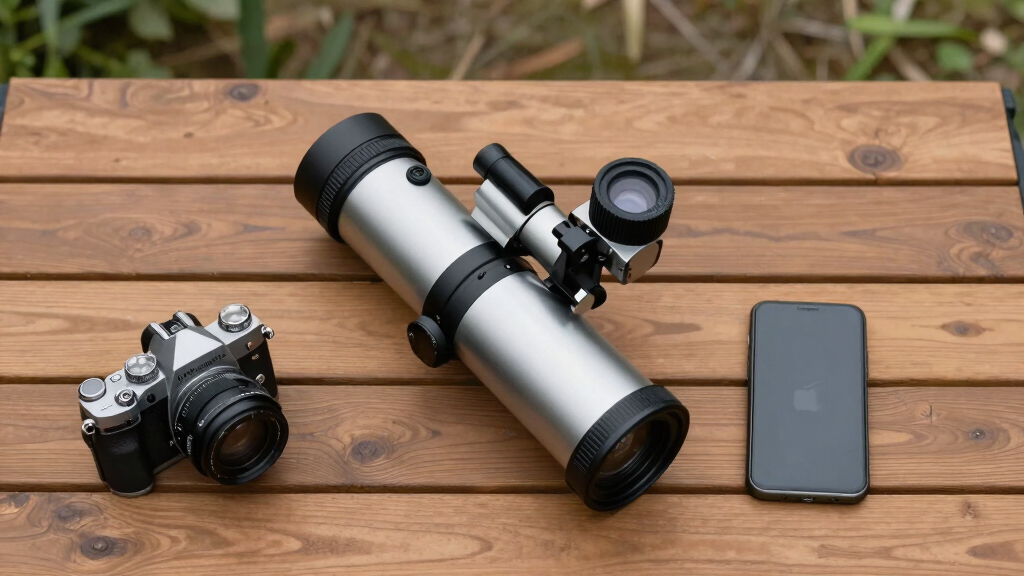

Finding the best telescope and mount combos for astrophotography can be overwhelming, given the wide range of options and complex features. The Celestron CGEM II 8″ Schmidt-Cassegrain stands out as the overall top pick for its reliable tracking and versatile aperture, ideal for serious astrophotographers. The ZWO Seestar S30 Pro offers an excellent all-in-one, app-controlled setup perfect for those just starting out or looking for a compact solution. Meanwhile, the Celestron CGEM II 11″ provides higher aperture for advanced imaging, but at a higher cost and complexity. The main tradeoffs involve balancing budget, ease of use, and imaging capability. Continue reading for an in-depth look at these options and more to find your ideal setup.

Prime made for students and young adults
- Fast, free delivery for dorm and study essentials
- Prime Video and Amazon Music included
- Member-only deals
Key Takeaways
- The top picks combine high-quality optics with stable, motorized mounts for precise tracking.
- Many options offer integrated or app-controlled features that simplify astrophotography for beginners.
- Larger apertures improve image detail but often come with increased weight and setup complexity.
- Compact mounts like the Sky-Watcher Star Adventurer GTi excel for portability and quick setup, ideal for travel or casual use.
- Choosing the right combo depends heavily on your experience level, target celestial objects, and budget constraints.
| Celestron CGEM II 8″ Schmidt-Cassegrain Telescope with German Equatorial Mount |  | Best Overall for Serious Astrophotography | Aperture: 8 inches | Optical Coating: StarBright XLT | Mount Type: German Equatorial | VIEW LATEST PRICE | See Our Full Breakdown |
| ZWO Seestar S30 Pro Smart Telescope, App-Controlled Astrophotography |  | Best for Beginners and Urban Astro Enthusiasts | Weight: 3.64 lbs | Imaging: Dual-camera 4K | Features: Automatic GOTO, AI Smart Imaging, Light Pollution Filters | VIEW LATEST PRICE | See Our Full Breakdown |
| Celestron CGEM II 11″ Schmidt-Cassegrain Telescope with GoTo EQ Mount |  | Best for Large Aperture and Detailed Observation | Aperture: 11 inches | Optical Design: Schmidt-Cassegrain | Magnification: Up to 660x | VIEW LATEST PRICE | See Our Full Breakdown |
| SVBONY SV555 APO Astrophotography Refractor Telescope |  | Best for Portable, High-Quality Wide-Field Imaging | Objective Lens Diameter: 5.4 centimeters | Optical Tube Length: 24.3 cm | Focus Type: Manual | VIEW LATEST PRICE | See Our Full Breakdown |
| Celestron NexStar 8SE Computerized Telescope – Schmidt-Cassegrain |  | Best for Entry-Level Convenience with Powerful Features | Aperture: 8 inches | Optics: Schmidt-Cassegrain | Mount: GoTo with NexStar+ control | VIEW LATEST PRICE | See Our Full Breakdown |
| National Geographic 114mm Reflector Telescope with Eyepieces and Smartphone Adapter for Astronomy and Astrophotography |  | Best Entry-Level Reflector for Astrophotography | Aperture: 114mm | Focal Length: 500mm | Eyepieces: 2 (19x and 51.5x) | VIEW LATEST PRICE | See Our Full Breakdown |
| Sky-Watcher Star Adventurer GTi Mount Head Kit with Counterweight and CW Bar |  | Best Portable GoTo Mount for Astrophotography on the Move | Mount Type: Equatorial | Tracking Modes: Lunar, Solar, Sidereal | Built-in Wi-Fi: Yes | VIEW LATEST PRICE | See Our Full Breakdown |
| Sky-Watcher Star Adventurer GTI Mount Kit with Counterweight, Tripod, and Pier Extension |  | Best All-in-One Portable Mount for Serious Astrophotography | Mount Type: GoTo EQ Tracking Mount | Includes: Counterweight, CW bar, Tripod, Pier Extension | Features: Built-in polar scope with illuminator, WiFi | VIEW LATEST PRICE | See Our Full Breakdown |
| telescope and mount combos for astrophotography | Aperture | Mount Type |
|---|---|---|
| Celestron CGEM II 8" Schmidt-C | 8 inches | German Equatorial |
| ZWO Seestar S30 Pro Smart Tele | — | — |
| Celestron CGEM II 11" Schmidt- | 11 inches | Computerized GoTo |
| SVBONY SV555 APO Astrophotogra | — | — |
| Celestron NexStar 8SE Computer | 8 inches | — |
| National Geographic 114mm Refl | 114mm | — |
| Sky-Watcher Star Adventurer GT | — | Equatorial |
| Sky-Watcher Star Adventurer GT | — | GoTo EQ Tracking Mount |
More Details on Our Top Picks
Celestron CGEM II 8″ Schmidt-Cassegrain Telescope with German Equatorial Mount
The Celestron CGEM II 8″ Schmidt-Cassegrain combines impressive light-gathering with advanced tracking, making it ideal for those who want detailed deep-sky images. Its over 800x light collection surpasses smaller scopes like the SVBONY SV555 APO, offering finer resolution for planetary and nebula photography. The computerized equatorial mount with All-Star polar alignment simplifies setup, but its complexity might challenge newcomers. The premium features come at a higher cost and weight, requiring a sturdy setup. This scope is perfect for experienced amateurs or semi-pros aiming for long exposure astrophotography without sacrificing image detail. It’s less suited for those seeking portability or quick setup.
Pros:- High light-gathering power for detailed, high-resolution images
- Extensive object database with advanced computerized tracking
- All-Star polar alignment for easier long exposure setup
- Suitable for deep-sky astrophotography
Cons:- Heavy and requires a sturdy mount setup
- Complex initial setup may deter beginners
- Higher price point may limit accessibility
Best for: Advanced amateur astronomers or astrophotographers who prioritize high-quality images and have a dedicated setup space.
Not ideal for: Beginners or casual stargazers who prefer lightweight, easy-to-use equipment or quick setup for casual observation.
- Aperture:8 inches
- Optical Coating:StarBright XLT
- Mount Type:German Equatorial
- Payload Capacity:40 lbs
- Slew Speed:5 degrees per second
- Polar Alignment:All-Star polar alignment
- Periodic Error Correction:Yes
Our verdict“This combo suits experienced astrophotographers seeking professional-grade imaging with a larger aperture and advanced tracking capabilities.”
ZWO Seestar S30 Pro Smart Telescope, App-Controlled Astrophotography
The ZWO Seestar S30 Pro stands out for its portability and ease of use, making it an excellent choice for newcomers or city dwellers limited by light pollution. Its automatic GOTO tracking and dual 4K imaging cameras deliver sharp, detailed photos with minimal setup, contrasting with bulkier, more complex systems like the Celestron CGEM II 8″. Its app-controlled interface simplifies operation, though reliance on smartphones and app connectivity can be a barrier for some users. The compact design makes it perfect for outdoor adventures, but it’s limited to deep-sky imaging and lacks the capacity for long exposures needed for more advanced astrophotography. It’s ideal for casual astrophotographers who want quick results without heavy equipment.
Pros:- Simple, app-controlled operation for quick setup
- High-resolution 4K imaging for detailed photos
- Lightweight and portable design for outdoor use
- Effective in light-polluted environments with filters
Cons:- Limited to deep-sky imaging, not suitable for terrestrial views
- Dependent on smartphone app, which could be complex for some
- Battery life and long exposure capabilities are not detailed
Best for: Beginners and urban astronomers looking for an easy-to-use, portable astrophotography solution.
Not ideal for: Experienced astrophotographers or those interested in extensive long-exposure deep-sky imaging, who need more control and hardware flexibility.
- Weight:3.64 lbs
- Imaging:Dual-camera 4K
- Features:Automatic GOTO, AI Smart Imaging, Light Pollution Filters
- Connectivity:App-controlled
- Additional Features:Anti-dew protection
Our verdict“This pick makes the most sense for beginners or city-based users seeking a compact, easy-to-operate astrophotography device.”
Celestron CGEM II 11″ Schmidt-Cassegrain Telescope with GoTo EQ Mount
The Celestron CGEM II 11″ Schmidt-Cassegrain offers a significant step up in light-gathering with its 11-inch aperture, ideal for capturing faint deep-sky objects with great detail. Its StarBright XLT coatings and computerized GoTo mount make locating and tracking objects effortless, outperforming smaller setups like the NexStar 8SE. However, its size and weight—over 27 pounds—demand a sturdy, dedicated setup space, and its complex assembly may challenge less experienced users. While it’s a powerful tool for serious astrophotography, it’s less suited for those wanting a portable or quick-deploy system. This combo balances high performance with a hefty price tag, appealing to enthusiasts ready to invest in long-term imaging projects.
Pros:- Large 11-inch aperture for bright, detailed images
- Extensive object database with automated tracking
- High-quality StarBright XLT coatings for contrast
- Sturdy steel tripod for stability
Cons:- Heavy and requires a dedicated, stable setup
- Complex initial alignment process
- High cost may limit accessibility for casual users
Best for: Intermediate to advanced astrophotographers seeking high-resolution deep-sky imaging and substantial light-gathering capacity.
Not ideal for: Beginners or casual users who prefer lightweight, easy-to-assemble setups or quick observation sessions.
- Aperture:11 inches
- Optical Design:Schmidt-Cassegrain
- Magnification:Up to 660x
- Optical Coatings:StarBright XLT
- Mount Type:Computerized GoTo
- Tripod Material:Steel
- Weight:27.5 lbs
Our verdict“This combo suits serious amateur astronomers aiming for detailed, high-quality deep-sky imaging and willing to handle its size and complexity.”
SVBONY SV555 APO Astrophotography Refractor Telescope
The SVBONY SV555 APO Refractor offers a compact yet capable platform for astrophotographers who prioritize image clarity and portability. Its Petzval triplet lens produces sharp, flat images ideal for wide-field deep-sky imaging, similar to the more specialized Celestron NexStar 8SE but with a focus on image quality over large aperture. The adjustable aperture from F4.5 to F22 adds versatility, especially with full-frame sensors, making it suitable for detailed astrophotography on the go. Its EAF mount kit promotes precise focusing, but the scope’s weight and lack of a dedicated mount may limit long-term stability and portability for some users. This combo excels for portable astrophotography but isn’t built for large, heavy-duty setups.
Pros:- High-quality Petzval triplet lens for sharp, flat images
- Adjustable aperture from F4.5 to F22 for versatility
- Full-frame sensor compatibility for wide-field imaging
- Includes EAF focus kit for precise control
Cons:- Lack of specific mount details limits stability insights
- No included eyepiece, requiring additional accessories
- Heavier than typical portable scopes, affecting ease of transport
Best for: Travelers or astrophotographers wanting high-quality, portable wide-field imaging with precise focus control.
Not ideal for: Users seeking large apertures or dedicated observatory setups for deep-sky imaging with heavy equipment.
- Objective Lens Diameter:5.4 centimeters
- Optical Tube Length:24.3 cm
- Focus Type:Manual
- Compatibility:Full-frame sensors
- Focal Length:Variable
- Item Dimensions:12.6″D x 10.63″W x 9.06″H
Our verdict“This scope is ideal for portable astrophotographers seeking high image quality and precise focusing in a lightweight package.”
Celestron NexStar 8SE Computerized Telescope – Schmidt-Cassegrain
The Celestron NexStar 8SE provides a balanced mix of portability and power, making it suitable for intermediate users who want to explore both planetary and deep-sky imaging. Its 8-inch Schmidt-Cassegrain offers sharp images, while the automated NexStar+ GoTo mount with SkyAlign simplifies object location. Compared to larger, more complex setups like the Celestron CGEM II 11″, it’s lighter and easier to transport, but still capable of capturing impressive astrophotos with the right accessories. Its setup time and limited optical compatibility may frustrate advanced users seeking maximum flexibility. Overall, it’s a reliable choice for those wanting a versatile, portable system with room to grow.
Pros:- Powerful 8-inch aperture for detailed planetary and lunar views
- Automated GoTo system with large object database
- Compact and portable design for field use
- Upgradeable with accessories for enhanced imaging
Cons:- Relatively high price for a beginner-level scope
- Initial alignment can take time
- Limited optical flexibility compared to custom setups
Best for: Intermediate amateur astronomers seeking a versatile, portable telescope with automated tracking and good imaging potential.
Not ideal for: Advanced astrophotographers or those requiring extensive customization and maximum aperture for faint deep-sky objects.
- Aperture:8 inches
- Optics:Schmidt-Cassegrain
- Mount:GoTo with NexStar+ control
- Alignment Technology:SkyAlign
- Warranty:2 years
Our verdict“This combo is perfect for intermediate users who value portability and ease of use while still pursuing quality astrophotography.”
National Geographic 114mm Reflector Telescope with Eyepieces and Smartphone Adapter for Astronomy and Astrophotography
This 114mm aperture Newtonian reflector stands out for offering a generous light-gathering ability, making it an excellent choice for beginners wanting to explore both planetary details and deep sky objects. Unlike the Sky-Watcher Star Adventurer GTi, which excels in tracking and portability, this model provides a more traditional telescope experience with multiple magnifications via included eyepieces and a smartphone adapter for quick astrophotography. The main tradeoffs involve its manual focus, which can be finicky for precise imaging, and the alt-azimuth mount’s limited stability for long exposures. Assembly complexity could challenge newcomers, but the large aperture and versatile eyepieces make it a compelling starter option. This pick makes the most sense for amateur astronomers seeking a complete, approachable setup with basic astrophotography capabilities.
Pros:- Large 114mm aperture for brighter, detailed views of celestial objects
- Includes multiple eyepieces for flexible magnification options
- Smartphone adapter simplifies capturing images
Cons:- Manual focus can be difficult to fine-tune for sharp images
- Alt-azimuth mount is less stable for extended exposures
- Setup and alignment may be challenging for absolute beginners
Best for: Beginners eager to start astrophotography with a larger aperture telescope and smartphone imaging.
Not ideal for: Advanced astrophotographers requiring long exposure stability or automatic tracking for deep sky imaging.
- Aperture:114mm
- Focal Length:500mm
- Eyepieces:2 (19x and 51.5x)
- Mount:Alt-azimuth
- Tripod:Full-size
- Finderscope:Red dot
Our verdict“This reflector is best suited for beginners who want a straightforward, larger aperture telescope with basic astrophotography features.”
Sky-Watcher Star Adventurer GTi Mount Head Kit with Counterweight and CW Bar
The Sky-Watcher Star Adventurer GTi stands out for its portability combined with full GoTo tracking, making it ideal for astrophotographers who need to shoot in different locations. Compared with the Sky-Watcher GTI Mount Kit, which includes a tripod and pier, this version emphasizes compactness and ease of transport, supported by built-in Wi-Fi and an illuminated polar scope for quick, precise alignment. Its 11-pound payload capacity limits usage to lightweight cameras and accessories, but this tradeoff is acceptable for those prioritizing mobility. While setup can be complex for newcomers unfamiliar with polar alignment, its Wi-Fi control and tracking accuracy make it a strong choice for fieldwork. This mount makes sense for astrophotographers who value portability without sacrificing tracking precision.
Pros:- Compact, lightweight design ideal for portability
- Full GoTo functionality with Wi-Fi control and smartphone app compatibility
- Built-in illuminated polar scope for quick, accurate alignment
Cons:- Limited payload capacity restricts heavier equipment
- May require additional accessories for optimal setup
- Setup process can be complex for beginners unfamiliar with polar alignment
Best for: Travelers and astrophotographers needing a lightweight, full-featured mount for variable locations.
Not ideal for: Heavy camera setups or astrophotographers who prefer fixed, heavy-duty mounts for deep sky imaging.
- Mount Type:Equatorial
- Tracking Modes:Lunar, Solar, Sidereal
- Built-in Wi-Fi:Yes
- Polar Scope:Illuminated
- Payload Capacity:11 lbs
- Focal Length:1500 mm
Our verdict“This mount is perfect for astrophotographers who need a portable yet precise tracking solution for on-the-go imaging.”
Sky-Watcher Star Adventurer GTI Mount Kit with Counterweight, Tripod, and Pier Extension
The Sky-Watcher Star Adventurer GTI Mount Kit with Pier Extension is distinguished by its comprehensive setup, including a sturdy tripod and pier extension, offering enhanced stability for longer exposures. While it shares many features with the smaller GTi Mount Head Kit, the added accessories provide better support for heavier setups, making it suitable for more ambitious astrophotography. The integrated polar scope with illuminator simplifies alignment, and Wi-Fi control ensures flexible operation. The main tradeoff is the slightly increased bulk and setup time compared to the smaller kit, which may deter casual users. Nonetheless, this kit caters well to astrophotographers seeking a portable, fully equipped mount capable of handling more substantial gear.
Pros:- Includes a sturdy tripod and pier extension for enhanced stability
- Full GoTo functionality with built-in Wi-Fi control
- Built-in polar scope with illuminator simplifies precise alignment
Cons:- Slightly more complex setup due to additional components
- Limited payload capacity for heavier equipment
- Bulkier than smaller portable mounts, reducing quick deployment advantage
Best for: Intermediate to advanced astrophotographers needing a portable, full-featured mount with added stability for longer exposures.
Not ideal for: Beginners seeking an ultra-light, quick-to-setup mount, or those with very lightweight camera setups.
- Mount Type:GoTo EQ Tracking Mount
- Includes:Counterweight, CW bar, Tripod, Pier Extension
- Features:Built-in polar scope with illuminator, WiFi
Our verdict“This kit is best for astrophotographers who require a portable, stable platform capable of supporting more substantial setups for long-exposure imaging.”

How We Picked
These products were evaluated based on a combination of performance, build quality, ease of use, versatility, and value for money. Priority was given to mounts that offer reliable tracking and compatibility with a range of telescopes, especially for astrophotography. We also considered user-friendly features like app control and automation, which help reduce the learning curve. Additionally, the overall stability, weight, and setup time influenced the rankings, ensuring that each combo suits different user needs—from beginners to advanced astronomers.| telescope and mount combos for astrophotography | Mount Type |
|---|---|
| Celestron CGEM II 8" Schmidt-C | German Equatorial |
| ZWO Seestar S30 Pro Smart Tele | — |
| Celestron CGEM II 11" Schmidt- | Computerized GoTo |
| SVBONY SV555 APO Astrophotogra | — |
| Celestron NexStar 8SE Computer | — |
| National Geographic 114mm Refl | — |
| Sky-Watcher Star Adventurer GT | Equatorial |
| Sky-Watcher Star Adventurer GT | GoTo EQ Tracking Mount |
Factors to Consider When Choosing Best Telescope And Mount Combos For Astrophotography
When choosing the best telescope and mount combo for astrophotography, it’s essential to balance several factors to match your experience level and imaging goals. The right setup can dramatically affect your image quality, ease of use, and overall satisfaction. Here are key considerations to guide your decision:Aperture and Optical Quality
The size of the telescope’s aperture directly impacts the brightness and detail of your images. Larger apertures gather more light, revealing fainter objects and finer details, but they also tend to be heavier and more expensive. Opt for high-quality optics that minimize aberrations, especially if you aim to capture detailed planetary or deep-sky images. Remember, a larger aperture isn’t always better if it complicates portability or setup.
Mount Stability and Tracking Accuracy
The mount’s stability and tracking precision are vital for astrophotography. A sturdy, motorized mount with accurate GoTo and tracking capabilities reduces star trails and ensures sharp images. Consider mounts with auto-guiding support if you’re aiming for long exposures. Cheaper or lighter mounts often sacrifice stability, which can ruin otherwise excellent optics. Investing in a reliable mount is often the most significant factor in achieving professional-quality astrophotos.
Ease of Use and Automation
Beginners benefit from mounts with integrated or app-controlled features that simplify alignment and tracking. Automation minimizes setup time and user error, making astrophotography more accessible. However, more advanced automation features typically come with a learning curve and higher price points. Weigh how much automation you need against your comfort with technology and your willingness to learn complex systems.
Portability and Setup Time
If you plan to shoot in different locations, portability becomes a priority. Compact mounts and smaller telescopes are easier to transport and quick to set up, but may limit your imaging options. Conversely, larger, heavy-duty setups provide better imaging quality but require more time and effort to assemble. Consider your typical shooting environment and how much time you’re willing to allocate to setup.
Budget and Future Expansion
Budget constraints influence your choice heavily. Lower-cost combos often sacrifice some stability and features, but can still deliver excellent results for beginners. Investing in a slightly higher-priced setup may offer better durability and room to upgrade accessories like filters, cameras, or larger telescopes. Think about your long-term goals—will you expand your gear or stick with a more straightforward, affordable system?
Frequently Asked Questions
Can I use a standard telescope mount for astrophotography?
While some standard mounts can handle astrophotography, they often lack the precise tracking and stability needed for long exposures. Mounts designed specifically for astrophotography include features like motorized tracking, auto-guiding support, and better balance, which are essential for high-quality images. Upgrading to a dedicated astrophotography mount can significantly improve your results, especially if you plan to advance your skills.
Is a larger aperture always better for astrophotography?
Generally, larger apertures allow more light collection, which improves detail and brightness. However, bigger telescopes are heavier, more expensive, and require sturdier mounts. For beginners or those with limited space, a smaller aperture with good optics can still produce impressive images while being easier to handle. Balance your desire for detail with practicality and ease of use.
What is the advantage of app-controlled mounts?
App-controlled mounts simplify alignment and tracking, reducing setup time and user error. They often include features like automated star alignment, remote control, and even guiding assistance. This makes astrophotography more accessible, especially for newcomers. However, reliance on apps requires familiarity with your device and the mount’s app interface, so consider your comfort with technology.
Should I buy a complete combo or assemble my own?
Buying a complete combo offers compatibility and convenience, especially for beginners who want a plug-and-play experience. Assembling your own setup allows for tailored components and potential upgrades, which appeals to more experienced users. However, mismatched parts can lead to compatibility issues, so if you go the custom route, research thoroughly and consider future expansion plans.
How important is portability for astrophotography gear?
Portability depends on your typical shooting locations and how often you travel. Lighter, more compact mounts and telescopes are easier to transport and set up quickly, ideal for field work or travel. Larger, more stable setups tend to be heavier and require more time to assemble, making them less suitable for frequent moves. Balance your portability needs with the quality of imaging you aim to achieve.
Conclusion
For casual astrophotographers or beginners, the Sky-Watcher Star Adventurer GTi offers a portable, easy-to-use option that still delivers solid results. The Celestron NexStar 8SE makes an excellent all-in-one starter kit with computer control and decent aperture. Serious amateurs and those aiming for high-detail imaging should consider the Celestron CGEM II 11″ for its large aperture and reliable tracking. Meanwhile, budget-conscious users may find the National Geographic 114mm Reflector a cost-effective entry point. Your choice should align with your experience, imaging goals, and how much weight you’re willing to handle during setup.
Halloween Picks
halloween
As an affiliate, we earn on qualifying purchases.