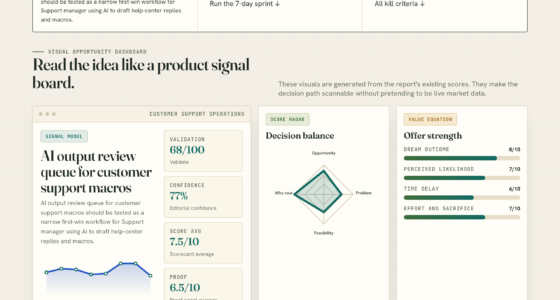

📊 Full opportunity report: White-collar professional services. The Tier 1 displacement. on ThorstenMeyerAI.com — validation score, market gap, and execution plan.
TL;DR
The white-collar professional services sector is experiencing significant displacement signals, with reductions in graduate hiring and AI-driven automation tests targeting entry-level analyst roles. Evidence confirms the cohort bifurcation pattern, though sub-sector dynamics vary.
Major white-collar professional services firms are reducing graduate recruitment and testing AI tools that could replace up to two-thirds of entry-level analyst positions, confirming the cohort-bifurcation hypothesis in this sector.
Data from 2023 reveals that the Big 4 accounting firms have cut graduate intake by an average of 14%, with KPMG reducing hires by 29% and Deloitte by 18%. This pattern aligns with broader AI adoption efforts, including automation tools like Microsoft Copilot and EY.ai, which automate routine audit and advisory tasks.
Simultaneously, investment banks such as Goldman Sachs and Morgan Stanley are testing AI systems that could replace approximately 66% of entry-level analyst roles. In the legal sector, employment signals lag but show signs of displacement, with law firms increasing graduate numbers by 13% in 2023-2024 while AI tools are piloted for legal research and document review. Consulting firms like McKinsey are an outlier, with North American hiring projected to grow 12% in 2026, citing a focus on expanding young talent despite broader industry trends.
The empirical evidence across these sub-sectors supports the pattern of displacement among junior cohorts while senior and partner-level roles are less affected, indicating a longer-term pipeline erosion extending over 5-10 years.
White-collar
professional services.
The Tier 1 displacement.
KPMG -29% · Deloitte -18% · EY -11% · PwC -6% graduate intake reductions · Goldman Sachs + Morgan Stanley AI testing could replace 2/3 entry-level analysts · BLS 0% paralegal growth 2024-2034 · McKinsey +12% contra-signal. The cohort-bifurcation hypothesis confirmed with sub-sector heterogeneity that strengthens the framework.
This is Atlas Essay 03 — the second Dimension 1 sector forensic, and the first test of Essay 02’s cohort-bifurcation hypothesis. White-collar professional services is the Tier 1 displacement empirically confirmed — but with two structural distinctions from software engineering. The empirical evidence is fragmented across four sub-sectors: Big 4 accounting (cleanest 6-29% graduate intake reductions) Investment banking (compression not extinction · Goldman + Morgan Stanley AI testing) Consulting (fragmented · McKinsey +12% contra-signal) Legal (lagging aggregate signals · emerging firm-level restructuring). The pipeline problem horizon is structurally longer: 5-10 year partner-track / equity-track gap 2030-2035+ vs software engineering’s 2-5 year 2027-2029 mid-level gap. The attribution-rigor framework extends from three factors to four — pyramid-model pressure is the professional-services-specific factor.
Four sub-sectors. Intensity gradient.
White-collar professional services is the second-most-documented sector for AI-driven labor displacement after software engineering. The empirical evidence is structurally fragmented across four sub-sectors with different intensities — the heterogeneity itself is the structural signature.
signal
framing
pattern
aggregate
Three cohorts. Pattern confirmed.
The cohort-bifurcation hypothesis from Essay 02 (junior cohort displaced · senior cohort augmented · pipeline collapsing) operationally tested across all four sub-sectors. Pattern empirically supported with sub-sector heterogeneity in intensity but consistent in structural form.
Four factors. Pyramid pressure added.
Essay 02 established three converging factors driving the cohort-bifurcation in software engineering. Essay 03 adds the fourth factor: pyramid-model pressure is structurally specific to professional services and not present in software engineering. The Atlas’s attribution-rigor framework operates sector-by-sector.
specific
Pipeline gap. 5-10 years.
The pipeline problem manifests differently in professional services than software engineering. The 5-8 year associate-to-partner apprenticeship model produces a structurally longer pipeline-gap horizon: 2030-2035+ partner-track / equity-track gap. Both are cohort-bifurcation second-order effects, but the horizon difference is structurally significant.
White-collar professional services is the Tier 1 displacement empirically confirmed. The cohort-bifurcation hypothesis from Essay 02 holds across all four sub-sectors documented — Big 4 accounting cleanest, investment banking through compression framing, consulting fragmented with McKinsey contra-signal, legal lagging at aggregate level but restructuring at firm level. The sub-sector heterogeneity is the structural signature, not a deviation from it. The pipeline problem manifests with a structurally longer 5-10 year horizon — 2030-2035+ partner-track / equity-track gap. The attribution-rigor framework extends to four factors with pyramid-model pressure as the sector-specific factor. Two of four Phase 1 sector forensics shipped. Both support the cohort-bifurcation hypothesis. The structural-empirical pattern is robust.
Implications of Displacement for White-Collar Sector Growth
This displacement signals a structural shift in white-collar professional services, potentially reducing entry-level opportunities and altering career pathways. The long-term erosion of the pipeline could impact sector stability, partner development, and economic productivity, especially if AI adoption accelerates across sub-sectors.

THE AI-POWERED LAWYER: Mastering Legal Research, Document Drafting, and Case Summaries
As an affiliate, we earn on qualifying purchases.
As an affiliate, we earn on qualifying purchases.
Sector-Specific Displacement Trends and Historical Background
The shift towards AI and automation in white-collar sectors has been gradual but accelerated since 2023, driven by cost pressures and technological maturation. The Big 4 accounting firms have publicly announced significant reductions in graduate intake, aligning with the deployment of AI tools for routine tasks. Investment banks are testing AI systems capable of replacing a majority of entry-level analysts, while legal firms are observing a plateau in employment growth but experimenting with AI for legal research. McKinsey and other consulting firms remain committed to hiring, signaling sector heterogeneity. Historically, these sectors have relied on a 2-5 year junior-to-senior pipeline, but emerging evidence suggests this is extending to 5-10 years due to AI-driven skill shifts and cost pressures.
“The cohort-bifurcation pattern from software engineering is now empirically supported in white-collar professional services, but with sector-specific dynamics.”
— Thorsten Meyer

AI for Accounting: Automating Bookkeeping, Financial Reporting, and Audit Workflows with Python
As an affiliate, we earn on qualifying purchases.
As an affiliate, we earn on qualifying purchases.
Unresolved Questions on Long-Term Sector Impact
It remains unclear how quickly AI adoption will accelerate across all sub-sectors and whether sector-specific displacement will lead to broader economic effects. The long-term impact on career pathways, partner development, and sector stability is still being studied, with some firms maintaining hiring despite automation trials.

The Official Guide to the QuickStart Certified Cyber Analyst: A Practical Guide to Cybersecurity Fundamentals, Network Defense, Cloud Security, and … (QuickStart Certified Cybersecurity Courses)
As an affiliate, we earn on qualifying purchases.
As an affiliate, we earn on qualifying purchases.
Monitoring Sector Displacement and AI Adoption Trends
Further data collection from industry reports, employment statistics, and AI pilot programs will clarify the pace of displacement. Sector-specific case studies and longitudinal analyses over the next 1-3 years will reveal whether the observed patterns persist and how they reshape professional career trajectories.
Generative AI for Financial Professionals (Incudes 100 Ready-to-use Prompts): A Practical Guide to Boost your Productivity with Artificial Intelligence (WorkSmart Guides)
As an affiliate, we earn on qualifying purchases.
As an affiliate, we earn on qualifying purchases.
Key Questions
What does the cohort-bifurcation pattern mean for entry-level jobs?
It indicates that junior roles are being displaced or reduced, while senior roles remain more stable, leading to a longer pipeline erosion over 5-10 years.
Are all sub-sectors equally affected by AI-driven displacement?
No, the impact varies: accounting shows clear hiring cuts, investment banking tests AI for major role replacements, legal signals lag but AI is adopted for routine tasks, and consulting remains committed to hiring.
Will AI completely replace human analysts and associates?
Current tests suggest AI can automate a significant portion of routine work, but the extent of full replacement remains uncertain and likely sector-specific.
How long will the displacement trend last?
Evidence points to a longer horizon of 5-10 years for pipeline erosion, with ongoing AI development and sector adaptation influencing the timeline.
Source: ThorstenMeyerAI.com