
📊 Full opportunity report: The Free-Download Question: When Running Your Own Model Actually Beats Paying on ThorstenMeyerAI.com — validation score, market gap, and execution plan.
TL;DR
Open-weight AI models now approach the performance of proprietary models at a fraction of the cost, especially for sustained workloads. Hardware advances and improved models make local inference increasingly viable, challenging the traditional paid API approach.
Recent developments show that open-weight AI models now match or closely approach the capabilities of proprietary models, and hardware advances make running these models locally more affordable than ever, challenging the traditional reliance on paid API services.
Model performance benchmarks as of mid-2026 indicate that open-weight models like DeepSeek V4 Pro and Kimi K2.6 are within 5 to 15 percentage points of the leading closed models on key tasks, with costs significantly lower—around one-seventh—of top proprietary models like GPT-5.5. This performance gap is narrowing, and for many workloads, open models can now deliver comparable results at a fraction of the cost.
Additionally, hardware improvements, particularly Apple Silicon’s unified-memory architecture and mixture-of-experts models, have lowered the barrier for local inference. A Mac Studio with 192GB of unified RAM can run large models like Qwen3.6-35B-A3B fully in memory, enabling organizations to operate models in-house without extensive data center infrastructure. The combination of lower hardware costs and more capable open models shifts the economic calculus, making local inference a more attractive option for many users.
However, the article emphasizes that open models still lag behind the frontier by six to twelve months on some capabilities, especially in the most demanding, long-horizon tasks. Moreover, effective deployment requires investing in structured harnesses—context management, retries, tool routing—which are critical for production use but not included in the raw model download.
The free-download question: when running your own actually beats paying
“Why pay for on-prem when you could run Qwen free?” The download is free — running it well is not. The honest comparison is total cost of ownership vs. per-token API. And there’s a real, moving crossover.
“Free” means the download, not the running
When someone says an open model is free, they mean the weights. They’re not counting the hardware, power, ops time, the quality gap, or depreciation. For most workloads, those are the entire cost.
- Hardware — the machine to hold & run it
- Electricity — sustained inference draws real power
- Ops time — updates, queue health, tuning, 2 a.m. breakage
- The harness — context, persistence, retries (not optional)
- Quality gap — 6–12 mo behind frontier on hardest tasks
- Depreciation — frontier hardware dates in ~3 years
Where owning beats renting
Below some usage level the API wins decisively. Above some sustained, predictable volume, owned hardware wins — and the meter never restarts. Drag the volume; toggle the task and sovereignty needs.
API vs. own-hardware — monthly cost balance
An illustrative model, not a quote. The point is the shape: a real crossover that moves with your inputs.
Two regional pools, a 5–25× price gap
The “you trade away too much capability” objection got much weaker. Open weights have closed to within 5–15 points of the closed frontier — and on some tasks drawn level.
What you own when you own the inference
Apple Silicon’s unified memory rewired the math — a 192GB Mac Studio holds a 70B model in memory; MoE models (e.g. 35B total / ~3B active) make frontier-adjacent capability runnable on a desk. But owning inference means owning all of this:
The true-cost line items the “free” framing skips
Lived from a small Mac fleet running Qwen on MLX for a high-volume publishing pipeline: at sustained volume it pays for itself against the per-token meter — but every item below is real.
Hardware capex
The fleet up front. Depreciates — dates in ~3 years even if no invoice shows it.
Electricity
Sustained inference draws real power. At fleet scale it’s a monthly bill, not a rounding error.
Operational burden
Model updates, quantizations, queue health, throughput tuning, 2 a.m. breakage you now own.
The harness
Context, persistence, retries, tool routing. Not optional — the model is only half the system.
No per-token meter
The payoff: once owned, inference cost stops scaling with use. The meter never restarts.
Data never leaves
Nothing sent to strangers. Sovereignty is structural, not a contractual promise.
The crossover zone is real — and growing
The “just run Qwen” dismissal and the “you need a vendor” reflex are both too simple. The local path wins in a specific, identifiable zone — and that zone is bigger than a year ago.
Which way it tips
Implications for Cost and Control in AI Deployment
This shift impacts how organizations approach AI deployment, as the total cost of owning and operating open-weight models can now be lower than paying per-token API fees for many workloads. It also increases the strategic importance of hardware investments and model fine-tuning, giving smaller operators and enterprises more control over their AI capabilities without relying on external providers.
For companies with predictable, high-volume AI needs, owning models could lead to substantial cost savings. Additionally, the ability to run models locally enhances data privacy and security, aligning with sovereignty concerns and regulatory requirements.
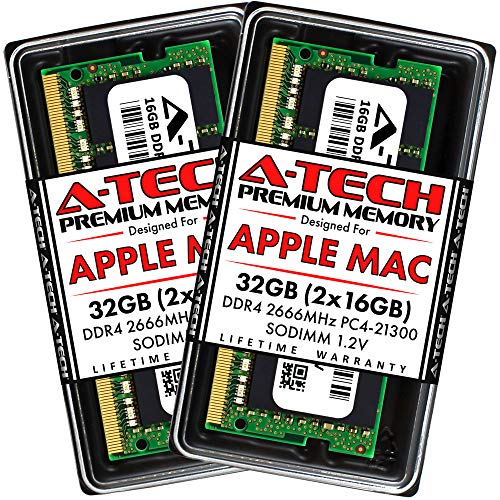
A-Tech 32GB Kit (2x16GB) RAM for Apple iMac & Mac mini (2018, 2019 & 2020) | DDR4 2666 MHz SODIMM PC4-21300 / PC4-21333 260-Pin SO-DIMM Memory Upgrade
- Total Capacity: 32GB (2x16GB) RAM kit
- Memory Speed: DDR4 2666/2667 MHz
- Form Factor: 260-Pin SO-DIMM
As an affiliate, we earn on qualifying purchases.
As an affiliate, we earn on qualifying purchases.
Recent Progress in Open-Weight Models and Hardware
Historically, proprietary models from companies like OpenAI, Anthropic, and Google have held performance and capability advantages, justifying their paid API models. However, recent benchmarks indicate that open-weight models are rapidly closing the gap, with some now matching the performance of top-tier proprietary models on key benchmarks.
Simultaneously, hardware advancements—particularly Apple Silicon’s unified memory and sparse activation architectures—have made running large models locally feasible at a consumer or small enterprise scale. These developments have shifted the economic landscape, making local inference more attractive for a broader range of users.
This evolution challenges the previous assumption that only cloud providers could host high-capability models, opening the door for more decentralized AI deployment.
“The gap between ‘free to download’ and ‘cheap to operate’ is where real decision-making about open versus closed AI resides. The arithmetic of total cost of ownership now favors owning for many workloads.”
— Thorsten Meyer

Running AI on Your Own Hardware: A Practical Guide to Self-Hosting Open-Weight Language Models
As an affiliate, we earn on qualifying purchases.
As an affiliate, we earn on qualifying purchases.
Remaining Gaps and Challenges for Local Inference
While open models have narrowed the performance gap, they still lag behind the frontier in some advanced reasoning tasks, particularly those requiring long-term planning or complex agentic behavior. The need for sophisticated harnesses and infrastructure remains a barrier for some organizations. Additionally, the long-term trajectory of hardware costs and model improvements is uncertain, making precise cost comparisons difficult over extended periods.

AI Systems Performance Engineering: Optimizing Model Training and Inference Workloads with GPUs, CUDA, and PyTorch
As an affiliate, we earn on qualifying purchases.
As an affiliate, we earn on qualifying purchases.
Expected Developments in Open Models and Hardware
Further improvements in open-weight models are anticipated, with benchmarks continuing to close the gap with proprietary models. Hardware innovations, especially in memory and sparse computation, are likely to reduce the cost and complexity of local inference further. Organizations should monitor these trends to determine the optimal balance between owning and outsourcing AI capabilities in the coming months.

LOCAL LLM DEPLOYMENT: Training, Fine-Tuning, & Offline Inference: The Complete Developer’s Guide to Building, Training, and Running Private Open-Source AI Offline (with full source code)
As an affiliate, we earn on qualifying purchases.
As an affiliate, we earn on qualifying purchases.
Key Questions
Can I run large AI models on a standard personal computer?
Yes, recent hardware advances, such as Apple Silicon’s unified memory, enable running models with tens of billions of parameters locally, provided the hardware is sufficiently equipped and optimized.
Is open-weight AI now as good as proprietary models?
In many benchmarks, open-weight models are within 5 to 15 points of the top proprietary models, and for some tasks, they are comparable or even superior. However, they may still lag in the most demanding, long-horizon reasoning tasks.
What are the main costs involved in running my own AI model?
The costs include hardware acquisition, electricity, engineering for inference reliability, and ongoing maintenance. These can be lower than API fees at high volumes, especially with recent hardware and model improvements.
Does running models locally improve data privacy?
Yes, local inference allows organizations to keep sensitive data in-house, reducing reliance on external cloud providers and aligning with privacy and sovereignty concerns.
What should organizations consider before switching to local models?
They should evaluate the performance requirements, infrastructure costs, technical expertise needed, and whether their workload can be effectively supported with open models and current hardware capabilities.
Source: ThorstenMeyerAI.com