

TL;DR
India’s earthquake warning system offers real-time alerts seconds to minutes before shaking begins, but it cannot forecast earthquakes beforehand. This distinction affects disaster preparedness efforts.
India’s earthquake warning system can deliver alerts seconds to minutes before seismic shaking begins, but it does not predict earthquakes in advance. This system is designed to enhance immediate response capabilities, not foretell when or where earthquakes will occur. The distinction is crucial for understanding its role in disaster management and public safety.
India’s earthquake early warning system, operated by the Indian Meteorological Department (IMD), is capable of detecting seismic activity in real time and sending alerts to vulnerable regions within seconds to a few minutes of an earthquake’s initiation. This system relies on a network of seismometers that monitor ground movements continuously. When seismic waves are detected, alerts are issued to local authorities and, in some cases, directly to the public via mobile alerts and sirens.
However, the system does not have the capability to predict earthquakes before they happen. It cannot forecast the timing, location, or magnitude of an earthquake in advance, as such predictions require understanding complex geological processes that are currently beyond scientific reach. The system’s primary function is to provide immediate warnings once seismic activity is detected, giving people and authorities a brief window to take protective actions.
India has been working to improve its earthquake warning infrastructure, especially after devastating quakes in the past, such as the 2001 Gujarat earthquake. The system’s coverage is expanding, but it remains limited to certain seismic zones and urban centers. Experts emphasize that while early warning can assist in saving lives by enabling timely protective actions, it is not a substitute for comprehensive disaster preparedness and resilient infrastructure.
Why Immediate Warning Matters for India’s Disaster Preparedness
The ability to issue seconds-to-minutes warnings can help reduce casualties and property damage during earthquakes. In densely populated areas like Delhi, Mumbai, and Kolkata, such alerts enable people to take protective actions, such as dropping to the ground, taking cover, and holding on, before shaking intensifies. Authorities can also use these alerts to halt trains, shut down industrial operations, and activate emergency response protocols.
Nevertheless, the system’s limitations mean it cannot prevent earthquakes or predict their occurrence. Its effectiveness depends on rapid detection and communication, which can be challenging in remote or less-instrumented regions. Understanding these capabilities and limits is important for policymakers and the public to set realistic expectations and to complement early warning with other disaster mitigation strategies.

Earthquake Alert System
No Subscription!
As an affiliate, we earn on qualifying purchases.
As an affiliate, we earn on qualifying purchases.
India’s Earthquake Monitoring and Warning Infrastructure Development
India is situated in a seismically active zone, with parts of the Himalayan belt and the Indo-Gangetic plains prone to earthquakes. Historically, the country has experienced significant quakes, notably the 2001 Gujarat earthquake and the 2015 Nepal quake that affected northern India. Recognizing the need for improved preparedness, India launched its earthquake early warning system in recent years, leveraging seismic networks and technological advancements.
The system is modeled partly on successful programs in countries like Japan and Mexico, which have integrated real-time seismic detection with public alert mechanisms. Despite these efforts, coverage remains uneven, with rural and less-developed regions still lacking comprehensive detection networks. Scientific consensus indicates that earthquake prediction remains a challenge worldwide, and India’s system is focused on rapid detection and warning, not forecasting.
“Our system can detect seismic activity as soon as it begins and send alerts within seconds, but it cannot predict earthquakes before they happen.”
— Dr. Suresh Kumar, seismologist at Indian Meteorological Department
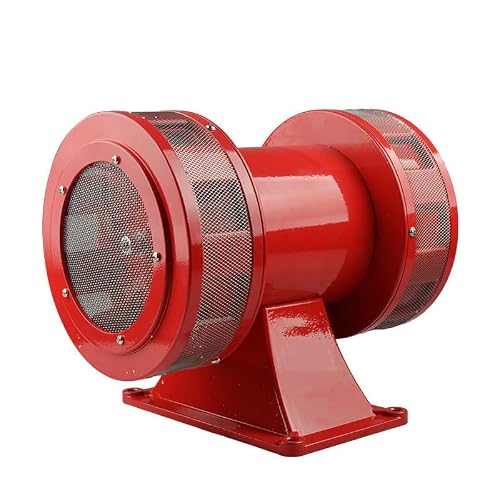
McbeAn Double Electric Motor Alarm Siren, 180 DB High Decibel Alarm, Air Raid Siren, Waterproof, Dustproof and Seismic, Emergency Sound Buzzer, for Factory, Residential Area
High volume180dB, optional working voltage: AC 220V/AC 110V, cast aluminum alloy shell, protection grade IP44
As an affiliate, we earn on qualifying purchases.
As an affiliate, we earn on qualifying purchases.
Remaining Questions About India’s Earthquake Prediction Capabilities
It is not yet clear how effective India’s warning system is in practice across all regions, especially in rural or less-instrumented areas. The system’s coverage, response times, and public awareness levels vary, and there is ongoing discussion about how much it can realistically reduce casualties in major quakes. Additionally, the scientific community agrees that true earthquake prediction remains a distant goal, and current systems are limited to detection and warning.

Blue Coolers Blue Seventy-Two | 72 Hour Emergency Backpack Survival Kits for 1 Person | Survival Kit for Wildfires, Earthquakes, Tornado, Hurricane, and Other Emergencies…
BLUE SEVENTY-TWO EMERGENCY BACKPACKS ALL COME STANDARD WITH: 1 x Triple-Pocket Reinforced Grab-N-Go Backpack; 1 x Pack of…
As an affiliate, we earn on qualifying purchases.
As an affiliate, we earn on qualifying purchases.
Upcoming Improvements and Policy Developments in Earthquake Preparedness
India plans to expand its seismic detection network and improve alert dissemination channels, including integrating mobile technology and community-based warning systems. Policymakers are also focusing on public education campaigns to increase awareness of earthquake safety protocols. Scientific research continues to explore potential indicators that could someday enable better prediction, but immediate priorities remain improving detection and response capabilities.
seismometer for home
As an affiliate, we earn on qualifying purchases.
As an affiliate, we earn on qualifying purchases.
Key Questions
Can India predict earthquakes before they happen?
No, current scientific understanding does not allow for reliable earthquake prediction. India’s system provides real-time alerts seconds to minutes after seismic activity begins, not forecasts in advance.
How effective is India’s earthquake warning system?
It can provide valuable seconds to minutes of warning in some cases, helping people and authorities take protective actions. However, its effectiveness depends on the coverage, infrastructure, and response protocols in place.
What are the limitations of India’s earthquake warning system?
The system cannot predict earthquakes before they start and is limited by the density of seismic sensors and communication infrastructure. It also cannot prevent damage or casualties but aims to reduce them through early alerts.
What steps is India taking to improve earthquake preparedness?
India is expanding its seismic network, enhancing alert dissemination, and increasing public awareness campaigns. Scientific research into prediction methods continues, but current focus remains on detection and response.
Source: google-trends