When you speak into a microphone, it turns sound waves into electrical signals. These signals are sampled at regular intervals, turning the continuous analog into discrete data points. Quantization assigns numbers to these samples, creating digital information. Advanced algorithms then encode and compress this data for storage or transmission. Finally, signal processing enhances the sound quality during playback. If you want to discover how each step works in detail, keep exploring this fascinating process.

Prime made for students and young adults
- Fast, free delivery for dorm and study essentials
- Prime Video and Amazon Music included
- Member-only deals
Key Takeaways
- Microphones convert sound waves into analog electrical signals that vary continuously over time.
- Analog signals are sampled at regular intervals to create discrete data points.
- Quantization assigns numerical values to each sample, representing sound amplitude.
- Digital encoding compresses and stores the sampled data for efficient transmission and storage.
- Signal processing algorithms enhance, analyze, and convert digital data back into sound during playback.
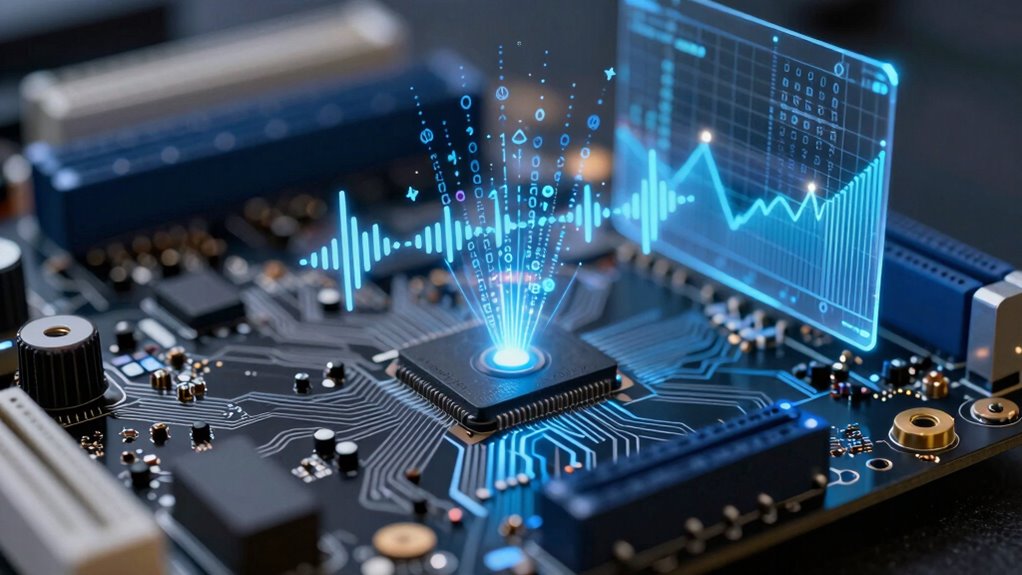
Have you ever wondered how your voice or ambient noises are transformed into digital information inside modern machines? It all starts with capturing sound through a microphone, which converts sound waves into electrical signals. These signals are analog, meaning they vary continuously over time. To make sense of these signals and store or transmit them efficiently, the machine uses a process called audio encoding. Audio encoding involves compressing and converting the continuous analog signals into digital data, making it easier to process, store, or send across networks.
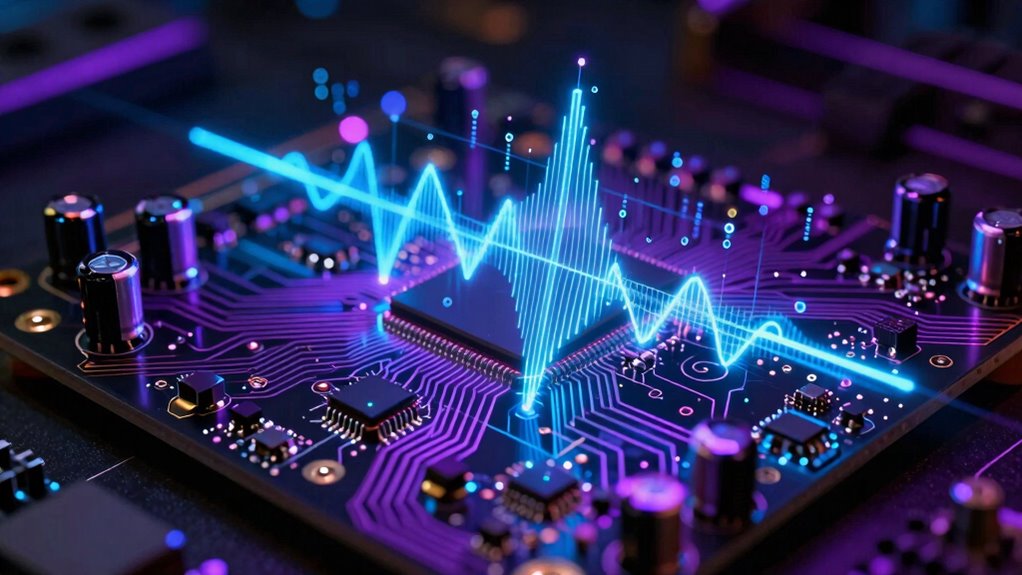
Once the sound is captured, signal processing comes into play. This step involves analyzing and manipulating the electrical signals to enhance quality, remove noise, or extract useful information. During signal processing, the machine samples the analog signal at regular intervals—a process called sampling—to create a series of discrete data points. These samples are then quantized, assigning each one a specific numerical value that represents the amplitude of the sound wave at that moment. This combination of sampling and quantization forms the foundation for digital audio data. Additionally, sampling rate determines how often these measurements are taken per second, directly impacting the fidelity of the audio. The importance of proper sampling is critical to maintaining the integrity of the sound during digital conversion. Moreover, advanced signal processing algorithms**** enable real-time adjustments and improvements, ensuring high-quality audio output.
Signal processing analyzes, samples, and quantizes sounds to create accurate digital audio data.
The core of transforming sound into data lies in audio encoding techniques. These techniques compress the data to reduce file size while preserving sound quality as much as possible. Lossless formats like FLAC retain all original data, while lossy formats like MP3 or AAC remove parts of the sound that are less perceptible to human ears. The encoding process involves algorithms that analyze the frequency content and dynamic range of the sound, focusing on the most important features for playback. This step guarantees that the digital file accurately represents the original sound but in a much more manageable size.
As the audio data moves through the system, signal processing techniques continue to refine and optimize it. Noise reduction algorithms, equalizers, and filters remove unwanted sounds or enhance certain frequencies, improving clarity and fidelity. When you play back the sound, digital-to-analog conversion takes place, turning the processed digital data back into an analog signal that a speaker can produce as sound waves again. This conversion is essential for maintaining the overall sound quality during playback.
In essence, your voice and ambient noises undergo a complex journey inside modern machines—starting from capturing, then encoding, processing, and finally converting back into sound. Each step relies heavily on signal processing and audio encoding to ensure that what you record or transmit remains true to the original, all while fitting within the constraints of digital storage and transmission systems. This seamless transformation allows modern technology to handle, share, and reproduce sound with remarkable fidelity and efficiency.
As an affiliate, we earn on qualifying purchases.
Frequently Asked Questions
How Do Microphones Convert Sound Into Electrical Signals?
You can think of a microphone as capturing a sound wave and turning it into an electrical signal. When you speak or make a noise, the sound wave hits the microphone’s diaphragm, causing it to vibrate. These vibrations generate an acoustic signal, which is then converted into an electrical signal by a tiny component inside the microphone. This electrical signal can then be processed or recorded as digital data.
What Types of Sensors Are Used for Sound Data Capture?
You use sensors like microphones and specialized devices for sound data capture. These sensors employ sound wave analysis to interpret audio signals. Acoustic fingerprinting helps identify unique sound patterns, making it easier to analyze and compare recordings. By capturing sound waves accurately, these sensors convert physical vibrations into digital data, enabling applications like music recognition, voice commands, and environmental monitoring. This process transforms raw sound into useful, structured information.
How Is Sound Data Stored in Digital Formats?
Sound data is stored digitally as sound waveforms, capturing the continuous audio signals in a series of numerical samples. You’ll find that audio compression reduces these large datasets into manageable sizes, using algorithms like MP3 or AAC. These formats efficiently encode waveforms, preserving sound quality while saving space. So, when you save or transmit sound, it’s these compressed waveforms that make digital audio both practical and precise in modern machines.
What Role Does Sampling Rate Play in Sound Data Accuracy?
The sampling rate directly impacts audio fidelity and sampling precision, determining how accurately sound is captured. A higher sampling rate records more data points per second, preserving more details and nuances of the original sound. This enhances audio fidelity, making the sound clearer and more true to life. Conversely, a lower sampling rate reduces data, which can compromise sampling precision and result in a less accurate, muddier sound reproduction.
How Do Machines Differentiate Between Different Sounds?
You can see that machines differentiate between sounds by analyzing their unique sound patterns and acoustic signatures. They capture sound waves, then use algorithms to identify specific features like frequency, amplitude, and timing. These features form a distinctive acoustic signature, allowing the machine to recognize and distinguish between various sounds accurately. So, it’s all about comparing these sound patterns and signatures to categorize and respond appropriately.
As an affiliate, we earn on qualifying purchases.
Conclusion
As you listen closely, the gentle whisper of sound transforms into a delicate dance of data within modern machines. Like leaves softly falling onto a pond, each wave ripples and settles into patterns you can’t see but can feel. Through this quiet ballet, your devices embrace the unseen melodies, turning fleeting moments into lasting impressions. In this way, sound’s fleeting grace is gently woven into the fabric of technology, forever capturing its subtle essence.
As an affiliate, we earn on qualifying purchases.
audio signal processing software
As an affiliate, we earn on qualifying purchases.
As an affiliate, we earn on qualifying purchases.
Fall Picks
fall essentials
As an affiliate, we earn on qualifying purchases.