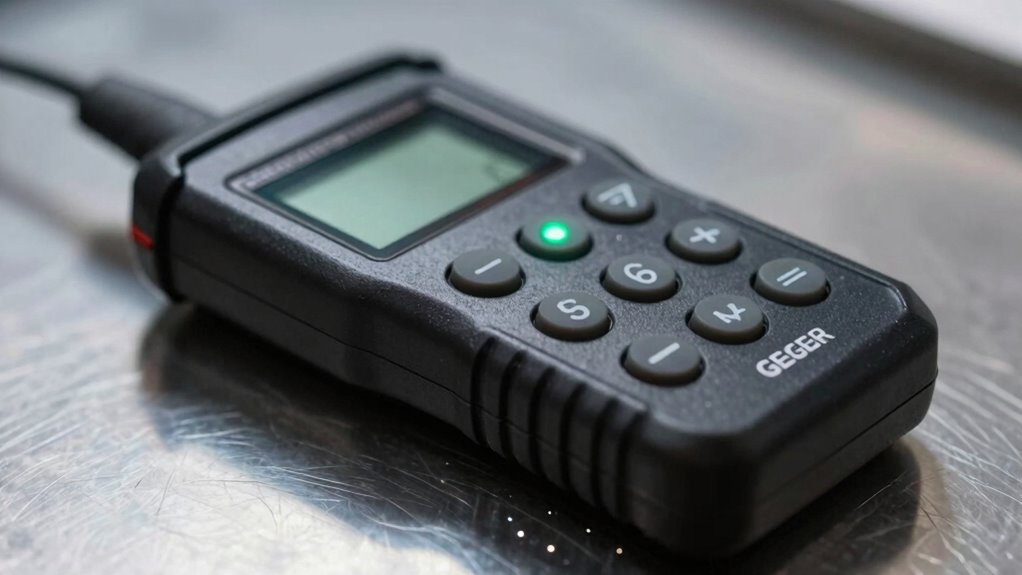

A Geiger counter detects radiation by sensing particles released from radioactive sources nearby. Inside, it has a tube filled with gas that gets ionized when radiation particles pass through. This ionization creates tiny electrical pulses, which the device picks up and turns into sound or digital signals. These signals let you know if radiation levels are high or safe. If you want to understand how it all works, keep exploring further.

Prime made for students and young adults
- Fast, free delivery for dorm and study essentials
- Prime Video and Amazon Music included
- Member-only deals
Key Takeaways
- Geiger counters detect radiation by sensing particles that ionize gas inside a special tube.
- When radiation hits the tube, it creates electrical pulses that the device counts.
- These pulses are converted into sounds or digital signals for easy reading.
- The device’s core component, the Geiger-Müller tube, is crucial for detecting ionization events.
- Proper calibration and maintenance ensure accurate radiation detection and reliable readings.
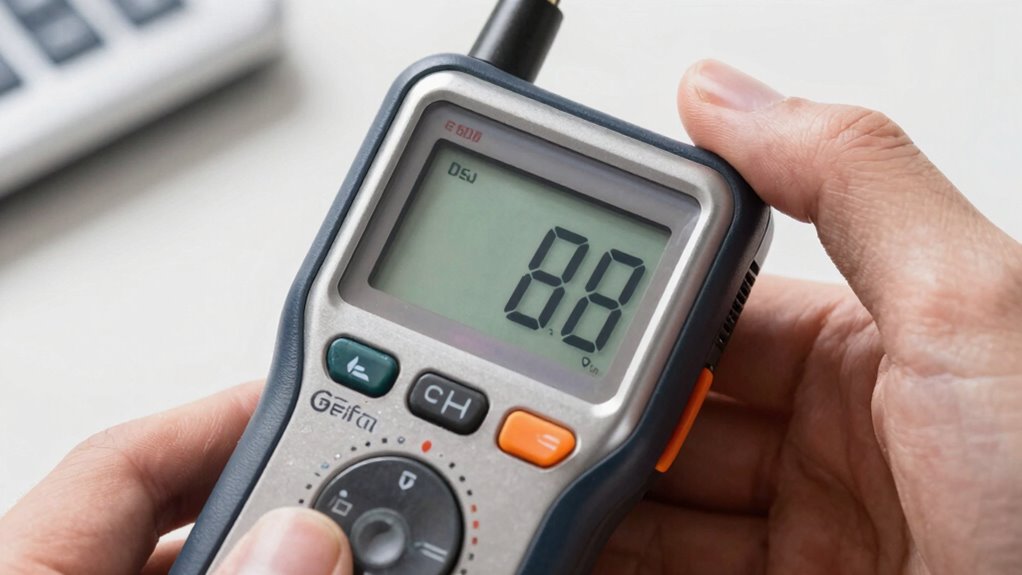
Radiation detection has become more accessible thanks to Geiger counters, compact devices that can quickly identify radioactive particles in your environment. These handy tools are designed to alert you when they detect radiation, helping you stay safe and informed. When you turn on your Geiger counter, it starts listening for tiny particles emitted by radioactive sources. Inside, it contains a Geiger-Müller tube, which is the core component responsible for sensing radiation. When a radioactive particle passes through this tube, it ionizes the gas inside, creating a brief electrical pulse. Your device then translates this pulse into a clicking sound or a digital reading, giving you immediate feedback on radiation levels nearby. Proper device calibration is essential to ensure accurate readings and reliable performance over time. Understanding how your Geiger counter works is key to maintaining radiation safety. You should regularly check and care for your device, guaranteeing it’s functioning correctly through proper Geiger counter maintenance. This means keeping the device clean, replacing batteries when needed, and periodically testing it with a known radiation source if possible. Proper maintenance guarantees your device remains accurate and reliable, which is vital when evaluating potential hazards. If your Geiger counter starts to behave strangely or gives inconsistent readings, it’s a sign you might need to troubleshoot or have it serviced. Additionally, understanding background radiation levels in your environment can help you interpret readings more effectively and distinguish between normal and hazardous levels. Being aware of radiation sources in your vicinity can also help in assessing risks more accurately. Regularly updating your knowledge about radiation safety guidelines ensures you respond appropriately in different situations. Familiarity with radiation detection principles can further improve your ability to interpret device readings accurately.
digital Geiger counter for radiation detection
As an affiliate, we earn on qualifying purchases.
As an affiliate, we earn on qualifying purchases.
Frequently Asked Questions
Can Geiger Counters Detect All Types of Radiation Equally?
No, Geiger counters can’t detect all Radiation types equally. They work best with beta and gamma radiation, but have detection limitations with alpha particles, which are less penetrating. Alpha radiation can be blocked by a sheet of paper or skin, so a Geiger counter might not pick it up unless it’s very close. Understanding these detection limitations helps you interpret the readings accurately and stay safe around different Radiation types.
How Often Should a Geiger Counter Be Calibrated?
Calibration keeps your Geiger counter accurate and reliable. You should calibrate it at least once a year, or more often if you notice inconsistent readings. Regular calibration ensures device accuracy, giving you confidence in detecting radiation correctly. If you use the device frequently or in extreme environments, consider calibrating more often. Properly maintained, your Geiger counter stays precise, providing peace of mind and protecting your safety.
Are There Any Safety Risks When Using a Geiger Counter?
Using a Geiger counter generally poses minimal safety risks if you follow proper radiation safety and user precautions. You won’t be exposed to harmful radiation just by operating the device, but avoid unnecessary exposure to high-radiation sources. Always handle radioactive materials with care, keep the device away from sensitive electronics, and wear protective gear if needed. Staying informed and cautious helps guarantee safe use and accurate readings.
What Is the Maximum Radiation Level a Geiger Counter Can Measure?
A Geiger counter typically measures radiation levels up to around 10,000 counts per minute or about 10 millisieverts per hour, depending on the device. The measurement limits are defined by radiation units, such as sieverts and roentgens, to gauge safety risks. When high levels surpass these limits, the counter alerts you, helping you stay aware of dangerous radiation exposure. Always check your device’s specifications for exact maximum measurement capabilities.
Do Different Models of Geiger Counters Vary in Accuracy?
Yes, different models of Geiger counters vary in accuracy due to calibration frequency and measurement limitations. You’ll find that some are more precise because they are calibrated regularly, reducing errors. However, all models have measurement limitations, especially at very low or very high radiation levels. When choosing a Geiger counter, consider these factors to guarantee it meets your needs, particularly if you require highly accurate readings for safety or scientific purposes.
As an affiliate, we earn on qualifying purchases.
Conclusion
Now that you know how Geiger counters work, you can appreciate their importance in keeping us safe. Did you know that during the Chernobyl disaster, Geiger counters helped detect radiation levels that were over 10,000 times higher than normal? That’s a huge difference! With these handy devices, you can quickly and easily check for radiation, giving you peace of mind and helping protect yourself and others from unseen dangers.
compact Geiger-Müller tube device
As an affiliate, we earn on qualifying purchases.
As an affiliate, we earn on qualifying purchases.
As an affiliate, we earn on qualifying purchases.
Columbus Day / Indigenous Peoples' Day Picks
long weekend sales
As an affiliate, we earn on qualifying purchases.