📊 Full opportunity report: How AI Is Changing Reports For Private Investigation Services on IdeaNavigator AI — validation score, market gap, and execution plan.

Prime made for students and young adults
- Fast, free delivery for dorm and study essentials
- Prime Video and Amazon Music included
- Member-only deals
TL;DR
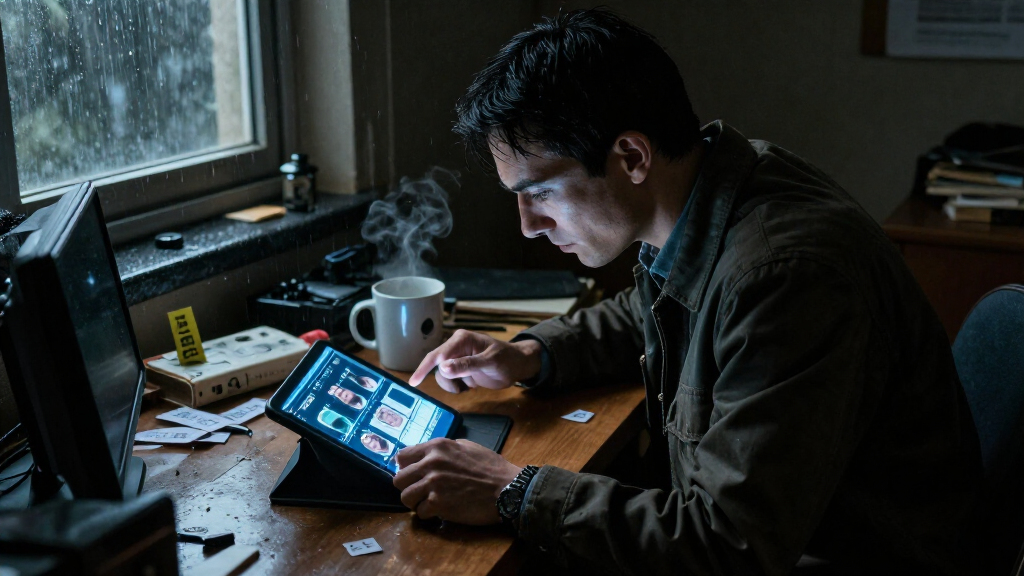
IdeaNavigator AI has outlined a proposed AI report-generation tool for independent investigators and small firms. The concept would turn field notes, timestamped photos and GPS data into draft chronological reports, but its accuracy, courtroom suitability and time savings have not been demonstrated.
IdeaNavigator AI has proposed testing an AI report generator for independent private investigators and small firms, a workflow intended to turn field notes, timestamped photos and GPS tracks into draft chronological reports. The proposal describes a product opportunity and a validation plan, not a launched or independently tested service; its courtroom suitability and potential time savings remain unverified.
The proposed tool would combine materials investigators collect during surveillance, including written observations, photographs with timestamps and GPS tracks. It would organize them chronologically, refer to exhibits, flag gaps in a timeline and export a report using the firm’s template. A human review step is part of the suggested workflow before a report is finalized.
IdeaNavigator AI identifies the intended customer as an independent investigator or small private investigation firm. It frames report writing as work that can take hours after a surveillance day and may go unpaid. That description is the proposal’s assessment of the problem; no survey, time study or firm interviews are supplied to establish how common the burden is.
The suggested business model is a monthly, per-seat subscription with pricing tiers tied to report volume. To test the idea, the proposal recommends converting recent case files from ten firms into reports, asking attorneys to review their admissibility quality and measuring time saved per report. No participating firms, attorney assessments, software performance results or pricing have been announced.
Investigation services · AI report concept
How AI Is Changing Reports for Private Investigation Services
A proposed report generator could turn field records into chronological drafts. The idea has a defined test plan, but no reported launch, pilot findings, or legal validation.
01 / The proposed workflow
From field records to a formal report
The concept focuses on assembling material already gathered during investigative work, then formatting a draft for a person to check.
Inputs
Bring records together
Combine field notes, timestamped photographs, and GPS tracks as source material for a chronological narrative.
Drafting
Structure observations
Organize events in sequence, attach references to exhibits, and flag possible gaps in the timeline for review.
Output
Apply the firm’s format
Export a report using a firm template, then have a human reviewer check every claim against the records.
02 / Why it might matter
The test is accuracy, not automation
The business case is that report writing may take time after surveillance, while report quality matters if work is examined later. These are reasons to investigate the idea, not measured findings about investigator workloads or courtroom outcomes.
Potential value
Less assembly work
If drafting time falls while chronology and source references remain accurate, firms may spend less effort preparing reports. No productivity results are available yet.
Human safeguard
Verify each detail
- Check sequence and timestamps against the source records.
- Look for omissions, misplaced times, or unsupported statements.
- Keep attorney review central to any legal-quality assessment.
Practical boundary: A polished narrative does not establish that a report is admissible. Requirements depend on the case and jurisdiction; no court assessment is reported.
03 / Validation path
A proposed pilot with measurable questions
IdeaNavigator AI recommends testing recent case files from ten firms, seeking attorney feedback, and tracking time per report. No participants or completed results are identified.
Recent case files from ten firms
Draft reports from source records
Attorney assessment of report quality
Time saved against normal workflow
Check chronology, references, and omissions
What the pilot needs to show
Drafting speed alone is not enough. Reviewers should compare report details with the original notes, photographs, and GPS records.
04 / Open questions
Important details remain unspecified
The proposal describes a possible product and a way to test it. It does not establish demand, court suitability, or operational safeguards.
Product and adoption
Prototype status, launch date, pilot firms, and customer commitments are not reported.
Legal meaning
“Court-format” and “admissibility quality” are undefined; no court has evaluated the reports.
Data protection
Retention, access controls, consent, storage, model training, and audit trails need answers.
Commercial case
A monthly per-seat subscription with report-volume tiers is suggested, but no prices or willingness-to-pay evidence is given.
05 / Key questions
What is known so far?
Has a service launched?
No launch is reported. The source describes a proposed product and validation plan, without a release date.
What records would it use?
Field notes, timestamped photos, and GPS tracks, organized into a chronological report with exhibit references and possible gap flags.
Have attorneys confirmed admissibility?
No attorney findings are provided. Attorney assessment is proposed as a future test; court acceptance is not established.
How might it charge?
The suggested model is a monthly per-seat subscription with tiers based on report volume. No prices or sales are reported.
Report Drafting Meets Legal Review
If the workflow can reliably organize existing evidence and reduce drafting time, it could let small firms spend less time assembling routine narratives. The potential benefit is not simply faster writing: reports may be relied on by clients, attorneys and courts, so a polished draft that distorts timing or evidence could create serious problems.
The proposed attorney review recognizes that formatting is not the same as admissibility. A report must accurately reflect underlying records and the investigator’s observations; an AI-generated chronology cannot independently establish that evidence is complete or legally adequate. The concept’s value therefore depends on whether firms can verify each statement against its supporting material without adding more review work than the tool saves.
For small practices, subscription pricing could make specialized reporting software accessible without a large initial purchase, but the proposal gives no prices or evidence of demand. The practical test is whether measured time savings and report quality justify the cost and the added responsibility of checking AI-generated text.
Popular right now

Vitamix Propel Series 510 Professional-Grade Blender, 3 Programs, Black

Vitamix Propel Series 750 Professional-Grade Blender, 4 Programs, Black

Ninja Flip Toaster Oven and Air Fryer, 8-in-1, Stainless Steel, SP151
As an affiliate, we earn on qualifying purchases.
From Field Records to Draft Reports
Private investigators may document activity through notes, images and location records, then compile those materials into a narrative for a client or legal matter. The proposal focuses on that specific handoff from structured observations to formal prose, rather than suggesting that AI conduct surveillance or decide what evidence means.
Large language models can generate text from supplied information, but that capability alone does not establish that a system preserves exact chronology, interprets timestamps correctly or produces a report suitable for a particular court or jurisdiction. IdeaNavigator AI presents those tasks as product features to build and test, including timeline-gap flags, exhibit references and firm-specific templates. It offers no performance data to show how well such features work in practice.
The suggested ten-firm exercise would provide an initial way to examine the product with actual case files and attorney review. The plan is a proposed validation method, not evidence that the exercise has occurred or that its results support commercial use.
Accuracy and Courtroom Fit Unproven
No test results are provided, so it is not known whether the proposed system can preserve event order, connect each narrative statement to the correct exhibit or flag missing information consistently. The proposal also does not identify a product, development team, launch date, data-handling policy or safeguards for sensitive investigative records.
It remains unclear what attorneys would assess when reviewing admissibility quality, which jurisdictions or case types would be included, and how discrepancies between notes, photos and GPS records would be handled. The concept does not establish that AI-generated reports would be accepted by a court, nor does it specify how investigators would document corrections or retain an audit trail. Those questions would need answers before firms could judge legal, operational and privacy risks.
The Proposed Ten-Firm Test
The next step described by IdeaNavigator AI is a pilot using recent case files from ten firms. Attorneys would review the resulting reports, while the firms would measure time saved compared with their existing process. No schedule or recruitment details have been announced.
Results that would help evaluate the concept include whether chronology and exhibit references remain accurate, how often investigators must correct drafts, and whether the review process offsets any time saved. Until such results are available, the proposal should be treated as an unvalidated product idea, not proof that AI reporting is ready for legal use.
Source: IdeaNavigator AI
Key Questions
Has an AI report generator for private investigators launched?
The material describes a product proposal and does not provide a launch announcement, product name or availability details.
What would the proposed tool do?
It would use field notes, timestamped photos and GPS tracks to draft a chronological report, add exhibit references, flag timeline gaps and export to a firm’s template for review.
Has the tool been shown to save investigators time?
No measured results are provided. The suggested pilot would compare report-writing time across case files, but the test has not been reported as completed.
Would an AI-generated report automatically be admissible in court?
No such finding is provided. The proposal calls for attorney review, and courtroom suitability remains unverified; a draft would still need to be checked against its underlying evidence.
Source: IdeaNavigator AI