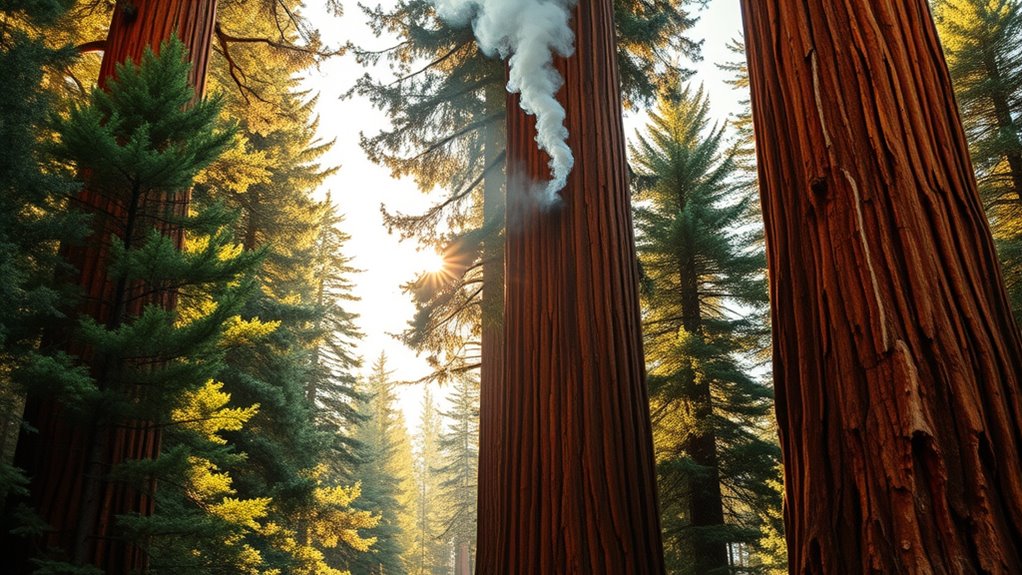

Prescribed burns are helping protect giant sequoias by mimicking natural fire patterns that historically maintained healthy forests. By carefully controlling these fires, forest managers reduce dangerous fuel buildup, lower wildfire risks, and promote the growth of native plants. These burns also create open spaces that allow sunlight to reach young sequoias. If you continue exploring, you’ll discover how fire ecology offers essential hope for safeguarding these majestic trees for future generations.

Prime made for students and young adults
- Fast, free delivery for dorm and study essentials
- Prime Video and Amazon Music included
- Member-only deals
Key Takeaways
- Prescribed burns reduce fuel buildup, lowering the risk of large, uncontrollable wildfires threatening sequoia groves.
- Controlled fires mimic natural fire cycles, promoting sequoia regeneration and ecosystem health.
- Fire management restores balance, preventing overgrowth and protecting the majestic sequoias from fire damage.
- Prescribed burns eliminate invasive species, fostering native plant growth that supports sequoia ecosystems.
- Active fire ecology practices demonstrate that managed fires are vital tools for sequoia conservation and wildfire resilience.
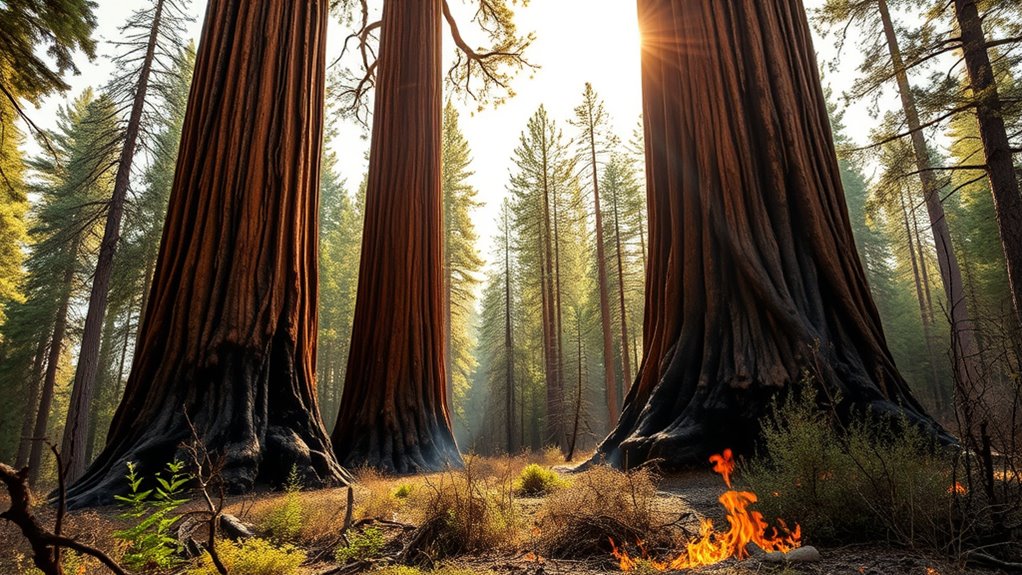
Despite the threat of devastating wildfires, giant sequoias are thriving thanks to the strategic use of prescribed burns. These controlled fires are a key component of fire ecology, an understanding of how natural fires shape and sustain healthy forests over time. Historically, fire played a crucial role in maintaining the balance within sequoia groves, clearing out accumulated fuels and promoting new growth. However, decades of fire suppression disrupted this natural cycle, leading to denser forests filled with dead wood and overgrown underbrush, which now pose an increased risk of uncontrollable wildfires. Recognizing this, forest management agencies have turned to prescribed burns as a proactive approach to restore the natural fire regime and protect these ancient giants.
By intentionally setting and carefully monitoring these fires, forest managers mimic natural fire patterns, reducing the buildup of combustible material. This process not only curbs the severity of future wildfires but also creates a healthier, more resilient ecosystem. Prescribed burns help eliminate invasive species, invigorate native plants, and open up the forest floor, allowing sunlight to reach seedlings and young sequoias. This approach is rooted in a deep understanding of fire ecology—the study of how fire influences forest dynamics—and how it can be harnessed to sustain essential habitats. Without these interventions, the risk of catastrophic fires that could threaten entire groves increases dramatically. Additionally, understanding the role of diversification in forest management can further enhance ecosystem resilience and long-term health.
Furthermore, prescribed burns are a critical part of forest management strategies aimed at conserving sequoia populations. They promote the growth of fire-adapted species, ensuring that sequoias and associated flora can thrive for generations to come. Forest managers carefully plan these burns during ideal weather conditions, balancing the need for effective fuel reduction with safety considerations. This disciplined approach ensures that fires remain controlled and beneficial, rather than destructive. It’s a reminder that fire, when understood and managed properly, isn’t the enemy but a tool for ecological renewal.
As these measures prove successful, it becomes clear that proactive forest management rooted in fire ecology principles offers a beacon of hope. It demonstrates that even in the face of climate change and increasing wildfire threats, we can work with natural processes to safeguard our most treasured landscapes. The resilience of the giant sequoias, thriving amid controlled fires, underscores how a science-based approach to fire management can restore balance, protect biodiversity, and preserve these majestic trees for future generations.
prescribed burn safety equipment
As an affiliate, we earn on qualifying purchases.
As an affiliate, we earn on qualifying purchases.
Frequently Asked Questions
How Do Prescribed Burns Improve Sequoia Seedling Survival Rates?
Prescribed burns improve sequoia seedling survival rates by enhancing seedling resilience and fire adaptation. When you use controlled fires, you reduce competing vegetation and open up nutrient-rich soil, helping seedlings establish stronger roots. This process mimics natural fire cycles, teaching young sequoias to adapt to future wildfires. As a result, the seedlings become more resilient, better able to withstand future fires, and thrive in their fire-prone environment.
What Are the Long-Term Ecological Impacts of Prescribed Burns?
Think of prescribed burns as planting seeds for a healthier future. They enhance soil health by recycling nutrients and reduce fuel buildup, which lowers wildfire severity. Long-term, these burns boost biodiversity impacts by creating diverse habitats for plants and animals. While they may temporarily disturb ecosystems, they ultimately foster resilient landscapes, supporting ecological balance and longevity. The long-term benefits outweigh the short-term disruptions, nurturing ecosystems for generations to come.
Are Prescribed Burns Safe for Nearby Human Communities?
Prescribed burns are generally safe for nearby communities when carefully planned and managed by experts. They help protect ecological balance by reducing wildfire risks, which ultimately enhances community safety. You should stay informed about scheduled burns and follow local guidelines to minimize any hazards. Proper communication and planning guarantee that prescribed burns support both ecological health and community well-being without posing undue risks.
How Often Are Prescribed Burns Conducted in Sequoia Forests?
You’ll find that prescribed burns in sequoia forests typically happen every 5 to 10 years, depending on ecological conditions. Fire management experts carefully plan these burns to maintain ecological balance and reduce wildfire risk. This regular management helps protect the giant sequoias’ unique habitat, ensuring the forest remains healthy and resilient. By conducting burns at these intervals, you support a balanced ecosystem that benefits both the environment and nearby communities.
Can Prescribed Burns Help Prevent Larger, Uncontrollable Wildfires?
Yes, prescribed burns can help prevent larger, uncontrollable wildfires by reducing excess fuel, which fire suppression often leaves behind. You can see how these controlled fires promote ecological balance, encouraging healthy forest growth and decreasing the risk of devastating wildfires. By carefully planning and implementing prescribed burns, you support a safer environment where natural fire cycles maintain the health of sequoia forests and surrounding ecosystems.
As an affiliate, we earn on qualifying purchases.
Conclusion
You can see how prescribed burns act like gentle guardians, clearing the way for giant sequoias to stand tall and proud. These controlled fires are like nature’s own firefighters, clearing out the chaos and making room for new life to flourish. By embracing these burns, you help protect these ancient giants from the wildfires that threaten to swallow them whole. It’s a hopeful dance between fire and forest, ensuring these majestic trees continue to inspire for generations to come.
As an affiliate, we earn on qualifying purchases.
As an affiliate, we earn on qualifying purchases.
Fall Picks
fall essentials
As an affiliate, we earn on qualifying purchases.