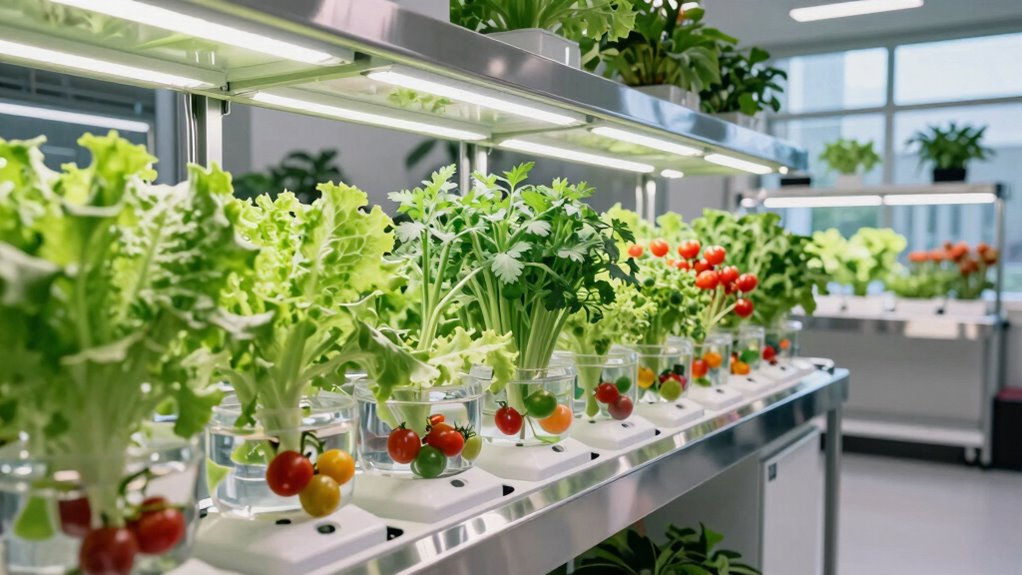

Indoor hydroponic gardens are useful because they let you grow fresh herbs and vegetables year-round without needing outdoor space. They’re space-efficient, fitting easily into kitchens or living rooms, and use vertical or countertop setups to maximize growth. You get precise nutrient delivery and environmental control, which means healthier plants and faster growth. Plus, they conserve water and reduce pests, making them an eco-friendly option. Keep exploring to discover how these features can transform your home gardening experience.

Prime made for students and young adults
- Fast, free delivery for dorm and study essentials
- Prime Video and Amazon Music included
- Member-only deals
Key Takeaways
- Enables year-round, space-efficient cultivation of fresh herbs and vegetables indoors.
- Delivers precise nutrients for faster plant growth and higher yields without soil or pests.
- Allows automated environmental control, ensuring optimal climate conditions for plant health.
- Conserves water through closed-loop systems, reducing waste and supporting sustainability.
- Fits into small spaces like kitchens or living rooms, making gardening accessible and convenient.
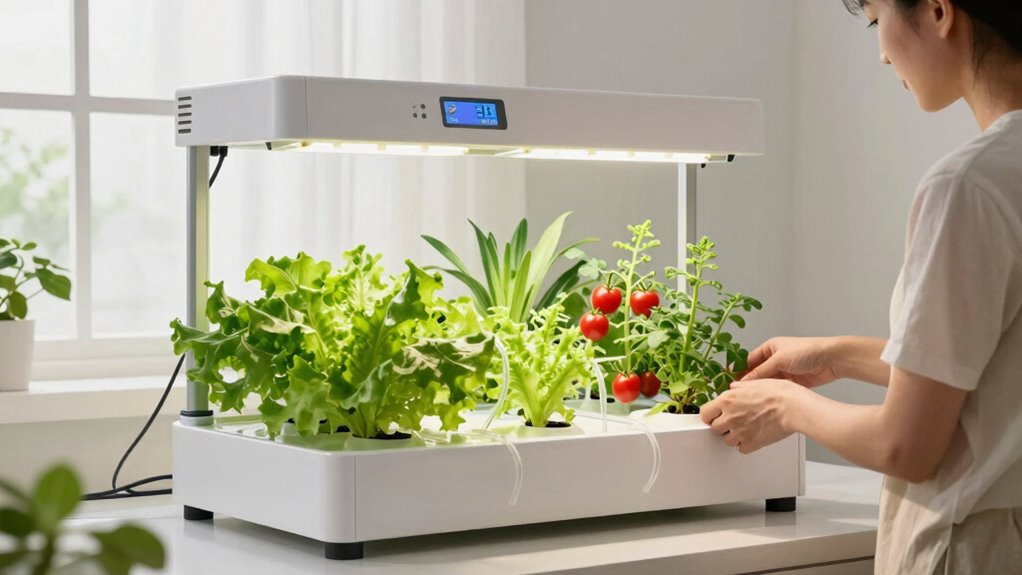
Have you ever considered growing fresh vegetables and herbs right inside your home? Indoor hydroponic gardens make that possible, turning your living space into a productive, green oasis. They’re especially useful if you live in an urban environment where outdoor gardening space is limited or nonexistent. Urban farming through hydroponics allows you to cultivate a variety of plants without needing a backyard or traditional garden plot. Instead, you maximize space vertically or on countertops, making it easy to integrate into your daily routine. This approach not only saves space but also provides a continuous supply of fresh produce, which is a significant advantage in city living.
One of the main reasons indoor hydroponic gardens are so beneficial is their efficiency in plant nutrition. Unlike soil-based gardening, hydroponic systems deliver nutrients directly to the plant roots through a water-based solution. This method ensures plants receive exactly what they need at the right time, promoting faster growth and higher yields. You don’t have to worry about soil quality or pests, which can often limit outdoor gardening. Instead, you maintain control over the entire nutrient process, adjusting the formula as needed to meet the specific requirements of your plants. This precise delivery system means you get healthier, more productive plants with less effort and fewer resources. Additionally, hydroponic systems often incorporate automated monitoring, making it even easier to optimize plant health and growth. A controlled environment is also essential for climate regulation, ensuring optimal conditions regardless of external weather. Proper environmental controls can help prevent issues like mold or temperature fluctuations that could harm your plants. Moreover, indoor hydroponic gardens can help mitigate some of the challenges posed by soil contamination, making them a safer option for growing edible plants. Implementing soil-less cultivation methods can further improve safety and plant health.
Additionally, indoor hydroponic gardens make it easier to grow plants year-round, regardless of the weather outside. You can enjoy fresh herbs, leafy greens, or cherry tomatoes even during winter months or periods of drought. The controlled environment allows you to regulate light, temperature, and humidity, creating ideal conditions for plant growth. With minimal space and effort, you can set up a compact system that fits into your kitchen or living room. This convenience encourages regular harvesting, which means fresher, tastier ingredients for your meals and a more sustainable lifestyle.
Furthermore, hydroponic gardening reduces water waste compared to traditional outdoor gardening. Because the water circulates within a closed system, you use less overall and avoid runoff or evaporation. This eco-friendly aspect appeals to those conscious of conserving resources. Plus, indoor gardening minimizes exposure to pests and weeds, reducing the need for chemical pesticides or herbicides. All these factors combine to make indoor hydroponic gardens a practical, efficient, and sustainable solution for growing nutritious food right at home. Whether you’re an urban dweller or simply want a cleaner, more controlled way to garden, hydroponics offers a modern approach that’s easy to manage and incredibly rewarding.
As an affiliate, we earn on qualifying purchases.
Frequently Asked Questions
How Much Does an Indoor Hydroponic System Typically Cost?
An indoor hydroponic system typically costs between $100 and $500, depending on size and features. When considering cost comparison, smaller, basic setups are more budget-friendly, while larger, automated systems cost more. To save money, follow maintenance tips like regular cleaning and monitoring nutrient levels, which prevent issues and extend the system’s lifespan. Investing wisely guarantees you get the best value and fresh produce year-round.
What Is the Average Lifespan of Hydroponic Garden Components?
You can expect your hydroponic garden components to last about 2 to 5 years, depending on durability and maintenance. Regular cleaning and proper care extend their lifespan, preventing issues like clogging or corrosion. Pumps, lights, and tubing tend to wear at different rates, so keeping up with routine maintenance guarantees your system stays functional longer. Investing in high-quality parts also boosts overall durability, making your indoor garden more reliable over time.
Can Hydroponic Gardens Be Used for Medicinal Plants?
Like a modern-day alchemist, you can definitely use hydroponic gardens for medicinal plants. They excel at herbal cultivation, providing precise control over nutrients, light, and environment, which is essential for medicinal plant care. This method guarantees your herbs stay pure and potent. Whether you’re growing chamomile or lavender, hydroponics offers a clean, efficient way to nurture medicinal plants indoors, making your herbal remedies more accessible and effective.
How Much Space Is Needed for a Small Indoor Hydroponic Setup?
For a small indoor hydroponic setup, you typically need around 2 to 4 square feet of space. This allows for effective space optimization, so your plants grow healthily without feeling cramped. You can customize the setup to fit your available space, using vertical stacking or compact containers. With thoughtful setup customization, even a small area can support a variety of herbs or medicinal plants efficiently.
Are There Specific Lighting Requirements for Different Plants?
Yes, different plants have specific lighting needs that you can’t ignore. You need to pay close attention to lighting duration and light spectrum because they directly influence plant growth and health. Some plants thrive with longer light periods, while others prefer shorter. The right light spectrum can promote flowering or leafy growth. By tailoring these factors, you’ll optimize your indoor garden’s success and guarantee your plants flourish exactly as they should.
countertop hydroponic herb garden
As an affiliate, we earn on qualifying purchases.
As an affiliate, we earn on qualifying purchases.
Conclusion
Indoor hydroponic gardens are like a secret garden right in your home, offering fresh produce year-round and transforming your space into a lush oasis. With minimal space, water, and effort, you can cultivate vibrant herbs and veggies without the hassle of soil. Embrace this modern green revolution, and you’ll find that your indoor garden becomes the heartbeat of your home—an ever-growing reminder that with a little care, nature can thrive indoors just as beautifully as outside.
vertical hydroponic plant system
As an affiliate, we earn on qualifying purchases.
As an affiliate, we earn on qualifying purchases.
automatic hydroponic plant monitor
As an affiliate, we earn on qualifying purchases.
As an affiliate, we earn on qualifying purchases.
Halloween Picks
halloween
As an affiliate, we earn on qualifying purchases.