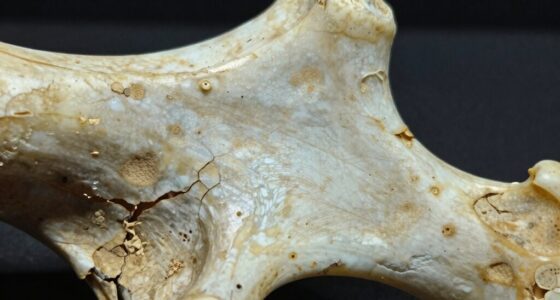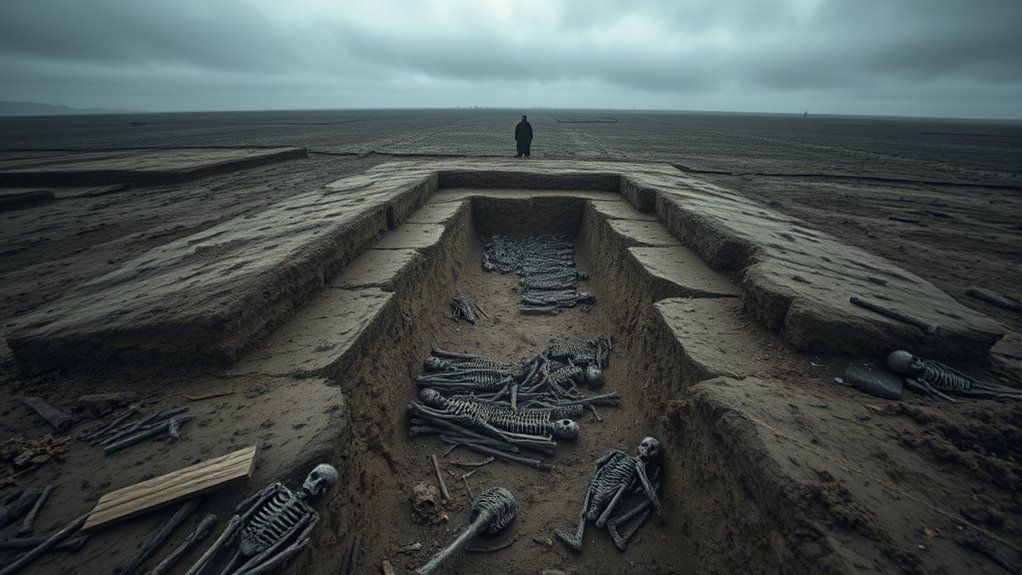

A recent discovery of a medieval Black Death mass grave reveals the devastating scale of the pandemic and how communities responded. You can see evidence of rapid, large-scale burials reflecting societal efforts to manage overwhelming mortality. Archaeological analysis provides insights into burial practices and social upheaval during the crisis. If you’re curious about what this grave uncovers about the plague’s aftermath, keep exploring to uncover more details.

Prime made for students and young adults
- Fast, free delivery for dorm and study essentials
- Prime Video and Amazon Music included
- Member-only deals
Key Takeaways
- Archaeologists have uncovered a medieval mass grave linked to the Black Death, providing direct evidence of the pandemic’s scale.
- Scientific analysis of the remains offers insights into burial practices and societal responses during the crisis.
- DNA testing helps identify the origins of victims, revealing the disease’s spread and impact on different populations.
- Radiocarbon dating confirms the burial dates, enhancing understanding of the plague’s timeline and aftermath.
- The discovery highlights community resilience and shifts in social structures resulting from the Black Death’s devastation.

During the Middle Ages, the Black Death ravaged Europe, killing millions and overwhelming communities. It left a trail of devastation that forever changed the continent’s social fabric. As you explore this dark chapter of history, you’ll find that uncovering mass graves provides essential insights into the scale of the disaster and its aftermath. These graves, often buried beneath layers of soil and forgotten for centuries, serve as stark reminders of how society coped with such overwhelming loss. Archaeologists now turn to advanced archaeological methods to analyze these sites, revealing details about the victims and the community’s response to the plague. Through careful excavation and scientific testing, you can piece together stories that weren’t recorded in written history, understanding the social impact of the Black Death on medieval society.
When archaeologists excavate a medieval mass grave, they don’t just see bones—they see a snapshot of a community in crisis. The location, size, and contents of these graves tell you about how societies prioritized burial practices during times of crisis. For example, mass graves often indicated rapid, large-scale burials when traditional methods couldn’t keep up with the death toll. You’ll notice that archaeological methods like DNA analysis and radiocarbon dating help identify the origins of the victims and the timeline of the outbreak. These techniques uncover details about the disease’s spread and how different social groups were affected, offering a clearer picture of the plague’s social impact. Additionally, mass grave analysis helps uncover the social dynamics and community responses during the crisis.
The discovery of a mass grave also prompts questions about how medieval communities responded to the crisis. Did they establish new burial practices? How did fear and grief influence societal behavior? By studying these graves, you can see evidence of community efforts to manage the dead, providing insight into the resilience and struggles of medieval populations. The social impact of the Black Death extended beyond death; it reshaped societal hierarchies, labor systems, and religious beliefs. Archaeological methods allow you to analyze artifacts, burial arrangements, and pathological evidence that reveal how communities tried to cope with an unimaginable scale of mortality.
Top picks for "medieval black death"
As an affiliate, we earn on qualifying purchases.
Frequently Asked Questions
How Many Individuals Are Estimated to Be Buried in the Mass Grave?
You’re probably wondering how many individuals are buried in the mass grave, and estimates suggest around 50 to 100 people. Based on population estimates and burial density, archaeologists believe the site was used during the Black Death’s peak. The high burial density indicates the urgency and scale of the disaster, revealing the grim reality faced by medieval communities. This discovery helps us understand the scale of the tragedy more clearly.
What Methods Were Used to Date the Remains Accurately?
You can find out how the remains were dated accurately through radiocarbon dating, which measures the decay of carbon isotopes in the bones, providing an approximate age. Additionally, stratigraphic analysis helps by examining soil layers around the grave, offering contextual clues about the period. Combining these methods guarantees a reliable estimate of when the individuals were buried, giving researchers a clearer picture of the plague’s aftermath.
Were Any Artifacts Found Alongside the Skeletal Remains?
You find a broken clay pot among the skeletal remains, revealing its artifact significance in understanding burial rituals. Such artifacts help archaeologists piece together the cultural practices of the time, indicating how communities responded to the plague. In this case, the pot’s placement suggests a ritualistic act or symbolic offering, providing deeper insight into the social and religious aspects of burial procedures during the Black Death era.
How Does This Discovery Compare to Other Black Death Burial Sites?
You’ll notice that this discovery highlights unique historical burial differences compared to other Black Death sites. Unlike some plague sites with isolated graves, this mass grave suggests a rapid, large-scale response to the outbreak. Plague site comparisons reveal variations in burial practices, often influenced by location and available resources. This site’s structure and context provide valuable insights into medieval responses and the scale of devastation during the Black Death.
What Insights Does This Grave Provide About Medieval Burial Practices?
As the saying goes, “you are what you leave behind.” This grave reveals that medieval rituals often emphasized burial symbolism, with bodies carefully arranged to reflect social status or religious beliefs. You can see evidence of ritual practices like coffin use or specific grave orientations, showing a respect for the dead and hope for the afterlife. It highlights how medieval communities approached death with reverence, blending practical needs with spiritual symbolism.
Conclusion
This discovery offers a haunting glimpse into the past, like peeling back a dark curtain to reveal history’s scars. You can almost hear the echoes of those lost souls, reminding us how the Black Death reshaped lives and landscapes. As you reflect on this mass grave, remember that history isn’t just written in books but buried in the earth beneath our feet, waiting to tell the stories of resilience amid tragedy.
Fall Picks
fall essentials
As an affiliate, we earn on qualifying purchases.