
Ocean fertilization experiments aim to boost phytoplankton growth to remove CO₂ from the atmosphere, but results have been mixed. Sometimes, blooms absorb significant carbon, but they often fade quickly, releasing CO₂ back into the air. Risks like disrupting marine ecosystems and creating hypoxic zones also pose challenges. If you want to understand why outcomes vary and what scientists are doing next, there’s more to uncover down the line.

Prime made for students and young adults
- Fast, free delivery for dorm and study essentials
- Prime Video and Amazon Music included
- Member-only deals
Key Takeaways
- Ocean fertilization aims to boost phytoplankton growth to absorb more atmospheric CO2, but results are inconsistent.
- Phytoplankton blooms may fade quickly, releasing stored carbon back into the atmosphere.
- Large-scale interventions risk disrupting marine ecosystems and creating hypoxic zones.
- Effectiveness depends on environmental factors like nutrient dispersal and ocean currents, leading to variable outcomes.
- Monitoring shows mixed success in long-term carbon sequestration and highlights ecological risks.
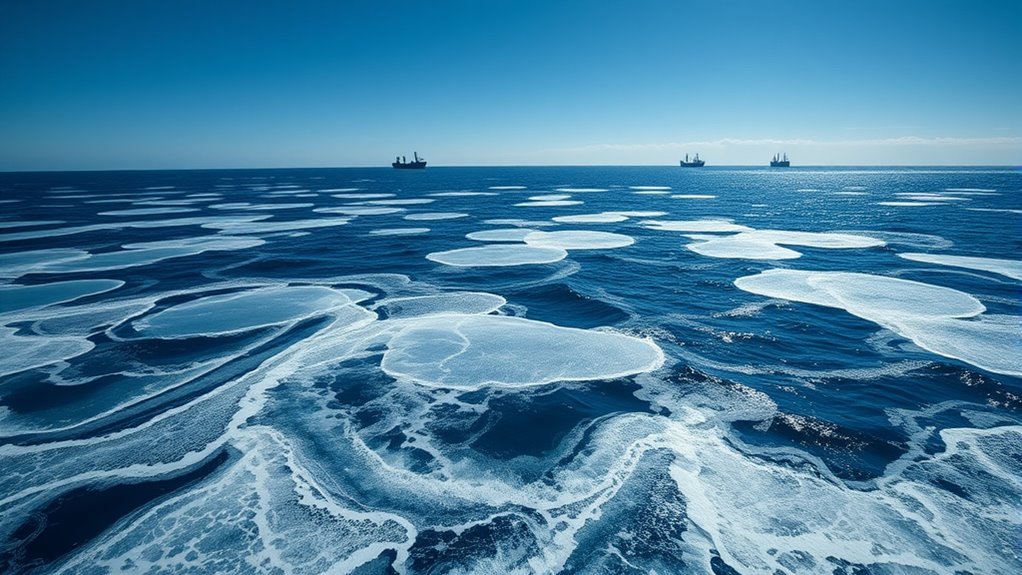
Scientists are launching a groundbreaking geoengineering experiment in the ocean to combat climate change. This initiative involves ocean fertilization, a form of climate intervention designed to enhance the ocean’s natural ability to absorb carbon dioxide (CO2). By adding nutrients like iron to specific ocean regions, researchers aim to stimulate the growth of phytoplankton, microscopic organisms that play a crucial role in sequestering CO2 from the atmosphere. The concept is straightforward: increase phytoplankton populations, and they will draw down more greenhouse gases, helping slow global warming. But the results have been mixed, highlighting both the potential and the challenges of this approach.
As you follow this experiment, you’ll see that ocean fertilization can indeed boost phytoplankton blooms temporarily. When these tiny plants flourish, they absorb CO2 during photosynthesis, and some of that carbon eventually sinks to the deep ocean, effectively removing it from the atmosphere for decades or even centuries. This is the core idea behind climate intervention using ocean fertilization—leveraging natural processes to mitigate climate change. However, the effectiveness depends heavily on various factors, including nutrient dispersal, ocean currents, and the local ecosystem’s response.
Despite initial optimism, the experiment’s outcomes demonstrate that ocean fertilization isn’t a straightforward solution. In some cases, the phytoplankton blooms fade quickly, releasing the absorbed CO2 back into the atmosphere when the organisms decay or are consumed by other marine life. Additionally, large-scale fertilization can have unintended side effects, such as disrupting local marine ecosystems, creating hypoxic zones, or encouraging the growth of harmful algae. These complications underscore the complexity of using ocean fertilization as a climate intervention, reminding you that manipulating natural systems carries risks. Research shows that the carbon sequestration process can vary significantly depending on environmental conditions, which adds to the challenge of predicting outcomes accurately.
You should also recognize that scientists are carefully monitoring these experiments to understand their full implications. They’re analyzing how much CO2 is truly sequestered, the duration of carbon storage, and the potential ecological impacts. The mixed results highlight that ocean fertilization isn’t a silver bullet but a tool that could complement broader climate strategies if applied responsibly. Ultimately, while the experiment showcases promising avenues for climate intervention, it also emphasizes the importance of cautious, well-researched approaches. As scientists continue to refine their methods, your understanding of ocean-based geoengineering will deepen, revealing both its potential and its limitations in the fight against climate change.
iron nutrient ocean fertilization kit
As an affiliate, we earn on qualifying purchases.
As an affiliate, we earn on qualifying purchases.
Frequently Asked Questions
What Are the Potential Long-Term Ecological Impacts?
You might unintentionally affect marine biodiversity and ecosystem resilience over the long term. Altering ocean chemistry could disrupt habitats, endangering species that rely on stable conditions. Changes in CO2 levels may also impact food chains and reproductive cycles, leading to unforeseen ecological shifts. While geoengineering aims to mitigate climate change, it’s vital to take into account these potential impacts to preserve the health and balance of marine ecosystems for future generations.
How Cost-Effective Is This Geoengineering Method?
You’ll find that the cost-effectiveness of this geoengineering method varies based on the cost analysis and economic viability. While initial expenses can be high, ongoing research suggests it could be financially feasible if scaled appropriately. However, you should consider potential ecological costs and long-term benefits. Careful evaluation of the economic viability is essential to determine if this approach offers a sustainable, affordable solution for reducing atmospheric CO2 levels.
Are There International Regulations Governing Such Experiments?
Yes, international protocols and regulatory frameworks govern geoengineering experiments, but their enforcement varies. For example, over 50 countries have signed treaties addressing environmental modifications. You should know that these rules aim to prevent unintended harm, but gaps remain, especially with emerging ocean experiments. Staying informed about evolving international agreements helps guarantee your projects adhere to current standards and contribute responsibly to climate solutions.
How Does This Experiment Compare to Terrestrial Geoengineering?
You might find that ocean geoengineering impacts marine biodiversity and ecosystem resilience differently than terrestrial methods. Ocean experiments directly affect marine environments, risking disruptions to delicate ecosystems, while terrestrial approaches often target atmospheric conditions. Both require careful consideration of ecological consequences. You should stay informed about ongoing research and regulations to understand how these techniques balance climate goals with preserving biodiversity and ecosystem health effectively.
What Are the Risks of Unintended Side Effects?
You risk wreaking widespread woes with unintended side effects. Marine toxicity could threaten marine life, while ecosystem disruption might destabilize delicate ocean balances. Sudden shifts in chemistry could spark unforeseen failures, causing long-lasting damage. You must weigh these risks carefully, understanding that even well-meaning interventions might magnify problems, making ecosystems more vulnerable rather than more viable. Vigilance and caution are essential to avoid these perilous pitfalls.
phytoplankton growth monitoring equipment
As an affiliate, we earn on qualifying purchases.
As an affiliate, we earn on qualifying purchases.
Conclusion
You see, this experiment proves that ocean geoengineering is a double-edged sword, like a fragile balance on a tightrope. While it shows promise in boosting CO2 absorption, the mixed results remind you that nature doesn’t easily bend to human plans. It’s a reminder that every action echoes, and the path to climate solutions is still uncertain. Keep watching, because the ocean’s story is far from finished, and your choices today shape its future.
As an affiliate, we earn on qualifying purchases.
As an affiliate, we earn on qualifying purchases.
Fall Picks
fall essentials
As an affiliate, we earn on qualifying purchases.