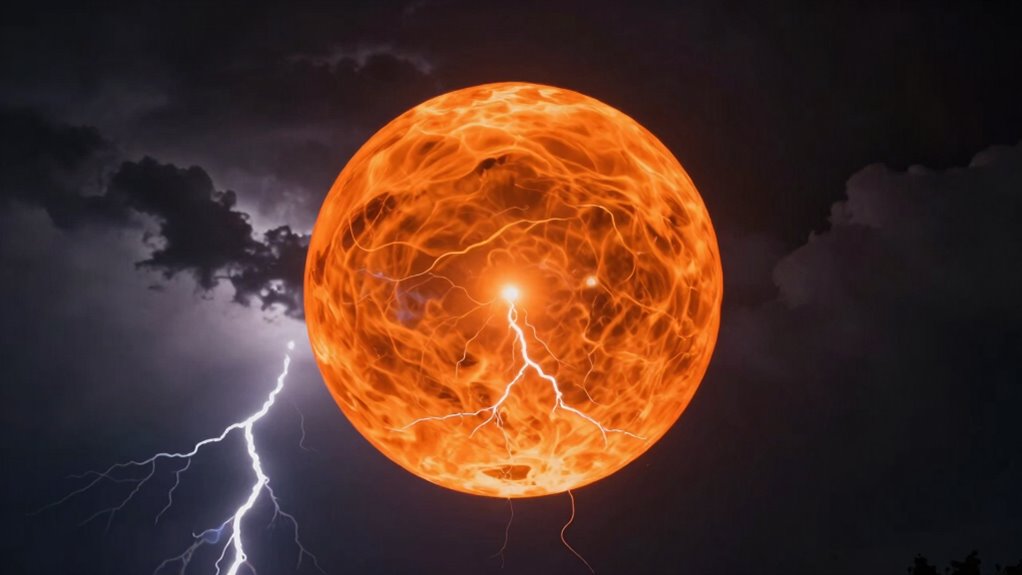
Ball lightning is a mysterious, glowing fireball that appears during thunderstorms, often floating or drifting unpredictably. Scientists have documented many sightings over centuries but still struggle to explain or predict when and where it will show up. Its complex formation involves plasma, electromagnetic fields, and atmospheric conditions that are hard to replicate or forecast. If you want to understand how researchers are unraveling this atmospheric mystery, there’s more to discover.

Prime made for students and young adults
- Fast, free delivery for dorm and study essentials
- Prime Video and Amazon Music included
- Member-only deals
Key Takeaways
- Ball lightning appears as glowing, floating spheres during thunderstorms, lasting seconds and exhibiting unpredictable movement.
- Its formation involves complex plasma, electromagnetic, and chemical interactions, which are not yet fully understood.
- Variability in atmospheric conditions makes predicting when and where ball lightning will occur extremely difficult.
- Limited empirical data and fleeting occurrences hinder development of reliable prediction models.
- Scientific research includes laboratory recreations, advanced sensors, and theoretical modeling to better understand and predict this elusive phenomenon.
Popular right now

Breville Bambino Espresso Machine, Brushed Stainless Steel

De'Longhi Dinamica Plus Fully Automatic Espresso Machine

Dyson Big Ball Multi Floor Canister Vacuum, Yellow
As an affiliate, we earn on qualifying purchases.
What Is Ball Lightning and How Is It Different From Regular Lightning?
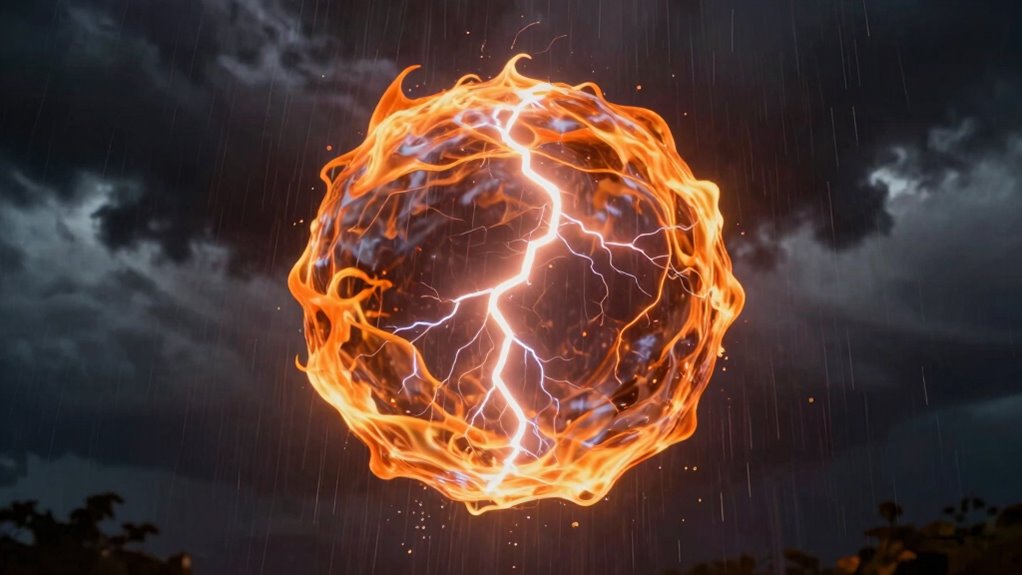
Have you ever wondered what ball lightning is and how it differs from the familiar flashes of regular lightning? It’s a fascinating electrical phenomenon that appears as glowing, floating orbs during thunderstorms. Unlike the quick, jagged strikes of regular lightning, ball lightning moves slowly and can hover, drift, or even pass through windows without causing damage. It remains one of the great atmospheric mysteries, with scientists still trying to understand its nature. Ball lightning produces a soft, luminous glow and sometimes lasts several seconds, unlike the brief flash of traditional lightning. Its unpredictable behavior and elusive form make it unique among atmospheric mysteries. Despite ongoing research, the exact origin and composition of ball lightning remain unknown, fueling curiosity and scientific debate. Understanding atmospheric phenomena continues to challenge researchers and could reveal new insights into natural electrical processes. Some theories suggest that ball lightning may involve complex interactions of plasma and electromagnetic fields, adding to the scientific intrigue. Additionally, advances in atmospheric research might someday help demystify this enigmatic phenomenon. Furthermore, recent studies have proposed that ball lightning could be linked to electrical discharges in plasma, which might eventually lead to better prediction models.
A Brief History of Ball Lightning Reports and Scientific Interest
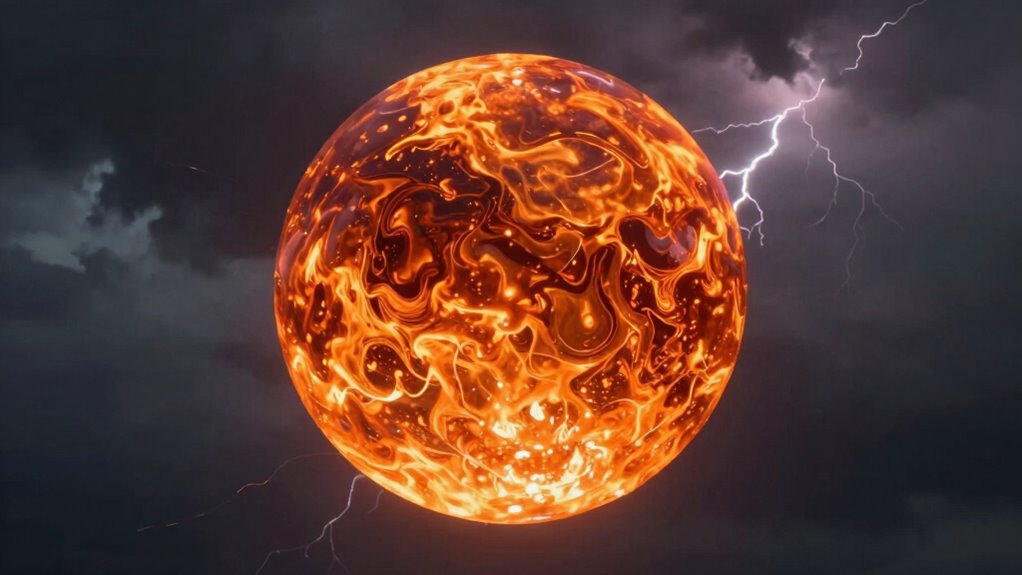
You’ve probably heard about early reports of ball lightning from witnesses who couldn’t explain what they saw. These sightings sparked curiosity among scientists, who wondered if there was more to this mysterious phenomenon. Over time, the growing number of accounts and experiments kept the scientific community intrigued and enthusiastic to understand it better. The phenomenon remains unexplained by current science, fueling ongoing research and speculation.
Early Sightings Documented
Early reports of ball lightning date back centuries, capturing the curiosity of both laypeople and scientists alike. Historical accounts reveal numerous eyewitness testimonies describing glowing, floating spheres appearing during thunderstorms. These accounts span different cultures and eras, often mentioning strange lights that move unpredictably and sometimes vanish suddenly. Many of these early sightings lacked scientific explanation but sparked interest in understanding the phenomenon. Some reports describe the balls passing through windows or bouncing on the ground, adding to their mysterious nature. Despite limited technology at the time, these accounts provided valuable clues about ball lightning’s behavior. Additionally, the concept of Free Floating phenomena helps explain some of the seemingly independent movement of these luminous spheres. Moreover, advances in scientific instrumentation today enable researchers to analyze these events more closely, though many aspects of ball lightning still elude understanding. Today, these historical accounts remain a vital foundation for scientists, highlighting the need for further research into this elusive and fascinating phenomenon.
Scientific Curiosity Grows
As eyewitness reports of glowing orbs during thunderstorms accumulated over centuries, scientists became increasingly intrigued by ball lightning’s mysterious nature. These rare meteorological phenomena challenged traditional ideas about electrical discharges in storms. Researchers documented sightings across cultures, sparking scientific curiosity about their origin and behavior. In the late 19th and early 20th centuries, reports grew more systematic as scientists attempted to observe and replicate these glowing orbs. While their fleeting nature and unpredictable appearances made study difficult, interest persisted because understanding ball lightning could unseal secrets about atmospheric electrical discharges. This curiosity led to experiments, theories, and ongoing debates about whether these luminous balls are a natural form of electrical discharge or something more complex. The phenomenon’s elusive nature continues to captivate scientific inquiry today. Additionally, the local weather patterns in regions like the Midwest are believed by some to influence the frequency of ball lightning occurrences.
How Do Scientists Think Ball Lightning Forms? (Main Theories)

Scientists have proposed several main theories to explain how ball lightning forms, though no single explanation has gained universal acceptance. One popular idea suggests that plasma formations created during thunderstorms generate the glowing, spherical shapes you observe. These plasma formations might result from intense electrical discharges interacting with atmospheric phenomena, creating a self-sustaining, luminous ball. Another theory proposes that ball lightning involves complex chemical reactions within the air, producing a plasma-like state that persists longer than typical lightning sparks. Some scientists believe that electromagnetic fields trap energy in certain atmospheric conditions, forming stable plasma spheres. Despite these ideas, the exact processes remain elusive, and the rarity and fleeting nature of ball lightning make it challenging to study. Still, research continues to uncover how these mysterious fireballs could originate.
Why Is Predicting Ball Lightning So Difficult?

You can’t predict ball lightning because it forms under unpredictable conditions that are hard to identify in advance. Its physical properties are complex and not fully understood, making it tough to model or anticipate. As a result, even experienced scientists find it challenging to forecast when and where ball lightning will appear. Advanced scientific understanding of this phenomenon remains limited, further complicating prediction efforts. Additionally, the unknown formation mechanisms contribute to the difficulty in developing reliable prediction models. The complex and variable nature of the phenomenon adds another layer of difficulty for researchers trying to study it, especially given how little is known about its emergent behaviors. Furthermore, the rare and fleeting occurrences of ball lightning make empirical data collection difficult, hindering comprehensive study.
Unpredictable Formation Conditions
Predicting ball lightning remains a challenge because its formation depends on a complex and often unpredictable interplay of atmospheric conditions. Variations in atmospheric electricity create fleeting environments where ball lightning can emerge unexpectedly. Factors like electric charge buildup, local humidity, and temperature fluctuations all influence its formation, but they don’t follow consistent patterns. This makes it difficult to forecast when and where ball lightning might appear, especially during thunderstorms. For you, understanding these unpredictable conditions is essential for lightning safety, but the variability keeps scientists from developing reliable prediction models. Without clear indicators, ball lightning continues to appear without warning, emphasizing the need for ongoing research to better comprehend its elusive formation process.
Complex Physical Properties
The physical properties of ball lightning are remarkably complex, making its behavior difficult to understand and anticipate. You need to take into account lightning physics and atmospheric electricity, which involve dynamic processes like charge transfer, plasma states, and electromagnetic interactions. Unlike typical lightning, ball lightning can hover, move unpredictably, or even pass through obstacles, indicating unique physical traits. Its composition may include ionized gases, microplasmas, or exotic states of matter, adding layers of complexity. These properties are influenced by fluctuating electric fields and atmospheric conditions, which are notoriously hard to measure accurately. Because of this, predicting how ball lightning behaves—its stability, movement, and lifespan—remains a significant challenge. Its complex, multi-faceted physical nature keeps scientists searching for better models and explanations.
Notable Incidents and Documented Cases of Ball Lightning

Throughout history, numerous eyewitness accounts and scientific reports have documented the mysterious phenomena of ball lightning. These ball lightning sightings often occur during thunderstorms and are marked by glowing, floating orbs that move unpredictably. Some notable cases include a 1942 incident in Florence, Italy, where a luminous sphere entered a house and caused damage, and a 1988 event in France, where a ball lightning incident destroyed a car. Many documented phenomena involve objects that linger for several seconds or minutes before vanishing or exploding. These cases have left vivid impressions on witnesses, and many remain unexplained to this day. Despite advances in research, the unpredictability and rarity of these incidents make them difficult to study, fueling ongoing scientific curiosity. The unpredictability of ball lightning continues to challenge researchers, highlighting the need for further investigation into this elusive phenomenon.
How Are Researchers Studying Ball Lightning Today?
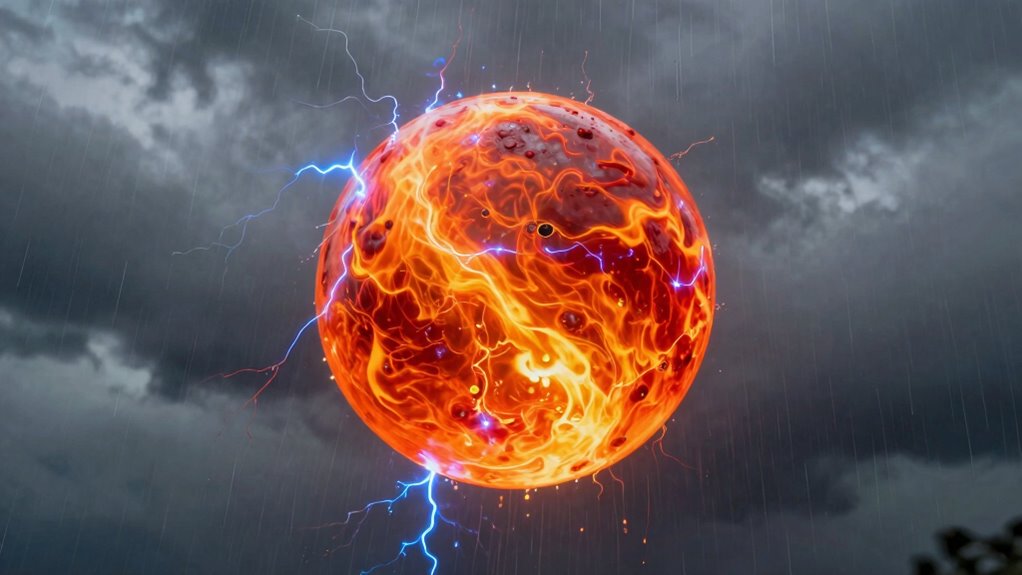
Researchers today approach the study of ball lightning with a combination of experimental recreations, advanced technology, and theoretical modeling. They use innovative research methodologies to better understand this elusive phenomenon. One key focus is ball lightning detection, where scientists develop sensors and monitoring systems to capture real-time data during thunderstorms. These detection methods help identify conditions that produce ball lightning and improve observation chances. Laboratory experiments also attempt to recreate ball lightning under controlled conditions, providing insights into its formation and properties. Meanwhile, computational models simulate the plasma physics involved, offering theoretical explanations for its behavior. Additionally, atmospheric conditions are closely analyzed to determine their role in ball lightning formation. Researchers are also exploring electromagnetic phenomena that may be associated with the phenomenon, which could shed light on its underlying mechanisms. The development of scientific instrumentation allows for more precise measurements, further aiding in understanding this mysterious event. Advances in sensor technology are enabling researchers to detect subtle signals associated with ball lightning, which were previously difficult to observe. For example, the integration of real-time data collection systems helps capture transient events, increasing the likelihood of successful observations. By combining these approaches, researchers aim to unravel the mystery of ball lightning, even though consistent real-world observations remain challenging. This multi-pronged strategy advances our understanding of this enigmatic fireball phenomenon.
Can We Detect or Observe Ball Lightning in Real Time?

Detecting or observing ball lightning in real time remains a significant challenge due to its unpredictable nature and fleeting appearance. Researchers rely on advanced sensor technology, including optical detection systems, to catch these rare events. Optical sensors can monitor electromagnetic emissions, visible light, and other signals associated with ball lightning, but their effectiveness depends on precise timing and placement. Modern sensor arrays aim to identify the unique optical signatures of ball lightning as it occurs, but the phenomenon’s brief duration often makes real-time detection difficult. Despite technological progress, capturing consistent, real-time observations remains elusive. Technological advancements continue to push the boundaries of what is possible in real-time detection efforts, especially as new sensor technologies are developed and refined. Improving sensor sensitivity and deploying multiple detection methods increases your chances of witnessing this elusive phenomenon as it happens, but complete certainty still eludes scientists today. Additionally, integrating multi-modal detection systems can enhance the likelihood of capturing these fleeting events by combining different sensing techniques.
What Would It Take to Predict When and Where Ball Lightning Appears?
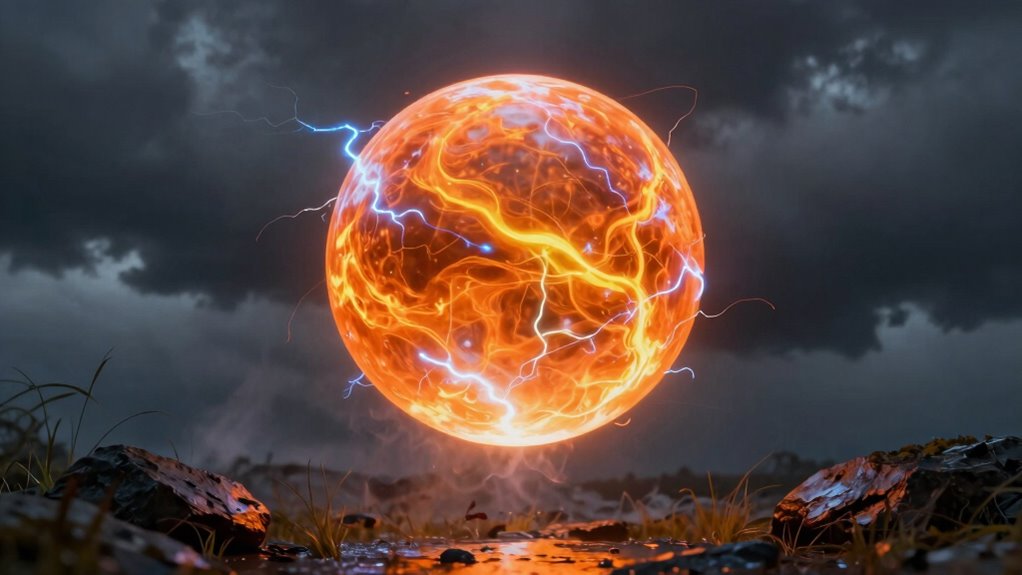
Predicting when and where ball lightning will appear requires a deep understanding of the environmental conditions that foster its formation. You need to analyze electrical phenomena, such as thunderstorms and lightning strikes, which often precede ball lightning events. Additionally, atmospheric chemistry plays a vital role; specific gas compositions and ionization levels can influence its appearance. Currently, scientists lack detailed models that connect these factors reliably, making prediction extremely difficult. To improve accuracy, you’d need advanced sensors capable of monitoring subtle electrical and chemical changes in real-time. Combining data from atmospheric chemistry with insights into electrical phenomena might reveal patterns or triggers for ball lightning, but such predictive capabilities remain elusive without a thorough understanding of the complex interactions involved. Understanding environmental triggers remains a key challenge in developing reliable prediction methods.
The Future of Ball Lightning Research: Will We Unlock Its Mysteries?
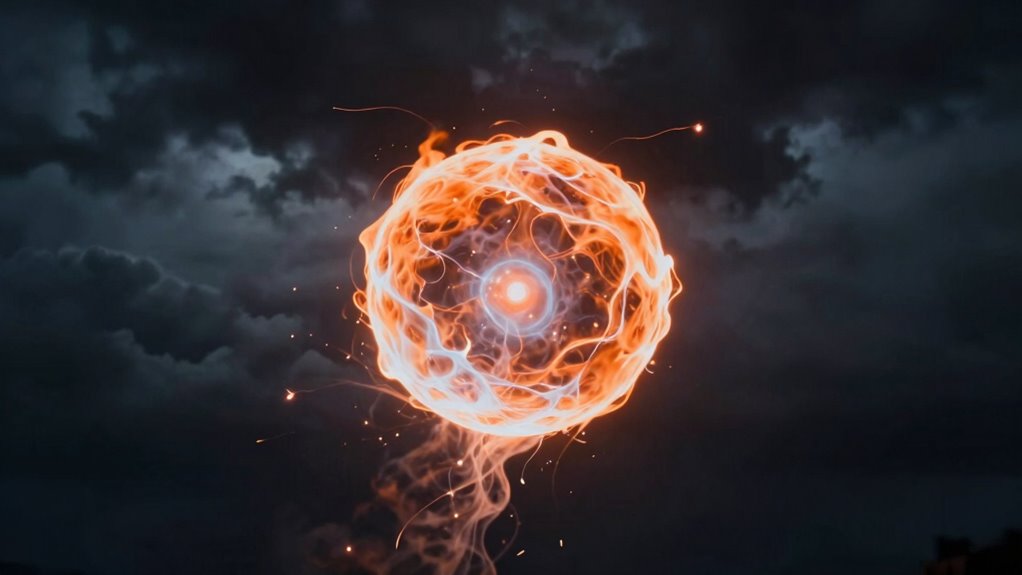
As technology advances and scientific tools become more sophisticated, the possibility of revealing the mysteries of ball lightning grows increasingly realistic. Researchers are now exploring quantum effects that may explain its fleeting stability and unusual behavior, pushing beyond classical theories. Additionally, atmospheric chemistry plays a vital role, as understanding the complex interactions of ions, aerosols, and electromagnetic fields could disclose how these luminous phenomena form and persist. Future studies will likely combine high-resolution sensors, advanced simulations, and interdisciplinary approaches to piece together the puzzle. While predicting ball lightning remains a challenge, ongoing research suggests we’re closer than ever to uncovering its true nature. With continued innovation, you might see the day when science fully demystifies this elusive, entrancing fireball.
Frequently Asked Questions
Has Ball Lightning Ever Caused Significant Damage or Injury?
Yes, ball lightning has caused damage and injury in some historical incidents. You might find injury reports from past encounters where the glowing orbs damaged property or injured people nearby. Although rare, these events demonstrate that ball lightning can be dangerous, especially if it strikes a person or combustible material. Your awareness of these incidents helps underline the unpredictable and potentially harmful nature of this mysterious phenomenon.
Are There Any Potential Practical Applications for Ball Lightning?
Have you ever wondered if ball lightning could have practical uses? While scientists still struggle with understanding and predicting it, potential technological applications exist. If we develop effective ball lightning containment techniques, it might serve as a novel energy source or a high-intensity light for specialized tasks. Unleashing these possibilities could revolutionize energy storage and lighting, turning a mysterious natural phenomenon into a valuable technological asset.
Can Ball Lightning Occur Indoors or Only Outdoors?
Ball lightning can occur both indoors and outdoors, though it’s rare indoors. You should prioritize indoor safety by ensuring proper lightning containment measures, as unexpected ball lightning could pose risks. While scientists still struggle to predict it, understanding that it might appear inside your home means staying cautious. Keep electrical systems well-maintained and avoid contact with conductive objects during storms to reduce potential dangers from this mysterious phenomenon.
How Does Ball Lightning Interact With Electronic Devices?
You might find that ball lightning causes electrical interference and device malfunctions, which is why about 30% of unexplained electronic failures are linked to unusual atmospheric events. When it interacts with electronics, it can induce surges or short circuits, disrupting normal operation. This unpredictable behavior makes ball lightning a mysterious phenomenon, often leading to unexplained power outages or device damage, especially during thunderstorms.
Are There Cultural or Mythological References to Ball Lightning?
You’ll find mythological symbolism and cultural legends often depict ball lightning as a divine or supernatural sign. Many cultures see it as a spirit or messenger from the gods, embodying mystery and power. In some traditions, it’s linked to mythological stories of lightning gods or celestial beings, representing divine intervention or omens. These references reflect humanity’s long-standing fascination with this elusive, fiery phenomenon and its symbolic significance.
Conclusion
If you’re enthralled by the curious, chaotic charm of ball lightning, you’ll find that understanding remains elusive. Despite dedicated discoveries and daring experiments, predicting this fiery phenomenon still puzzles scientists. With each effort, we inch closer to clarity, but the mystery persists. Stay hopeful, for science’s spark might someday solve this enigmatic energy. Until then, embrace the excitement of the unknown and keep chasing the mesmerizing, combustible, and curious world of ball lightning.