
The Great Attractor is a massive gravitational anomaly that pulls galaxies, including the Milky Way, through space. It’s made up of a dense core of dark matter and visible matter that exerts a strong gravitational pull. This causes large-scale galaxy motions and cosmic flows across hundreds of millions of light-years. Though hard to observe directly because of dust and obscuration, advancements reveal how dark matter shapes our universe’s structure—and there’s more to uncover about its hidden influence.
Key Takeaways
- The Great Attractor’s gravity, mainly from dark matter, pulls our galaxy and others toward a massive cosmic region.
- It resides behind the Zone of Avoidance, making direct observation challenging due to dust and gas.
- The Attractor influences galaxy motions within the cosmic web, guiding large-scale galaxy flows over hundreds of millions of light-years.
- Dark matter’s unseen mass dominates the Attractor’s pull, shaping galaxy trajectories and large-scale structures.
- Advances in infrared and X-ray astronomy help map its influence despite observational obstacles.
infrared telescope for astronomy
As an affiliate, we earn on qualifying purchases.
As an affiliate, we earn on qualifying purchases.
What Is the Great Attractor and Why Does It Matter?
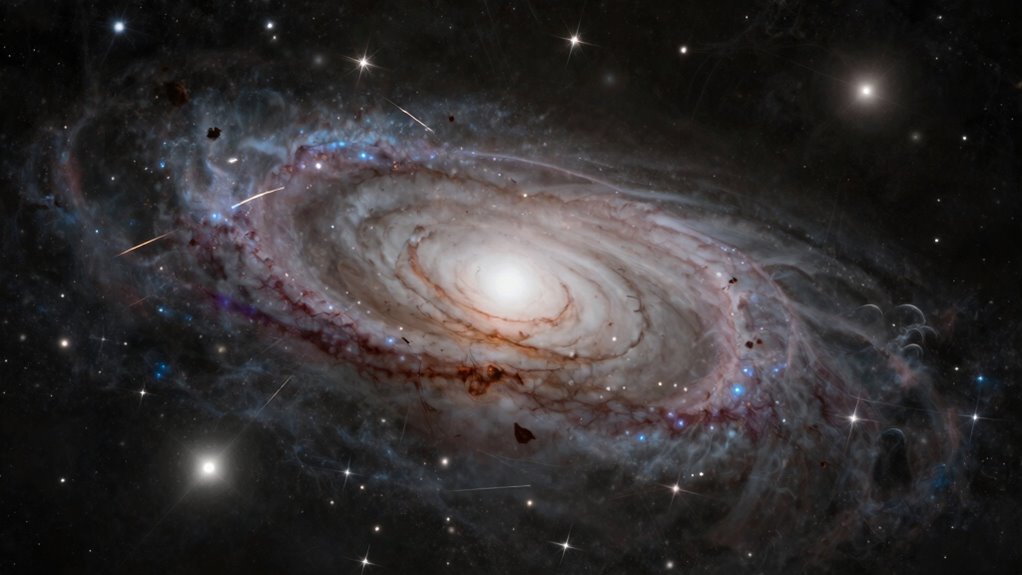
Have you ever wondered what pulls galaxies across the universe? It’s the Great Attractor, a mysterious region with immense gravitational influence. This massive concentration of matter affects galactic trajectories, causing galaxies, including our own, to drift toward it. Although we can’t see it directly because of cosmic dust, its gravity shapes the movement of galaxies over millions of light-years. The Great Attractor isn’t a single object but a region with a dense cluster of galaxies and dark matter, pulling everything nearby. Its gravitational influence is so strong that it helps explain why galaxies don’t drift apart completely. Interestingly, ongoing research into the large-scale structure of the universe continues to shed light on the nature of this cosmic pull. The gravitational effects observed there are key to understanding galaxy clustering and how cosmic mass distributions influence the universe’s evolution. By studying these mass concentrations, scientists gain insights into the distribution of dark matter, which plays a crucial role in the universe’s large-scale behavior. Understanding this cosmic pull reveals how large‑scale structures influence galaxy movement and shape the universe’s motion and evolution.
As an affiliate, we earn on qualifying purchases.
How Do Galaxies Like the Milky Way Move Toward It?
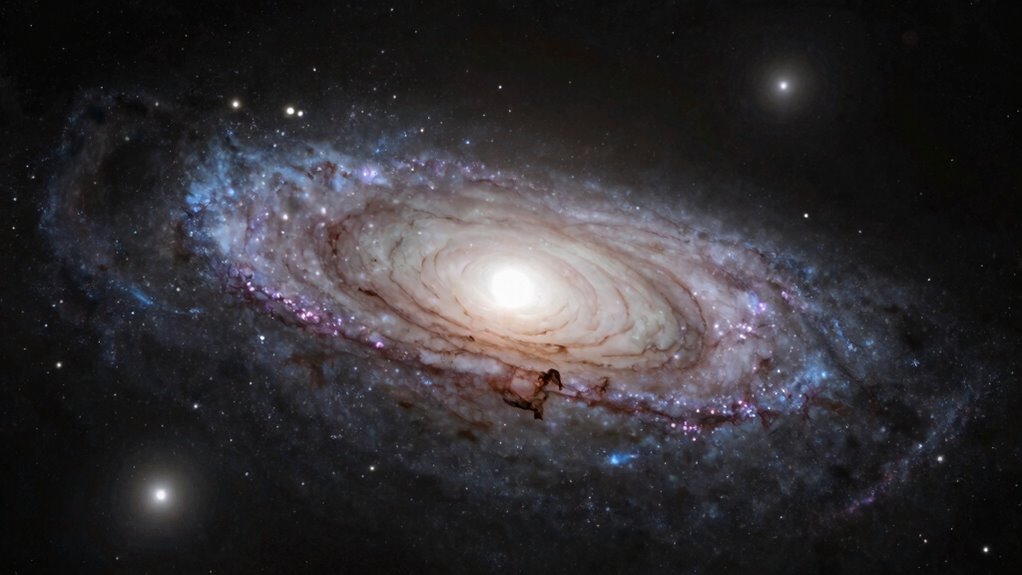
Ever wonder how galaxies like the Milky Way move toward the Great Attractor? It all comes down to galaxy dynamics and cosmic drift. Gravity pulls galaxies toward dense regions, creating a flow across the universe. As galaxies orbit within the cosmic web, they don’t stay still; instead, they drift gradually toward the Attractor, which acts like a cosmic sink. Your galaxy’s movement results from these gravitational forces working over millions of years, causing a slow but steady journey through space. This cosmic drift is a key part of understanding large-scale structure and how matter distributes itself in the universe. Additionally, the development of European cloud servers supports the analysis of cosmic data, allowing scientists to better understand these large-scale movements. These technological advances also enhance our ability to analyze cosmic flows, which are essential for studying the universe’s expansion and structure. So, the Milky Way isn’t just sitting still—it’s moving, pulled along by the invisible but powerful forces shaping the cosmos.
As an affiliate, we earn on qualifying purchases.
Why Is the Great Attractor Difficult to Observe?
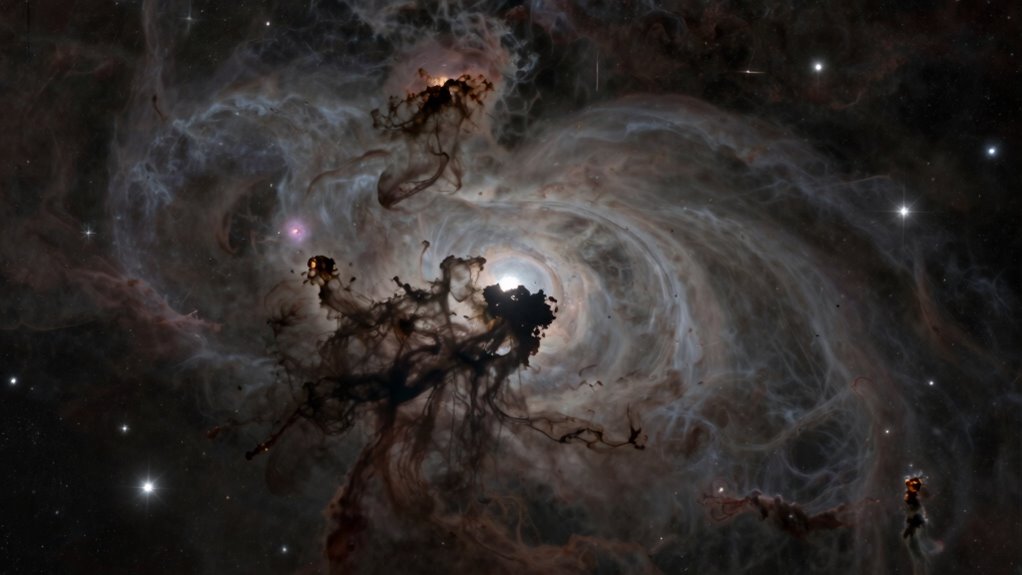
Why is the Great Attractor so hard to observe? Cosmic obscuration makes it difficult because dense clouds of gas and dust block our view, especially in the direction of the Zone of Avoidance. Additionally, dark matter’s presence means we can’t see it directly, only infer its effects on galaxy motions. To understand this better:
- Cosmic obscuration hides the Attractor behind the Milky Way’s dense regions.
- The region’s dust and gas absorb and scatter light, preventing clear observations.
- Dark matter’s presence means we can’t see it directly, only infer its effects on galaxy motions.
- Limitations of current telescopes restrict our ability to penetrate these obscured areas effectively.
- Technological limitations of current instruments further hinder our observations in these regions. Moreover, advancements in multi-wavelength astronomy are gradually helping researchers see through cosmic dust, though challenges remain. Efforts to develop more sensitive detectors are also providing new opportunities to explore these hidden regions. Improving data analysis techniques helps extract signals from noisy, obscured data, making it easier to study the Great Attractor despite observational hurdles.
All these factors combine to make studying the Great Attractor a significant challenge for astronomers.
galaxy simulation educational kit
As an affiliate, we earn on qualifying purchases.
As an affiliate, we earn on qualifying purchases.
What Are the Latest Discoveries About the Great Attractor?
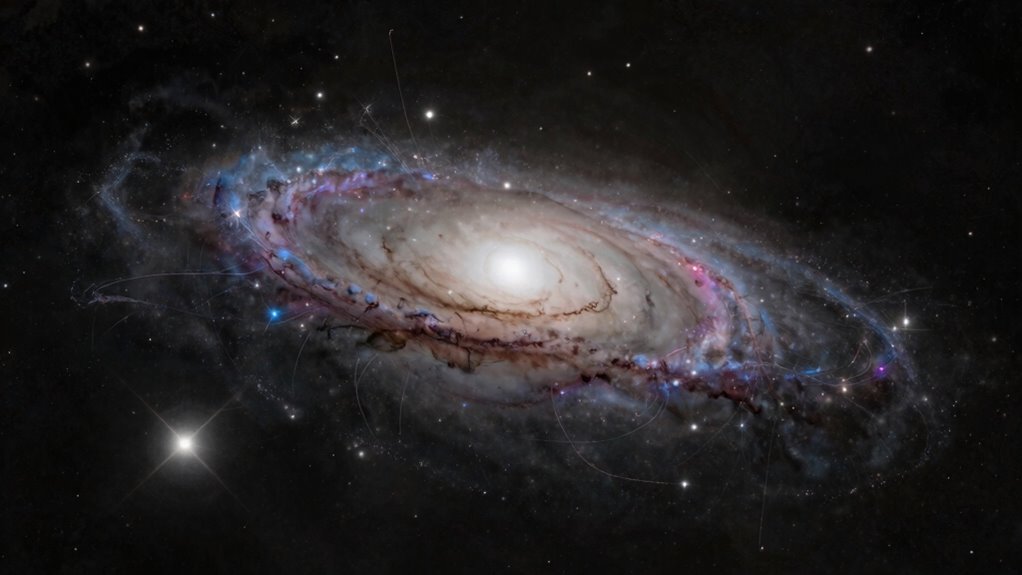
Recent advancements in mapping techniques have revealed more about the mass hidden within the Great Attractor. Scientists now understand how this dense concentration influences cosmic flows across the universe. These discoveries are reshaping our view of how large-scale structures shape the cosmos, highlighting the importance of cosmic structure in understanding the universe’s evolution. Additionally, improved galaxy surveys help astronomers better estimate the amount of dark matter present, which plays a crucial role in the gravitational pull exerted by the Great Attractor. Moreover, enhanced deep-sky imaging techniques allow for more detailed observations of obscured regions, providing clearer insights into the hidden mass concentrations and their impact on cosmic movements. Recent advances in observational technology are also enabling scientists to detect subtler gravitational effects, further refining our understanding of these cosmic phenomena.
New Mapping Techniques
Advancements in mapping techniques have considerably improved our understanding of the Great Attractor, allowing scientists to peer through cosmic dust and obscuring matter more effectively. These innovations have enhanced our grasp of galactic dynamics and dark matter‘s role in large-scale structures. Notable developments include:
- Infrared surveys that penetrate dust clouds, revealing hidden galaxy clusters.
- X-ray observations that detect hot gas associated with massive structures.
- Improved redshift measurements refining movement models of nearby galaxies.
- Computer algorithms that analyze complex data to map unseen mass concentrations.
These methods have uncovered more precise details about the mass distribution, helping us understand how dark matter influences cosmic flows. As a result, we’re closer to unraveling the forces shaping the universe’s large-scale structure and the true nature of the Great Attractor.
Hidden Mass Concentration
What new insights have recent discoveries revealed about the hidden mass within the Great Attractor? Scientists now believe that dark matter accounts for a significant portion of this unseen mass. Unlike visible galaxies and gas, dark matter doesn’t emit light, making it difficult to detect directly. Its gravitational pull plays a pivotal role in shaping the Attractor’s immense influence. Advanced observations suggest that dark matter forms a vast, complex web that anchors the concentration, intensifying the gravitational pull pulling galaxies toward it. These findings help explain why the Great Attractor exerts such a strong gravitational force, despite seeming invisible. As researchers refine their techniques, they’re uncovering more about this mysterious, hidden mass, revealing how dark matter drives the universe’s large-scale structure and influences cosmic flows.
Impact on Cosmic Flow
The Great Attractor’s immense gravity considerably influences the motion of galaxies across the universe. Recent discoveries reveal its significant role in shaping cosmic flow, driven by galactic dynamics and dark matter. Researchers now understand that:
- The Attractor causes a large-scale peculiar velocity, pulling galaxies toward it.
- Dark matter within it amplifies gravitational effects beyond visible matter.
- Its influence extends across hundreds of millions of light-years, affecting galaxy clusters.
- New data suggests the presence of filamentary structures funneling matter into the Attractor, enhancing cosmic flow.
These insights help us comprehend how dark matter and galactic dynamics govern large-scale structures, revealing the Attractor’s pivotal role in cosmic evolution and motion.
Where Does the Great Attractor Fit in the Cosmic Web?
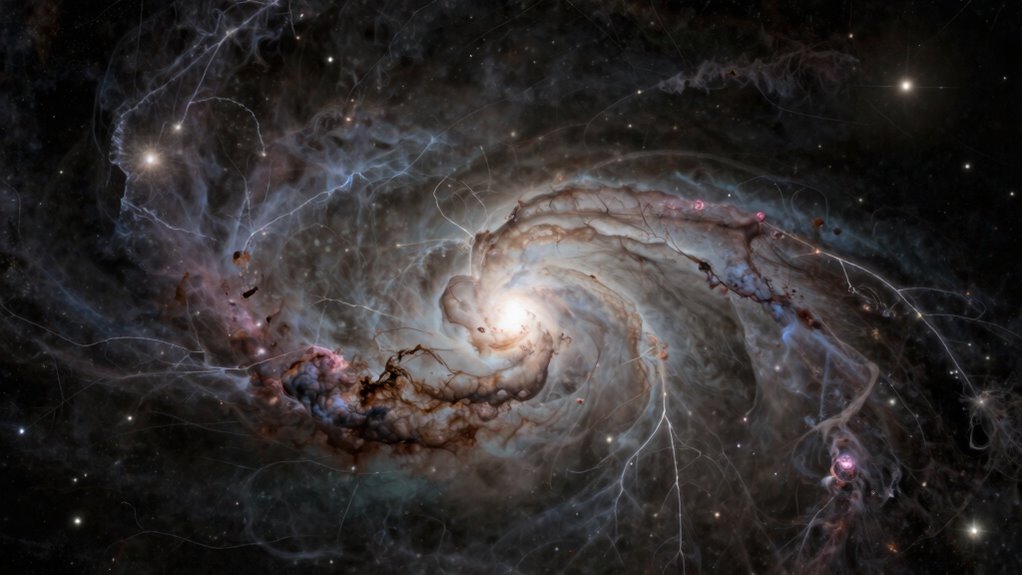
Nestled within the vast cosmic web, the Great Attractor acts as a gravitational anchor that shapes the motion of galaxies in its neighborhood. It sits at a junction where multiple cosmic filaments converge, forming a dense cluster of matter. This region’s dark matter distribution plays a pivotal role, providing the unseen mass that amplifies gravity’s pull. As you observe the cosmic web, you’ll notice how these filaments channel galaxies toward the Attractor, indicating its central position within this large-scale structure. The Attractor’s location highlights how dark matter and cosmic filaments work together to organize matter in the universe. Understanding where it fits helps clarify the universe’s overall architecture and how gravity drives the movement of galaxies across vast distances. dark matter distribution is fundamental to understanding the Attractor’s influence on galaxy movement.
Could There Be Hidden Mass Behind the Great Attractor?
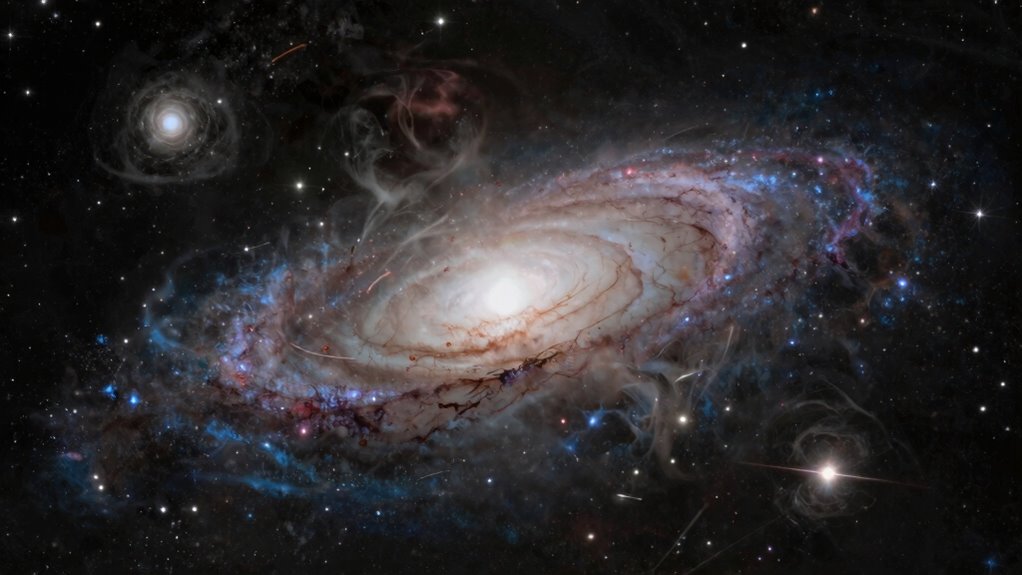
Scientists suspect that much of the mass behind the Great Attractor remains unseen, hidden in the form of dark matter. This mysterious substance exerts a gravitational pull that influences galaxy movements but isn’t directly detectable. To understand this hidden mass, consider these points:
- Dark matter accounts for most of the universe’s mass, affecting galaxy clusters’ motion.
- Its gravitational pull helps explain the observed velocities of galaxies near the Great Attractor.
- Even without emitting light, dark matter shapes large-scale cosmic structures.
- Advanced instruments and simulations aim to map dark matter’s distribution, revealing what’s hidden behind the observable universe.
This unseen mass could be key to understanding the true scale of the gravitational forces pulling galaxies toward the Great Attractor.
What Does the Great Attractor Reveal About Cosmic Motion?
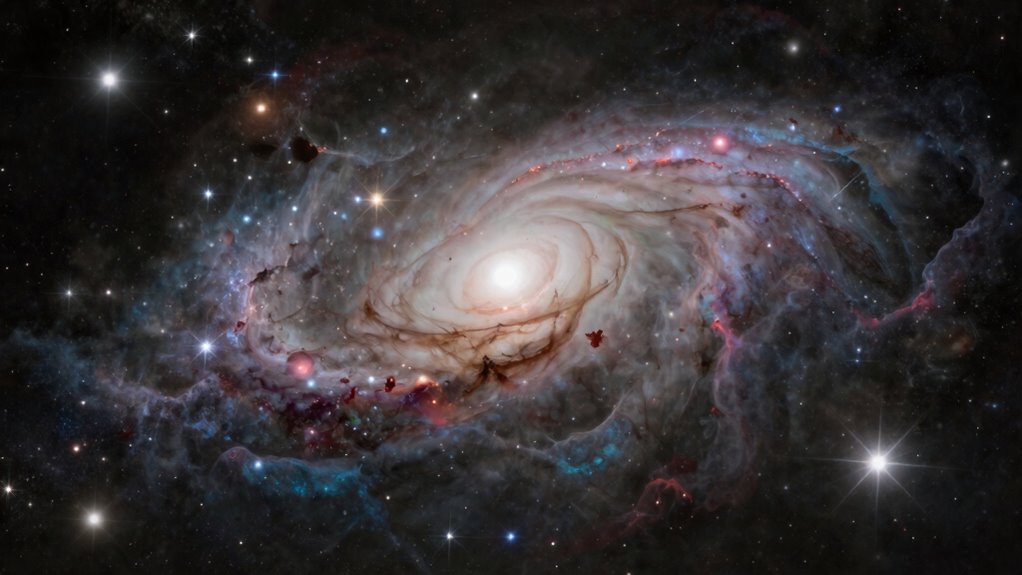
Observations of galaxy movements reveal that the universe isn’t static; rather, galaxies are constantly in motion, influenced by gravity. The Great Attractor highlights how dark matter shapes these motions, as visible matter alone can’t account for the observed gravitational pull. Its presence suggests gravitational anomalies—regions where gravity is stronger than expected—pointing to unseen mass. This unseen mass, primarily dark matter, drives large-scale cosmic flows, pulling galaxies toward the Attractor. By studying these movements, you learn how dark matter influences the universe’s structure and evolution. The Great Attractor thus serves as a cosmic signpost, revealing that dark matter and gravitational anomalies play an essential role in shaping the cosmic motions we observe today.
Frequently Asked Questions
How Large Is the Mass of the Great Attractor?
The mass of the Great Attractor is estimated to be around 10,000 times the galactic mass of the Milky Way, roughly 10^16 solar masses. Its immense cosmic density creates a gravitational pull that influences the motion of galaxies in our local universe. You can think of it as a massive cosmic sink, drawing in galaxies and shaping the large-scale structure of space, although its exact composition remains a mystery.
Does the Great Attractor Influence Local Galaxy Groups?
Yes, the Great Attractor influences local galaxy groups by affecting galactic interactions and shaping cosmic flow patterns. Its immense gravity pulls galaxies toward it, causing them to move in specific directions and speeds. You can think of it as a cosmic anchor, guiding the movement of nearby galaxies and creating flow patterns that help astronomers understand the large-scale structure of the universe. This influence extends across vast cosmic distances, shaping the universe’s dynamic behavior.
Could Dark Energy Be Affecting the Great Attractor’s Pull?
Dark energy effects likely influence the Great Attractor’s pull by driving cosmic expansion, which counteracts gravitational forces. As dark energy accelerates the universe’s expansion, it may weaken the gravitational attraction of massive structures like the Great Attractor over long periods. However, current observations suggest that, at this scale, gravity still dominates, so dark energy’s effects are subtle but could become more significant in shaping large-scale cosmic flows in the future.
Are There Any Nearby Structures Competing With the Great Attractor?
Think of your cosmic neighborhood as a bustling city, where gravitational rivals vie for attention. Nearby structures like the Laniakea Supercluster, Virgo Cluster, and the Shapley Supercluster compete with the Great Attractor‘s pull. While the Great Attractor dominates locally, these cosmic giants exert their own gravitational influences, creating a dynamic tug-of-war that shapes our galaxy’s journey through space.
How Do Scientists Measure the Velocity of Our Galaxy Relative to It?
You measure your galaxy’s velocity relative to the Great Attractor through galactic velocity measurements, which track how fast your galaxy moves toward or away from it. Scientists use redshift analysis to determine this speed, observing how the light from your galaxy shifts toward the red end of the spectrum. The greater the redshift, the faster your galaxy is moving away, revealing its velocity relative to the massive attractor.
Conclusion
Though the Great Attractor pulls galaxies like ours across vast distances, it remains a mysterious force lurking behind cosmic dust. Its unseen mass contrasts sharply with the visible universe you see, reminding you how much remains hidden in the cosmic web. As you ponder this invisible giant guiding our galaxy’s journey, you’re reminded that even in a universe full of light, some of the most profound truths stay in the shadows, waiting to be uncovered.