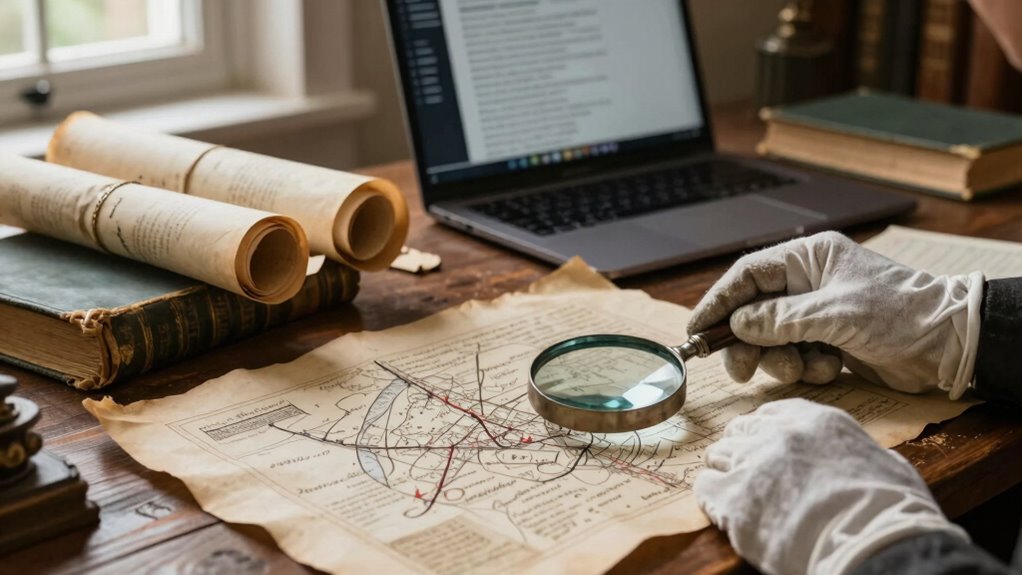

To separate myth from likely fact, you analyze ancient sources carefully, considering possible biases or exaggerations. You also use scientific methods like radiocarbon dating and DNA analysis to verify artifacts and timelines. Comparing stories across cultures and examining physical evidence helps confirm or challenge accounts. Digital tools and interdisciplinary research further improve accuracy. If you keep exploring, you’ll discover how these techniques reveal the truth behind historical stories and legends.

Prime made for students and young adults
- Fast, free delivery for dorm and study essentials
- Prime Video and Amazon Music included
- Member-only deals
Key Takeaways
- Cross-reference multiple sources to identify consistent details and reduce bias.
- Use scientific dating methods to verify the age of artifacts and texts.
- Analyze language and linguistic features for historical accuracy.
- Incorporate archaeological and forensic evidence to support or challenge narratives.
- Apply critical thinking to assess biases, exaggerations, and mythic motifs in accounts.
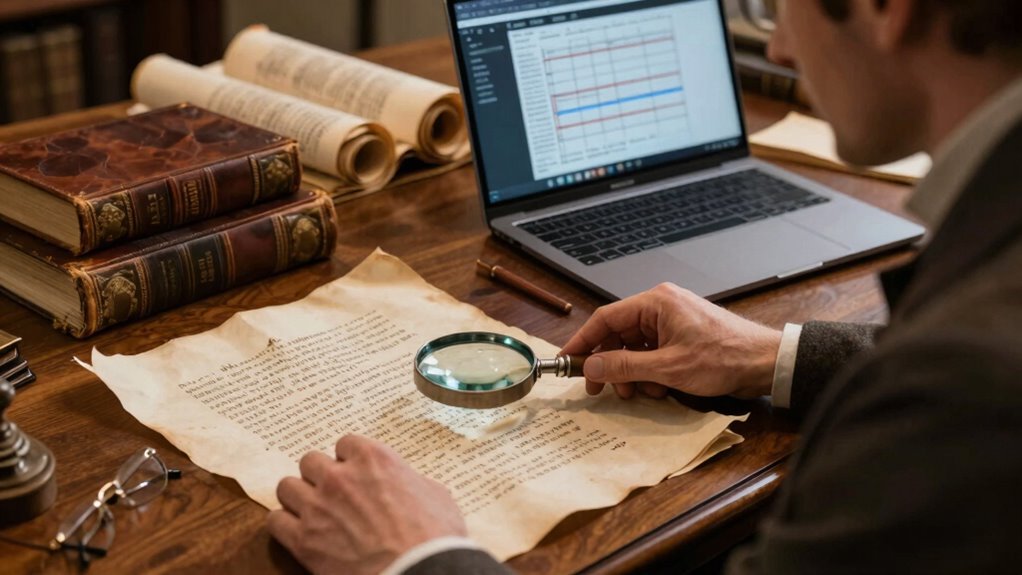
Have you ever wondered how historians determine what’s true and what’s merely a myth? It’s a fascinating process that involves careful analysis of ancient sources and the application of modern methodologies. When historians sift through the past, they don’t just accept stories at face value. Instead, they examine the origins of these stories, considering where they came from and the context in which they were created. Ancient sources—such as texts, inscriptions, or artifacts—are their starting point. These sources are invaluable because they provide firsthand or near-contemporary accounts, but they also come with limitations. Some ancient texts are biased, exaggerated, or incomplete, which is why historians approach them critically. They look for inconsistencies, corroborate details with other sources, and consider the motives or perspectives of the authors.
Modern methodologies have revolutionized how historians distinguish myth from fact. Techniques like radiocarbon dating, DNA analysis, and digital imaging allow for a more precise understanding of artifacts and documents. For example, if a story claims that a certain event occurred thousands of years ago, scientists can use dating methods to verify its timeline. Similarly, linguistic analysis helps determine whether a recorded story aligns with known historical languages or if it might be a later invention. Historians also use comparative analysis—looking at similar stories from different regions or cultures—to identify common motifs that suggest mythic origins, versus unique details that might point to actual events. Additionally, understanding the scientific techniques available enhances the accuracy of these assessments.
In addition, interdisciplinary approaches are vital. Archaeologists excavate sites, providing physical evidence that can confirm or challenge written accounts. Forensic techniques can analyze artifacts for clues about the people or events described. Digital tools like databases and software help organize and cross-reference vast amounts of data, making it easier to spot patterns or discrepancies. All these modern strategies work together to build a clearer picture of history, filtering out myths and highlighting what’s likely to be factual. Understanding how historical evidence is analyzed is crucial to grasping how we separate legend from reality. This comprehensive approach reflects the importance of evidence-based research in uncovering historical truths.
Ultimately, the process is about questioning and verifying. You, as a reader or researcher, should understand that history isn’t just a collection of stories but a carefully constructed narrative built on evidence. By examining ancient sources with a critical eye and applying modern methodologies, historians endeavor to uncover the truth behind the myths. It’s a meticulous, ongoing effort that continually refines our understanding of the past, separating what’s genuine from what’s simply legend.
As an affiliate, we earn on qualifying purchases.
Frequently Asked Questions
How Do Historians Handle Conflicting Sources?
When you handle conflicting sources, you analyze oral traditions alongside written records, considering their cultural perspectives. You compare different accounts, looking for common themes or discrepancies. By understanding the cultural context behind each source, you can assess their reliability. You also cross-check evidence and weigh the credibility of oral versus written narratives, recognizing that each offers valuable insights. This careful approach helps you piece together the most accurate historical picture possible.
What Role Do Archaeological Findings Play?
Imagine finding a mysterious artifact that coincidentally matches a story from ancient texts. Archaeological findings help you, as a historian, piece together the cultural context and use dating techniques to verify timelines. These discoveries often challenge myths, revealing what’s likely fact. By analyzing artifacts within their cultural setting and applying precise dating methods, you can differentiate between legend and reality, making history more accurate and engaging.
How Is Bias Identified in Historical Accounts?
You identify bias in historical accounts by examining cultural perspectives that shape the narrative. Look for narrative biases, like how certain events are emphasized or downplayed, reflecting specific viewpoints. Question the motives behind the account and consider who benefits from a particular portrayal. Comparing multiple sources helps reveal these biases, allowing you to see through distortions and better understand the true context behind the story.
Can Myths Ever Be Proven True?
Imagine you’re a detective in ancient Greece, trying to verify legends. You might find some truth through legend verification, but myths rooted in oral tradition often lack concrete evidence. While some stories may contain kernels of fact, many are exaggerated or symbolic. So, myths can sometimes be proven true in parts, but overall, they’re more about cultural values than factual history, blending imagination with reality.
What Tools Assist in Verifying Historical Accuracy?
You verify historical accuracy using tools like primary sources, which provide firsthand accounts, and oral traditions, which offer cultural context. You analyze artifacts, documents, and recordings to cross-check facts. Oral traditions help fill gaps but need corroboration. By comparing these sources critically, you distinguish between myth and fact, ensuring your understanding of history is based on evidence rather than assumptions or legends.
As an affiliate, we earn on qualifying purchases.
Conclusion
So, next time you’re told a story, remember that historians have to sift through myths to find the truth. It’s ironic how the very stories we cling to often blend fact and fiction, making certainty a rare treasure. As you analyze history, question what’s handed to you—because sometimes, the most “truthful” tales are the ones hiding behind the biggest myths. In the end, understanding history is less about facts and more about unraveling the stories we choose to believe.
digital archaeological imaging tools
As an affiliate, we earn on qualifying purchases.
As an affiliate, we earn on qualifying purchases.
As an affiliate, we earn on qualifying purchases.
Fall Picks
fall essentials
As an affiliate, we earn on qualifying purchases.